
You can leave water in an electric kettle overnight without immediate health risks, provided the water is fresh and the appliance is kept clean. This practice is common in many households, but it isn’t ideal because stagnant water can lead to mineral buildup and affect the taste of your next brew.
Whether this is safe depends on the quality of your local water supply and the material of your kettle. If you live in an area with hard water, leaving it to sit can accelerate scale deposits; if you use a plastic kettle, the water might pick up a chemical taste over time.
Who leaves water in an electric kettle
People who wake up early for tea or coffee often leave water in the kettle to save time. These individuals usually live in busy households where efficiency is the top priority during the morning rush. They prioritize having boiling water ready within seconds rather than filling, measuring, and heating from scratch every single time.
Another group includes office workers or students who use a kettle throughout the day. They often leave a small amount of water inside to avoid repeated trips to the sink. These users generally have access to filtered water and assume that if the water was safe to drink the night before, it remains safe the next morning.
This page serves best those who want to balance convenience with appliance maintenance. If you’re someone who keeps water in the kettle for days at a time, or if your primary concern is the potential for bacteria growth in a warm, damp environment, you should look for information regarding long-term water storage and sanitation standards. The assumption made here is that you use the kettle daily and have access to potable tap water that meets local safety standards.
What decides the outcome
The type of material inside your kettle is the primary factor that determines how much the water quality changes overnight. Stainless steel or glass interiors are generally inert and don’t impart flavors, whereas older plastic models may leach odors or chemicals into stagnant water. Check your manufacturer’s manual or the base of your kettle to confirm if it’s BPA-free plastic or a food-grade metal.
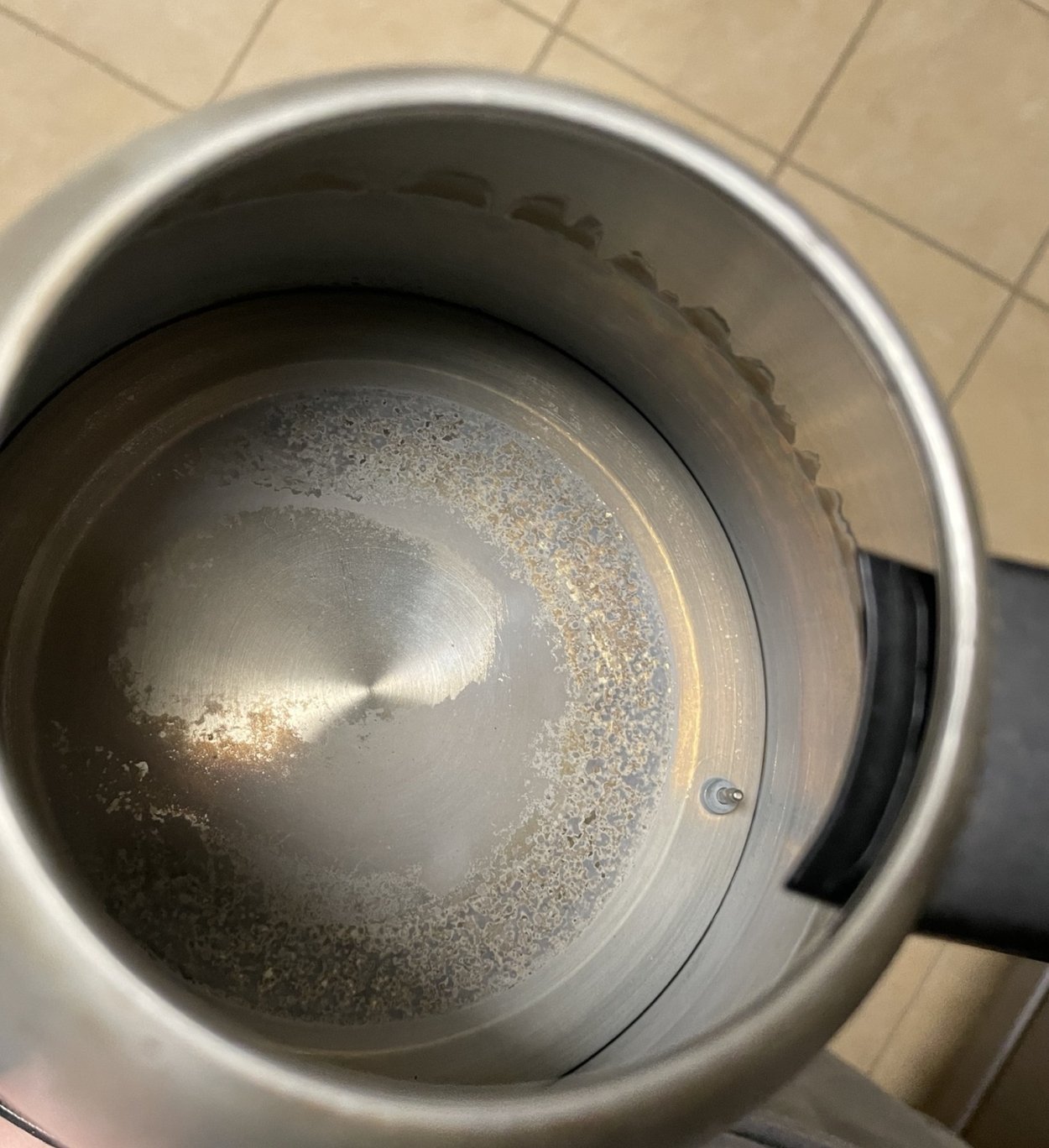
Water hardness determines how quickly mineral deposits, known as limescale, accumulate on the heating element. If your tap water is hard, the calcium and magnesium salts will settle and crystallize as the water sits, creating a chalky layer that makes the kettle harder to clean later. You can test your water hardness using a simple kit from a local hardware store or by checking the water quality report provided by your municipal utility.
Ambient temperature in your kitchen affects how long the water remains “fresh.” In a warm, humid environment, the risk of biofilm or microbial growth in the water increases if the kettle lid isn’t sealed properly. Keep the kettle in a cool, dry area away from direct sunlight and stovetop heat to minimize the risk of contamination.
Frequency of cleaning is the most common mistake people make. Most users assume that because the water is boiled, the kettle is self-cleaning. In reality, boiling kills bacteria but doesn’t remove the mineral scale or biological residue that builds up over time. If you don’t descale your kettle at least once every four to eight weeks, the water left inside will taste metallic or “flat” regardless of whether it’s safe to drink.
How to manage your kettle
- Fill the kettle with only the amount of water you need for your immediate use to reduce waste and prevent excess mineral buildup.
- Ensure the lid is fully closed after filling to keep dust or airborne particles from settling into the water overnight.
- Place the kettle on its base away from other heat sources like toasters or stoves to keep the water temperature stable.
- Press the power switch only when you’re ready to heat the water to avoid accidental activation.
- Watch for the automatic shut-off to engage, which signals that the water has reached its boiling point.
- Pour the water immediately after boiling to prevent the buildup of scale on the heating element.
- Empty any remaining water into a plant or the sink if you don’t plan to use the kettle for more than 24 hours.
- Wipe the exterior and the rim of the lid with a clean cloth to prevent grime accumulation.
The key judgment call is deciding when the water has sat for too long. If you notice a cloudy appearance or a strange odor when you lift the lid, don’t boil it; empty the kettle completely and rinse it with fresh water. If the water has been sitting for more than 24 hours, it’s always better to start with fresh, cold water to ensure the best flavor and safety.
Comparison of storage situations
Storing water in your kettle is a trade-off between convenience and the longevity of the appliance. The following table summarizes how different situations affect your water and your kettle.
| Situation | Action | Effort required | What to watch for |
|---|---|---|---|
| Daily use | Keep fresh water | Minimal | Scale buildup |
| Hard water area | Empty after use | Moderate | Mineral deposits |
| Long absence | Empty completely | Low | Dry out inside |
| Plastic kettle | Empty after use | Low | Chemical smell |
| Daily tea drinker | Filtered water | Moderate | Fresh taste |
The primary mistake users make is leaving water in the kettle overnight in regions with hard water. This practice accelerates calcium carbonate deposition, which acts as an insulator on the heating element.
Use this decision rule to protect your hardware: if you live where the water hardness exceeds 120 mg/L, empty the kettle every single night. If your water is soft, you may safely leave water for up to 24 hours. However, never leave water in a plastic kettle for more than four hours. Plastic components can leach subtle chemical compounds into stagnant water, which ruins the flavor profile of your tea or coffee. If you notice a faint, medicinal odor when you open the lid, you have already waited too long.
Signs of a healthy kettle
Managing mineral deposits
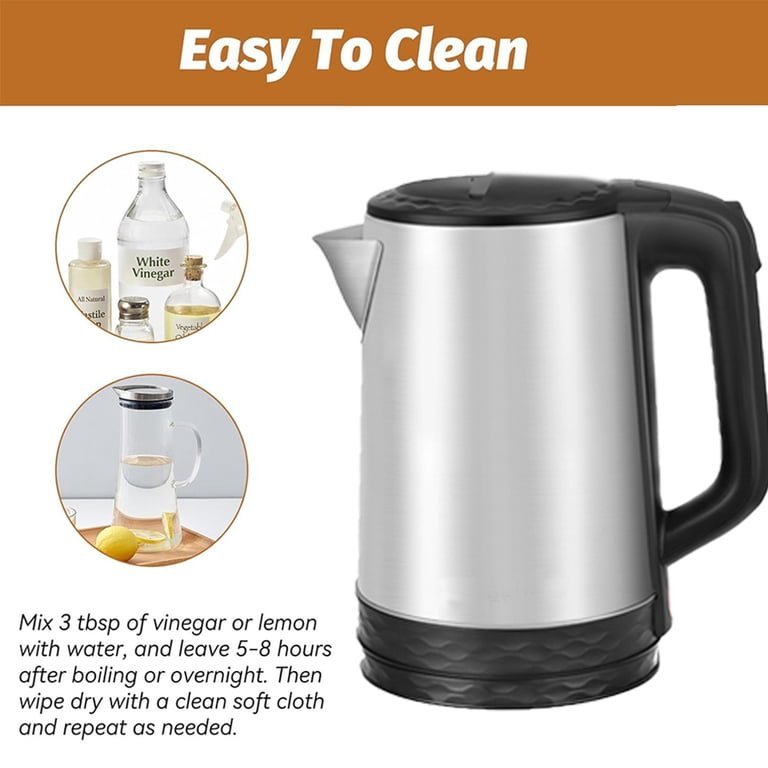
Experienced users know that a clean interior is the only way to ensure the water tastes like water. If you see white or gray flakes floating in your cup, your kettle has developed significant limescale. This isn’t inherently dangerous, but it acts as an insulator that forces your heating element to work harder, consuming more electricity and potentially shortening the life of the unit. To maintain the appliance, fill it with a mixture of equal parts white vinegar and water, bring it to a boil, and let it sit for 30 minutes before rinsing thoroughly.
Avoiding contamination
The environment around your kettle matters as much as the water inside. If your kitchen is prone to high humidity or if you keep the kettle near a sink where soap spray or food particles can land, the risk of contamination is higher. Always keep the lid shut when not in use. You can refer to FoodSafety.gov’s cold food storage charts for guidance on how water and other liquids should be handled to avoid the growth of harmful bacteria in household environments.
Common issues and fixes
If you find that your water tastes unusual, it’s often a sign that the kettle needs maintenance rather than a problem with the water source itself.
| What you notice | What it usually means | What to do first | How to stop it |
|---|---|---|---|
| White flakes | Limescale buildup | Descale with vinegar | Use filtered water |
| Metallic taste | Metal leaching | Scrub the interior | Dry after use |
| Plastic smell | Material degradation | Replace the kettle | Avoid plastic models |
| Cloudy water | High mineral content | Flush the kettle | Install a softener |
| Slimy surface | Biofilm growth | Clean with soap | Keep lid closed |
Most users mistake limescale for mold. If you see white flakes, boil a mixture of equal parts water and white vinegar for five minutes. If the flakes dissolve, it’s mineral buildup; if they remain solid, you’re likely dealing with a deteriorating heating element.
A common mistake is leaving residual water in the base overnight. This creates a humid environment that accelerates bacterial growth. If your water tastes “flat” or earthy, dump the kettle completely after every use. If the taste persists after a deep cleaning, inspect the heating coil for pitting. Pitting indicates the protective coating has failed, which means the unit is no longer food-safe and must be replaced immediately.
The rules of water safety
Government health agencies, including the Environmental Protection Agency, emphasize that water quality depends heavily on the integrity of your plumbing and the source of your supply. While municipal water is treated to remove pathogens, the pipes in older buildings can introduce lead or other contaminants if the water sits for long periods.
The device itself must be treated with care. Never submerge the electrical base in water, as this can cause a short circuit or pose a risk of electric shock. If your kettle shows signs of frayed cords or damaged insulation, stop using it immediately. These repairs require a certified technician; never attempt to open the housing of an electric kettle yourself, as If you’re unsure about the safety of your tap water, contact your local water utility to request a copy of their annual water quality report.
The real cost of storage
The cost of leaving water in your kettle is measured in both electricity and the lifespan of the appliance. Heating cold water to a boil requires more energy than heating water that’s already at room temperature, but the energy saved by using “leftover” water is negligible compared to the cost of replacing a kettle damaged by mineral buildup.
If you leave hard water in the kettle, the cost of descaling agents and the time spent cleaning will quickly outweigh the few pennies you might save in electricity. A high-quality electric kettle can last for many years with proper care, but if you allow scale to build up on the heating element, you may find yourself needing a replacement much sooner as it ages.
The most efficient way to manage this is to boil only what you need. This reduces the time the kettle spends running and decreases the amount of mineral-heavy water left to evaporate inside the unit.
If you live in a region with hard water, check your local water hardness report. If your area exceeds 120 milligrams per liter of calcium carbonate, you must empty the kettle after every use. Failure to do so creates a thick insulating layer on the element.
Keeping your kettle clean
To keep your kettle in top shape, you should perform a visual inspection of the interior every time you fill it. If you notice a film or residue, a quick rinse with warm water and a soft sponge is usually enough to remove it. Don’t use abrasive cleaners or metal scrubbers, as these can scratch the interior surface, creating microscopic grooves where bacteria and minerals can hide.
If you’re going away for more than two days, empty the kettle completely and leave the lid open to allow the interior to dry out fully. This prevents the growth of mold or mildew in the damp, dark environment inside the kettle. When you return, rinse the kettle with fresh water and boil a small amount to sanitize it before your first cup.
For hard water buildup, use a mixture of equal parts white vinegar and water. Boil this solution, let it sit for thirty minutes, and rinse thoroughly. If you see white, chalky flakes, you’re dealing with limescale. If the residue is brown or metallic, you likely have iron deposits. If a persistent smell or discoloration remains after a deep cleaning, it’s time to retire the unit.
When to avoid this method
If you have a compromised immune system, you should avoid leaving water in the kettle and instead boil fresh, cold water every time you need it. Stagnant water, even when boiled, can contain chemical byproducts or heavy metals that have concentrated as the water evaporated overnight.
If you live in a region with a “boil water advisory,” don’t rely on your kettle’s automatic shut-off to ensure safety. These advisories often require water to be held at a rolling boil for at least one minute to neutralize pathogens, whereas many electric kettles shut off as soon as the water reaches 212°F. In these cases, use a stovetop pot to ensure the water stays at a boil for the required time.
The most common mistake is assuming that a “boil-dry” protection feature indicates the device is safe for purification. It does not. If your kettle is made of a lower-quality plastic that smells strongly when heated, no amount of cleaning will fix it. You should replace it with a glass or stainless steel model to ensure your water remains free of plasticizers.
Use this simple decision rule: if the water source is questionable or your health is fragile, skip the convenience of the electric kettle. Use a metal pot on the stove to maintain a consistent, timed boil.
Frequently asked questions
Can you reboil water in an electric kettle?
Yes, you can reboil water, but it’s better to use fresh water each time. Reboiling the same water repeatedly concentrates minerals and can lead to a flat, metallic taste in your tea or coffee.
Is it safe to drink water left in a kettle overnight?
Yes, it’s safe to drink, provided the water was fresh when you started and the kettle is clean. If you notice any odd smells or if the water has been sitting for more than 24 hours, it’s best to empty it and start with fresh water.
How often should I descale my electric kettle?
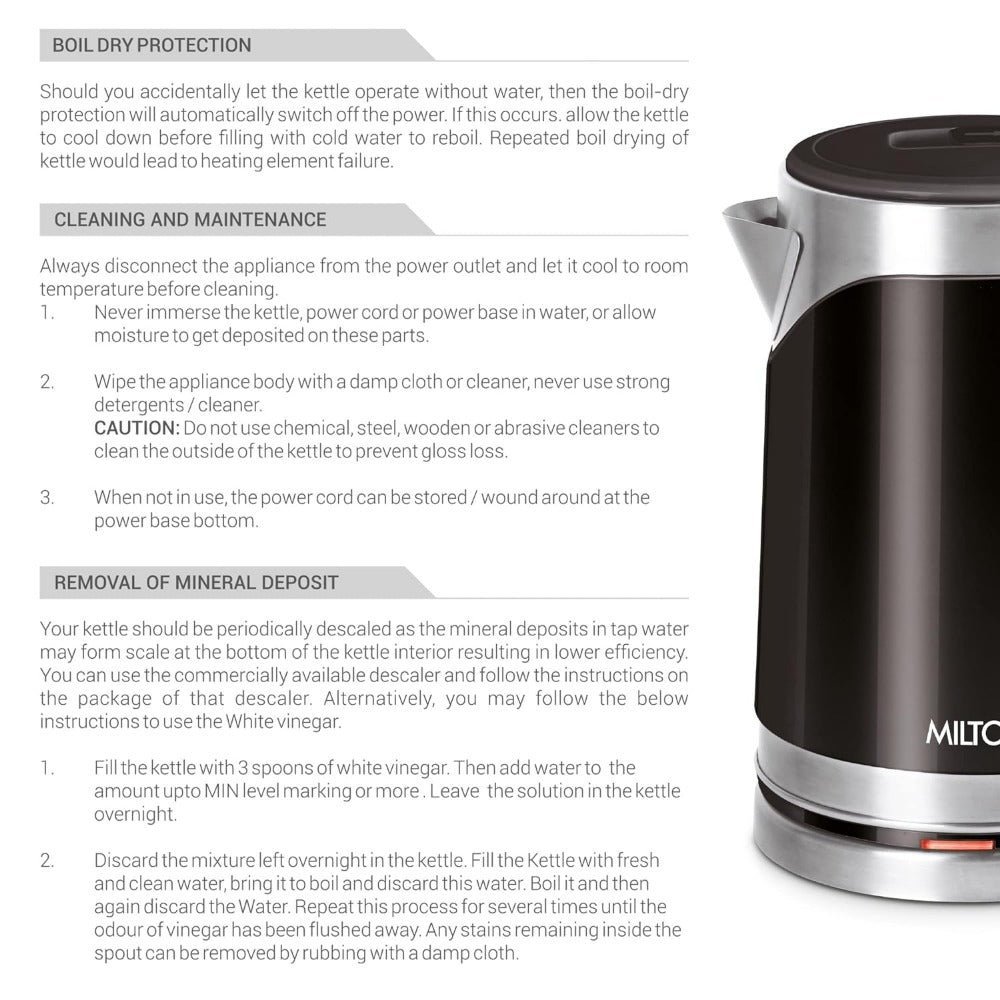
You should descale your kettle every four to eight weeks, depending on the hardness of your local water supply. If you see white or gray flakes forming at the bottom, your kettle needs descaling immediately to maintain its efficiency.
Does boiling water remove all contaminants?
No, boiling kills bacteria and viruses but doesn’t remove heavy metals, minerals, or chemicals like chlorine. If your water has contaminants, boiling won’t make it safe; you should use a proper water filtration system or bottled water instead.
Why does my boiled water taste like plastic?
Your water tastes like plastic because the kettle interior is made of a low-grade material that leaches chemicals when heated. You should replace the kettle with a glass or stainless steel model to avoid this issue.
What happens if I leave water in a plastic kettle?
Leaving water in a plastic kettle can lead to the leaching of chemicals into the water over time. This is more likely to happen if the water is warm or if the kettle is an older model that isn’t labeled as BPA-free.
Does the automatic shut-off kill all bacteria?
Yes, the automatic shut-off is designed to reach the boiling point of 212°F, which is sufficient to kill common waterborne bacteria. However, it doesn’t remove mineral deposits or other non-biological contaminants that may be present in your tap water.
Leave water, in short
Start by filling your kettle with only the amount of fresh water you need for your current task. If you do find yourself with leftovers, empty them out before you go to bed to ensure your next morning cup is fresh. If you notice a persistent metallic taste or cloudy buildup that regular rinsing doesn’t fix, it’s time to descale the unit or consider a replacement.