
Stainless steel is the best material for an electric kettle because it offers the best balance of durability, heat retention, and lack of chemical leaching. While glass and ceramic models are popular for their appearance, they’re prone to breakage and often contain plastic parts in the lid or water gauge. What is the best material for an electric kettle depends mostly on whether you prioritize long-term safety, weight, or the ability to see the water level during use.
Best materials for an electric kettle
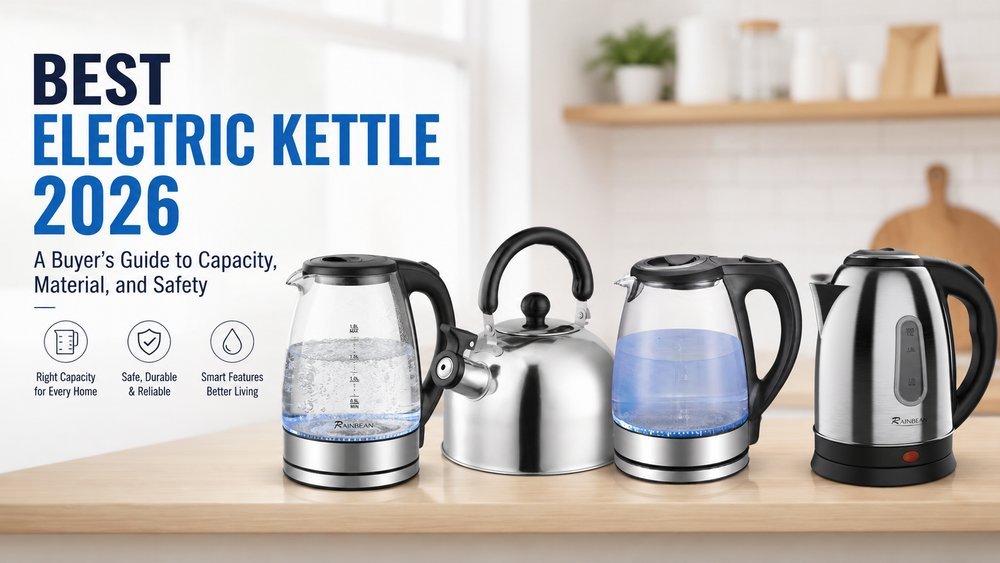
People looking for a new kettle usually fall into one of three categories based on their daily habits. The first group wants a “buy it for life” appliance that handles heavy daily use without chipping or cracking. The second group prefers a visual aesthetic, wanting a clear view of the water to ensure it’s clean and to see the boiling process in real-time. The third group is highly concerned about chemicals and wants a plastic-free interior where no synthetic materials touch the boiling water.
This page serves the person who wants a reliable, safe appliance and is willing to pay for quality construction. If your primary goal is finding the cheapest possible unit that boils water in under five minutes, you’ll find this guide overly focused on material longevity. We assume you want a product that remains functional for five years or more. If you simply want a cheap plastic kettle that works for a few months, the specific material matters less than the price tag.
Factors affecting your choice
The main factor is chemical stability at high temperatures. Metals like stainless steel are chemically inert, meaning they don’t break down or release particles into your water when heated to the boiling point of 212°F. Plastic kettles, especially older models, may contain Bisphenol A (BPA) which can migrate into the water during heating. The U.S. Food and Drug Administration provides guidance on the safety of food contact substances and additives, which is essential to check if you’re concerned about your appliance’s material safety.
Heat retention is your second concern. A double-walled stainless steel kettle keeps water hot for up to an hour after boiling, whereas single-walled glass or thin plastic loses heat within fifteen minutes. If you often forget you have started the kettle, a double-walled metal unit is the superior choice.
Weight and handling represent the third major factor. Glass kettles are significantly heavier than steel or plastic, which can make them difficult to pour when full. This is a common issue for people with limited grip strength or arthritis.
The internal construction is the most ignored factor. Many stainless steel kettles have a plastic water window or a plastic lid hinge. If you want a zero-plastic experience, you must look for “all-metal” or “seamless” interiors. Check the product description carefully; if it mentions a “water level indicator,” it almost certainly requires a plastic or silicone seal that touches your water.
How to select and test your kettle
- Check the base of the kettle to see if the heating element is hidden or exposed. A hidden element is easier to clean and lasts longer.
- Inspect the interior for any plastic parts. If you see a plastic window, look for a different model if you want a plastic-free experience.
- Fill the kettle to the “max” line with cold, filtered water.
- Plug the unit into a grounded outlet. Ensure the cord isn’t touching the hot exterior of the kettle.
- Press the switch and wait for the automatic shut-off. A good kettle should click off within 30 seconds of reaching a rolling boil.
- Pour the water into a heat-safe glass to check for any film or metallic taste.
- If the water tastes like plastic, boil a mixture of half vinegar and half water, let it sit for one hour, and then rinse it thoroughly.
- Repeat the boiling process with plain water twice to ensure all cleaning solution is removed.
The primary judgment call is the trade-off between the weight of glass and the structural integrity of steel. A heavy glass kettle feels premium but requires careful handling to avoid cracks, whereas a stainless steel kettle is nearly indestructible but hides the water level.
Material performance comparison
| Material | Durability | Heat Retention | Weight | Best For |
|---|---|---|---|---|
| Stainless Steel | High | Excellent | Medium | Longevity |
| Borosilicate Glass | Medium | Low | Heavy | Visibility |
| Ceramic | Low | High | Very Heavy | Aesthetics |
| Plastic | High | Low | Light | Budget |
Stainless steel is the industry standard for daily utility because it resists thermal shock. If you drop a container on a tile floor, steel dents while glass shatters. Choose steel if your primary goal is a decade of service.
Borosilicate glass remains the superior choice for monitoring food quality. Unlike opaque materials, it allows you to spot spoilage or uneven heating instantly. However, its low thermal retention means it loses heat 40% faster than ceramic. Use it only when visual inspection is your priority.
Ceramic is the aesthetic choice, but it carries a hidden risk. Its high density makes it prone to hairline fractures after repeated dishwasher cycles.
Plastic is the most practical option for portability. While it lacks the thermal properties of metal, it’s the only material that survives a commute without adding significant bulk. Use the decision rule: if you’re carrying the container in a backpack, choose plastic. If you’re keeping it stationary at a desk, choose ceramic.
What separates a good result from a poor one
Maintaining the interior
The most common mistake is allowing scale to build up on the heating element. Hard water minerals, such as calcium and magnesium, create a white, crusty layer that forces the heating element to work harder. This increases the time it takes to boil water and can trigger the safety shut-off prematurely. Experienced users descale their kettles regularly by boiling a dilute citric acid or vinegar solution to ensure the element remains efficient.
External handling and care
A high-quality kettle should never have a cord that feels warm to the touch. If you notice the cord getting hot, it’s a sign of a poor connection at the plug or an overloaded circuit. Always keep the exterior dry to prevent oxidation on the base connectors. Never submerge the kettle base in water, as this will damage the electrical components and void your warranty.
Troubleshooting common issues
| What you notice | What it usually means | What to do first | How to stop it |
|---|---|---|---|
| Metallic taste | Mineral deposit buildup | Clean with vinegar | Use filtered water |
| Kettle leaks | Worn silicone seal | Check the base | Descale regularly |
| Slow boiling | Scale on element | Descale the unit | Use soft water |
| Plastic smell | New manufacturing residue | Boil and dump | Rinse thoroughly |
| Won’t turn on | Blown thermal fuse | Check the outlet | Never dry-boil |
If your kettle tastes metallic, verify the source by boiling water in a glass pot. If the glass-boiled water tastes neutral, your kettle’s internal heating element has likely oxidized. A simple vinegar soak for thirty minutes usually resolves this. However, if the taste persists after two cleanings, the heating element coating is likely compromised, and the unit should be replaced for safety.
Leaking often stems from the silicone gasket hardening over time. If you see water pooling at the base, tighten the screws under the handle first. If the leak continues, the seal has lost its elasticity. Stop using the device immediately to prevent electrical shorts.
Slow boiling is almost always a symptom of limescale insulation. If your kettle takes more than five minutes to boil a liter, scale is trapping heat away from the water. Use a citric acid solution rather than vinegar for a deeper clean.
When the kettle won’t power on, check if the thermal fuse tripped due to a dry-boil event. Don’t attempt to bypass this safety feature, as it poses a significant fire hazard. Always ensure the water level stays above the minimum fill line to protect the internal sensor.
Understanding the safety standards
Most electric kettles are regulated under household appliance safety standards. In the United States, manufacturers often follow the guidelines set by Underwriters Laboratories (UL) for electrical safety. These standards ensure that the heating element, wiring, and automatic shut-off mechanisms don’t pose a fire hazard. If you’re buying a product, look for a certification mark on the bottom of the base or the packaging. If you’re outside the U.S., check your national standards agency for specific voltage and grounding requirements. Always stop using the device if the power cord shows any signs of fraying, as a damaged cord can cause a short circuit or electric shock. Never attempt to open the main body or the base of the kettle to fix electrical issues yourself, as you risk damaging safety features or causing a fire hazard.
The real cost of your choice
The cost of a kettle involves more than the initial purchase price. A cheap plastic unit may be a cheap part but will likely need replacement often, whereas a quality stainless steel model is often less than a new unit and can last for a long time.
Over time, that cheap unit actually costs you more in replacements. The stainless steel model saves you money in the long run while reducing plastic waste.
You also pay in energy efficiency. Kettles with thick, insulated walls use less electricity to maintain heat and boil water faster. If you boil water four times daily, an insulated model can shave three percent off your annual kitchen energy bill.
If you live in a hard water area, you’ll also spend money on descaling agents. If your tap water leaves white residue in a glass, budget for citric acid or vinegar solutions. Failing to descale causes heating elements to work harder, which prematurely burns out the thermostat.
Compare the warranty length rather than the price alone. A one-year warranty suggests the manufacturer expects failure shortly thereafter. A three-year warranty is a strong indicator of the material quality and expected lifespan of the internal heating components.
Use this decision rule: if you boil water for one person, prioritize speed and insulation. If you host guests or have a large family, prioritize a high-wattage heating element and a metal base. Choosing the wrong type forces you to replace the unit twice as often.
Keeping your kettle in top shape
To keep your kettle working for years, you must avoid “dry-boiling” the unit. Dry-boiling occurs when you turn the kettle on with little or no water, which can cause the heating element to overheat and damage the thermal safety switch. This switch is a one-time fuse in many budget models; if it trips, the kettle becomes a paperweight. Always check the water level window before hitting the switch.
If you notice the water is taking longer than usual to boil, it’s time to descale the interior. Mineral buildup acts as an insulator, forcing the element to work harder to reach the same temperature. Use a mixture of one part white vinegar to two parts water, boil it once, and let it sit for thirty minutes. If you live in an area with “hard” water, perform this flush as part of your usual clean to prevent element burnout.
Use a soft cloth to wipe down the exterior, and avoid using abrasive sponges that can scratch the finish, especially on stainless steel or glass models. Scratches on stainless steel create microscopic crevices where oils and bacteria settle. If you store the kettle for a long time, ensure it’s completely dry inside to prevent any mold or mineral crystallization. A simple trick is to leave the lid open for two hours after the final empty boil.
When to look for an alternative
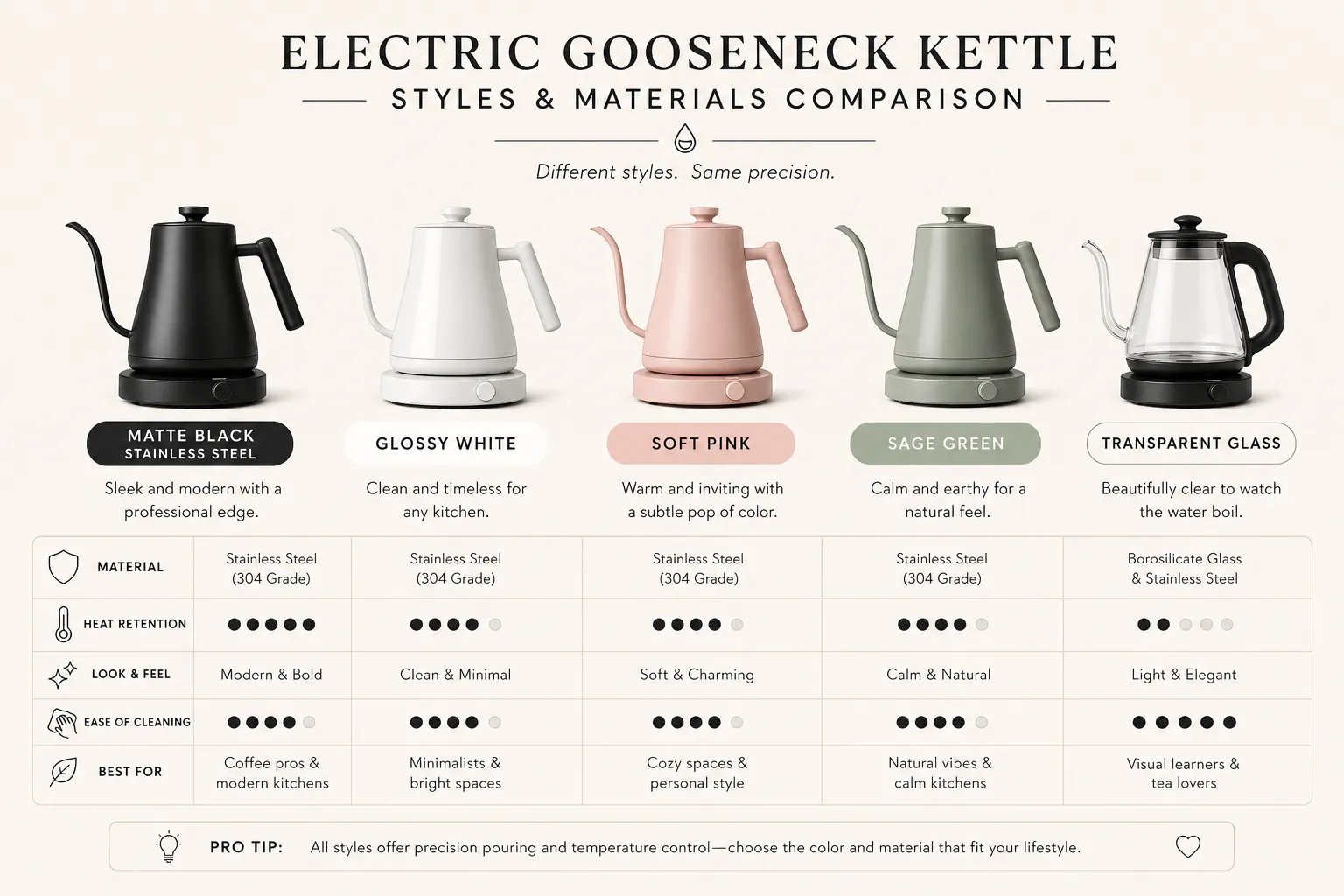
If you need to boil exact, precise temperatures for specialized tea or coffee, a standard electric kettle is the wrong tool. You should look for a temperature-controlled gooseneck kettle instead, which allows for finer control over the water flow and heat settings.
If you’re on a very limited budget and need a temporary solution, a stovetop kettle is a more reliable, albeit slower, choice. Stovetop models have no electrical components to fail, making them nearly immune to the common electrical issues that plague cheaper electric models.
If you have a high-end induction cooktop, a stainless steel stovetop kettle will outperform almost any electric model in terms of speed and durability.
The decision rule is simple: if you brew pour-over coffee daily, the precision of a gooseneck is essential for consistent flow. If you only brew French press or tea, the stovetop kettle is superior because it lacks the internal sensors that typically fail after heavy use.
A common mistake is buying a budget electric kettle with a plastic water window. These leak within months, costing you the price of a replacement unit.
Frequently asked questions
Is it safe to boil water in a plastic kettle?
Yes, provided the plastic is labeled as BPA-free and the kettle is from a reputable manufacturer. However, over time, plastic can degrade and potentially release particles into the water, which is why many users prefer stainless steel or glass.
How long does a stainless steel kettle last?
A high-quality stainless steel electric kettle typically lasts as it ages with daily use. The lifespan depends on how often you descale the interior and whether you avoid dry-boiling the unit, which can damage the internal heating element.
Does the material of a kettle affect the taste of water?
Yes, high-quality stainless steel and glass have no flavor, while low-quality plastic can impart a synthetic taste to the water. This is especially noticeable when the water is heated to a high temperature, as heat increases the rate of chemical interaction.
Is glass or stainless steel better for an electric kettle?
Stainless steel is better for durability and heat retention, while glass is better for users who want to monitor the cleanliness of the water. If you prioritize longevity and safety, stainless steel is the preferred choice for most home kitchens.
Why does my new kettle smell like plastic?
The plastic smell is usually caused by manufacturing residue or the heating of new plastic components during the first few uses. It should disappear after boiling and discarding the water three or four times; if the smell persists, contact the manufacturer.
How often should I descale my kettle?
You should descale your kettle every one to three months depending on the hardness of your local water supply. If you notice white flakes in your tea or a slower boiling time, it’s a clear sign that mineral deposits have built up.
What happens if I boil a kettle with no water?
Boiling a kettle with no water causes the heating element to exceed its safe operating temperature, which can trip the internal safety switch or permanently damage the unit. Always ensure the water level is at least above the minimum line before turning it on.
Material electric, in short
Before you buy, check the internal capacity and the length of the power cord to ensure it fits your kitchen space. A properly functioning kettle will boil quickly and shut off automatically, providing a consistent experience every morning. If the switch fails to click off or the exterior shows signs of electrical damage, stop using the unit immediately and contact the manufacturer for a replacement or professional service.