
A standard electric unit running at 350°F draws roughly 2,000 to 3,000 watts, and calculating the hourly cost of your oven comes down to multiplying that draw by your local power rate, which usually lands between 30 and 60 cents per hour.
The exact total changes based on three main factors: your utility company’s price per unit of energy, the temperature setting, and how well the door gasket keeps heat inside. High heat settings like broil or self-clean force the heating elements to stay on longer, which pushes the hourly expense higher.
Who calculates oven energy use
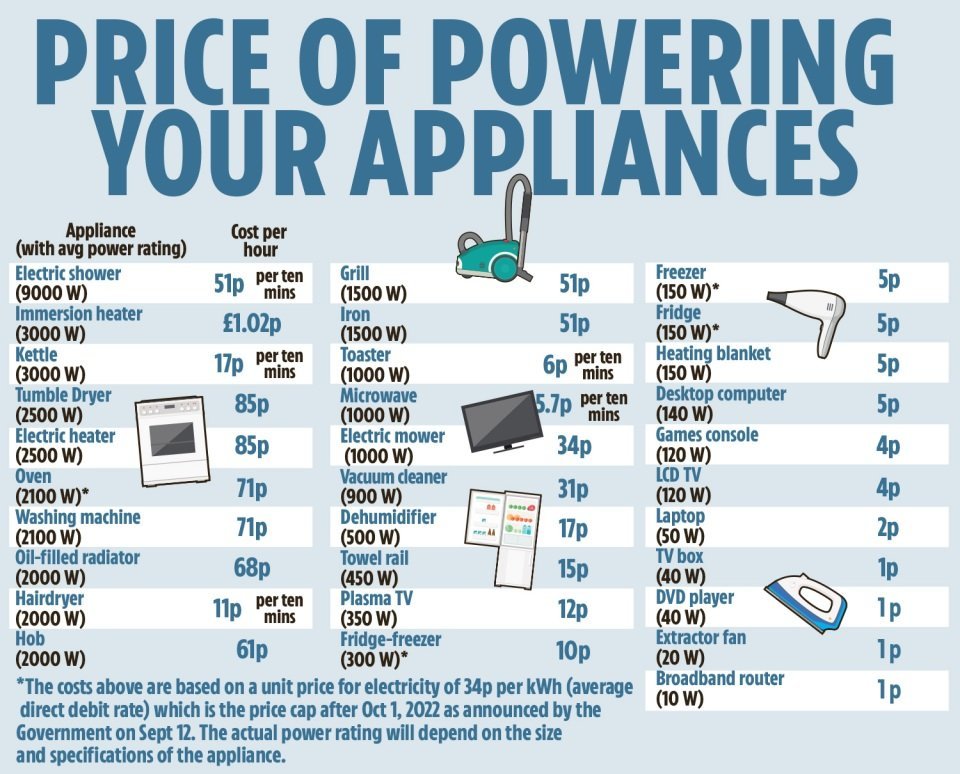
Home cooks who prepare long-simmered dishes or bake several times a week need this calculation to decide if their appliance makes sense for daily meal prep. A person living on a strict monthly budget often suspects their baking habits drive up their electric bill, so they want exact numbers to compare against a smaller countertop unit. If you run your kitchen appliance two or three times a week for quick 30-minute meals, tracking these numbers won’t save you more than a few dollars each year.
This guide serves home cooks comparing everyday utility costs or deciding whether to switch between natural gas and electricity. It assumes a standard residential appliance operating on a standard utility connection, not a heavy commercial model in a bakery. If you run a commercial kitchen or need help wiring high-voltage connections, professional industry guides will serve you better.
What drives your baking utility bill
The temperature setting dictates how hard your heating element works over sixty minutes. An electric model set to 350°F doesn’t draw power continuously; its internal thermostat cycles the heating element on and off to maintain heat, running roughly one-third to one-half of the total time. If you turn the knob to 450°F, that duty cycle increases significantly, keeping the heating element powered for up to two-thirds of the hour and driving up electricity use. Check your appliance’s manual or nameplate tag, usually visible around the interior door frame, to find its total rated wattage.
Door insulation and gasket condition matter just as much as your heat dial, and this is where people make the most expensive mistakes. You can test your seal by closing the door on a dollar bill; if it slides out without resistance, heat leaks out constantly during cooking.
Your local utility billing rate creates the widest gap in final operating costs. Electric rates in the United States vary from under 12 cents per kilowatt-hour in some regions to over 30 cents per kilowatt-hour in others. You can find your current rate by checking the supply and delivery charges printed on your most recent electric or natural gas statement.
Calculating hourly oven running expense
- Find the wattage rating on your electric appliance’s metal data plate, which usually sits behind the lower storage drawer or along the door frame, noting a number like 2,400W or 3,000W. A clear plate confirms the exact power rating before doing math.
- Divide that wattage rating by 1,000 to convert the power figure into kilowatts (kW), turning a 2,500W rating into 2.5 kW. Your final decimal number confirms the calculation worked.
- Check your latest monthly electric bill and locate the cost per kilowatt-hour (kWh), including both supply and delivery charges. A specific rate like $0.16 per kWh confirms you have your true local rate.
- Multiply your appliance kilowatts by an estimated duty cycle of 0.4 for standard 350°F baking to reflect that the element only runs about 40% of the time, turning 2.5 kW into 1.0 kWh of actual use. The resulting number shows your estimated hourly power draw.
- Multiply that hourly draw by your utility rate to find the total running cost, where 1.0 kWh multiplied by $0.16 equals $0.16 per hour. A written cent figure shows your math is complete.
- For a natural gas appliance, locate the BTU rating on the metal tag, which typically reads between 11,000 and 18,000 BTUs per hour. Writing down this BTU number confirms you have the right baseline.
- A decimal under 0.25 therms confirms the conversion.
- A smaller decimal confirms you adjusted for cycle times.
- Multiply the adjusted therm total by your gas utility’s cost per therm, found on your gas bill, to get your hourly fuel total. A final price confirms your gas cost per hour.
The hardest judgement call is estimating the duty cycle accurately. A modern, well-insulated appliance with a pristine gasket running at low heat sits near a 0.3 duty cycle, while an older, drafty model running at 450°F approaches 0.6.
If your appliance has damaged high-voltage wiring, a cracked terminal block, or a broken gas shutoff valve, stop your checks immediately and call a licensed technician. Working on live 240-volt circuits or open gas fittings risks severe injury and requires specialized diagnostic equipment.
Appliance energy use compared
| Cooking method | Energy needed | Average running cost | Things to monitor |
|---|---|---|---|
| Electric 350°F | 1.0 to 1.5 kWh | $0.20 to $0.45 per hr | Door seal wear |
| Electric 450°F | 1.8 to 2.4 kWh | $0.35 to $0.70 per hr | Element cycling frequency |
| Gas 350°F | 0.06 to 0.09 therms | $0.10 to $0.25 per hr | Clean burner ports |
| Gas Broil | 0.12 to 0.16 therms | $0.20 to $0.40 per hr | Flame color stays blue |
| Air Fryer 375°F | 0.7 to 1.0 kWh | $0.12 to $0.25 per hr | Basket capacity limits |
| Microwave High | 0.5 to 0.8 kWh | $0.08 to $0.16 per hr | Uneven temperature spots |
Daily habits that change running costs
Batch cooking and preheating discipline
Experienced cooks run multiple dishes back-to-back while the chamber remains at operating temperature. Preheating an empty cavity from room temperature to 350°F consumes around 0.5 kWh of electricity before food ever enters, representing pure overhead that gets wasted if you only bake one tray of cookies. If you need to cook several items throughout the afternoon, putting them in immediately after one another eliminates duplicate warm-up phases.
You should also avoid preheating for longer than the chime requires. Leaving an empty chamber running for 30 minutes before inserting food wastes energy and runs up utility charges for zero benefit. Use the built-in oven light to monitor your food’s progress instead of pulling the door open. Opening the door drops the air temperature quickly and forces the thermostat to restart the heating cycle.
Managing airflow and interior metal
Leaving unused sheet pans or heavy pizza stones on lower racks increases the time it takes to reach your desired temperature. That extra metal absorbs heat that should go directly into cooking your food, dragging out the warm-up cycle by several minutes. If you aren’t actively using a baking stone or spare trays, take them out before turning on the dial.
Keeping the heating elements clean also ensures proper radiant heat transfer. Spilled grease or charred drippings smoke and trap heat against the metal element instead of letting it radiate smoothly into the cooking space. Clean heating components warm the cavity evenly, which helps the thermostat hit target temperatures quickly and turn the elements off sooner.
Fixing common energy waste problems
| What you notice | What it usually means | What to do first | How to stop it happening again |
|---|---|---|---|
| Baking takes longer | Heat leaking out | Check door gasket seal | Wipe gasket after heavy use |
| Kitchen feels hot | Worn fiberglass seal | Replace the door gasket | Keep door hinges aligned |
| Burner flame yellow | Incomplete gas combustion | Clean the burner holes | Schedule annual gas service |
| Element stays bright | Thermostat failure | Test with internal thermometer | Avoid bumping sensor tube |
| Preheating takes long | Damaged bake element | Inspect element for blisters | Clean spills off elements |
If your oven door fails the “paper test”—where a sheet of paper slides out easily when the door is closed—your gasket is compromised. This leak forces the unit to run 20% longer, spiking utility bills.
A yellow flame indicates a dangerous carbon monoxide risk. If the flame doesn’t turn blue within seconds of cleaning, stop using the appliance immediately. Professional recalibration is required.
Most users ignore the thermostat sensor tube. If this thin metal rod is bent or coated in grease, the oven will misread temperatures by up to 50 degrees. Always keep this sensor clear of foil or cookware.
Finally, inspect heating elements for visible white blisters or cracks.
Utility rules and appliance standards
Residential energy rates depend on rules established by state public utility commissions, which approve rate schedules and peak demand charges. Many power companies now use time-of-use pricing plans, where power used between 4:00 PM and 9:00 PM on weekdays costs substantially more than power drawn in the morning or late evening. Review the EPA ENERGY STAR criteria to check how modern cooking units handle basic energy limits and design standards.
| TYPICAL TIME-OF-USE BILLING DIFFERENCE |
|---|
| Off-Peak Hours (Morning / Late Night) |
| [$$] Baseline Power Rates |
| On-Peak Hours (4:00 PM – 9:00 PM Weekdays) |
| [$$$$$$$$] Rates Can Double or Triple |
Gas supply rules follow safety guidelines written by the National Fire Protection Association under standard NFPA 54 for fuel gas installations. If you must run a new gas supply line or upgrade a breaker box for a 50-amp, 240-volt range circuit, local codes require a licensed professional to pull permits and perform the work. Don’t attempt electrical panel modifications or gas piping jobs yourself, as installation errors can create fire risks and void your home insurance coverage.
Real costs of cooking meals
The average American household running an electric cooking chamber for four hours a week spends roughly $5 to $10 a month on that appliance, assuming an electric rate of 16 cents per kilowatt-hour. That translates to an annual running expense of roughly $60 to $120. If your power provider charges peak rates above 30 cents per kilowatt-hour, your yearly spending can climb past $200 for the same four hours of weekly cooking.
A natural gas unit generally costs less to operate, often staying between $2 and $5 per month for that same four hours of weekly cooking. These fuel numbers vary widely depending on seasonal demand and local pipeline tariffs.
The most common mistake is failing to account for the “preheat tax.” Heating an empty oven to 400 degrees often consumes as much energy as the first twenty minutes of cooking. If you’re only heating a small portion of leftovers, use a toaster oven instead. It typically draws 50% less power and reaches temperature in a fraction of the time.
To cut costs, bake during off-peak billing hours and cook multiple items together. If your utility offers a time-of-use plan, avoid running the oven between 4:00 PM and 9:00 PM when demand surcharges are highest.
Maintaining efficient appliance heating
Check the condition of your appliance door gasket every six months to make sure it keeps heat where it belongs. Wipe grease and crumbs off the silicone or fiberglass rubber strip using warm water and mild soap, as baked-on debris hardens the seal and causes gaps. If the gasket feels brittle, shows cracks, or tears loose from its mounting channel, replace it immediately to prevent heat loss.
Calibrate your appliance thermostat once a year using a standalone oven thermometer placed on the center rack. Set the dial to 350°F, let it complete three heating cycles over 45 minutes, and write down the temperature readings when the indicator light turns off. If the average temperature sits more than 25°F higher or lower than the dial, adjust the calibration screw behind the temperature knob following your user manual’s instructions.
When to use a different appliance
Firing up a full-size 3,000-watt appliance to reheat a slice of pizza, bake a single potato, or warm up a small side dish is the wrong choice. A countertop air fryer or toaster oven uses roughly 1,400 to 1,700 watts and features a much smaller interior cavity. Because an air fryer heats up in two minutes instead of fifteen, cooking small meals in it cuts total power use by more than half.
For steaming vegetables or reheating stews, a microwave uses roughly 800 to 1,200 watts and finishes the task in a fraction of the time. Microwaves don’t create browning or crispy crusts, so if you need a dry, roasted finish on a large chicken, stick to your primary cooking chamber. However, you should never choose your main oven simply out of habit when a smaller appliance can handle the portion size.
Frequently asked questions
Does preheating the oven use more electricity?
Yes, preheating draws continuous power for 10 to 15 minutes because the heating elements stay on without cycling off until the cavity hits the target temperature. Once heated, the elements cycle on and off, using less energy per minute than during warm-up.
Is a gas oven cheaper to run than an electric one?
Yes, running a gas unit typically costs roughly half as much per hour as an electric model based on standard residential utility rates. The actual savings depend on local natural gas supply tariffs compared to local electricity prices per kilowatt-hour.
How much power does an oven self-clean cycle use?
About 6 to 10 kilowatt-hours of electricity for a standard three-hour cycle. The appliance runs at temperatures near 800°F to 900°F, keeping elements energized longer than regular baking and costing around $1.50 to $3.00 depending on utility rates.
Does opening the oven door really waste that much energy?
Yes, opening the door drops internal air temperatures by 25°F to 50°F in just a few seconds. That drop forces the heating element to cycle back on immediately for several minutes to rebuild heat, raising overall energy use.
How many watts does an electric oven use per hour?
Between 1,000 and 2,000 watt-hours (1.0 to 2.0 kWh) during normal 350°F baking. While the heating element may carry a 2,500-watt rating, it only draws power about 40% of the time once preheated.
Does a convection oven use less electricity?
Yes, convection models generally use about 20% less energy because internal fans circulate hot air, allowing you to lower cooking temperatures by 25°F and reduce cooking times. The reduced run time lowers total kilowatt-hour usage per meal.
Can a dirty oven increase electricity costs?
Yes, thick grease and charred food absorb heat energy and cover radiant heating surfaces, making the appliance work longer to hit its target temperature. Keeping the bottom panel clean allows heat to circulate freely throughout the chamber.
Next steps for energy tracking
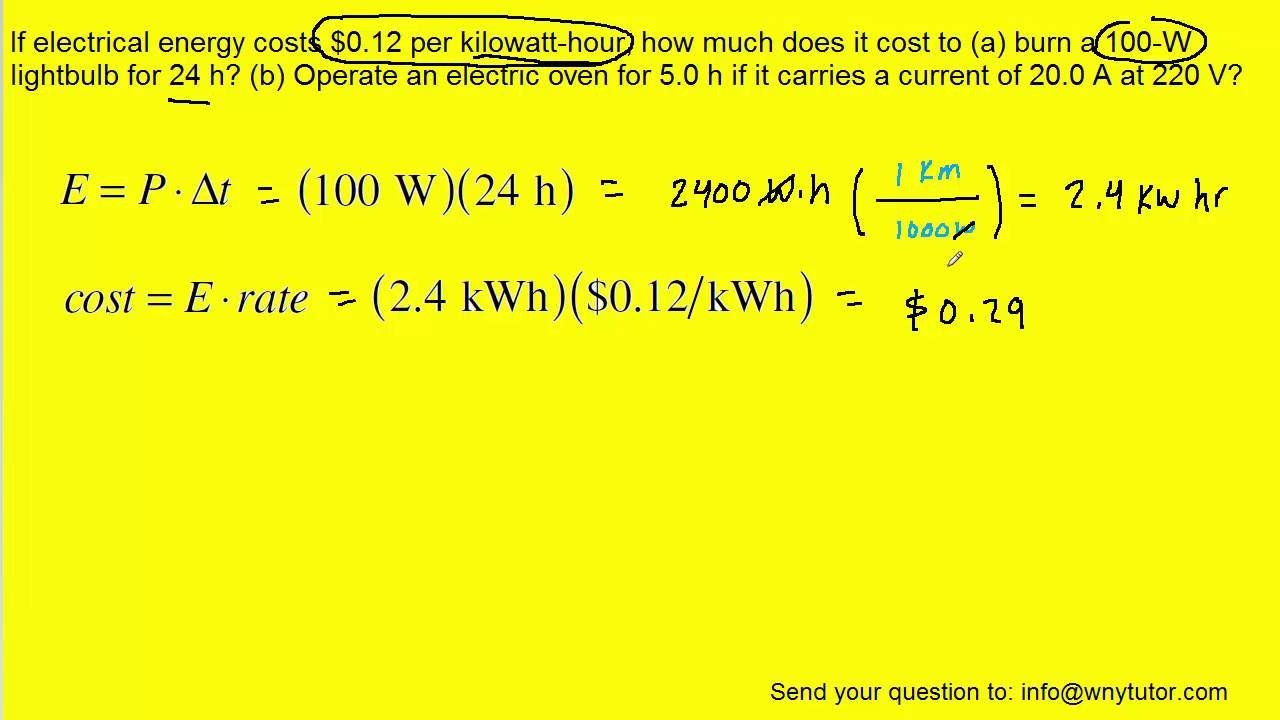
Look up the supply and delivery rate on your latest energy bill, find the wattage on your appliance’s metal data plate, and calculate your exact hourly cost using the steps above.
If the seal passes the dollar-bill test and your cooking times match standard recipes, your unit operates efficiently. Most modern ovens should reach 350 degrees in under fifteen minutes. If yours consistently exceeds twenty minutes, you’re likely wasting energy through a compromised thermal seal.
Oven cost, in short
If the cabinet exterior feels hot to the touch, the door gasket appears brittle, or preheating takes over twenty minutes, call an appliance repair service to inspect the door hinges and heating elements. A failing hinge often creates a gap invisible to the naked eye.
Related guides