
The Camp Chef Outdoor Oven is widely considered the best portable camping oven because it offers a full-sized rack system and a consistent heat output that mimics a home kitchen range. This unit relies on a standard 16-ounce propane canister to power both the burners and the internal oven box, providing reliable performance for most camping setups. Choosing the right oven depends on whether you value high-heat capacity, total weight, or fuel compatibility, which this guide evaluates through these specific performance factors.
What is the best portable camping oven for you?
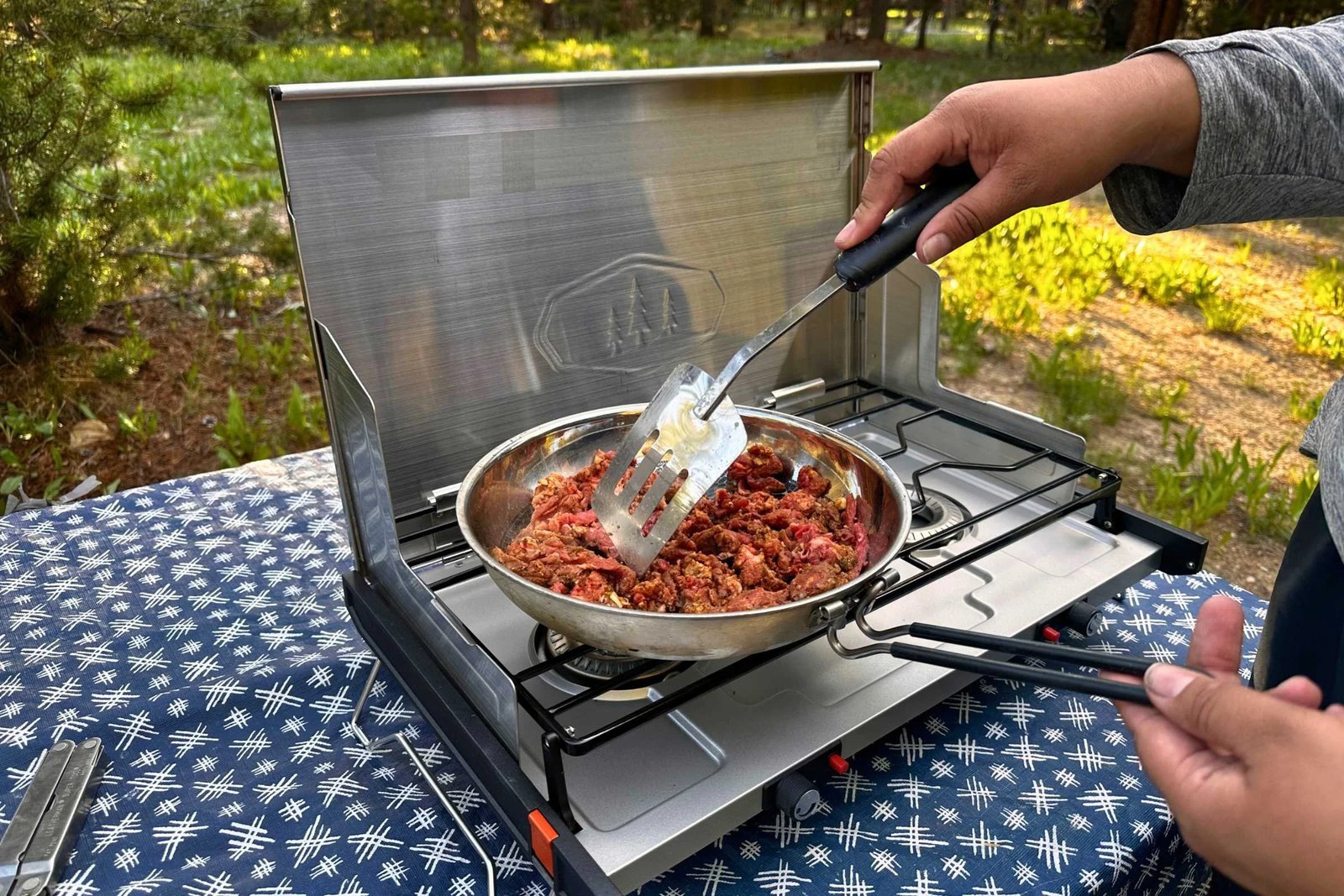
People who need this equipment usually fall into one of three categories. First, there are the base-camp enthusiasts who stay in one location for several days and want to bake bread, roast vegetables, or heat pre-made meals without relying on a campfire. These users prioritize stability and capacity over weight. Second, there are car campers who value space-saving designs; they need an oven that fits easily into a trunk or a plastic storage bin alongside other gear. Finally, there are the occasional users who only cook outdoors as part of your usual clean and don’t want to spend heavily on specialized equipment.
This article assumes you’re a car camper who has access to a level surface and standard propane canisters. If you’re a backpacker, this page isn’t for you, as portable ovens are far too heavy and bulky for travel on foot. We focus on units that provide at least 3,000 BTUs of heating power, as anything less struggles to maintain a steady temperature in windy conditions. Our advice assumes you’re using the equipment in temperatures above 40°F, as extreme cold significantly changes the pressure and efficiency of propane gas.
Factors that change your results
The most important factor is the wind. Even a small breeze carries heat away from the oven walls, forcing the burners to work harder and consuming fuel faster. If you camp in open, windy areas, you must use a wind screen or position the unit behind a vehicle to maintain a stable internal temperature.
Fuel efficiency is the next major variable. A standard 16-ounce propane cylinder typically lasts for about 3 to 5 hours of total runtime when the oven is set to 350°F. If you connect to a larger 20-pound tank using a hose adapter, you get much longer runtimes and lower costs per hour, but you lose the portability of the small canisters.
The type of food you cook also dictates the outcome. Dense items like roasts or casseroles require even heat distribution, while delicate pastries might burn if they’re too close to the bottom burner. Most people make the mistake of not preheating the oven for at least 15 minutes before putting food inside. Without this step, the internal thermometer won’t give an accurate reading, and your food will likely come out unevenly cooked or doughy in the center.
Finally, altitude affects gas pressure. At elevations above 5,000 feet, propane stoves often produce a weaker flame because there’s less oxygen available for combustion. If you camp in the mountains, expect longer cooking times and adjust your expectations accordingly.
Setup and operation procedure
- Place the oven on a level, non-combustible surface like a metal camp table or a cleared patch of dirt.
- Connect your 16-ounce propane canister to the regulator hose, ensuring the connection is hand-tight to prevent leaks.
- Open the oven door and check that the burner tray is clear of any debris or shipping materials.
- Turn the oven knob to the “Light” position and use a long-reach lighter to ignite the burner at the bottom of the oven box.
- Watch the flame for a steady blue color; a yellow or orange flame indicates poor combustion, which requires you to check the regulator connection.
- Close the oven door and turn the dial to your desired temperature setting, then wait 15 minutes for the unit to preheat.
- Insert your food and monitor the internal temperature gauge, making small adjustments to the dial as needed.
- Use a digital probe thermometer to ensure any meat or leftovers reach the safe minimum internal temperature of 165°F before serving.
- Turn off the oven knob first, then close the valve on the propane canister to clear the gas from the hose.
The judgment call for a successful cook is the preheat time. If you rush this, the metal walls of the oven won’t radiate heat correctly, and the top of your dish will remain cool while the bottom potentially burns.
Comparison of portable oven features
Different models offer different trade-offs in weight, size, and fuel type. Use this table to match your needs to the right hardware.
| Situation | Best Option | What it takes | Watch for |
|---|---|---|---|
| Heavy cooking | Propane oven | 20lbs, high effort | Fuel supply |
| Light baking | Foldable box | 5lbs, low effort | Wind protection |
| Quick meals | Dutch oven | 10lbs, medium effort | Charcoal management |
| Large groups | Double burner | 25lbs, high effort | Stability |
Select a propane oven only if you have a stable vehicle base. These units require a bulk tank, which adds 15 pounds of fuel weight for a weekend trip. If you’re hiking, stick to the foldable box. It fits in a standard daypack but loses heat rapidly in winds exceeding 10 mph.
The Dutch oven is the superior choice for stews, but it demands constant attention. You must rotate the lid every 15 minutes to prevent hot spots. If you lack the patience for charcoal management, choose the double burner instead.
A common mistake is choosing a double burner for solo trips. The added 25 pounds creates a center of gravity issue on uneven ground, often leading to spilled meals. If you’re cooking for fewer than three people, the weight penalty outweighs the convenience of the extra surface area. Always prioritize the weight of your fuel over the number of burners.
What separates quality from poor performance
Heat retention and insulation
Experienced campers look for double-walled construction. A single-walled metal box loses heat the moment a breeze hits it, whereas a double-walled unit acts like a thermos, keeping the heat inside where it belongs. If you can push on the outer wall and it flexes easily, it likely lacks the insulation needed for consistent baking. The best units have a latch that pulls the door tight against a seal, preventing hot air from escaping through the edges.
Burner control and stability
The quality of the gas valve determines your success with delicate recipes. A cheap valve often has a “high” and “off” setting with nothing in between, which makes it impossible to maintain a steady 350°F. Look for a dial that offers smooth resistance and a wide range of motion. Furthermore, the legs must be sturdy; a wobbly oven is a safety hazard, especially when you’re pulling out a hot dish. If the unit doesn’t sit flat on your table, use shims to stabilize the base before you light the burner.
Common issues and fixes
| What you notice | What it means | What to do first | How to stop it |
|---|---|---|---|
| Flame won’t light | Clogged nozzle | Clean with brush | Cover burner when off |
| Uneven baking | Hot spots | Use heavy tray | Rotate food halfway |
| Gas smell | Loose seal | Tighten connection | Check O-ring condition |
| Low heat | Cold fuel | Warm canister | Use insulated base |
If your burner clicks but produces no spark, check for moisture. A damp igniter is the most common failure point. Simply dry the ceramic tip with a paper towel or hold a flame to it for five seconds to evaporate the condensation.
For uneven baking, the mistake most users make is overcrowding the rack. This blocks airflow, forcing the burner to work harder while still leaving the center raw. If you can’t reduce the load, switch to a cast-iron tray. Its thermal mass absorbs the intense heat spikes that thin aluminum sheets can’t handle.
When you detect a gas smell, stop immediately. Don’t test the connection with a lighter. Use a soapy water solution on the valve threads instead. If you see bubbles forming, the O-ring has likely perished from heat exposure. Replace it before your next trip to avoid a total fuel dump.
Finally, low heat in cold weather is rarely a mechanical defect. It’s a pressure drop caused by the fuel’s inability to vaporize efficiently at low temperatures. If the ambient temperature is below 40°F, your fuel won’t vaporize. Always keep a spare canister in your sleeping bag to ensure it stays warm for breakfast.
Regulatory and safety standards
Portable gas appliances must comply with safety standards set by the American National Standards Institute (ANSI) regarding gas leak prevention and flame stability. In the United States, look for the UL mark on the back of the unit. If you’re in Canada or Europe, check your local government’s consumer safety board for specific gas-appliance regulations, as thread patterns and regulator pressure settings often differ by region. Never attempt to modify the gas regulator or bypass the safety interlocks; these parts are designed to stop gas flow if the flame goes out. If the burner fails to hold a flame, the issue is likely a faulty thermocouple or a blocked orifice, which requires a professional technician to service.
The real cost of portable ovens
The cost of owning a portable oven goes beyond the price of the unit itself. You must factor in the recurring expense of propane canisters, which can be a cheap part depending on where you buy them. If you go on ten trips a year, these small costs add up quickly.
Budgeting for fuel is only the start. If you rely on small 16-ounce canisters, you pay a premium for convenience; switching to a bulk tank adapter can cut your fuel costs by 60 percent. However, this requires carrying an extra hose and a larger tank, which complicates your setup.
Another cost is the weight and space in your vehicle. A larger oven might require you to leave other gear behind or reorganize your entire packing system. If your oven weighs over 20 pounds, you’ll likely need a dedicated storage bin to protect the igniter from damage during transit.
Finally, consider the time cost of maintenance. Neglecting this cleanup causes carbon deposits to harden, eventually requiring harsh chemical solvents that can degrade the oven’s internal heat-reflective coating.
Maintenance and storage
To keep your oven working, you must clean the grease tray after every single use. If grease drips onto the burner or accumulates in the corners, it becomes a fire risk and attracts pests to your campsite.
Store the unit in a dry, covered bag or a dedicated plastic bin to prevent the internal burners from getting clogged with dust or dirt during transit. If you notice rust on the cooking racks, scrub them with a wire brush and apply a light coat of vegetable oil before storing them for the season.
Always check the rubber seals on the regulator hose once a year. If they look cracked or brittle, replace them immediately. A failure to swap these seals can lead to dangerous gas leaks that are often undetectable by smell alone.
A well-maintained oven should last for many seasons. The primary sign that it needs attention is a consistent yellow flame that doesn’t turn blue when you adjust the air intake. If the flame remains yellow despite adjustment, your burner ports are likely clogged with carbon deposits. You can clear these blockages using a thin needle or a blast of compressed air.
If you live in a coastal climate, check for salt-air corrosion regularly. Salt will pit the stainless steel surfaces much faster than standard humidity. If you see orange spots forming, use a stainless steel cleaner immediately to prevent permanent pitting.
When to avoid this method
If you’re trying to cook for more than six people, a single-burner portable oven is the wrong choice. You’ll spend your entire day waiting for small batches of food to finish, and you’ll likely run out of fuel before everyone is fed. In this case, a traditional campfire grate or a large-capacity charcoal grill is much more effective.
The primary mistake is underestimating the recovery time between batches. A portable oven loses significant heat every time you open the door to swap a tray. If your recipe requires a steady temperature for longer than thirty minutes, the fuel consumption will double compared to a static heat source. You should stick to this method only if you can complete your cooking in two cycles or fewer.
Additionally, if you’re camping in an area with a high risk of forest fires, many local authorities prohibit the use of any open-flame cooking equipment, including portable ovens. Always check the current fire restrictions on the official website of the park or forest you plan to visit before you pack your gear. If the fire danger level is listed as “High” or “Extreme,” assume all portable stoves are banned regardless of their design.
Frequently asked questions
Can I use a portable oven inside a tent?
No, you should never use a portable oven inside a tent or any enclosed space. These units produce carbon monoxide, an odorless and colorless gas that can be fatal in small, poorly ventilated areas. Always operate the oven outside in a well-ventilated space, at least 10 feet away from your sleeping quarters.
How long does a 16-ounce propane canister last?
A standard 16-ounce propane canister lasts for about 3 to 5 hours of continuous use at a medium heat setting. This duration varies based on the outside temperature, wind speed, and the efficiency of your specific oven model, so always carry at least one spare canister whenever you notice it’s running low.
Is it safe to leave the oven unattended?
No, you should never leave a portable oven unattended while it’s lit. A gust of wind can blow out the flame while the gas continues to flow, creating a fire or explosion hazard. Stay within arm’s reach of the unit whenever the burner is active to monitor for flare-ups.
What happens if the burner flame turns yellow?
A yellow flame indicates that the burner isn’t getting enough oxygen, which results in incomplete combustion and soot buildup. Turn off the oven immediately, wait for it to cool, and check the burner head for blockages or debris. If the problem persists, don’t use the oven until a technician inspects it.
Does the oven need a special type of cookware?
Yes, you should use lightweight, thin-walled metal pans that fit the dimensions of your oven rack. Use cookware that fits the dimensions of your oven rack and is centered to ensure even heat distribution.
How do I know if the oven is hot enough?
You can confirm the temperature by using a standalone oven thermometer placed in the center of the rack. Built-in gauges on portable ovens are often inaccurate due to their proximity to the burner, so a separate thermometer is the only way to get a true reading of the internal air temperature.
Portable camping, in short
Before you head out, test your oven at home in your backyard to ensure all connections are secure and the burner ignites on the first try. A successful trip depends on knowing your equipment’s limits before you reach the campsite. If you smell gas or the flame doesn’t stay lit after multiple attempts, stop using the unit and consult the manufacturer’s manual or a professional service provider.