
When choosing the right battery for your needs, you might find yourself stuck between NMC and LFP options. Both have their strengths, but which one truly fits your lifestyle and goals?
Understanding the key differences can save you money, improve performance, and even keep you safer. Keep reading, and you’ll discover exactly what sets NMC and LFP apart—helping you make a smart, confident choice for your next battery.
Battery Chemistry Basics
Batteries power many devices today. Choosing the right battery chemistry matters. Each type has unique traits that affect performance and life. Understanding these basics helps in picking the best option.
Two popular types are NMC and LFP batteries. They both use lithium but differ in materials and features. Let’s explore their key aspects to see how they compare.
Key Features Of Nmc Batteries
NMC stands for Nickel Manganese Cobalt. This mix offers high energy density. It means NMC batteries store more power in a small space. This makes them ideal for electric cars and portable electronics.
NMC batteries have good power output. They can deliver energy quickly when needed. Their lifespan is decent but shorter than some alternatives. They require careful management to avoid overheating.
These batteries also weigh less than some others. This helps reduce overall device weight. Cost-wise, NMC batteries tend to be pricier due to materials used.
Key Features Of Lfp Batteries
LFP stands for Lithium Iron Phosphate. It uses iron and phosphate, which are cheaper and more stable. LFP batteries offer excellent safety and long life. They resist overheating and fire risks better than NMC.
They have lower energy density than NMC. This means they hold less power in the same space. However, LFP batteries handle more charge cycles. They last longer before their capacity drops.
LFP batteries are heavier but more affordable. They suit applications where safety and lifespan matter most. Examples include energy storage systems and electric buses.

Credit: www.mayfield.energy
Performance Comparison
Comparing the performance of NMC and LFP batteries helps in choosing the right type. Both have unique strengths and suit different needs. Understanding their energy density, charge rates, and cycle life shows how they perform in real use.
Energy Density And Capacity
NMC batteries have a higher energy density than LFP. This means they store more energy in the same size. They offer greater capacity for longer use between charges. LFP batteries have lower energy density but are safer and more stable.
For devices needing long runtime in a small space, NMC is often preferred. LFP suits applications where safety and stability are more important.
Charge And Discharge Rates
LFP batteries handle faster charge and discharge rates better than NMC. They can deliver power quickly without much heat buildup. NMC batteries charge slower and are sensitive to high discharge rates.
This makes LFP ideal for tools or vehicles needing bursts of power. NMC works well in steady, moderate power uses.
Cycle Life And Durability
LFP batteries last longer with more charge cycles than NMC. They maintain capacity after many charges. NMC batteries degrade faster and lose capacity sooner.
LFP’s durability suits long-term use and frequent charging. NMC fits uses where battery replacement happens regularly.
Safety And Stability
Safety and stability are key factors in choosing between NMC and LFP batteries. Both types have different chemical makeups, which affect their performance and risks. Understanding these differences helps in selecting the right battery for various uses.
Thermal Stability
LFP batteries have better thermal stability than NMC. They handle high temperatures well without breaking down. NMC batteries can overheat more easily, especially under heavy use. This makes LFP safer in hot conditions or during fast charging. Heat can cause NMC batteries to degrade faster. LFP’s stable chemistry reduces the chance of damage from heat.
Risk Of Fire And Explosion
NMC batteries carry a higher risk of fire and explosion. Their chemical makeup can cause thermal runaway if damaged or overheated. LFP batteries are less likely to catch fire. They resist thermal runaway better than NMC. This makes LFP a safer option for devices and vehicles that need strong protection. Fire safety is a major advantage of LFP batteries in many applications.

Credit: troescorp.com
Cost Considerations
Cost plays a big role when choosing between NMC and LFP batteries. Both types have different price points and value over time. Understanding these costs helps make a smart choice for your needs.
Manufacturing Costs
NMC batteries use nickel, manganese, and cobalt. These metals are expensive and can increase production costs. Cobalt, especially, is costly and hard to source. LFP batteries use lithium, iron, and phosphate. Iron and phosphate are cheaper and more common. This makes LFP batteries cheaper to produce. Manufacturing NMC packs often involves more complex steps. This adds to the overall cost. LFP production is simpler, lowering manufacturing expenses.
Long-term Value
LFP batteries last longer and need fewer replacements. This lowers cost over the battery’s life. NMC batteries have higher energy density. They store more power in smaller sizes. This can save space and weight in some uses. But NMC cells tend to degrade faster. They may need replacing sooner, adding to costs. LFP’s longer cycle life means less frequent replacements. This can lead to better savings over time.
Environmental Impact
The environmental impact of NMC and LFP batteries is a key factor in their use. Both types affect the planet in different ways. Understanding these effects helps in choosing the right battery for the future.
Resource Availability
NMC batteries use nickel, manganese, and cobalt. These metals are rare and often mined in difficult conditions.
Mining can cause pollution and harm local ecosystems. It can also lead to human rights concerns in some countries.
LFP batteries use lithium, iron, and phosphate. Iron and phosphate are more common and easier to find.
This makes LFP batteries less risky for resource shortages and environmental damage.
Recycling And Disposal
Recycling NMC batteries is complex. The mix of metals requires careful processing.
Improper disposal of NMC batteries can release toxic metals into soil and water.
LFP batteries are easier to recycle due to simpler chemistry. This reduces environmental risks.
Both battery types need better recycling programs to reduce waste and pollution.
Applications And Use Cases
Batteries play a key role in many modern devices and systems. Choosing the right battery type depends on the application. NMC and LFP batteries have different strengths. Their use cases vary across industries.
This section explains where NMC and LFP batteries work best. It covers electric vehicles, energy storage systems, and consumer electronics.
Electric Vehicles
NMC batteries have high energy density. They store more energy in a small space. This makes them popular in electric cars. Cars need long driving ranges and fast acceleration. NMC meets these needs well.
LFP batteries are safer and last longer. They handle more charge cycles without losing power. Many electric buses and trucks use LFP for durability. LFP batteries also work well in colder climates.
Energy Storage Systems
Energy storage systems store power from solar and wind sources. LFP batteries are common here. They offer long life and stable performance. LFP is safer in large battery banks.
NMC batteries can store more energy per weight. This helps when space is limited. But they need careful temperature control. LFP is often preferred for home and industrial energy storage.
Consumer Electronics
Portable devices need lightweight batteries with high energy. NMC fits well in smartphones, laptops, and tablets. It provides longer use between charges.
LFP batteries appear in devices needing safety and longevity. Power tools and electric bikes often use LFP. They can handle rough use and many recharges.
Choosing The Right Battery
Choosing the right battery is key to getting the best performance and value. Batteries power many devices and systems today. Picking the right type helps avoid problems later.
Different batteries suit different needs. Understanding the options makes it easier to choose the best one for your situation.
Factors To Consider
Start by checking the battery’s lifespan. Longer life means fewer replacements and less waste.
Next, look at safety. Some batteries handle heat and impact better than others.
Cost plays a big role. Choose a battery that fits your budget and offers good value.
Energy density matters too. It tells you how much power the battery can store.
Think about environmental impact. Some batteries are easier to recycle and less harmful.
Matching Battery To Needs
Identify how you will use the battery. High power tools need different batteries than small gadgets.
Consider the weight and size limits. Some batteries are lighter and smaller for portable devices.
Check charging speed. Fast charging suits busy users, while slow charging may be fine for others.
Look at temperature range. Batteries that work well in heat or cold are better for outdoor use.
Match the battery’s features to your daily needs. This ensures good performance and satisfaction.
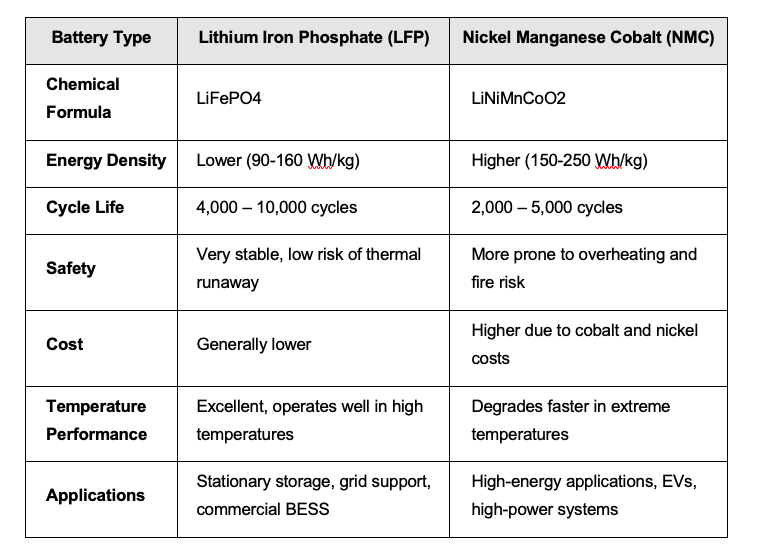
Credit: sinovoltaics.com
Frequently Asked Questions
What Is The Main Difference Between Nmc And Lfp Batteries?
NMC batteries use nickel, manganese, and cobalt for high energy. LFP batteries use lithium iron phosphate, offering longer life but lower energy.
Which Battery Type Lasts Longer, Nmc Or Lfp?
LFP batteries generally last longer due to their stable chemistry. NMC batteries have shorter life but higher energy density.
Are Nmc Batteries Safer Than Lfp Batteries?
LFP batteries are safer because they are more stable and less likely to catch fire. NMC batteries can overheat under stress.
Which Battery Has Better Energy Density, Nmc Or Lfp?
NMC batteries have higher energy density, meaning they store more power in less space. LFP batteries hold less energy per volume.
What Applications Suit Nmc Batteries Best?
NMC batteries are ideal for electric vehicles and devices needing high energy. They provide strong performance and lighter weight.
Where Are Lfp Batteries Commonly Used?
LFP batteries are popular in stationary storage and electric buses. Their long life and safety make them great for heavy use.
How Do Charging Times Compare Between Nmc And Lfp Batteries?
NMC batteries usually charge faster but may degrade quicker. LFP batteries charge slower but maintain capacity longer.
Conclusion
NMC and LFP batteries each have clear strengths and weaknesses. NMC offers higher energy but costs more. LFP is safer and lasts longer but stores less power. Choosing depends on your needs and budget. Think about what matters most: power, price, or safety.
Both types continue to improve with new technology. Understanding these differences helps you make a smart choice. The best battery fits your lifestyle and goals.