
The most common reason for an lg dryer d95 code is a restricted exhaust vent that prevents hot air from leaving the machine. This isn’t an immediate emergency, but you should stop using the dryer to avoid overheating or a potential fire hazard. To confirm this, detach the vent hose from the back of the machine and run a short cycle; if the code disappears, your home venting system is blocked. This check takes under five minutes and identifies whether the problem is inside the appliance or within your house walls.
What the dryer code means
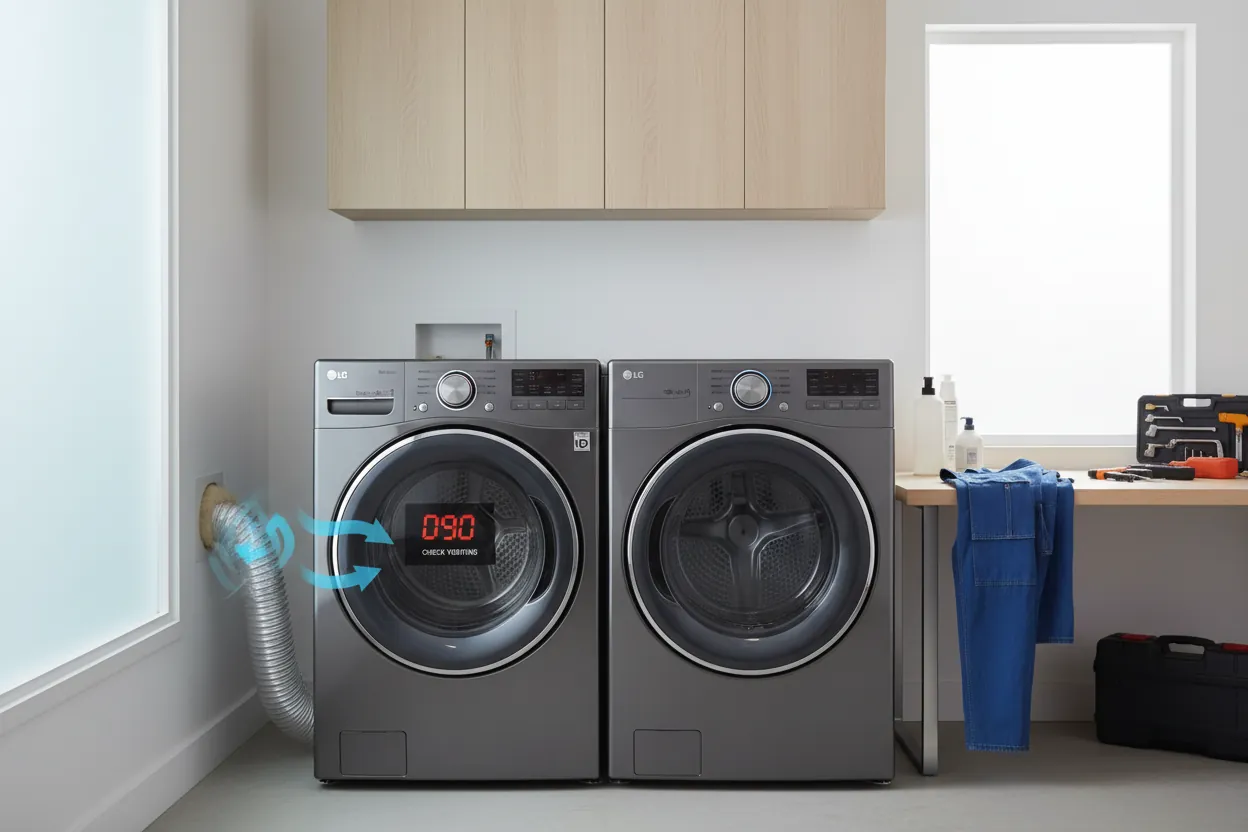
When this display appears, it tells you that the internal sensors detect poor airflow. The machine can’t remove moisture efficiently, which forces the heater to run longer than necessary. This increases your energy costs and wears out the internal components faster.
| What you notice | What it usually means | What to do first |
|---|---|---|
| D95 code flashes | Airflow is restricted | Clear the exhaust duct |
| Clothes stay damp | Airflow is blocked | Clean the lint filter |
| Dryer feels hot | Poor heat dissipation | Inspect external vent hood |
| Long drying times | Clogged vent hose | Vacuum the hose path |
| Burning smell | Lint buildup inside | Stop use immediately |
| D80 or D90 code | Vent is partially blocked | Check for crushed hose |
If your dryer is relatively new, the error often stems from a kinked transition hose behind the unit. Push the dryer back too forcefully, and you’ll collapse the flexible ductwork, creating an instant bottleneck. Check the space behind the machine before calling a technician.
If you live in a home built before 1990, your vent path likely contains multiple 90-degree elbows. If you see these codes frequently, replace the standard flexible hose with a rigid metal duct.
Most people mistakenly believe cleaning the lint trap is enough. However, if the dryer still runs long cycles after a trap cleaning, the blockage is in the wall, not the machine. If the exterior hood flap doesn’t lift when the dryer is running, the obstruction is severe. You must disconnect the hose and clear the line from the outside in.
Restricted home exhaust venting
The D95 error indicates that the air pressure inside your dryer has reached a critical limit because the exhaust path is nearly closed. This usually happens because lint has built up in the rigid or flexible ducting that connects your dryer to the outside of your home.
If the vent cap on your exterior wall is covered in lint or debris, the air has nowhere to go. You can confirm this by feeling for strong airflow at the outside exit point while the machine runs.
If you feel little to no air, the blockage is in the wall or the hose. To fix this, disconnect the flexible hose from the back of the dryer and the wall. Use a vacuum or a long-handled dryer vent brush to remove lint from both ends. If the hose is made of thin, white plastic foil, replace it with rigid metal ducting, as plastic hoses are prone to sagging and kinking.
Most homeowners make the mistake of only cleaning the first few feet of the duct. If you can’t see light through the entire length of the pipe, the obstruction remains deep in the wall cavity. You must clear the full run to prevent the internal thermal fuse from blowing, which would require a costly service call.
If your vent run exceeds 25 feet or contains more than two 90-degree elbows, the dryer will struggle to push air regardless of cleanliness. In these cases, install a secondary booster fan to maintain proper velocity. Once the path is clear, the error will clear itself after the next successful cycle.
Clogged internal lint filter
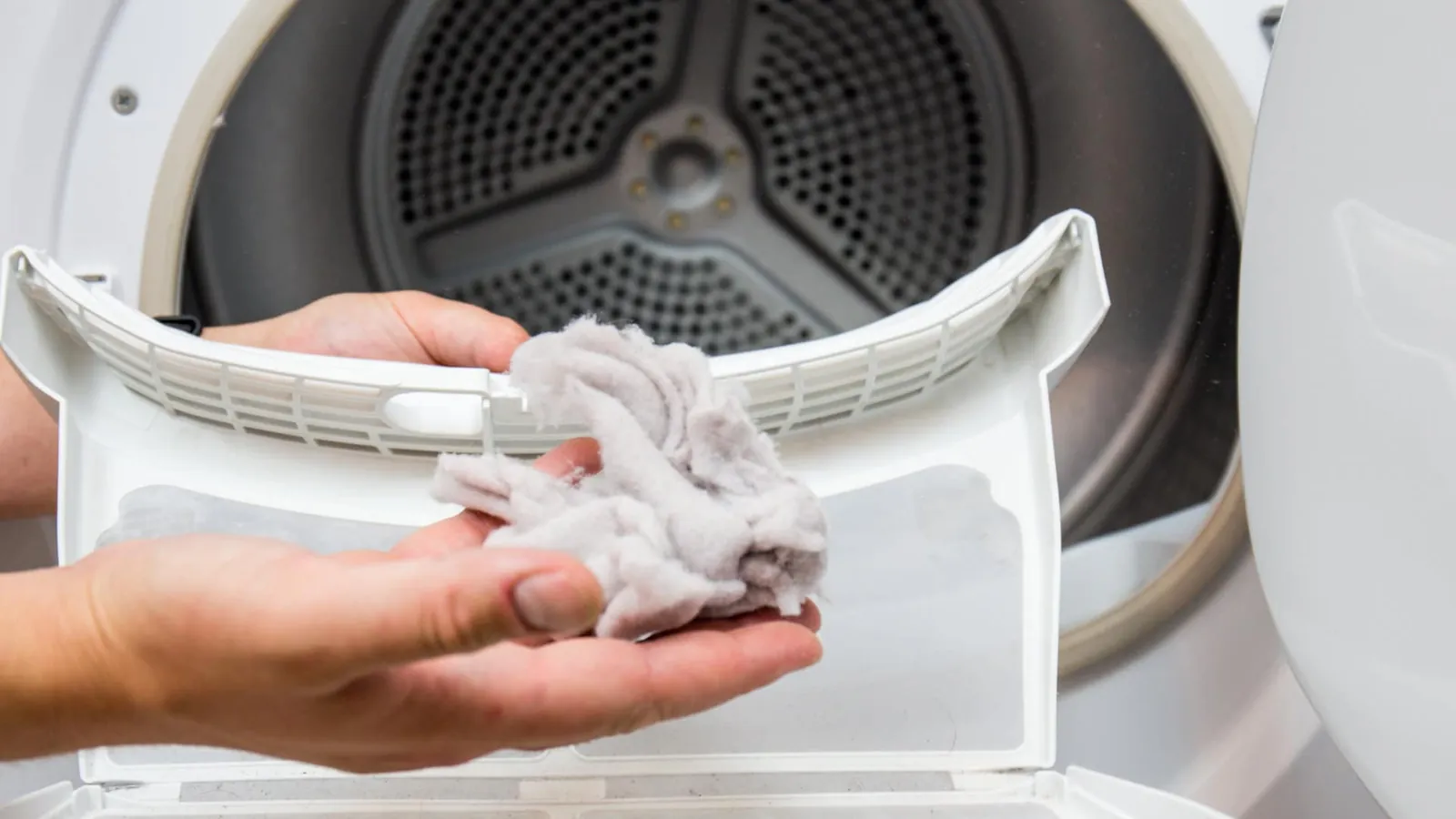
A very dirty lint screen can trigger airflow warnings because it acts as a primary filter for the entire system. If the mesh is coated with a thick layer of fabric softener residue or lint, the air can’t pass through the drum correctly. You can tell this is the cause if the D95 code appears even when the external vent hose is completely disconnected.
Wash the lint screen with warm water and a soft brush to remove invisible buildup from dryer sheets. If the water beads up on the mesh instead of passing through, the screen is still too dirty to use. After cleaning, let the filter air-dry completely before sliding it back into the slot.
Most owners make the mistake of only wiping the lint away with their fingers. If you notice your clothes are still damp after a full cycle, perform the water test immediately. If the screen is clean and the error persists, the restriction is definitely in your home’s exterior ducting.
This is a simple fix that costs nothing, but failing to do it will eventually cause the machine to shut down to protect the heating element. A blown thermal fuse is the common result of ignoring this warning, which often requires a professional repair call to resolve.
Damaged or crushed vent hose
Sometimes the vent hose behind the machine becomes crushed against the wall, which restricts airflow even if the pipe itself is clean. This happens if the dryer is pushed too close to the wall, causing the flexible hose to fold or kink sharply. You can identify this by pulling the dryer forward 12 inches and inspecting the hose for visible bends or flattened sections.
If you find a kink, straighten the hose and ensure it has a gentle, sweeping curve rather than a sharp angle. If the hose is crushed, replace it with a new section of rigid or semi-rigid metal ducting.
A common mistake is using a soft, plastic-foil hose that collapses under its own weight. This material is a fire hazard and lacks the structural integrity to maintain an open airway. If your vent run exceeds 10 feet or contains more than two 90-degree elbows, switch to rigid aluminum pipe to prevent sagging.
This issue differs from a lint clog because the restriction is physical and permanent until the hose is repositioned. If you hear a thumping sound or notice the dryer exterior feels excessively hot to the touch, check for these kinks immediately. A restricted vent causes the dryer to overheat, which can cause the thermal fuse to blow. Always ensure the hose isn’t held in place by heavy furniture that compresses it over time.
When to stop and get help
You should stop trying to fix the dryer yourself if you encounter these specific conditions that require professional tools or specialized knowledge:
- The error persists after you have fully cleaned the exterior vent duct and the internal lint screen.
- You smell burning plastic or see smoke coming from the machine during a cycle.
- The dryer makes loud grinding or squealing noises that suggest a failing blower motor.
- You find that the vent ducting is located inside a wall or ceiling where you can’t reach it for cleaning.
If you reach these points, contact a licensed appliance technician. A blower motor or internal sensor repair involves electrical components that carry a risk of shock. Never attempt to disassemble the dryer cabinet yourself, as internal capacitors can hold a lethal electric charge even when the unit is unplugged.
Most novices make the mistake of assuming a simple reset button will resolve a thermal fuse failure. If the dryer runs for ten minutes and then shuts off completely, don’t keep pressing the start button. This often indicates a restricted vent that causes the thermal fuse to blow repeatedly.
Replacing the fuse without clearing the blockage wastes money and invites a house fire. If the dryer is cold to the touch but the timer advances, call a pro to test the heating element circuit.
Related guides
- Best Compact Dryer for Small Apartments in 2026
- Best Dryer Under 600: Top 10 Picks for Every Need in 2026
- 10 Best Vented Gas Heaters for Safe and Efficient Heating
Frequently asked questions
Can I keep using my dryer with a D95 code?
No, it isn’t safe to use your dryer while this code is active. The D95 warning means the machine is struggling to push air out, which causes the internal temperature to climb to dangerous levels. Continuing to run it risks overheating the heating element and increases the chance of a fire starting in your ductwork. You should resolve the airflow restriction before running another load of laundry.
How do I know if my vent is too long?
Your vent is likely too long if the total length from the dryer to the exterior wall exceeds 20 feet or has more than two 90-degree elbows. Each turn adds significant resistance to the airflow, making it harder for the dryer to push lint out. If your home has a long or complex vent path, you must clean it more often to prevent the D95 error from returning frequently.
How often should I clean the dryer vent?
You should clean the external dryer vent based on your specific usage, as outlined in the owner’s manual, to ensure safe operation. If you do many loads of laundry each week or have a large family, you may need to clean it more frequently. A simple way to track this is to check the exterior vent hood every time you change the seasons; if you see lint accumulating, it’s time to clean.
Is it safe to use a vacuum to clean the vent?
Yes, a household vacuum is safe and effective for cleaning the first few feet of your vent hose. Use the hose attachment to suck out loose lint from the back of the dryer and the exterior vent opening. However, a vacuum can’t reach deep into long wall ducts, so you should use a specialized dryer vent cleaning brush kit for those sections to ensure the entire path is clear.
What happens if I ignore the D95 code?
Ignoring the code will eventually lead to the dryer shutting down its heater to prevent a fire. You’ll notice that your clothes stay wet for much longer, or they may not dry at all even after multiple cycles. Over time, the extra heat and strain will cause the blower motor to fail or the thermal fuse to blow, which requires a professional repair.
Does the type of vent hose matter?
Yes, the material of your vent hose significantly impacts airflow and safety. Always use rigid or semi-rigid metal ducting, as these materials have smooth interiors that resist lint buildup and don’t collapse. Never use flexible white plastic or thin foil hoses, as they’re highly flammable and easily crushed. A smooth metal pipe provides the least resistance and helps the dryer run at its peak performance.
Conclusion
If the error persists after you’ve cleared the blockage, it’s time to call a professional technician. They’ll be able to inspect the internal sensors and heating elements to ensure everything’s working safely. Don’t ignore these warnings, as they’re designed to keep your home protected while you’re doing your laundry.
