
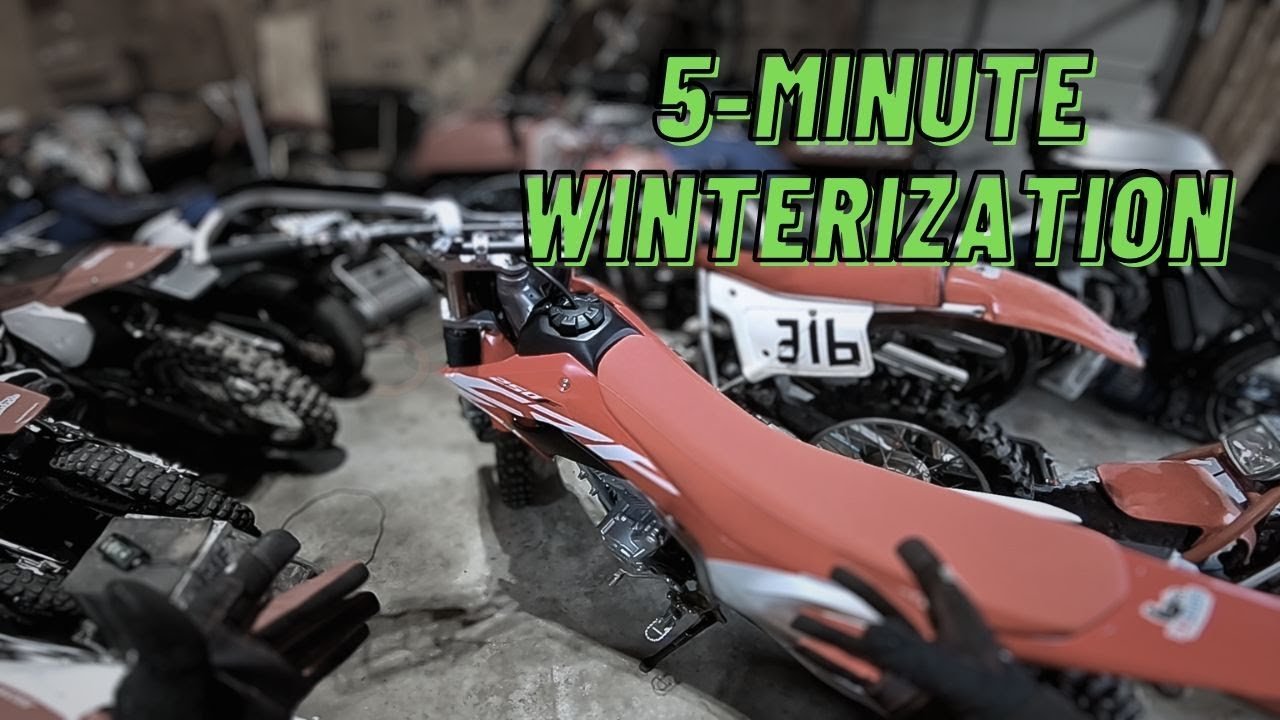
Learning how to winterize a dirt bike takes about two to three hours, costs very little for basic fluids, and ranks as medium difficulty because you’ll handle fuel and electrical parts. This job protects your engine, seals, and carburetor from costly cold-weather corrosion. Before starting, you must have a sturdy bike stand that lifts both wheels off the ground completely.
Tools to winterize your dirt bike
| Item | How much | Why it’s needed | A substitute |
|---|---|---|---|
| Fuel stabilizer | 1 to 2 ounces | Prevents stale gas and varnish | none — don’t swap this |
| Fresh engine oil | 1 quart bottle | Coats transmission gears and clutch | none — don’t swap this |
| Oil filter | 1 new filter | Traps winter contaminants cleanly | none — don’t swap this |
| Fogging oil spray | 1 aerosol can | Protects cylinder walls from rust | 10 ml clean engine oil |
| Chain lubricant | 1 spray can | Prevents surface rust on links | dedicated gear oil coating |
| Exhaust plug | 1 rubber bung | Keeps moisture and mice out | clean rag sealed with tape |
| Smart battery maintainer | 1 unit | Keeps lead or lithium charged | none — don’t swap this |
Before you start
- Wash off all caked mud, chain grit, and grease, then run the engine for three minutes so water evaporates completely from hidden engine cases.
- Park the machine in a dry, ventilated work area away from pilot lights or open flames before handling gasoline.
- This guide isn’t for water-cooled snow-bike conversions or machines stored outdoors in open rain.
- If you discover cracked fuel lines or leaking fork seals during your wash, stop and order replacement parts rather than storing damaged rubber over winter.
- Never drain hot coolant into open floor drains; take toxic fluids to a licensed hazardous waste drop-off.
Step by step
- Fill the fuel tank to 95 percent capacity, add fuel stabilizer based on the bottle’s label, and run the engine for five minutes so treated gas reaches the carburetor bowl.
- Turn the fuel petcock to the off position, place a catch tray underneath, loosen the carburetor bowl drain screw, and let all trapped gas empty out.
- Drain the warm engine oil completely into a pan for ten minutes, remove the old filter, and screw on a fresh filter hand-tight.
- Pour the exact volume of fresh motor oil listed in your owner’s manual into the filler hole, then tighten the filler cap securely.
- Pull the spark plug cap off, remove the plug with a socket wrench, and spray fogging oil directly into the spark plug hole for three seconds.
- Kick the starter lever over gently three times with the kill switch held down to spread the oil across the cylinder wall, then torque the spark plug back in.
- Clean the drive chain with a stiff nylon brush, wipe it dry with a shop rag, and coat every link thoroughly with dedicated chain lube.
- Unhook the negative battery terminal first, disconnect the positive lead, pull the battery out, and attach it to a float charger indoors.
- Push a rubber wash plug snugly into the exhaust silencer opening so nesting rodents can’t crawl inside the pipe.
- Lift the frame onto a center stand so both tires hang free, which protects your suspension springs and prevents flat spots on the tire rubber.
How to know it worked
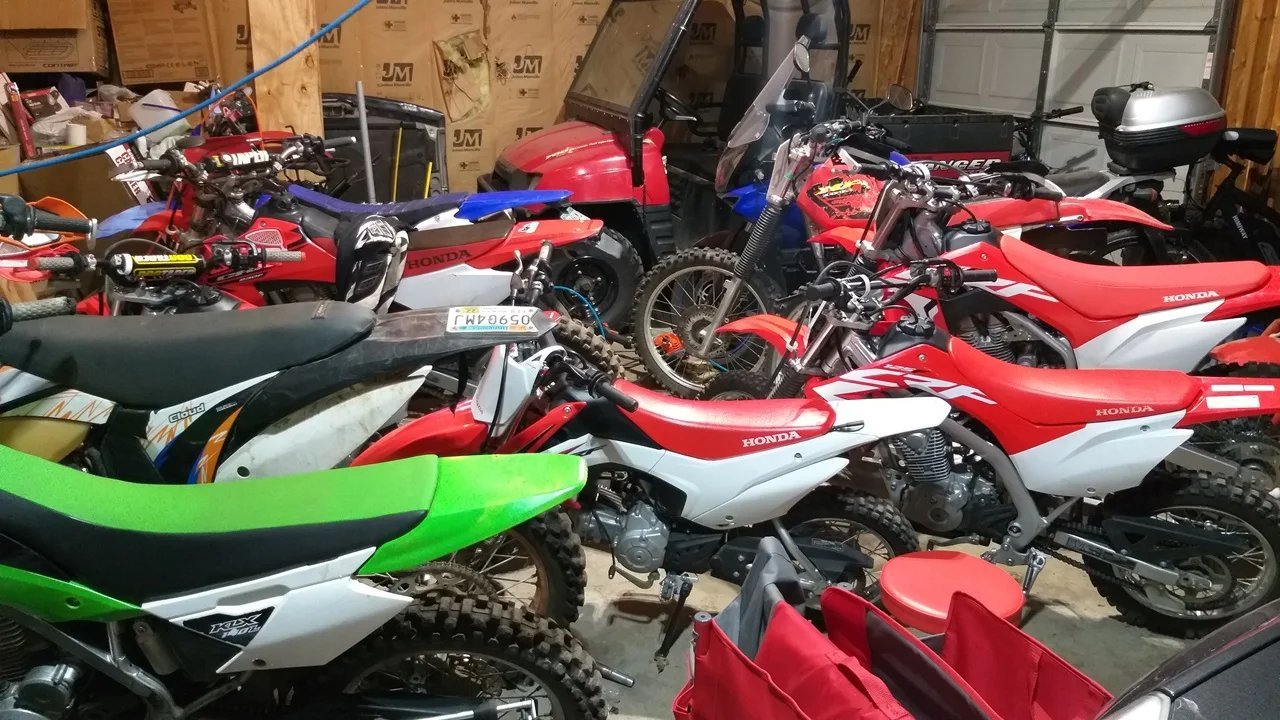
You’ll know the storage prep succeeded if the bike sits balanced with zero tire contact on the cold floor. A quick check of the carburetor drain hose should show no dripping fuel after you’ve tightened the drain screw. If your battery maintainer shows a solid green light, the charging circuit is healthy; if it flashes red or yellow, the unit needs another 12 hours or the battery has dropped below recovery voltage. The real mechanical test comes during spring startup: treated fuel and coated cylinders will fire up within three to five kicks without smoking excessively.
If something goes wrong
| What happened | Why | What to do |
|---|---|---|
| Carburetor overflows gas | Petcock valve leaked fuel past seat | Drain bowl and rebuild shutoff valve |
| Battery reads zero volts | Float charger lost wall power | Test cell with multimeter immediately |
| Chain develops red rust | Cheap lube washed away early | Clean with kerosene and re-oil |
| Kick lever feels stuck | Excess oil locked cylinder space | Remove plug and cycle kicker |
| Tires touch the floor | Center stand sank into dirt | Place thick plywood under stand |
| Mildew coats vinyl seat | Storage area lacks air circulation | Wipe clean and improve airflow |
How often to do this
Perform this full storage routine once per year right before the first freezing temperatures arrive. If you ride during winter dry spells, you must complete the wash, fuel treatment, and drying steps again after every cold outing. Leaving pump gas mixed with ethanol untouched for extended periods invites phase separation, where the ethanol-water mixture separates from the gasoline and sinks to the bottom of your tank. The trade-off is clear: spending two hours now saves you a full carburetor rebuild and battery purchase when riding season returns.
Frequently asked questions

Should you leave gas in a dirt bike over winter?
No, never leave untreated pump gas sitting inside your dirt bike over the winter. If you keep gas in the tank, add stabilizer and fill it almost full to prevent condensation; if you prefer an empty system, drain both the fuel tank and carburetor bowl completely.
Can I leave my dirt bike battery in the cold?
No, freezing temperatures will permanently degrade an uncharged motorcycle battery within weeks. Freezing weather causes discharged battery plates to sulfate quickly. Remove the battery, clean its terminals, and store it on a wooden shelf inside a climate-controlled room connected to an automatic smart float maintainer.
What happens if you don’t winterize a dirt bike?
You’ll face clogged carburetor jets, rusted cylinder walls, and a dead battery by spring. Old fuel turns to sticky varnish inside tiny passages, while moisture in the air causes bare metal rings to corrode against the cylinder liner.
Is fogging oil really necessary for 4-stroke engines?
Yes, fogging oil protects the cylinder wall and piston rings from ambient moisture while the bike sits idle. When an engine cools for months, condensation forms inside the combustion chamber; this light oil layer stops surface rust from pitting expensive metal surfaces.
Can I store my dirt bike on its side stand all winter?
No, prolonged storage on a side stand creates permanent flat spots on your tires and keeps suspension springs under uneven tension. Storing your machine on a sturdy stand keeps both wheels off the concrete and prevents flat spots on the tires.
Why does my dirt bike smoke on first start after winter?
About two minutes of white or blue smoke is completely normal during your first spring startup. The engine simply burns off the protective fogging oil you sprayed into the spark plug hole during autumn storage, and the smoke clears once the exhaust reaches normal operating temperature.
Does synthetic oil last longer during winter storage?
Yes, synthetic oil resists acidic breakdown better than conventional mineral oil while sitting inside an idle crankcase. Fresh synthetic oil contains active anti-corrosion additives that protect internal clutch plates and transmission gears from seasonal moisture, but you should still change it before storing the bike.
Final Thoughts
Once your bike is tucked away, place a breathable cover over it to keep dust and moisture at bay. You won’t regret taking these precautions when the snow finally melts. Just remember to check your tire pressure and tighten the chain before your first spring ride, and you’ll be ready to go.