
To lock a kick scooter, secure the structural metal frame or the folding joint to an immovable street post using a hardened steel U-lock. Pass the lock shackle directly through the triangle where the deck joins the steerer tube, leaving less than an inch of open room inside the shackle.
The exact spot you choose decides whether your scooter stays safe. Most thieves won’t cut thick steel in daylight; they target loose quick-release clamps or thin cable locks that snap in two seconds with small wire cutters.
A scooter has narrow, open parts that easily slide out of loose loops. This guide isn’t for plastic toy micro-scooters, which lack solid frame points and belong inside the house.
Steps to lock your kick scooter
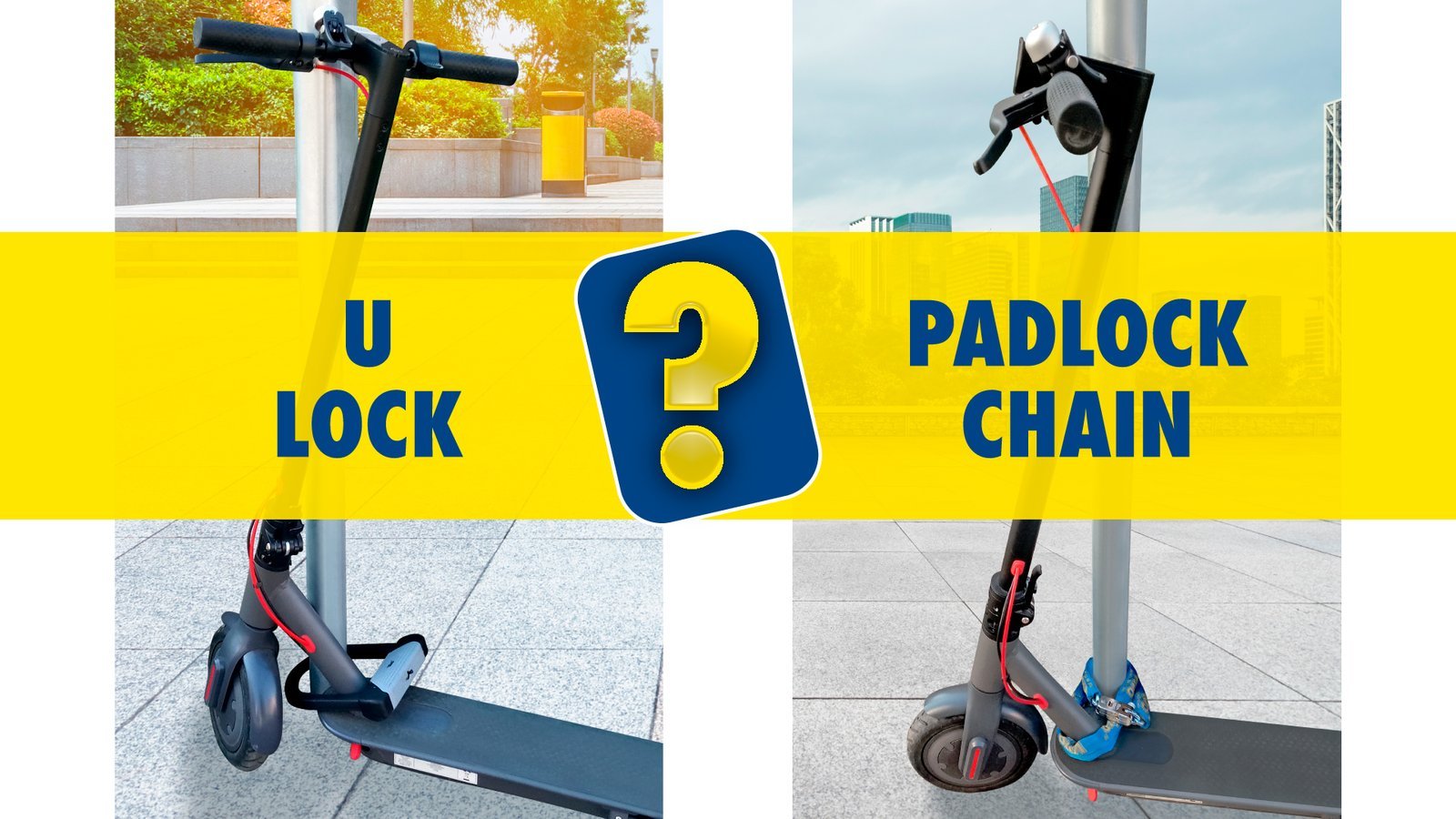
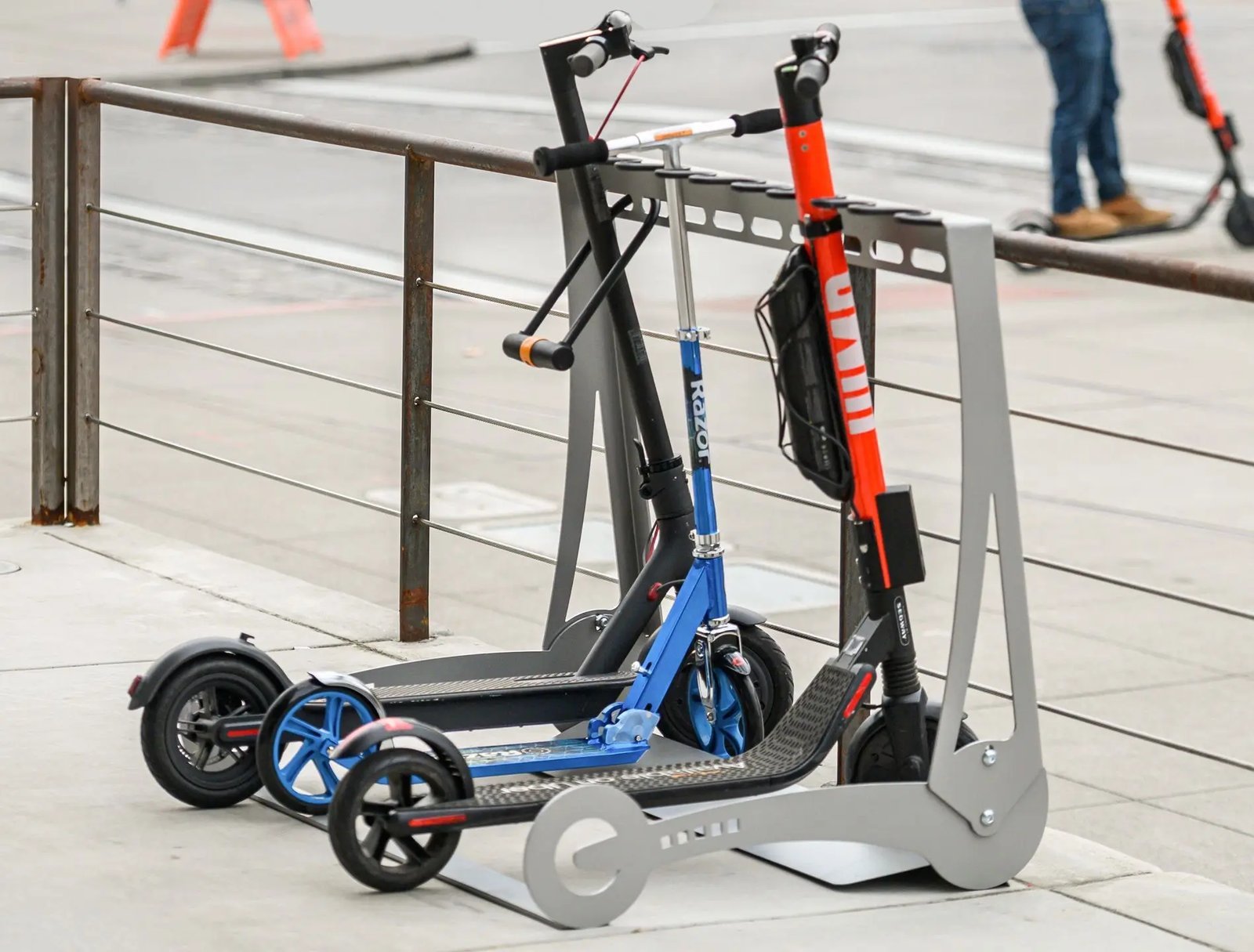
- Park the scooter directly against an anchored metal rack or cemented street post. Keep the deck parallel to the rack so the scooter can’t tip over or swing into foot traffic.
- If your scooter has a folding hinge triangle, run the shackle through that gap; if it has a solid deck joint, loop the lock tightly around the main neck stem right above the baseplate. Keep the lock body facing downward so rain can’t settle into the keyway. Tip: Never run the lock only over the handlebar stem, because a thief can unbolt the bar clamp in under two minutes and slide the lock straight off.
- Capture both the fixed street post and the structural frame inside the U-lock shackle. Position the lock at least 12 inches above the pavement to prevent thieves from using the ground as leverage for bolt cutters.
- Tighten the crossbar onto the shackle until it clicks shut, then turn the key completely.
- Thread a secondary steel cable through the front wheel spokes and hook both loops into your main lock shackle before closing it. This varies by model — check the label on your deck to see if your front fork allows clear cable access.
The Master Lock anti-theft standards recommend keeping shackles snug against anchor posts so prying tools can’t fit inside the gap.
How long it takes
Securing a scooter takes under a minute once you know your frame shape.
| Situation | How long | What changes it | What to watch for |
|---|---|---|---|
| Standard U-lock on bike rack | 30 to 45 seconds | Open space on the rack | Shackle catching brake lines |
| U-lock plus wheel cable | 60 to 90 seconds | Cable stiffness in cold weather | Loose cable ends dragging on ground |
| Chain lock on wide utility pole | 45 to 60 seconds | Pole diameter and chain weight | Chain sliding down toward the dirt |
| Disc lock on rear wheel brake | 20 to 30 seconds | Disc hole size and rotor clearance | Forgetting the lock before pushing off |
If locking takes far longer than normal, your lock shackle is likely too small for the street posts in your area.
How to tell when it’s done
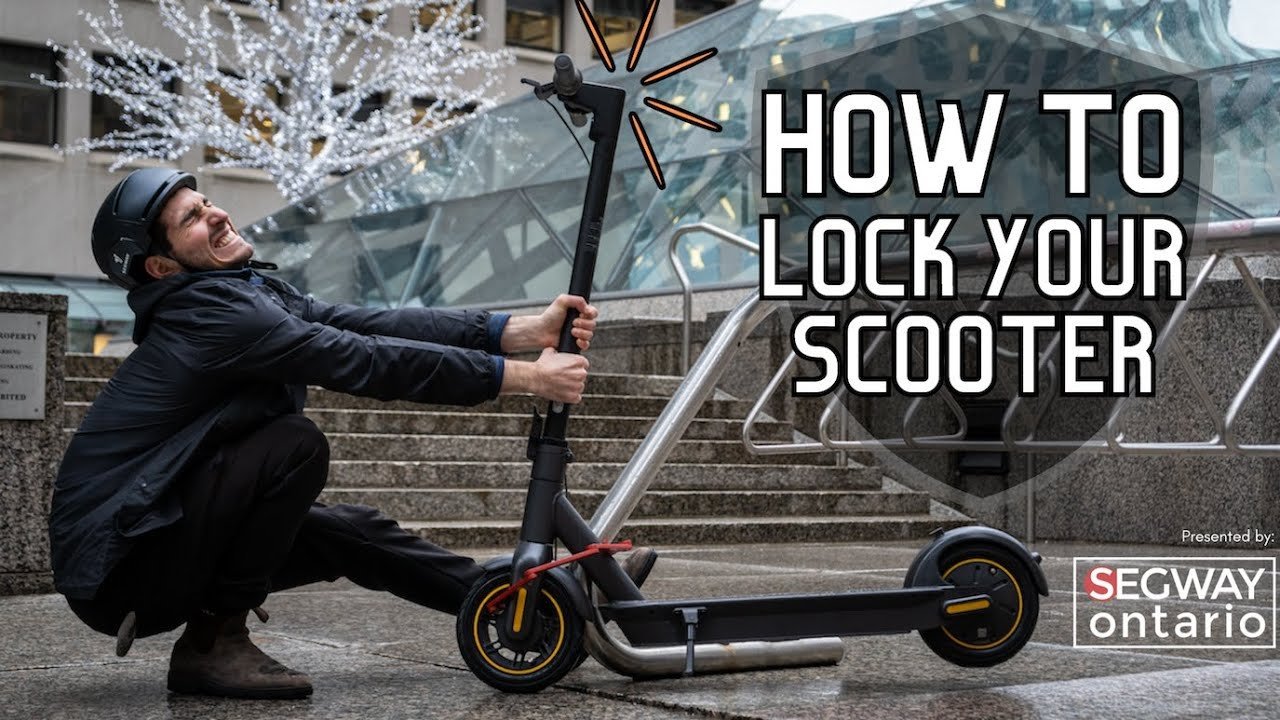
A scooter is fully secure when the main frame can’t slide out of the lock, even if parts are unbolted. You’ll hear a firm, mechanical click as the crossbar tumblers seat, and the key will turn smoothly without forceful wiggling.
Grab the handlebars and give the scooter two hard pulls in opposite directions. The scooter should move only an inch or two until the lock catches against the fixed post. If the lock slides over the top of the folding joint or slips past the front deck plate, the anchor point is invalid.
Mistakes that ruin it
- Locking only through the wheel: Thieves easily remove one wheel nut to take the entire frame, which costs you the whole scooter just to save a cheap wheel. Always secure the main neck or folding joint first.
- Using thin wire cable locks: Handheld wire snips cut thin braided cables instantly and quietly. Choose a hardened steel shackle or a heavy chain lock with links at least 8mm thick instead.
- Anchoring to short signposts: Someone can lift your locked scooter directly over an open pole that stands under seven feet tall. Check that your post has a wide sign bolted to the top or choose a closed loop.
- Leaving excessive shackle space: Empty room between the post and the frame invites hydraulic bottle jacks that pop locks open. Pick a mini U-lock size that fits tightly against the frame metal.
Frequently asked questions
Can someone steal a scooter if the wheel is locked?
Yes, someone can steal it quickly. A small wheel takes seconds to unbolt with an adjustable wrench, or a thief can simply carry the rest of the scooter away. You must pass your primary lock directly through the main structural metal frame.
Is a cable lock good enough for a kick scooter?
No, a standard cable lock isn’t enough for unattended parking. Pocket wire cutters slice braided aircraft cables without making noise. A cable works only as a secondary line to keep quick-release wheels from wandering off while a solid lock holds the frame.
Where is the strongest locking point on a scooter?
The strongest point is the welded frame joint between the standing deck and the steering tube. This solid metal neck can’t be removed without power saws that ruin the scooter’s value. Avoid using removable parts like handlebars, carry straps, or mudguards.
What should you do if the bike rack is full?
Find an anchored steel street sign or an immovable metal fence embedded in concrete. Check that the pole can’t be unbolted or lifted out of the ground. If no solid anchor exists nearby, fold the scooter and take it inside with you.
Can folding kick scooters be locked while folded?
Yes, you can lock them while folded by running your shackle through the closed triangular hinge. However, folding scooters take up very little space, so the safer trade-off is carrying the folded unit inside rather than leaving it on the street.
Final Thoughts
Always double-check that your lock is tight and doesn’t rattle against the metal frame before you walk away. If you’re leaving your ride outside for several hours, it’s a good idea to remove the display or lights too. You’ll feel much more relaxed knowing your gear is safe while you’re busy.