
To complete how to repair a veneer table top, inject standard wood glue under raised areas, press the sheet flat with a heavy weight, and clamp it for 24 hours. The main cause of loose veneer is dried animal glue or moisture breaking the bond between the thin wood skin and the core board underneath.
Why veneer tables need repair
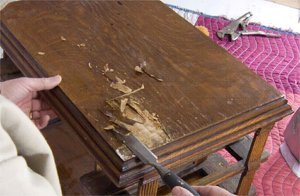 Photo: www.wwgoa.com on Google
Wood veneer is a thin sheet of real hardwood glued over a stable base like plywood or particleboard. Liquid spills soak through tiny seams, making the thin skin swell while softening older water-based glues. Dry indoor air during winter shrinks the wood, which cracks brittle bonds underneath.
Environmental shifts cause seasonal expansion. The Forest Products Laboratory wood handbook notes that wood swells or shrinks across its grain as relative humidity changes. Because the thin top skin and the thick base core expand at different rates, tension pulls the glue line apart over time. Sharp knocks or heavy objects dragged across the surface also catch fragile edges, lifting raw splinters away from the core base.
Flatten small blisters with an iron
This fix works for hollow pockets where the veneer sheet isn’t cracked or missing. Old tables often use hide glue, which melts under heat. If the blister sounds hollow when tapped, try dry heat before adding fresh adhesive; if the wood stays loose after heating, you’ll need to slit the blister and inject glue.
Place a dry cotton towel over the blister. Set a standard household iron to medium heat with the steam turned completely off. Press the warm iron over the towel for 30 to 45 seconds to re-soften the original adhesive underneath. Immediately remove the iron and press a heavy flat block or stack of books over the spot. Leave the weight in place for 60 minutes. You’ll know it worked when the blister stays flush with the rest of the table surface once cooled.
Reglue lifted edges with a clamp
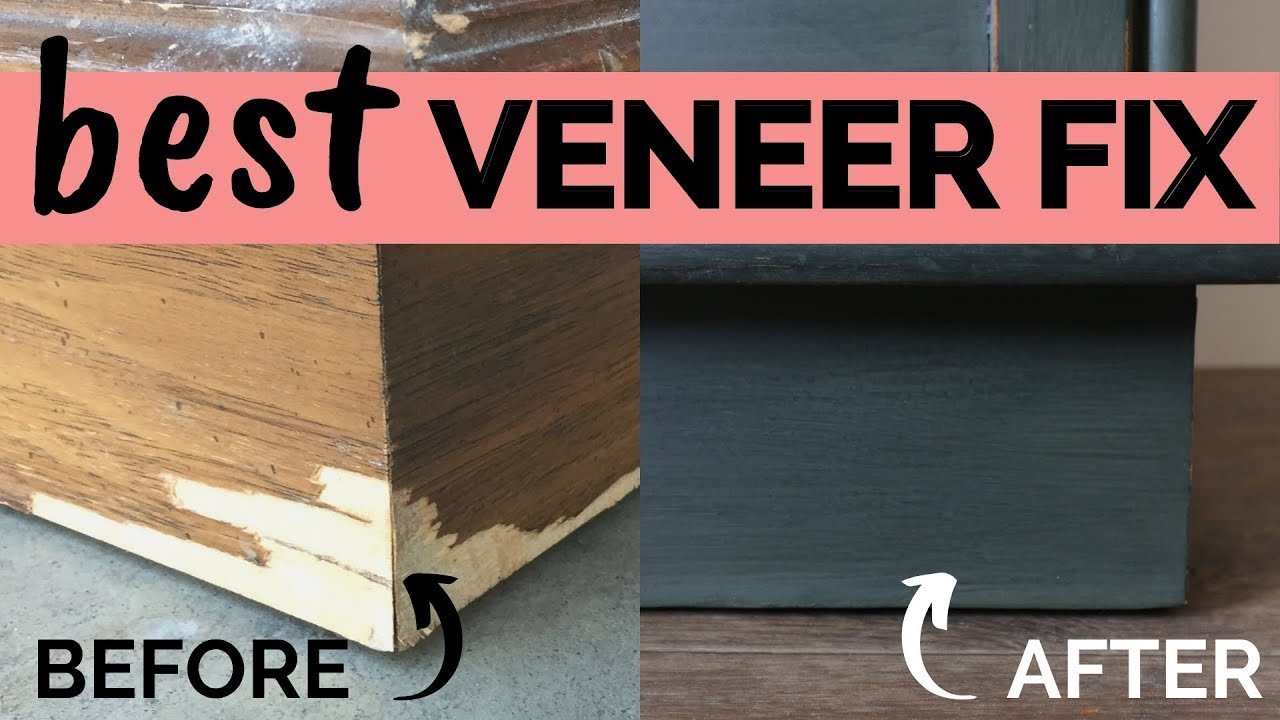 Photo: www.youtube.com on Google
This method fixes loose table borders where the thin wood layer has peeled away from the core. This isn’t for brittle, shattered edges that snap off in tiny crumbs.
Dip a thin artist’s palette knife into standard PVA wood glue, loading about one teaspoon onto the blade. Slide the knife deep beneath the lifted flap to spread an even, thin coat across both surfaces. Wipe away excess wet squeeze-out immediately with a damp rag. Put a strip of wax paper over the repair, cover it with a scrap piece of flat wood, and secure it with a C-clamp tightened firmly by hand. This pressure setting varies by model—check the label on your clamp so you don’t crush soft wood. Keep the clamp locked in place for 24 hours. The edge will feel solid, smooth, and tight when fully cured.
Patch missing sections with new grain
This method handles holes where veneer tore off completely. It takes steady hand-tool control; if the missing section covers several square inches of an antique, take it to a professional furniture conservator instead of cutting it yourself.
- Place a piece of donor veneer that matches your wood grain over the void.
- Cut an oval or diamond patch through both layers using a sharp utility knife held at a 90-degree angle.
- Clean the bare base wood using 120-grit sandpaper to scrape away ancient glue.
- Apply a half-teaspoon of wood glue directly to the patch pocket.
- Press the matching cut patch into the hole, cover with wax paper, and weight it down with 15 pounds of books for 24 hours.
The trade-off here is visual: while the patch sits flush, new raw wood rarely matches old, aged finishes without custom stain work.
What not to do
- Don’t soak the surface with water or steam, because excessive moisture warps thin veneer and permanently ruins the particleboard core underneath.
- Don’t sand raised blisters with an electric orbital sander, which easily grinds through thin veneer skin in seconds and ruins the piece.
- Avoid filling wide veneer gaps with soft silicone or caulk, because these products can’t hold wood stains and will peel off quickly.
- Don’t use super glue or hot melt adhesives on loose edges, as they dry too quickly to adjust grain alignment and leave brittle joints that fail under stress.
How to stop it happening again
 Photo: www.youtube.com on Google
Proper climate control and quick spill cleanup keep the thin wooden face glued tightly to its base core.
| If you’re doing this | Do this instead | Why |
|---|---|---|
| Placing hot coffee mugs directly on bare veneer | Put down cork or felt coasters | Heat softens glues and leaves cloudy moisture rings |
| Wiping tables with a dripping wet sponge | Clean using a damp, well-wrung microfiber cloth | Excess water penetrates seams and loosens adhesive bonds |
| Positioning tables right beside a heating vent | Keep furniture at least three feet from vents | Blasts of hot air dry out thin sheets and snap glue joints |
| Moving furniture by dragging across carpets | Lift the piece by the solid frame base | Dragging flexes the top and snaps fragile edge banding |
| Letting indoor humidity drop very low in winter | Run a room humidifier around 40% to 50% | Stable air prevents shrinkage cracks across the outer wood |
Frequently asked questions
Can you sand a veneer table top?
Yes, but hand-sand with 220-grit paper only. Electric sanders strip through veneer within seconds because the top sheet is paper-thin. A common mistake is using coarse 60-grit sandpaper, which cuts straight down to the base board and ruins the entire table.
How long does veneer glue take to dry?
PVA wood glue takes 24 hours to cure under clamp pressure. Leaving the clamps on for less than 12 hours risks the joint springing open before the adhesive bonds. Keep the weighted block stable and unmoved throughout the entire curing period for best results.
Is it safe to paint over chipped veneer?
Yes, but you must glue down all loose edges and fill deep voids first. Painting over lifted wood allows the edges to catch, snap, and peel the fresh paint right off. Prime the repaired top before applying your topcoat.
What happens if water gets under table veneer?
The wood fibers swell and break away from the core base. Within days, bubbling or peeling starts along the seams. If damp wood stays trapped under heavy finishes, mold will grow and rot the base particleboard.
Can you use contact cement to fix table veneer?
No, contact cement bonds on touch and prevents you from sliding pieces flush. Standard PVA wood glue gives you several minutes of open working time to line up grain patterns cleanly before applying pressure with your clamps.