
Are you wondering if Cal Hypo can raise your pool’s cyanuric acid (CYA) levels? Keeping the right balance of chemicals in your pool is key to clear, safe water.
But understanding how each product affects your pool can be confusing. If you’re trying to figure out whether Cal Hypo impacts your CYA, you’re in the right place. You’ll get clear answers and practical tips to help you manage your pool chemistry like a pro.
Keep reading to make sure your pool stays crystal clear all season long.
What Is Cal Hypo?
Cal Hypo is a popular chemical used to keep pools clean and safe. It helps kill bacteria and algae that grow in water. Knowing what Cal Hypo is can help pool owners maintain their pools better. This section explains its basic nature and why it is important.
Chemical Composition
Cal Hypo stands for calcium hypochlorite. It contains calcium, chlorine, and oxygen. The chlorine part is the active sanitizer. It kills germs and algae in pool water. The calcium helps keep the water balanced. This chemical is usually found as a white powder or tablet.
Common Uses In Pools
Pool owners use Cal Hypo to disinfect water. It quickly raises chlorine levels to kill harmful organisms. It also helps remove cloudy water and algae. Many use it for shock treatments after heavy pool use. It keeps pools safe and clear for swimmers.
Role Of Cyanuric Acid In Pools
Cyanuric acid (CYA) plays a key role in outdoor pool maintenance. It acts as a protector for chlorine, the main sanitizer in pool water. Without CYA, chlorine breaks down quickly under sunlight. This means the pool needs more chlorine added often. With CYA, chlorine lasts longer, keeping the water clean and safe.
Understanding how CYA works helps pool owners keep their pools balanced. Too much or too little CYA can cause problems. It affects how well chlorine works and the overall water quality. Knowing the right CYA level is important for a healthy swimming environment.
Purpose Of Cya
Cyanuric acid protects chlorine from sun damage. It forms a shield around chlorine molecules. This shield slows down chlorine’s breakdown from UV rays. This protection helps reduce the amount of chlorine needed. It also keeps the water clear and safe for swimmers. Without CYA, chlorine would lose power quickly under sunlight.
Effects On Chlorine
CYA affects chlorine’s strength and activity in the pool. It slows chlorine’s loss, but too much CYA lowers chlorine’s ability to kill germs. High CYA levels make chlorine less effective. This can lead to cloudy water or algae growth. Maintaining the right balance ensures chlorine works well. Pool owners must test and adjust CYA regularly for best results.
Cal Hypo And Cyanuric Acid Levels
Calcium hypochlorite, also known as Cal Hypo, is a popular pool sanitizer. It kills bacteria and keeps water clear. Pool owners often wonder about its effect on cyanuric acid (CYA) levels. CYA helps protect chlorine from sunlight. Understanding how Cal Hypo influences CYA is important for balanced pool care.
Maintaining the right CYA level is key for effective chlorine use. Too much or too little CYA can cause problems. Let’s explore how Cal Hypo interacts with CYA and compare it to other chlorine sources.
Does Cal Hypo Increase Cya?
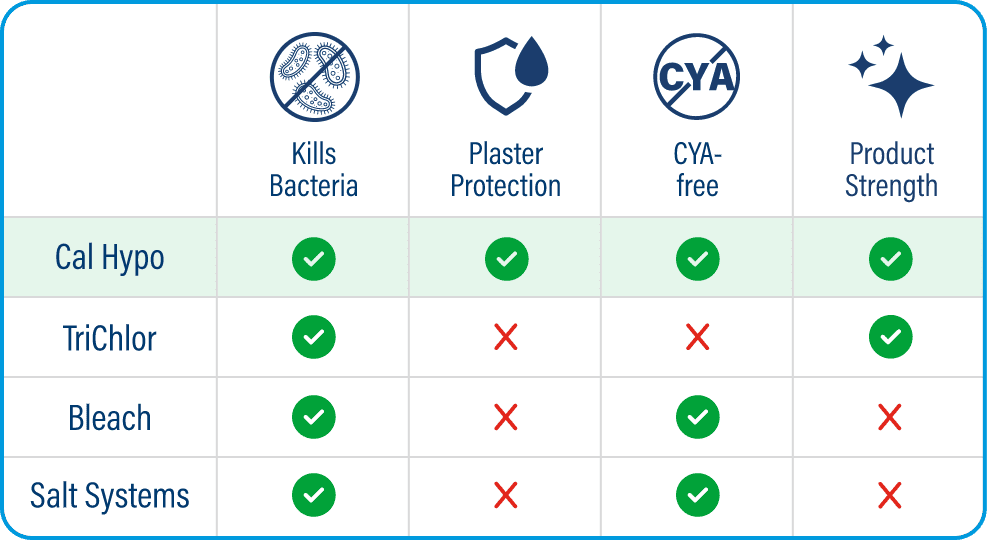
Cal Hypo does not contain cyanuric acid. It adds chlorine and calcium to pool water. Because it lacks CYA, it does not raise cyanuric acid levels. This means using Cal Hypo alone won’t increase the CYA in your pool.
Pool owners who want to raise CYA must add it separately. Stabilizers like cyanuric acid tablets or liquid products are used for that. Cal Hypo simply boosts chlorine without changing CYA concentration.
Comparing Cal Hypo To Other Chlorine Sources
Sodium dichlor is another common chlorine source. Unlike Cal Hypo, it contains cyanuric acid. Using sodium dichlor increases both chlorine and CYA levels in pools. This can lead to high CYA if not monitored carefully.
Liquid chlorine or bleach also differs. It adds chlorine but no cyanuric acid. Like Cal Hypo, these do not affect CYA levels. Choosing between chlorine types depends on your pool’s CYA needs.

Credit: www.reddit.com
Managing Cya Levels With Cal Hypo
Managing cyanuric acid (CYA) levels is crucial when using calcium hypochlorite (Cal Hypo) in pools. CYA stabilizes chlorine and protects it from sunlight. But too much CYA can reduce chlorine’s effectiveness. Understanding how Cal Hypo affects CYA helps keep water safe and clear.
Proper dosing and regular testing are key. This ensures CYA stays within the ideal range. Careful control prevents problems like algae growth or cloudy water.
Recommended Dosages
Cal Hypo adds chlorine and cyanuric acid to pool water. Each dose increases CYA slightly. Use only the amount needed to maintain chlorine levels. Avoid large, infrequent doses. Small, steady doses prevent CYA from rising too fast.
Follow product instructions for safe use. Calculate pool volume before adding Cal Hypo. This helps keep CYA levels balanced. Most pools work best with CYA between 30 and 50 ppm.
Testing And Monitoring Cya
Test CYA regularly using pool test kits. Check levels at least once a month. More often during hot, sunny weather. Record results to track changes over time.
Adjust Cal Hypo dosing based on CYA results. If CYA is too high, consider partial water replacement. Lowering CYA restores chlorine effectiveness. Consistent testing keeps pool water healthy and safe.
Potential Risks Of High Cya
High cyanuric acid (CYA) levels in pool water can cause several problems. Pool owners must watch CYA levels closely. Too much CYA affects water quality and the power of chlorine. Understanding these risks helps keep pools clean and safe.
Impact On Pool Water Quality
High CYA can make pool water cloudy. It may cause a strong smell that is not pleasant. Algae and bacteria grow faster with too much CYA. This happens because chlorine works less well. Pools with high CYA may need more cleaning and treatment.
Effect On Chlorine Efficiency
CYA protects chlorine from sunlight but reduces its strength. High CYA means chlorine takes longer to kill germs. More chlorine is needed to keep the pool safe. This can raise pool maintenance costs. Low chlorine efficiency can lead to unsafe swimming conditions.
Credit: poolife.com
Alternatives To Cal Hypo For Chlorination
Calcium hypochlorite, or Cal Hypo, is a popular choice for pool chlorination. It effectively kills germs and keeps water clean. Yet, it raises cyanuric acid (CYA) levels. High CYA can reduce chlorine’s power over time. Many pool owners want alternatives that do not increase CYA. These options help maintain balanced water chemistry and clear pools.
Non-cya Chlorine Options
Sodium hypochlorite is a liquid chlorine that does not add CYA. It works fast and is easy to use. Chlorine gas is strong and has no CYA, but needs special equipment. Lithium hypochlorite is another solid form with no cyanuric acid. These choices keep CYA levels stable while sanitizing water.
Pros And Cons Of Alternatives
Sodium hypochlorite is simple and effective. It costs more and breaks down quickly in sunlight. Chlorine gas is very powerful but can be dangerous to handle. It requires trained professionals for safety. Lithium hypochlorite dissolves well and leaves no residue. It is more expensive than Cal Hypo and less common.

Credit: www.testyourownpool.com
Frequently Asked Questions
Does Cal Hypo Increase Cyanuric Acid Levels In Pools?
Cal Hypo does raise cyanuric acid (CYA) levels because it contains stabilizer. Using it adds more CYA to the pool water over time.
How Much Cyanuric Acid Does Cal Hypo Add Per Dose?
Each dose of Cal Hypo adds a small amount of CYA, usually around 6 ppm per pound per 10,000 gallons. This varies by pool size and dose amount.
Can High Cyanuric Acid Harm Pool Water Quality?
Yes, high CYA can reduce chlorine’s effectiveness, making it harder to kill bacteria. Keeping CYA between 30-50 ppm is best for pool health.
How Often Should I Test Cyanuric Acid After Using Cal Hypo?
Test CYA levels every 2 to 4 weeks if you use Cal Hypo regularly. This helps avoid buildup and keeps chlorine working well.
Can I Lower Cyanuric Acid If Cal Hypo Raises It Too Much?
You can lower CYA by partially draining and refilling the pool with fresh water. No chemical can reduce CYA once it’s in the water.
Is Cal Hypo Better Than Other Chlorine Types For Cya Control?
Cal Hypo increases CYA, unlike liquid chlorine or bleach, which do not raise CYA. Choose chlorine type based on your CYA management plan.
What Is The Ideal Cyanuric Acid Range For Pools Using Cal Hypo?
Keep CYA between 30 and 50 ppm when using Cal Hypo to balance chlorine stability and effectiveness. Too much or too little can cause issues.
Conclusion
Cal hypo does not raise cyanuric acid (CYA) levels in your pool. It works mainly to lower chlorine and balance pH. To keep your pool water safe, test CYA regularly. Add stabilizer separately if CYA is low. This helps protect chlorine from sunlight.
Remember, managing pool chemicals carefully keeps water clear and healthy. Simple steps make pool care easier and more effective.