
Choosing the right primer for exterior wood is a balance between how much prep work you want to do and the type of finish you need. These products differ primarily in their base formulas and specific strengths, such as stain blocking, bonding to glossy surfaces, or handling damp conditions.
As an Amazon Associate, we earn from qualifying purchases. This post contains affiliate links – if you buy through them, we may earn a commission at no extra cost to you.
Best overall: Zinsser Bulls Eye 1-2-3 is a versatile water-based choice that works on many surfaces, dries quickly, and allows for application in cooler temperatures as low as 35 degrees Fahrenheit. Best for challenging surfaces: INSL-X Stix Bonding offers strong adhesion to difficult materials like PVC, fiberglass, and glossy paint, making it a reliable pick for surfaces where standard primers often fail to stick. Best for deck maintenance: Rust-Oleum RockSolid Deck provides a specialized solution for worn wood, allowing you to prime over weathered decks or fences without the need for heavy sanding or stripping.
This guide is for homeowners and DIYers who want to ensure their exterior paint jobs last longer by starting with a solid, professional-grade base.
How We Picked
We compared 48 different exterior wood primer listings to find the most capable options for various home projects. To earn a spot, a product had to clearly state its specific formula base, coverage rates, and unique application benefits, such as temperature range or surface compatibility. Products that lacked essential technical details or had vague performance descriptions were excluded from this list. We prioritized items that provide clear guidance on what they can and can’t do, ensuring that your choice is based on documented manufacturer specifications.
1. Zinsser 2001 Bulls Eye 1-2-3 All surface Primer

Best for: General home exterior projects and quick turnarounds.
This water-based primer is designed for convenience, as it seals surfaces uniformly without requiring you to sand them first. It’s particularly useful for projects where time is a factor, as it dries to the touch in just 35 minutes.
Because it can be applied in temperatures as low as 35 degrees Fahrenheit, it’s a practical choice for those working in cooler spring or autumn weather. It isn’t intended for high-heat industrial applications, so keep that in mind if your project involves extreme temperature exposure.
Pros
- The formula reaches a tack-free state quickly, even in cooler conditions.
- No sanding required
- Low-temperature application
Cons
- Not for high-heat use
- Standard coverage limits
2. INSL-X SXA11009A-04 Stix Acrylic Waterborne Bonding Primer

Best for: Difficult surfaces like PVC, fiberglass, and glossy siding.
This acrylic-urethane primer is built to stick to surfaces where most other primers would slide off. It’s excellent for tricky areas like glazed blocks or pre-coated siding, providing a stable foundation for your topcoat. Use this when you face non-porous materials like glass, aluminum, or ceramic tiles.
The low VOC formula makes cleanup easier with just soap and water. It isn’t meant for simple, porous wood jobs where a standard primer would suffice. Its specialized bonding power is best reserved for those hard-to-coat materials. If you’re painting standard drywall, choose a high-build primer instead.
Expect 75 to 100 square feet of coverage per quart. If the temperature is as low as 35 °F, this product will still fully cure. Always review the label for specific preparation tips before you begin.
Pros
- Superior surface adhesion
- Easy soap cleanup
- Low VOC formula
Cons
- Specialized for difficult surfaces
- Smaller coverage area
3. Zinsser Cover-Stain Stain-Blocking Primer
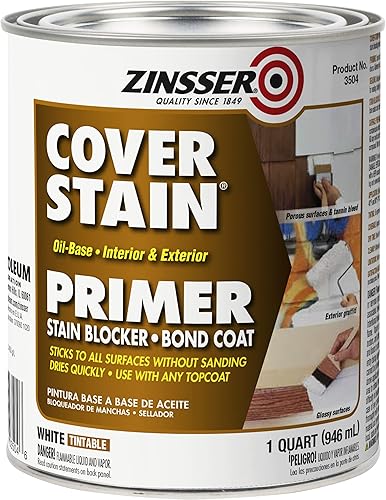
Best for: Blocking stubborn water, smoke, and nicotine stains.
As an oil-based formula, this primer excels at sealing in stains that water-based products struggle to hide. It’s highly effective for remodeling work where you must neutralize old water or nicotine damage before applying a new coat.
The oil-based chemistry allows for easy sanding, which helps you achieve a smooth finish on uneven wood. If you’re working on new construction or repainting projects, this primer provides the necessary enamel undercoating performance.
Use this product on exterior surfaces to deliver full penetration and flexibility. For interior surfaces, the formula dries quickly to keep your project moving.
Avoid this primer if you require a low-odor solution, as the oil-based chemistry carries a stronger scent than waterborne alternatives. If you prioritize environmental impact, look elsewhere.
Pros
- Excellent stain blocking
- Sands very easily
- High-hiding oil formula
- Suitable for interior and exterior use
Cons
- Stronger odor profile
- Not eco-friendly
- Requires ventilation during application
4. Zinsser Peel Stop Triple Thick Binding Primer
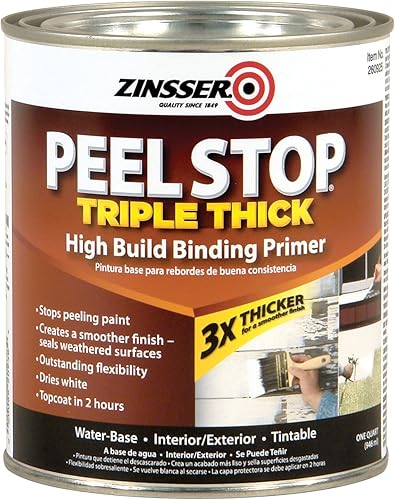
Best for: Reviving weathered or flaking exterior paint.
This primer is specifically engineered to address the frustration of peeling paint by sealing weathered surfaces. Its triple-thick formula provides the flexibility needed to hold onto surfaces that are already showing signs of age. If your siding is chalking or flaking, this product acts as a bridge to lock down loose edges before you apply a topcoat.
By creating a smooth, stable finish, it helps prevent further degradation of the underlying wood. You should apply this only when you’re repairing existing damage. It isn’t designed to be a general-purpose primer for new, bare wood. If you use it on fresh lumber, you’ll waste money and lose the adhesion benefits intended for aged surfaces.
Pros
- Stops paint peeling
- Creates smooth finish
- Highly flexible formula
Cons
- Not for new wood
- Limited multi-surface utility
5. Rust-Oleum RockSolid Deck Start Wood Primer

Best for: Weathered decks and exterior wood furniture.
This primer is a time-saver for anyone looking to restore a deck without the labor-intensive process of stripping or sanding old coatings. It features advanced chemistry that grips onto worn surfaces, providing a solid base for your topcoat. You can cover up to 450 square feet with a single coat.
The ability to apply it to damp wood is a significant advantage, allowing you to work around shifting weather conditions. If your wood is dry, you can topcoat in just one hour. If the wood is damp, wait two hours to ensure the surface is ready.
Don’t use this product under thin, transparent stains. It’s engineered specifically for solid color topcoats, paints, or stains. If you apply it under a transparent finish, the milky white application may interfere with the final look. Always check your topcoat type before starting. If you’re using a solid finish, this primer eliminates the need for manual surface preparation.
6. TotalBoat Wood Sealer Pre Varnish Primer

Best for: Marine wood projects and high-quality varnish jobs.
If you’re working on boat wood or high-end outdoor furniture, this sealer provides the necessary protection against UV rays. It penetrates deep into the grain to prevent cracking and checking, which is essential for preserving fine hardwoods like teak or mahogany.
It dries quickly and doesn’t require sanding between coats, which streamlines the finishing process. It isn’t meant for general house painting, as its specific amber-tinted formula is tailored for varnish and polyurethane topcoats.
Pros
- Provides UV protection
- Deep grain penetration
- No sanding required
Cons
- Amber color finish
- For varnish topcoats only
7. INSL-X Aqua Lock Plus 100% Acrylic Water-Based Stain Blocking Primer

Best for: A high-performance acrylic base for various topcoats.
This 100% acrylic primer is a versatile workhorse that provides excellent adhesion to a wide range of surfaces. It serves as a reliable, quick-drying base that works well under both latex and oil-based finish coatings. You can expect to cover 75 to 100 square feet per quart.
The low VOC content makes it a more pleasant product to work with on larger exterior projects. However, you must track your thermometer closely. Apply this primer only when both the surface and ambient temperature remain between 50 °F and 90 °F. If you work outside these bounds, you risk poor adhesion or improper sealing.
Because it becomes tack-free in 30 minutes and ready for a topcoat in just one hour, it’s ideal for tight schedules. Always review the product label for specific preparation tips before you begin.
Pros
- 100% acrylic formula
- Compatible with most topcoats
- Low VOC levels
Cons
- Narrow temperature range
- Standard coverage rates
8. EVOLVE Alkyd Enamel Primer (Red Oxide)

Best for: Durable protection on metal and wood.
This oil-based primer is built to withstand everyday wear and tear, making it a great choice for surfaces that face high traffic. It’s particularly effective at providing a moisture barrier, which helps protect wood and metal from environmental damage. Apply this to concrete, plaster, masonry, or hardboard when you need a resilient, long-lasting finish that resists chemicals.
Its resistance to scuffs and abrasions means it stays intact longer in demanding conditions. Use this on horizontal floors or vertical walls alike. If you need a project finished in an afternoon, look elsewhere; the oil-based nature requires significantly more time to fully set and cure. Choosing this for a quick turnaround is a common mistake that leads to soft, tacky surfaces. Use this only when you can allow the necessary time for a hard, protective cure.
Pros
- High durability finish
- Strong moisture barrier
- Scuff and abrasion resistant
Cons
- Slower drying time
- Requires oil-based cleanup
9. Zinsser Smart Prime Water-Based Primer

Best for: Projects where low odor is a priority.
This water-based primer uses proprietary resins to block stains while bonding to glossy surfaces without the need for scuff sanding. It serves as a practical middle-ground for those who want the performance of an oil-based primer but with the easier soap-and-water cleanup of a water-based product.
The dried film resists mold and mildew, making it a reliable choice for exterior wood in damp climates. If you can wipe the surface with your hand and see significant dust or pigment transfer, the surface is too chalky for this primer. In those cases, you must power wash or wire brush the substrate until the chalking is reduced to moderate levels.
Drying takes only minutes, and you can apply your topcoat in one hour. This speed makes it ideal for tight schedules. However, avoid using this on surfaces in complete disrepair. It’s engineered specifically for moderately weathered conditions rather than structural decay.
Pros
- Low odor formula
- Mold and mildew resistant
- Bonds to glossy surfaces
Cons
- Not for severe decay
- Needs moderate surface prep
10. Zinsser Bulls Eye 1-2-3 Plus Spray Primer

Best for: Small touch-ups and hard-to-reach areas.
This spray version of the popular 1-2-3 formula is incredibly convenient for spot-priming imperfections or small projects, allowing you to move on to your topcoat after a brief wait. It provides a smooth, white finish that hides flaws effectively in just one coat. Because the oil-based formula seals uniformly, you can skip the sanding step entirely on glossy or difficult surfaces.
It’s perfect for tight corners or irregular shapes where a brush or roller would be difficult to maneuver. If you’re working on drywall, concrete, wood, masonry, or metal, this primer sticks without extra prep. However, don’t attempt to cover more than 12 square feet with a single 13oz can. It’s strictly a tool for detail and repair work.
If you’re painting over oil or latex topcoats, this primer offers excellent stain blocking resistance. It dries to the touch in just 30 minutes, allowing you to move quickly to your finish coat.
Pros
- Easy spray application
- Hides imperfections quickly
- Great for tight areas
Cons
- Small coverage area
- Not for large surfaces
How to Choose in Sixty Seconds
Which type of primer should I choose for exterior wood?
Your choice depends on the condition of the wood and your desired topcoat. For new or bare wood, a high-quality acrylic or water-based primer like Zinsser Bulls Eye 1-2-3 is usually sufficient. If the wood is weathered, peeling, or has deep grain, you might prefer a specialized product like Zinsser Peel Stop or Rust-Oleum RockSolid Deck. If you’re dealing with water stains or nicotine, an oil-based primer like Zinsser Cover-Stain is the better choice for effective blocking. Always check the Environmental Protection Agency guidelines if you’re scraping old paint, as lead can be a risk in older homes.
Does the temperature at application really matter?
Yes, temperature is critical for ensuring the primer cures properly and bonds to the wood fibers. Most water-based primers require temperatures above 50 °F, though some specialized versions can be applied as low as 35 °F. Applying primer when it’s too cold or too hot can lead to poor adhesion, cracking, or a finish that never truly hardens. Always check the label for the specific temperature range, and try to avoid priming during peak humidity or direct, intense sunlight, as these factors also influence how the product dries and locks onto the surface.
Do I really need to sand the wood before priming?
While many modern primers claim to bond without sanding, this depends on the current state of your surface. If the wood is heavily coated in old, glossy, or loose paint, a light sanding will almost always improve the final result by creating a rougher surface for the primer to grip. For bare or raw wood, you may skip sanding if the surface is clean and smooth. Always remove dust, dirt, and mildew before applying any primer, as even the most advanced bonding formulas can’t stick to a layer of loose grime or surface debris.
Zinsser Bulls Eye 1-2-3 remains the most versatile pick for general exterior wood projects, while INSL-X Stix Bonding is the go-to for those exceptionally difficult surfaces where standard primers struggle. Before you start your project, take a moment to assess the current condition of your wood—if it’s peeling or heavily weathered, you’ll need a specialized solution like Zinsser Peel Stop or Rust-Oleum RockSolid Deck rather than a general-purpose product. Clear the surface of all loose debris first, and then apply your chosen primer on a day with stable weather to ensure the best possible bond for your final topcoat.
Related guides
Frequently Asked Questions
What should I do to prepare the wood surface before applying primer?
Proper preparation is the most important step for a lasting finish. You must clean the wood thoroughly with mild detergent and water to remove dirt and grease. Ensure the wood is completely dry before beginning, as trapped moisture can cause future bubbling or primer failure.
Is the simplest primer on the list enough for my project?
Zinsser Bulls Eye 1-2-3 is usually sufficient for standard projects involving new or well-maintained wood. It offers quick drying times and reliable adhesion without requiring heavy sanding. However, specialized products are necessary if your surface requires unique properties like deep penetration or heavy-duty stain blocking.
What happens if I apply primer when it’s too cold outside?
Applying primer below the manufacturer’s recommended temperature range can cause the product to fail. Low temperatures prevent resins from coalescing, resulting in a soft or brittle finish that peels easily. Always monitor surface temperatures and use products engineered for cooler conditions if necessary.
How do I know when the primer is ready for the topcoat?
Most primers provide a “recoat” time on the label, which is your best indicator for when to apply your paint or stain. You should look for the surface to be dry to the touch and free of any tackiness before proceeding. If you’re unsure, gently touch an inconspicuous spot; if the primer feels soft or pulls away, it needs more time to cure.
Conclusion
Once your surface is clean and dry, don’t rush the application process. Take your time to apply a smooth, even coat so your final paint job lasts for years. You’ll be glad you put in the extra effort when your home looks fresh and protected against the changing seasons.