
As an Amazon Associate, we earn from qualifying purchases. This post contains affiliate links – if you buy through them, we may earn a commission at no extra cost to you.
There’s no single best camping mattress for bad back — the right one depends on how you sleep, where you camp, and what kind of support your body needs most. If you need deep cushioning to ease pressure on hips and shoulders, a thick foam pad works best. If you sleep on uneven ground or in cold weather, insulation and adjustable firmness matter more. And if you’re carrying it far, weight and pack size become critical. Most buyers split between those who want maximum cushioning and those who need adaptive support with insulation. The Gaialoop Memory Foam Camping Mattress 4 gives thick, still foam comfort. The Lost Horizon Option3 4.5″ Foam offers adjustable firmness and high insulation.
1. Memory Foam Camping Mattress 4

Best for: Someone who needs thick, still foam for back pain relief
This mattress gives you 4 inches of dual-layer memory foam that doesn’t change firmness once it’s expanded. It doesn’t inflate, so there’s no risk of slow leaks or noisy valves. The foam provides cushioning for side, back, and stomach sleeping. The CertiPUR-US and OEKO-TEX certifications mean the foam and cover are tested for harmful chemicals, so there’s no off-gassing to disturb sleep.
Good if:
- You camp in a car, RV, or on a flat cot
- You prefer a quiet, stable surface without air noise
- You want a removable, machine-washable cover
Skip it if:
- You hike to your campsite — it’s too bulky and heavy
- You sleep on rocky or uneven ground without a cot
2. Lost Horizon Option3 Self-Inflating Foam Camping Mattress
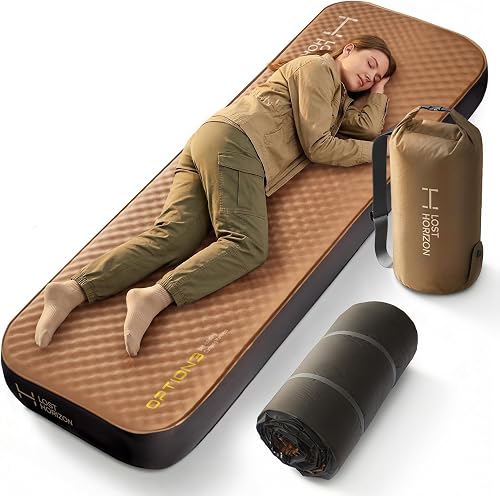
Best for: Someone who wants to adjust firmness for their back’s needs
This pad mixes foam and air so you can control how soft or firm it feels. The 4.5-inch thickness and 5.5-pound foam fill help distribute weight evenly, reducing pressure on sore spots like the lower back or hips. The R-value of 13 means it offers exceptional insulation in cold environments. The quiet foam-and-air mix avoids the crinkly sounds of air-only pads.
Good if:
- You wake up stiff and want to tweak support each night
- You camp in cold environments and need strong insulation
Skip it if:
- You hate slow deflation — it takes patience without a pump
- You need to pack light or carry it far on foot
3. Wevelel 3.1″ Memory Foam Pad

Best for: Someone who needs insulation and a self-inflating setup
At 3.1 inches thick, this pad isn’t the thickest, but its 50D-density memory foam gives strong rebound and even pressure relief. The R-value of 9.5 means it keeps warmth in without extra layers. The dual-use valve lets you deflate it quickly by squeezing air out — no mouth pumping needed. The 50D stretch-knit fabric is quiet and breathable, so it won’t trap heat or make noise when you turn over.
Good if:
- You want fast setup and easy storage
- You camp in cool weather and need good ground insulation
- You need a pad that supports up to 800 lbs
Skip it if:
- You need the deepest cushioning — it’s thinner than 4-inch pads
- You expect it to feel like a hotel mattress without time to expand
4. OGERY 3″ Memory Foam Pad

The 3-inch hybrid foam-and-air design reduces the bouncy feel of pure air pads. You can fine-tune firmness with the built-in foot pump — no extra gear needed. The foam core helps block ground cold, and the fabric is quiet and abrasion-resistant. It’s a balanced pick for car campers who want control without bulk.
Good if: – You like adjusting firmness without blowing air by mouth — the foot pump lets you add just enough air after the foam self-inflates, so you avoid both under-inflation and over-inflation – You need a non-slip bottom for use on tent floors or cots — the textured base grips even slick surfaces, so you won’t slide sideways during the night – You want quiet sleep without crinkly plastic sounds — the foam interior absorbs movement noise, unlike air-only pads that rustle with every turn
Skip it if:
– You need strong insulation for winter camping — Its insulation performance in very cold conditions isn’t stated.
– You want more than 3 inches of cushioning for severe back pain — this pad offers support, not deep cradling; if you sink too far in standard air pads, this won’t fix it
– You’re hiking long distances — at 77 x 27 x 3 inches, it’s too bulky and heavy for backpacking, even if it’s light enough for the trunk
5. Gaialoop Memory Foam Camping Mattress
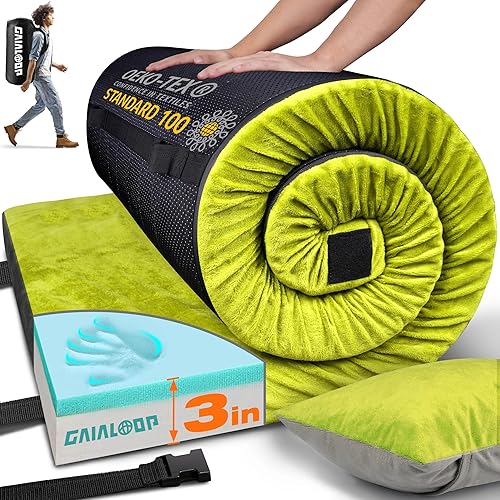
This pad uses the same CertiPUR-US and OEKO-TEX certified foam as the 4-inch model, but in a lighter, more compact roll. The waterproof coating on the cover keeps moisture out, which helps if you camp on dewy ground. The soft cover is easy to remove and clean — useful for families or frequent use.
Good if: – You want trusted safety certifications on both foam and fabric – You need a waterproof layer against ground moisture – You prefer a lighter, easier-to-store pad than the thicker model
Skip it if: – You need more than a thinner pad’s cushioning for chronic back pain – You camp on very rocky terrain without a cot or pad base
Don’t assume this pad replaces a full mattress on uneven ground — it adds comfort, not support. If you’re sleeping on roots, rocks, or steep slopes, pair it with a camping cot or thick insulating pad. It’s perfect for car campers, festival-goers, or weekend road trippers who want clean, odor-free sleep without hauling bulk. But if your spine demands deeper cradle, this thickness won’t hold up — even with memory foam. Test it on your hardest surface before trusting it on a multi-night trip.
6. Kingfun 3 Inch CertiPUR-US Memory Foam Camping Mattress Pad
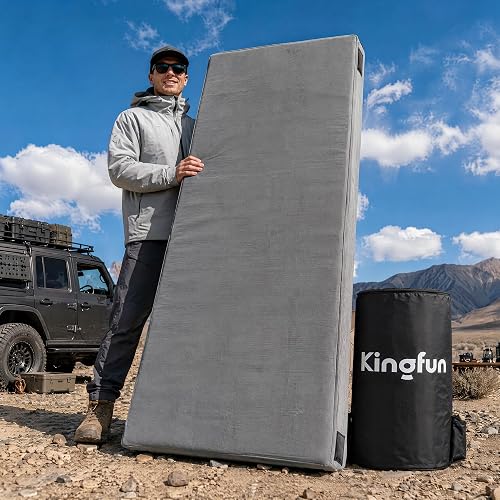
The 1-inch gel memory foam over 2 inches of support foam gives a medium-firm feel that resists sinking. The TPU-coated cover blocks rain and dew, and the non-slip bottom grips on wet surfaces. The product requires 72 hours to fully expand after unpacking. If you roll it up too soon after unpacking, the foam won’t recover its shape, and you’ll sleep on a lumpy, uneven surface.
Good if:
- You camp in wet or damp conditions and need full waterproofing
- You want a pad with Velcro corners to connect to other pads
- You need a pad safe for infants or pregnant users
Skip it if:
- You can’t wait 72 hours for it to expand fully
- You need more than a thinner pad’s cushioning for back support
Don’t assume this pad replaces a full-size mattress — it’s designed for temporary use on hard ground. If you’re sleeping on rocky terrain, pair it with a thin foam underlay to prevent bottoming out. The eight Velcro connectors let you link multiple pads, but only if all are fully expanded. Never try to connect them while still compressed — the connectors won’t align, and you’ll waste time adjusting.
7. Overmont Ultralight Camping Sleeping Pad with Pillow and Built-in Foot

Best for: Someone who hikes or backpacks and needs lightweight support
At just 1.98 lbs and packed to the size of a water bottle, this is the only pad here designed for backpacking. The 4.7-inch thickness and wave-shaped air cells lift you off uneven ground. The built-in foot pump inflates it in under a minute. The 75D fabric resists tears, and the dual-layer valve locks air in all night. It uses air-cell structure for support, not memory foam.
Good if:
- You carry your gear miles to camp
- You need a built-in pillow to save space
- You want fast setup and easy deflation
Skip it if:
- You need the deep, still cushioning of memory foam for back pain
- You sleep on hard ground without a tent floor or cot
8. Memory Foam Mattress with Pillow

Best for: Someone who wants a pillow built in and deep foam cushioning
This pad combines a deep layer of support foam with a top layer of memory foam for medium firmness. The built-in pillow removes the need to carry a separate one. The waterproof cover and non-slip bottom work well on uneven terrain. It’s a good all-in-one pick for car campers who want full-body support and no extra gear.
Good if:
- You want a pillow attached so you don’t forget it
- You need a pad that grips rocks or tree roots
- You want a removable, washable cover with full waterproofing
Skip it if:
- You’re in cold weather — its R-value isn’t stated
- You need faster expansion — it can take up to 72 hours
9. Hikenture 4″ Thick Self Inflating Sleeping Pad

Best for: Someone who wants electric inflation and high insulation
This pad uses a built-in electric pump to inflate in 90 seconds — no manual effort. The thick foam core hugs your body and blocks cold with an R-value of 9.5. The stretch-knit fabric is silent and soft. It’s a premium pick for RV or car campers who want hotel-like comfort without lifting a finger.
Good if:
- You hate manual inflation and want button-controlled setup
- You need strong insulation for year-round use
- You want a quiet, noise-free surface for shared tents
Skip it if:
- You don’t have access to power — the pump needs electricity
- You need something packable for hiking or biking
10. HomeMate Thick 4 Inch Memory Foam Camping Mattress Pad

This pad uses 40D memory foam over 30D support foam for deep cushioning. It’s certified safe and comes in six sizes — including queen — so you can match it to your vehicle or cot. The non-slip dots keep it steady on wet ground, and the waterproof cover protects the foam. The 72-hour expansion time means plan ahead.
Good if: – You need the deepest foam cushioning for chronic back pain – You want to choose a size that fits your SUV, RV, or guest room
Skip it if: – You can’t wait 72 hours for it to fully expand – You need to carry it far — it’s heavy and bulky
If you’re using it in an SUV or RV, the queen size fits snugly across the back seats without gaps. For indoor use, the twin or full sizes work as guest beds without needing extra linens. The removable cover wipes clean after muddy pets or spilled drinks — no deep scrubbing needed. But if you’re hiking more than a mile from your car, this isn’t the pad. It is not suitable for long-distance backpacking. The velcro strips let you link two pads for extra width, but only if you’re parked or settled.
Where These Overlap
Five of these pads — Memory Foam Camping Mattress 4, Hikenture 4″ Foam & Air, HomeMate 4″ Thick Memory Pad, Memory Foam Mattress with Pillow, and Lost Horizon Option3 — all offer 4 inches or more of cushioning. For car campers, choices differ by setup method and insulation needs. If you don’t mind manual inflation, the Gaialoop 4-inch and HomeMate pads give nearly identical foam comfort. If you want to avoid cold ground, Hikenture and Lost Horizon lead with their R-values. The OGERY, Wevelel, and Gaialoop 3-inch pads all use similar foam types and are close in feel — the main difference is whether you need self-inflation or a waterproof cover. The Overmont stands apart as the only true backpacking pick. If you don’t hike, its light weight doesn’t matter. If you do, the other pads here are too bulky.
Still Not Sure?
Will I use this every night or just occasionally?
If you camp often and wake up with back pain, you need deep, still foam like the Gaialoop or HomeMate models. These give consistent cushioning night after night. If you only camp a few times a year, the Overmont or OGERY offer quick setup and enough support for occasional use. Don’t buy a thick pad if you’ll rarely use it — you’ll regret the storage space it takes.
Do I already have a cot or sleeping surface?
If you sleep on a cot, most of these pads work fine — even the thinner ones like OGERY or Wevelel. But if you sleep directly on the ground, especially on rocks or roots, you need thick foam and good insulation. The Lost Horizon and Hikenture pads help here because they combine foam with high R-values. A thinner pad alone won’t lift you far enough off rough terrain.
Will I regret not having a waterproof cover or easy cleanup?
If you camp in dewy grass, near lakes, or in rain-prone areas, a waterproof cover matters. The Kingfun, Memory Foam Mattress with Pillow, and HomeMate all list full waterproof coatings. If you have kids, pets, or spill food often, a removable, washable cover is worth it — Gaialoop, OGERY, and HomeMate all offer that. If you camp in dry, clean spots, the waterproof layer adds weight and bulk as noted in the product details.
Related guides
- 5 Best Car Camping Heaters for Winter: Our Top Picks
- What Is the Best Portable Camping Oven: Our Top Pick in 2026
- Can I Make Desserts in a Camping Oven: Tips for Success in 2026
Frequently Asked Questions
What’s the best thickness for a camping mattress if I have a bad back?
Pads with thick foam are available for those seeking deeper cushioning; thinner options offer less. The Gaialoop and HomeMate models offer thick foam cushioning. Thicker foam helps prevent bottoming out, especially on uneven terrain.
Do memory foam pads work better than air mattresses for back pain?
Yes, memory foam pads usually work better because they don’t shift or leak. Air mattresses can feel bouncy and may sag in the middle, putting extra strain on your lower back. Memory foam holds its shape and spreads weight evenly. Pads like the Gaialoop and HomeMate use memory foam to reduce pressure points without the risk of sudden air loss.
How do I know if a camping mattress is safe for my skin?
Look for CertiPUR-US and OEKO-TEX certifications. These mean the foam and fabric are tested for harmful chemicals like heavy metals, formaldehyde, and phthalates. Brands like Gaialoop, OGERY, and HomeMate list these certifications. Certified materials reduce skin irritation and odor, which matters if you have sensitive skin or allergies. CertiPUR-US
Can I use a camping mattress with a bad back indoors?
Yes, many of these pads work well indoors as guest beds or floor mats. The Gaialoop, HomeMate, and Kingfun pads all mention use for guest rooms, dorms, or yoga. Their thick foam and washable covers make them practical for home use. Just remember: if you need full expansion, give it 24–72 hours after unpacking — especially in cold rooms.
Closing
For deep, sink-in comfort that cradles your hips and shoulders on rocky or uneven ground, choose the Gaialoop 4-inch memory foam mattress—it holds its shape without sinking too far, and its CertiPUR-US foam and OEKO-TEX cover stay quiet and clean after repeated use. If you sleep cold or camp in spring or winter, the Lost Horizon Option3 4.5″ is your best bet: its 5.5-pound foam core and R-value of 13 lock in heat better than any other pad here, and the air-foam hybrid lets you tweak firmness by hand. Avoid both if you’re hiking miles to your site—neither packs small enough. If you need something lighter and more portable, skip the thick foam entirely and look at the Overmont ultralight air pad instead. But if your car’s your basecamp, go thick—your spine will feel the difference when you wake up without aches.