
The process known as ignition timing is the precise moment when the spark plug fires to ignite the fuel-air mixture inside the engine cylinder. This event must occur slightly before the piston reaches the top of its stroke to ensure that the pressure from combustion pushes the piston down with maximum force.
How ignition timing works
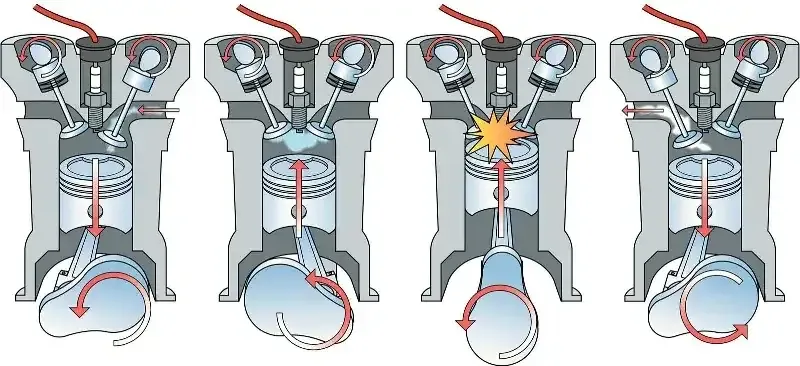
- Timing is measured in degrees of crankshaft rotation relative to the top dead center position of the piston.
- Advancing the timing means the spark fires earlier in the compression stroke, while retarding it fires the spark later.
- High-speed engine operation requires advanced timing because the mixture takes a fixed amount of time to burn.
- Detonation or “knocking” often occurs if the timing is too advanced for the fuel octane level being used.
- Modern electronic control units automatically adjust the timing based on engine load, temperature, and sensor data.
- Incorrect timing reduces fuel efficiency and can cause permanent internal engine damage if left uncorrected over time.
Why precision in combustion matters
The core purpose of adjusting the spark is to align the peak pressure of the combustion event with the most effective mechanical position of the piston. If the explosion happens too early, the rising piston fights against the expanding gases, which creates intense heat and structural stress. If it happens too late, the piston has already begun to move down, meaning the engine fails to capture the full energy of the burning fuel.
This delicate balance relies on the Society of Automotive Engineers standards for engine terminology and performance measurement. Because fuel burns at a relatively constant speed, the engine must “start” the fire sooner as the pistons move faster.
Think of it like swinging a bat at a baseball; if you wait until the ball is right in front of you, you’ll miss the contact point. You have to start your swing early so the bat meets the ball at the perfect moment.
Engineers design these systems to operate within a specific window of efficiency. If the timing is set to be too aggressive for the current fuel quality, the mixture explodes rather than burning smoothly. This creates a shockwave that can shatter piston rings or damage the head gasket. Sensors now monitor these vibrations, allowing the computer to pull the timing back instantly to protect the hardware, which is why you might hear a faint “ping” sound under heavy load.
Scenarios requiring timing adjustments
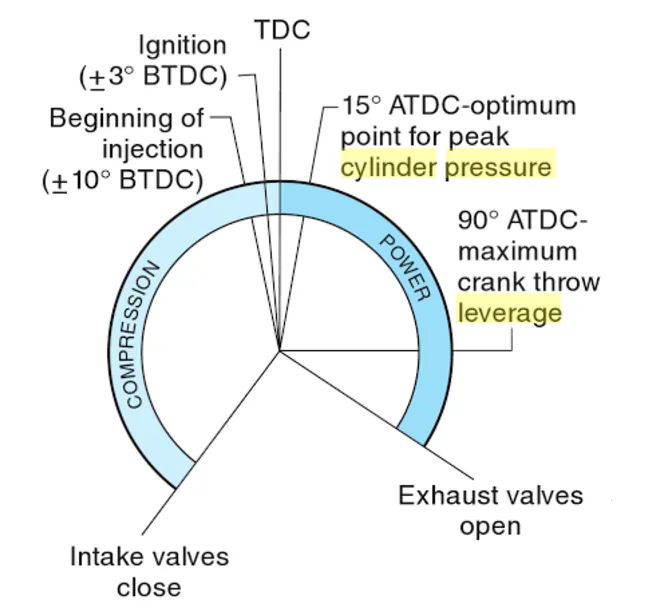
While modern cars handle this automatically, older systems or specific performance setups require manual intervention or custom tuning.
| Situation | What changes | What to do instead |
|---|---|---|
| High altitude driving | Lower air density | Advance timing slightly |
| Low octane fuel | Faster burn rate | Retard the timing |
| Heavy engine load | Increased cylinder pressure | Retard the timing |
| Racing applications | Higher RPM limits | Advance for top speed |
| Excessive engine heat | Detonation risk rises | Retard the timing |
Steps to check your vehicle timing
- Locate the timing marks on the harmonic balancer or the flywheel of your engine, which are usually small notches or lines stamped into the metal surface.
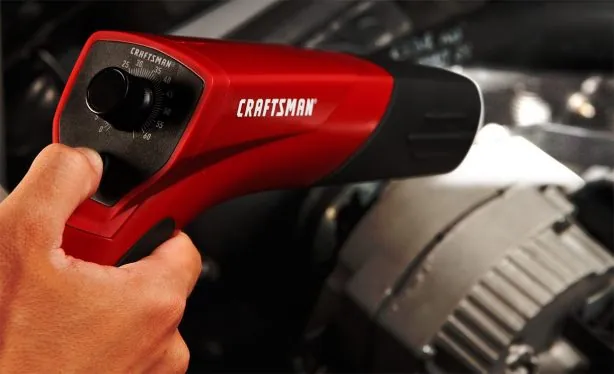
- Connect a timing light to the number one spark plug wire, ensuring the clamp is secure and the light is powered by the vehicle battery.
- Start the engine and allow it to reach its normal operating temperature, as cold idle speeds will result in an inaccurate reading on your timing light.
- Point the timing light at the indicator mark while the engine is idling, observing where the flash illuminates the position of the notch relative to the fixed scale.
- Compare the observed angle on the scale to the manufacturer’s specified degree setting, which is typically printed on a sticker in the engine bay.
- Loosen the distributor hold-down bolt slightly if adjustment is needed, rotating the housing a few degrees until the light shows the mark aligns with the correct specification.
- Tighten the hold-down bolt firmly once the target degree is reached and re-check the light to ensure the rotation didn’t shift the housing during tightening.
Mistakes that ruin engine performance
Guessing the timing setting instead of using the manufacturer’s official service manual often leads to severe engine overheating. If your engine pings under load, you’re likely too far advanced; if it lacks power, you’re likely too far retarded.
Failing to disconnect the vacuum advance line before checking the timing causes the reading to be completely incorrect. You must plug the vacuum hose with a golf tee or bolt to prevent a vacuum leak from skewing your idle speed.
Using a timing light with a weak or failing bulb makes it impossible to see the marks clearly in daylight. If you can’t see the harmonic balancer mark, use a dab of white paint or correction fluid to highlight the notch.
Over-tightening the distributor bolt can crack the housing, leading to expensive repairs. Always use a torque wrench set to the manufacturer’s specification.
Related guides
- How Homogeneous Charge Compression Ignition Works: The Process
- Can I Make Rice in a Slow Cooker? The Best Ratios and Timing in 2026
Frequently asked questions
Can I adjust the ignition timing on any car?
You can’t adjust the timing on most modern vehicles because the computer controls it through digital maps. If you drive a car built after the mid-1990s, the engine control unit manages the spark event based on sensor inputs that you can’t change without specialized software. Older vehicles with mechanical distributors allow for manual adjustments by rotating the distributor housing.
What happens if the timing is too advanced?
Advanced timing causes the fuel to ignite too early, which leads to engine knocking or pinging sounds. This happens because the pressure peak occurs while the piston is still traveling upward toward the top of the cylinder. If you hear this metallic rattling sound, you must reduce the timing immediately to prevent catastrophic damage to the pistons and connecting rods.
How do I know if my timing is off?
Poor engine performance, such as a lack of power, rough idling, or overheating, indicates the timing might be off. If the engine struggles to start or feels sluggish when you press the gas pedal, the spark is likely not occurring at the optimal moment. Check the manufacturer’s service manual for the specific degree setting for your engine and verify it with a timing light.
Is it safe to drive with incorrect timing?
Driving with incorrect timing is unsafe because it causes the engine to run hotter than intended and lose significant power. If the timing is retarded, the engine will be inefficient and waste fuel. If the timing is too advanced, the risk of internal engine failure from detonation increases, which can leave you stranded with a broken vehicle.
Does fuel octane affect ignition timing?
Higher octane fuel resists pre-ignition better than low octane fuel, allowing the engine to run more advanced timing without knocking. If your vehicle requires premium fuel, using regular gas will force the engine computer to retard the timing to protect the motor. This results in lower horsepower and worse gas mileage compared to using the recommended fuel grade.
How long does it take to check the timing?
Checking the timing typically takes 15 to 20 minutes if you have the correct timing light and access to the engine marks. You must allow the engine to warm up to operating temperature first, which accounts for most of the time. The actual adjustment process takes only a few minutes once you have verified the current reading against the manual.
What is the difference between static and dynamic timing?
Static timing refers to the spark event measured while the engine isn’t running, whereas dynamic timing is measured while the engine is actively spinning. Static timing is rarely used today because it doesn’t account for the changes in speed and load that occur during driving. Dynamic timing provides the real-world data needed to ensure the engine runs smoothly under all conditions.
Conclusion
Properly setting your engine spark timing is a balancing act between power and safety. Always consult your owner’s manual before making any changes, as the correct degree setting varies by engine model and year. When in doubt, leave the adjustments to a professional mechanic to avoid damaging your vehicle.
