
Thermal energy is the internal kinetic energy of an object’s atoms and molecules, which manifests as heat and is transferred between systems through distinct physical processes. It’s a fundamental property of matter, dictated by how rapidly particles vibrate, rotate, and collide within a substance. Understanding how this energy moves allows us to manipulate temperatures for home insulation, industrial manufacturing, and even daily cooking.
Key Takeaways
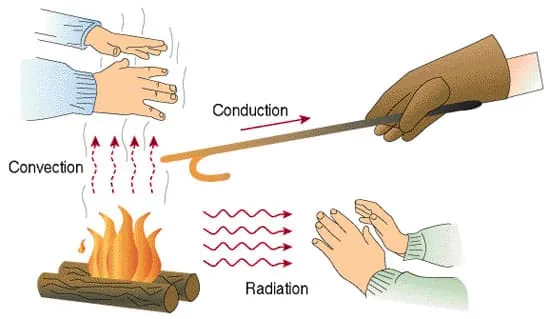
- Thermal energy naturally flows from warmer objects to cooler objects until equilibrium is reached.
- Conduction, convection, and radiation represent the three distinct mechanisms of heat transfer.
- Materials with high thermal conductivity, such as copper or aluminum, transfer energy significantly faster than insulators.
- Improving home energy efficiency often involves adding insulation to block these specific transfer pathways.
- The total thermal energy of a system depends on both the temperature and the mass of the material.
What Is Thermal Energy?
At its core, thermal energy is the sum of all microscopic kinetic energy within a substance. When you measure the temperature of an object, you’re effectively measuring the average speed of its molecules. As these particles move or vibrate faster, the object’s temperature rises, and its thermal energy increases. This isn’t to be confused with heat, which is the process of transferring energy from one body to another due to a temperature difference.
The amount of thermal energy contained in a material depends on its mass and its specific heat capacity. For example, a swimming pool filled with water at 70 degrees Fahrenheit holds far more thermal energy than a single cup of water at the same temperature because the pool contains significantly more molecules.
The Three Methods of Transfer
Heat transfer occurs through three primary physical phenomena. Each method relies on different interactions at the molecular level, and in most real-world scenarios, all three happen simultaneously to varying degrees.
Conduction: Particle-to-Particle Contact
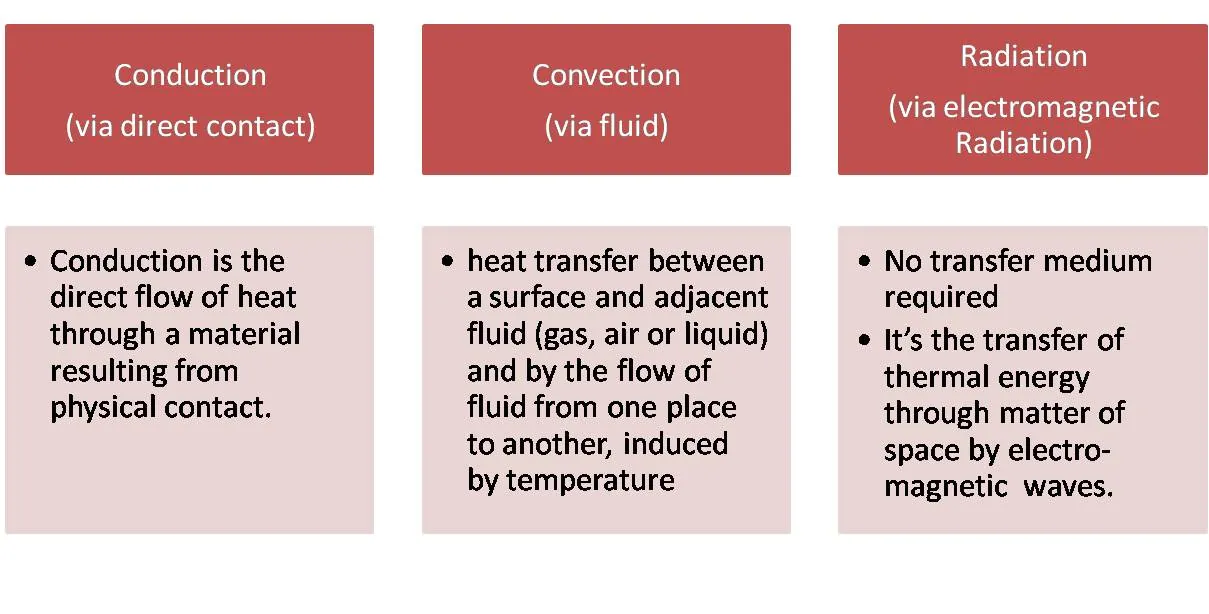
Conduction is the transfer of heat through direct physical contact. When high-energy, fast-moving particles collide with slower, cooler neighbors, they transfer some of their kinetic energy. This process occurs most efficiently in solids, where molecules are packed closely together. Metals are excellent conductors because they possess “free electrons” that can travel rapidly through the material, carrying energy far faster than simple atomic vibrations.
Convection: Moving Fluids and Gases
Convection occurs only in fluids—liquids and gases. As a fluid is heated, it typically expands and becomes less dense, causing it to rise. Cooler, denser fluid then rushes in to take its place, creating a circular flow known as a convection current. This is why a radiator heats a room: it warms the air, the air rises, and cooler air flows toward the radiator to be heated in turn.
Radiation: Electromagnetic Waves
Unlike conduction and convection, radiation doesn’t require a medium to travel. It’s the transfer of energy through electromagnetic waves, such as infrared light. Every object with a temperature above absolute zero emits some level of thermal radiation. The sun warms the Earth through radiation, crossing the vacuum of space where no molecules exist to conduct or convect heat.
| Method | Primary Medium | Mechanism | Example |
|---|---|---|---|
| Conduction | Solids | Direct contact | Touching a hot stove |
| Convection | Liquids/Gases | Fluid circulation | Boiling a pot of water |
| Radiation | Vacuum/Air | Electromagnetic waves | Sun warming your skin |
How Does Thermal Energy Move?
The movement of thermal energy is dictated by the Second Law of Thermodynamics, which dictates that energy naturally disperses. Heat will always move from a region of higher temperature to a region of lower temperature. This flow continues until the two regions reach a state of thermal equilibrium, meaning they’re at the exact same temperature.
To manage this movement, we use insulating materials to slow down the transfer process. Insulation acts as a barrier, increasing the resistance to heat flow. In your home, materials like fiberglass, cellulose, or spray foam are used to stop conduction through walls and minimize convection currents in attics or crawlspaces.
Factors Affecting Transfer Rates
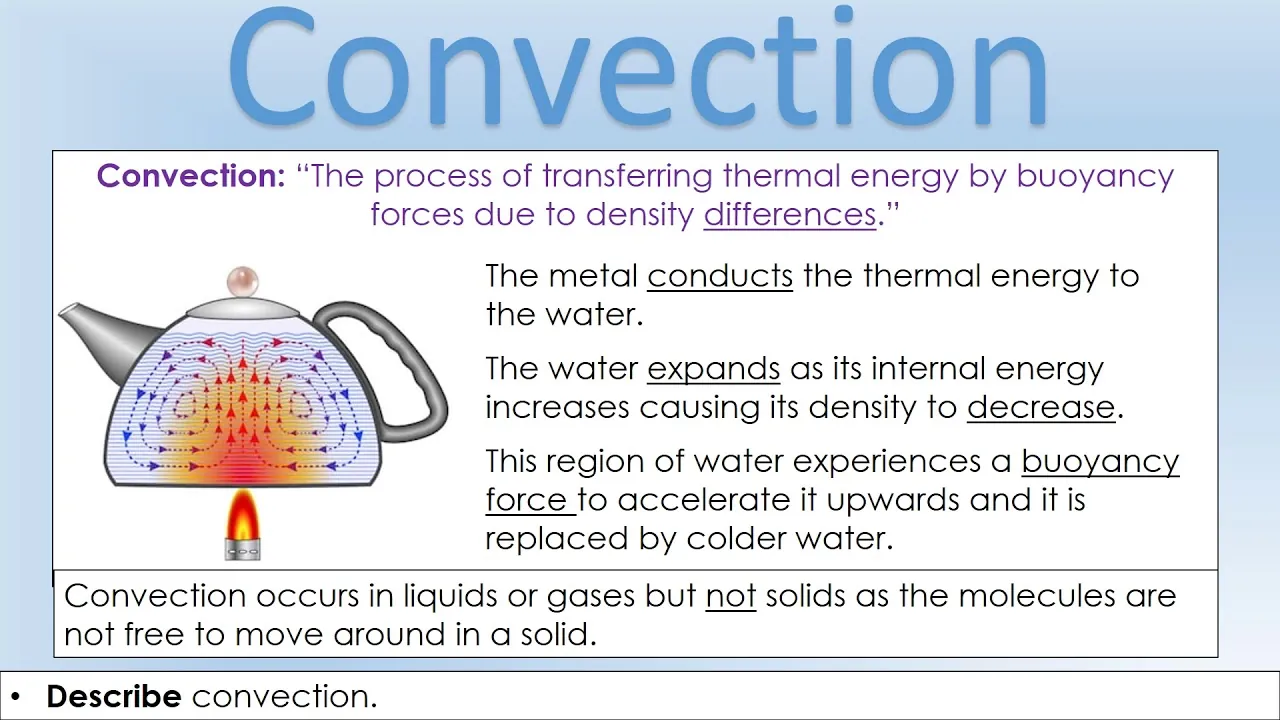
Several variables determine how quickly thermal energy moves between two points. If you want to increase the rate of transfer, you focus on high conductivity and large surface areas. If you want to prevent transfer, you minimize these factors.
- Temperature Gradient: A larger difference in temperature between two objects leads to a faster rate of heat transfer.
- Surface Area: Increasing the area of contact—such as using a radiator with many fins—significantly boosts the efficiency of convective and radiative transfer.
- Material Properties: High thermal conductivity materials allow energy to pass through almost instantly, whereas thermal insulators trap the energy.
- Thickness: Adding more material, such as thicker walls or double-pane windows, increases the distance the energy must travel, slowing the transfer rate.
Common Thermal Energy Applications
We rely on the manipulation of thermal energy for almost every aspect of modern life. Engineers design systems specifically to maximize or minimize these transfers based on the desired outcome.
Household Heating and Cooling
Home climate control is a giant exercise in managing heat transfer. In the winter, you want to keep thermal energy inside. You use insulation to stop conduction, weather stripping to stop convection (leaking air), and reflective barriers to stop radiation. In the summer, the goal is to keep the heat outside, using the same principles in reverse.
Industrial Manufacturing
Factories use thermal energy to reshape materials. Metal forging, for instance, requires heating metals to specific temperatures where they become malleable. Heat exchangers are used in power plants to move thermal energy from combustion gases into water, turning it into steam to spin turbines.
Cooking and Food Safety
Cooking is effectively the controlled application of thermal energy to change the chemical structure of food.
- Sautéing: Relies on conduction from the hot pan to the food.
- Baking: Utilizes a combination of convection (circulating hot air) and radiation from the oven walls.
- Microwaving: Uses electromagnetic waves to excite water molecules, generating internal heat rapidly.
Managing Heat in Daily Life
If you’re trying to improve the efficiency of your living space, you should focus on the pathways where heat is lost or gained most rapidly.
Warning: Never block vents or intake ports on heating and cooling appliances, as this can cause the system to overheat and pose a significant fire risk.
Pro Tip: Use reflective curtains on south-facing windows during the summer to block infrared radiation from the sun, effectively lowering your cooling demand.
| Strategy | Primary Method Targeted | Benefit |
|---|---|---|
| Double-pane windows | Conduction | Creates an insulating air gap |
| Attic insulation | Conduction/Convection | Prevents heat escape in winter |
| Reflective roof coating | Radiation | Reflects solar heat away |
| Weather stripping | Convection | Stops drafts and air leakage |
Troubleshooting Thermal Loss
If your home feels drafty or your energy bills are unexpectedly high, you’re likely dealing with uncontrolled heat transfer. Use this guide to identify the source of the issue.
- Cold Spots on Walls: This often indicates a lack of insulation or “thermal bridging,” where heat is conducting through wooden studs or metal components.
- Drafty Windows: This is a classic example of convection. Cold outdoor air is displacing warm indoor air through gaps.
- High Humidity: If your home is humid, it can feel colder or warmer than it actually is, as moisture affects the body’s ability to regulate heat through evaporation.
- Uninsulated Ducts: If your HVAC ducts run through an unconditioned attic, you’re losing massive amounts of thermal energy to the wrong space.
Frequently Asked Questions
Why does metal feel colder than wood?
Metal is a high-conductivity material. When you touch it, it rapidly draws thermal energy away from your skin through conduction. Wood is a much better insulator, so it doesn’t conduct heat away from your hand nearly as quickly. Even though both objects are at the same room temperature, the metal feels colder because it facilitates faster heat transfer away from your body.
Does thermal energy exist in space?
Yes, thermal energy exists in space, but because space is a near-perfect vacuum, there’s no matter to conduct or convect heat. Objects in space can only lose or gain thermal energy through radiation. This is why astronauts need suits that are carefully designed to manage radiative heat loss and gain, as they can’t rely on the air to regulate their body temperature.
How does a thermos keep drinks hot?
A thermos uses a double-walled construction with a vacuum between the layers. The vacuum eliminates conduction and convection because there are no molecules to carry the energy. The inner surface is usually silvered to reflect infrared radiation back into the liquid. By blocking all three methods of heat transfer, the thermos keeps the thermal energy trapped inside for many hours.
Can cold be transferred?
Technically, no. In physics, “cold” is simply the absence of thermal energy. When you feel like you’re being chilled by an ice cube, you’re actually experiencing the transfer of your body’s thermal energy into the ice cube. Heat always flows from the warmer object to the cooler one; there’s no physical mechanism for the movement of “coldness.”
Conclusion
The movement of heat is a constant, invisible force shaping our environment. By mastering the concepts of conduction, convection, and radiation, you gain the ability to better insulate your home, cook more effectively, and understand the thermodynamic processes governing the world around you. Start your next project by conducting a thermal audit of your home to identify where energy is escaping.
