
Most hardware fasteners, including the different types of screw heads head styles and drive types, are categorized by their shape and the tool required to install them. These components vary based on how they sit against the material and how they transfer torque from a driver to the fastener. While heads determine the finish and surface profile, drive types dictate the grip and potential for slippage during assembly.
Different types of screw heads and drives
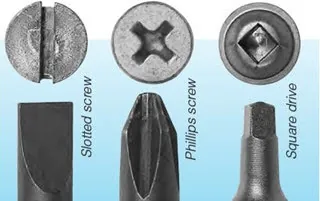
You can identify the right hardware for your project by comparing the intended use and the tool compatibility for each style.
| Style Name | Best For | Common Example |
|---|---|---|
| Flat head | Flush surface finish | Woodworking countersunk holes |
| Pan head | General purpose fastening | Sheet metal assembly |
| Phillips drive | High-volume manual work | Drywall installation |
| Torx drive | High torque applications | Automotive engine parts |
| Hex drive | Structural metal connections | Heavy machinery assembly |
| Slotted drive | Simple low-torque tasks | Antique furniture restoration |
Flat head screws
A flat head screw is designed with a countersunk profile that sits level with the surface of the material. It suits projects where a smooth finish is required, such as cabinet installation or fine woodworking.
- Provides a flush finish that prevents snagging on clothing or other materials.
- Increases surface contact area within the material to improve holding power.
- Requires a countersunk hole to prevent the wood from splitting upon entry.
You use this style when the fastener head must not protrude from the surface, such as when attaching a hinge to a door frame. If you drive it too deep, you damage the wood fibers; if you leave it too high, the surface remains uneven. For example, use a #8 flat head screw when attaching a 0.5-inch thick cabinet plate to ensure it sits perfectly level.
Pan head screws
Pan head screws feature a slightly rounded top with flat load-bearing surfaces that sit on top of the material. They suit general assembly where the fastener head doesn’t need to be hidden or flush.
- Distributes pressure over a wider area than a flat head, reducing material deformation.
- Allows for easy removal because the head remains accessible above the surface.
- Works well with thin sheet metal or plastics where countersinking isn’t possible.
These fasteners are the standard choice for general construction tasks where surface appearance is secondary to structural integrity. If the material is soft, like plastic or thin aluminum, use a lower torque setting to avoid stripping the threads. For example, attach a metal electrical cover plate using a standard pan head screw to ensure a secure hold without damaging the wall surface.
Torx drive screws

The Torx drive system uses a six-pointed star pattern to maximize torque transfer and prevent the driver from slipping out. It suits heavy-duty applications, such as deck building or automotive repair, where high force is necessary.
- Reduces cam-out, which happens when a driver slips out of the screw head.
- Allows for higher torque application without damaging the recess of the fastener.
- Extends the lifespan of both the driver bit and the screw itself.
This drive system is superior to cross-head designs for power tool use, though it requires specific bits. If you’re using a standard drill, always match the bit size to the Torx specification, which is typically marked as T15, T20, or T25 on the packaging.
Phillips drive screws
A Phillips drive features a cross-shaped recess that centers the driver automatically during installation. It suits high-volume assembly where speed is more important than extreme torque.
- Centers the bit automatically, making it ideal for one-handed operation.
- Allows the driver to cam out intentionally when the screw reaches full depth.
- Remains widely available in almost every hardware store and tool kit.
This drive is a mistake for heavy structural work because the design forces the bit out under high pressure, which can strip the head. If you use a drill, you must apply constant downward pressure to keep the bit engaged. For example, when hanging drywall, use a Phillips-head screw with a dedicated dimpler bit to set the head exactly 0.03 inches below the paper surface.
Other common fastener styles
-
Hex head screws: These feature a hexagonal top that requires a wrench or socket. They’re ideal for heavy structural steel work where maximum leverage is required.
Use a six-point socket instead of a twelve-point one on corroded bolts. The twelve-point version rounds off rusted corners under high torque. That mistake turns a simple removal into a drilling job.
-
Slotted head screws: These have a single linear slot and are used for simple, low-torque tasks. They’re often found on vintage items or electrical switch plates.
A driver tip must match the slot width exactly. One that’s too narrow chews up the surrounding metal with every turn.
-
Oval head screws: These combine a countersunk base with a rounded top. They’re used for decorative trim where a slightly raised, finished look is desired.
Drill a shallow conical recess first so the angled underside seats flush. Without that pilot chamfer, the screw tilts and splits thin hardwood stock.
Choosing the right screw for your task
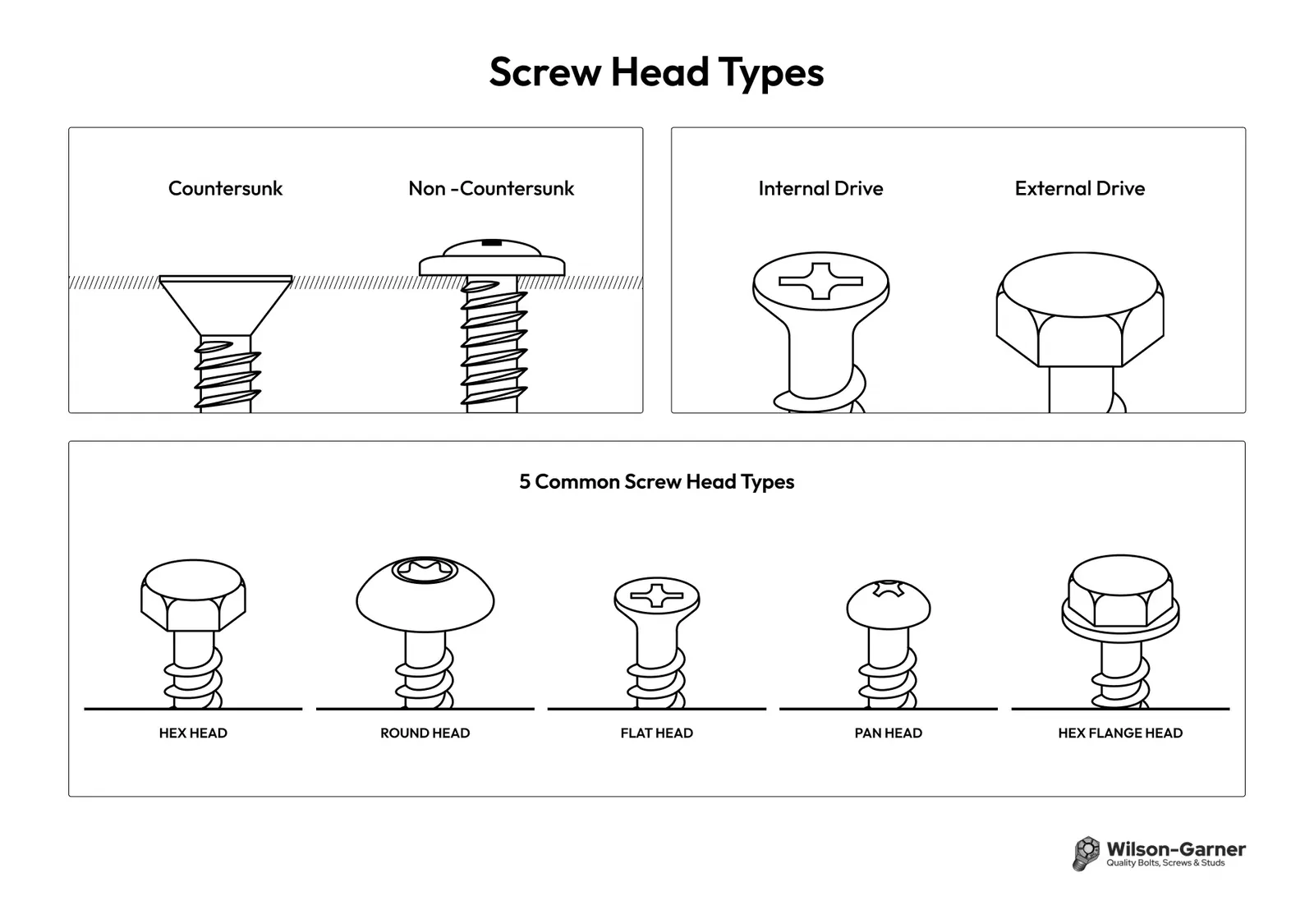
You select the appropriate hardware by matching the material density, the required finish, and the available tools. If the material is hard wood, you must choose a flat head screw to achieve a flush finish, but you must also drill a pilot hole to prevent splitting. If you’re working with metal, a pan head is better because it sits on the surface and provides a strong grip without needing a countersink.
If you have a power drill, prioritize Torx or hex drives to avoid stripping the head. If you’re working by hand or with a manual screwdriver, a Phillips or slotted drive is often easier to manage. These choices are rarely interchangeable; picking the wrong head style often leads to surface damage, while the wrong drive type leads to damaged tools and wasted time.
Related guides
Frequently asked questions
Can I use a power drill with slotted screws?
No, it’s dangerous to use a power drill with slotted screws because the driver bit slips out easily and can scratch your material. Use a manual screwdriver for these fasteners to maintain control and prevent the bit from jumping out of the slot.
How do I know which screw drive size I need?
You check the packaging or the head of the screw itself for the size designation, such as T25 for Torx or #2 for Phillips. If the markings are worn, test different bits until you find one with zero wiggle room when inserted into the recess.
Is it safe to replace a Phillips screw with a hex head?
Yes, it’s safe as long as the screw length and thread pitch match the original hardware. Ensure the head style of the replacement doesn’t interfere with the surrounding material, especially if the original was a flush-mount flat head.
Why do my screws strip when I use a drill?
Your screws strip because the drive type isn’t suited for high-speed power tools or because the bit size is incorrect. Apply firm, constant pressure toward the material and use a slower speed setting to keep the bit seated firmly within the screw recess.
How long should a screw be for my project?
A screw should be long enough to penetrate the base material by at least two-thirds of its total length. If you’re joining two pieces of wood, ensure the threaded portion reaches deep into the second piece without poking through the other side.
Does it matter if I use a zinc or stainless screw?
Yes, it matters because stainless steel resists rust in outdoor or wet environments, while zinc-plated screws are for indoor use only. Using zinc screws outside will cause them to corrode and lose their holding power within a few years of exposure.
Conclusion
Start by identifying the material thickness and the required finish of your project. If you need a flush surface, pick a flat head; if you need strength, use a Torx drive. You’ll know you have the right fit when the driver bit sits securely without wobbling. If the head begins to round off or the bit keeps jumping out, stop immediately to avoid permanent damage.
