
A disc stack centrifuge clarifies liquids by using high-speed rotation to separate fluids and solids based on their density. Inside the spinning bowl, stacked conical discs force dense particles outward while lighter liquid remains near the center. This design enables continuous separation, which makes the process efficient for high-volume industries like dairy production and oil refining.
How the disc stack centrifuge is built
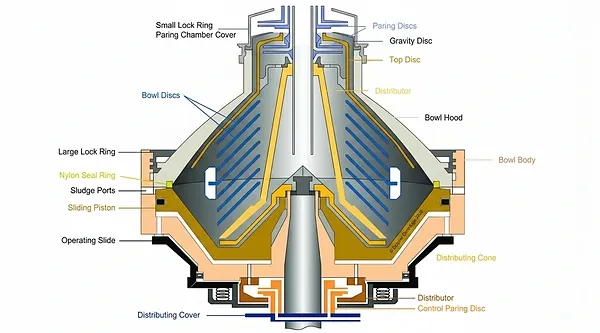
The system relies on several key parts to maintain stability and performance during operation. These components must be inspected regularly to prevent vibration or mechanical failure. If you notice abnormal noise, stop the unit immediately and check the bowl balance or feed flow rate.
| Part or input | What it does | What you notice when it goes wrong |
|---|---|---|
| Bowl | Rotates to create centrifugal force | Strong vibrations or loud grinding noise |
| Disc stack | Increases separation surface area | Poor clarity of the output liquid |
| Feed pump | Pushes liquid into the bowl | Low throughput or uneven flow rate |
| Motor | Provides rotational power | Machine fails to reach operating speed |
| Solids outlet | Removes collected heavy waste | Frequent alarms or clogged discharge ports |
Inspect the bowl assembly for microscopic cracks every 2,000 operating hours. Even minor surface pitting creates an imbalance that destroys bearings within days. If the bowl vibrates during startup, don’t attempt to “run it out” to speed. Instead, shut down and verify that the feed pump pressure matches your specific process viscosity.
Most operators mistakenly ignore the disc stack until the output clarity drops. However, if your output appears cloudy while the flow rate remains high, the stack is likely fouled with organic buildup. Clean the discs manually if chemical cleaning cycles fail to restore clarity. If you see solids accumulating in the bowl despite a clear outlet, the discharge ports are likely obstructed by solidified debris. Clear these ports immediately to prevent catastrophic bowl rupture.
Operation of the centrifuge
- The bowl begins to rotate, accelerating to its operating speed, which often exceeds 6,000 revolutions per minute depending on the specific model and bowl diameter.
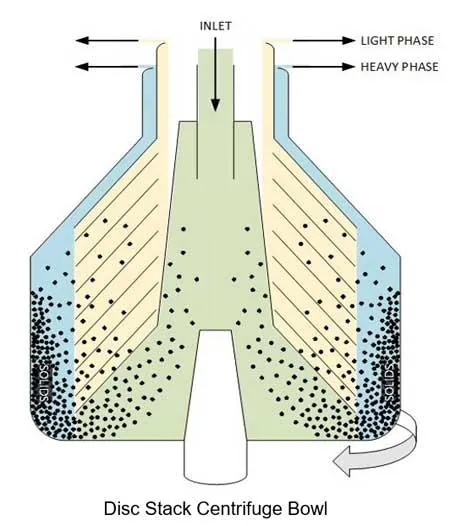
- The liquid mixture enters the center of the rotating bowl through a stationary feed pipe and flows downward toward the bottom of the disc stack.
- As the liquid moves upward through the small gaps between the conical discs, centrifugal force pushes the heavier solids toward the outer bowl wall.
- The clarified, lighter liquid continues moving toward the center of the bowl, where it’s collected by a paring disc and pumped out of the machine.
- Heavier solids accumulate at the perimeter of the bowl, where they’re periodically ejected through discharge ports or nozzles to prevent excessive buildup.
- The entire cycle runs continuously, allowing for the processing of large volumes of liquid without needing to stop the machine for manual cleaning of the bowl.
Why performance varies during use
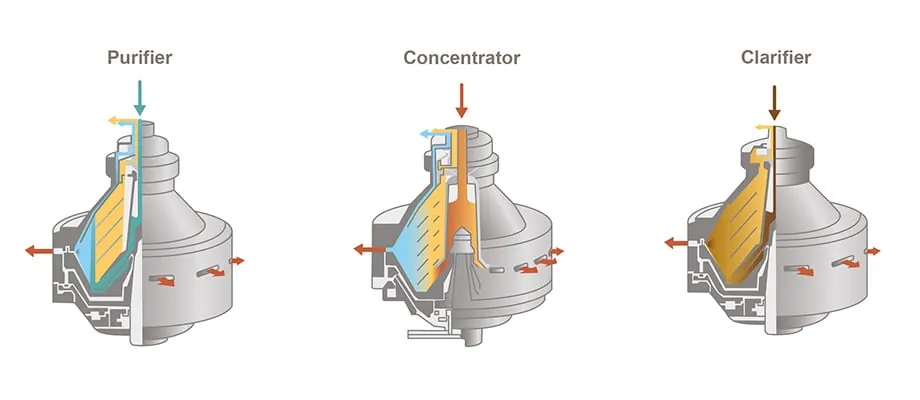
Mechanical efficiency depends heavily on the consistency of the input feed. If your liquid contains more solids than the design parameters allow, the bowl will fill too quickly, causing the discharge system to trigger prematurely. This leads to a loss of process efficiency, as the machine spends more time cycling its solids ejection mechanism rather than clarifying the liquid.
The temperature of the incoming fluid also dictates how well the system performs. Higher temperatures generally lower the viscosity of the liquid, which allows particles to move more freely toward the outer wall. If the temperature drops below the manufacturer’s recommended range, the liquid becomes too thick for the disc gaps, resulting in poor separation and “carry-over” where solids remain in the liquid output.
A common mistake is ignoring the feed rate limits specified for your model. Forcing too much liquid through the bowl at once prevents particles from having enough time to settle against the discs. This creates a turbulent flow that carries sediment through to the output, effectively defeating the purpose of the machine. Always check the data plate on your specific unit to ensure the flow rate matches the intended duty.
Controls and design limits
Things you can change
- Adjust the feed flow rate to improve separation quality.
- Modify the temperature of the input liquid to lower its viscosity.
- Change the timing of the solids discharge cycle based on solid concentration.
- Clean the disc stack regularly to prevent buildup and maintain balance.
Fixed design limits
- The maximum rotational speed is fixed by the motor and bowl design.
- The physical dimensions of the discs and bowl volume are permanent.
- Bowl materials are limited by the chemical compatibility of the processed liquid.
Operating outside these limits risks catastrophic mechanical failure or voided warranties. If the machine requires deep internal repairs, you must contact a certified technician or the manufacturer directly, as opening the high-speed bowl without proper training or tools poses a significant risk of physical injury.
Habits for better performance
Consistent performance requires regular attention to the state of the machine. You should measure the solids content in your feed at least once per shift to see if the discharge frequency needs adjustment. If the solids content rises by more than 5% over your baseline, you must decrease the feed flow rate to maintain the same level of clarity.
Check the vibration levels at the start of every production day. If the vibration exceeds the manufacturer’s threshold—often measured in millimeters per second—you should shut down the unit and inspect the bowl for uneven deposit buildup. Neglecting this check often leads to accelerated bearing wear, which can cost thousands of dollars in repairs over a single year of operation.
Finally, keep the feed pipe clear of debris that could cause uneven flow. If you notice the motor drawing more power than usual, it may indicate that the bowl is partially clogged or the paring disc is obstructed. Addressing these small issues early prevents the machine from entering an emergency shutdown state during a critical production run.
Frequently asked questions
How often should the disc stack be cleaned?
The disc stack should be cleaned whenever the inspection intervals defined in your specific equipment manual are reached, usually every 500 to 2,000 hours of operation. You can determine the exact timing for your unit by checking the accumulated running hours on the control panel or the maintenance log provided by the manufacturer.
Is it safe to operate the machine with high vibration?
It’s never safe to operate a centrifuge with high vibration, as this indicates a severe imbalance that can lead to catastrophic failure. If your vibration sensor triggers or you notice excessive shaking, you must perform an emergency stop immediately and contact a certified technician to inspect the bowl and bearings before restarting.
What happens if the feed rate is too high?
A feed rate that’s too high results in poor separation, where solids pass through the machine and contaminate your clarified liquid. You can fix this by reducing the input flow until the output quality returns to your target standard, as the liquid needs sufficient residence time inside the bowl to settle properly.
Does the liquid temperature affect separation?
Liquid temperature directly affects viscosity, where higher temperatures generally improve separation by allowing particles to move more easily through the disc stack. If your separation quality is low, check the heater settings to ensure the liquid is at the optimal temperature for your specific process as listed in the technical data sheet.
How long does a disc stack centrifuge last?
The machine can last 15 to 25 years with proper maintenance, though specific parts like bearings and seals will require replacement based on usage; consult your owner’s manual for the authoritative service schedule for your centrifuge.
Can I process different types of liquids?
You can process different liquids, but only if the machine’s seals and bowl materials are chemically compatible with the new fluid. Before switching, you must check the chemical resistance guide provided by the manufacturer to ensure that your current configuration won’t degrade or fail when exposed to the new substance.
Conclusion
The reliability of your system depends on following these maintenance steps and respecting the operational limits set by the manufacturer. By monitoring the feed quality and vibration levels daily, you ensure the equipment continues to provide consistent results throughout its service life.
