
For most minor sink or toilet clogs, a simple plunger is the most effective tool because it uses water displacement to clear obstructions, whereas a drain snake is better for deep, stubborn blockages. If your drain is fully blocked by a hard object like a toy or a large clump of hair, the snake is the only choice that will physically break up or pull out the debris.
Comparing common drain clearing tools
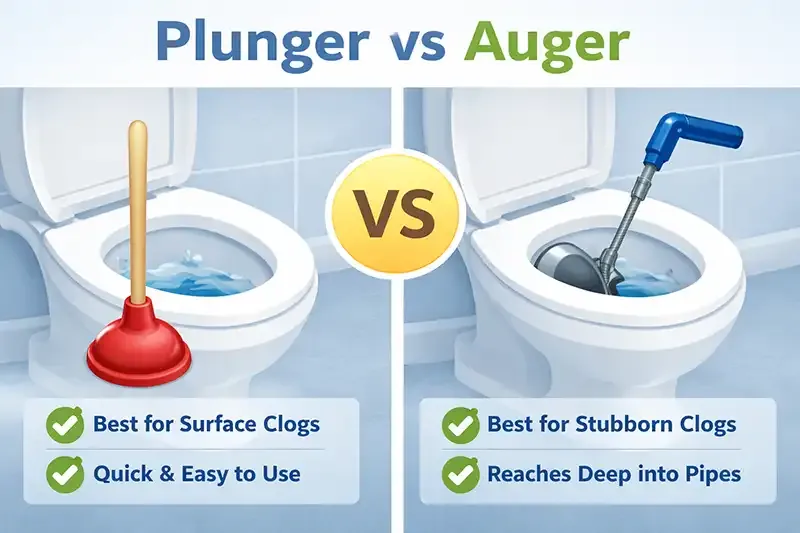
Choosing the right tool depends on the location and the type of clog you’re facing. While a plunger is excellent for surface-level issues in toilets and sinks, it often fails when the blockage is located deeper inside the pipes.
| Method | How long | Effort | Cost | Best for |
|---|---|---|---|---|
| Cup Plunger | 2 minutes | Low | Low | Flat sink drains |
| Flange Plunger | 3 minutes | Medium | Low | Toilet bowls |
| Drain Snake | 15 minutes | High | Medium | Deep pipe clogs |
If you have a minor clog, start with the plunger to save time and effort. If the water doesn’t go down after three attempts, move to the snake. A snake is necessary if the clog is more than six inches past the drain opening. You can tell you have reached the obstruction when you feel a sudden resistance or a “give” in the cable.
A mistake many people make is using a harsh chemical cleaner before trying these tools. This can damage your pipes and create a safety risk if you later need to touch the water while using a snake. Corrosive chemicals can cause chemical burns on your skin or eyes if they splash back during the snaking process. If your pipes are older galvanized steel, avoid chemicals entirely, as they can accelerate internal corrosion and lead to pinhole leaks.
If you’re dealing with a slow-draining tub, check the overflow plate first. If the water clears when you remove the plate and clear the hair trapped in the linkage, you have saved yourself the trouble of snaking the main line. Always wear rubber gloves when working with standing water, regardless of whether you have used a chemical cleaner. This simple barrier protects you from bacteria and potential skin irritation.
Using a plunger for surface clogs
A plunger works by creating a seal that allows you to force water back and forth to dislodge debris. It’s the primary tool for toilets and kitchen sinks where the clog is likely near the drain opening.
Ensure there’s enough water in the basin to cover the rubber head of the plunger completely. If you’re plunging a sink with an overflow hole, block that opening with a wet rag before you begin. Without this step, the water and pressure escape through the overflow rather than forcing the clog loose.
Place the rubber cup firmly over the drain opening to create an airtight seal. You must use a cup-style plunger for flat surfaces like sinks and a flange-style plunger with the extended rubber lip for toilet bowls. Using the wrong shape prevents the necessary suction.
Push down and pull up forcefully for 30 seconds without breaking the seal. If you feel no resistance when pushing, the seal is compromised. Reposition the cup until you feel the weight of the water pushing back against your hands.
Remove the tool and check if the water drains; repeat the process if needed. This method is ideal for soft clogs like soap scum or food waste. However, it won’t work if the clog is deep in the branch line or if a secondary vent issue prevents the water from moving.
If the water level remains stagnant after three attempts, stop plunging to avoid damaging the pipe seals. At this point, the obstruction is likely a hard object or a structural blockage requiring a plumbing snake.
Using a drain snake for deep blockages
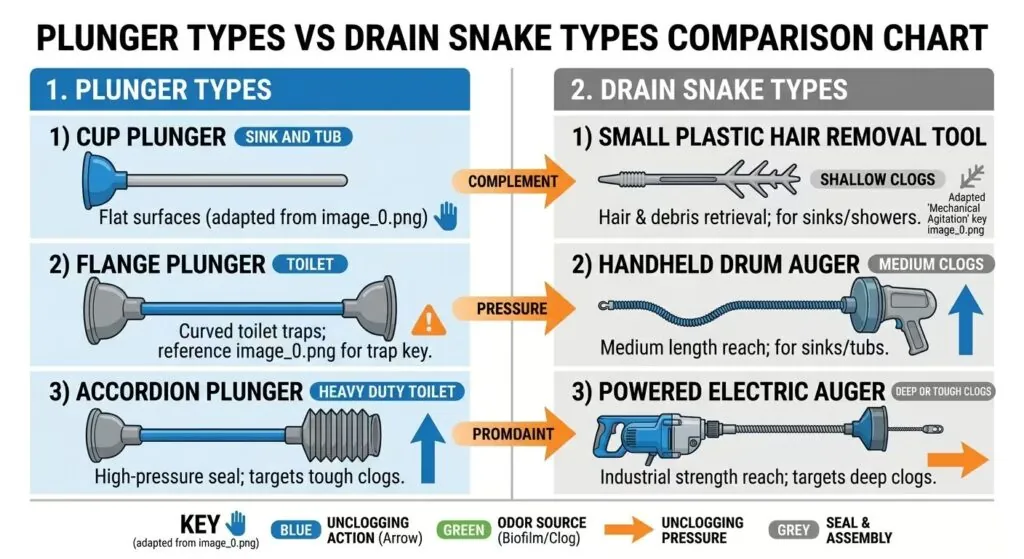
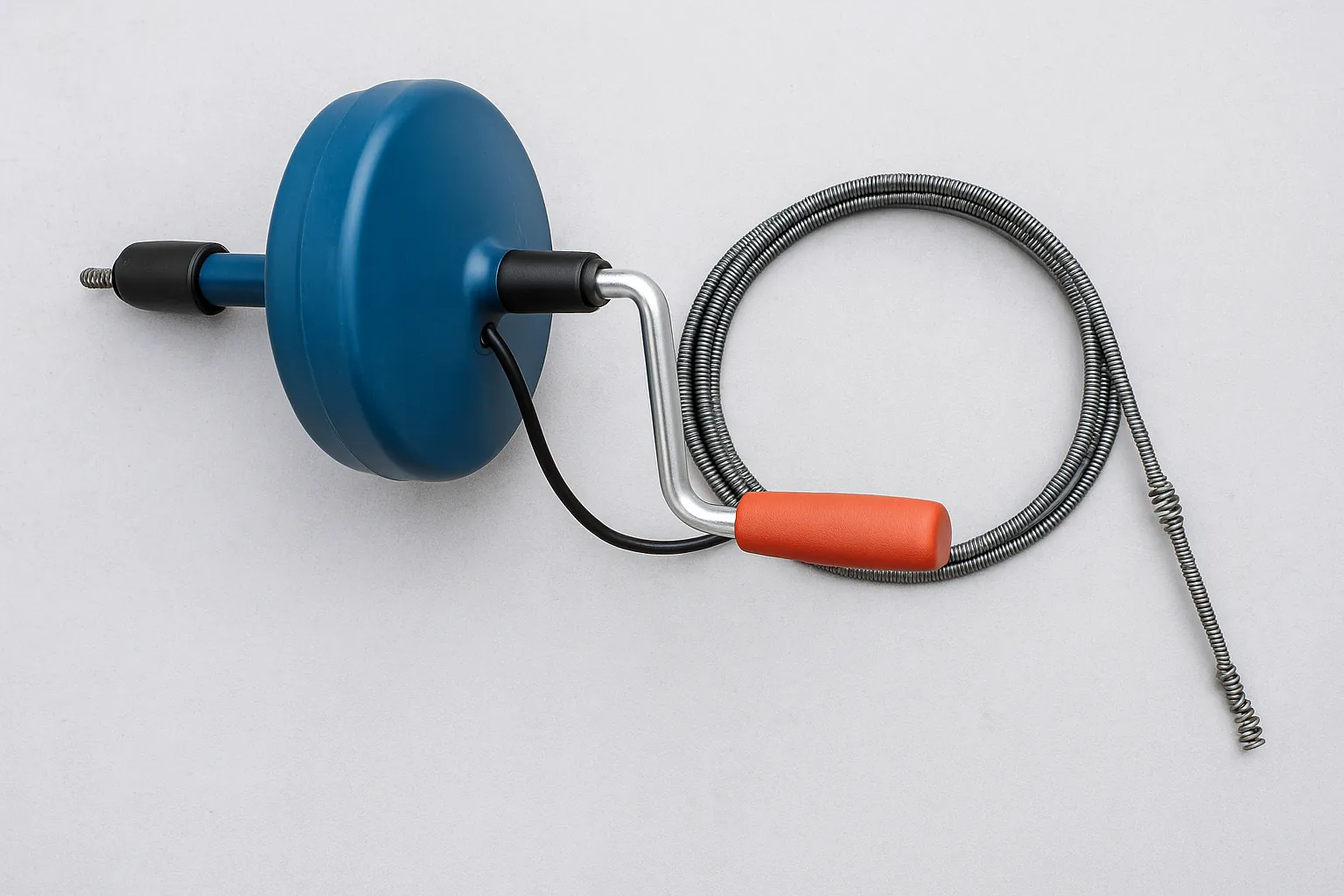
A drain snake, or plumbing auger, consists of a long, flexible metal cable that reaches deep into the plumbing system. It’s designed to pierce or grab obstructions that are out of reach for a plunger.
Insert the tip of the cable into the drain opening until you feel resistance. Tighten the set screw on the handle to lock the cable in place. Rotate the handle clockwise while applying gentle pressure to hook the debris. Pull the cable back slowly to remove the material from the pipe.
If the cable hits a hard stop before you feel the resistance of a clog, you have likely reached a pipe bend. Pull back two feet, rotate the handle in the opposite direction to help the tip navigate the curve, and try again. Never force the cable if it binds; pushing too hard can snap the metal or puncture thin PVC pipes.
Most standard home snakes reach 15 to 25 feet. If your blockage remains after you have extended the full length of the cable, the obstruction is likely deep in the main sewer line. In this case, stop immediately. Attempting to force a snake through a main line cleanout requires specialized equipment that prevents the cable from twisting inside the pipe.
A common mistake is failing to clean the cable as you retract it. Wipe the residue off with a rag to prevent grime from drying inside the housing. If the cable comes back out with no debris but the water still sits, the clog is likely grease-based. Use a chemical-free enzyme cleaner to break down the remaining buildup before trying the snake again.
Handling heavy-duty pipe issues
For very stubborn blockages, some people use a drain bladder. This tool attaches to a garden hose and expands to seal the pipe, then uses high-pressure water to blast the blockage away.
Feed the bladder into the pipe until it reaches the obstruction. Turn on the water slowly to inflate the device and seal the pipe. Increase the water pressure to force the clog through the line. Turn off the water and remove the device once the flow is clear.
This method is powerful but carries a risk of flooding if the pipe is damaged or if the seal fails. It isn’t suitable for old, fragile pipes that might crack under high pressure. If you’re unsure about the age of your plumbing, stick to manual tools like the snake.
If your home was built before 1970, assume your pipes are made of cast iron or clay. These materials degrade over time, and the pressure from a bladder can easily cause a catastrophic rupture. If you see rust flakes or sediment in your sink, avoid the bladder entirely.
Always keep one hand on the hose near the drain opening while the device is active. If you feel the hose buck or hear a dull thud, shut off the water instantly. This indicates the bladder has slipped out of position or the pipe has cracked.
You should also verify that your main cleanout is accessible before starting. If the clog is further down the line than the cleanout, the water will have nowhere to go but back into your home.
Which tool should you choose?
When you’re in a hurry, the plunger is the winner because it takes seconds to set up and works instantly on most common sink clogs. If you’re doing this for the first time, the plunger is also the safer choice as it requires no technical skill to operate without damaging the pipes.
When you want the best possible result regardless of the effort, the drain snake is the superior option because it removes the debris entirely rather than just pushing it further down the line. Use a snake if the water level remains unchanged after three minutes of vigorous plunging; this indicates a deep obstruction that a simple pressure change can’t shift.
The trade-off is clear: you trade the ease and speed of the plunger for the reach and mechanical power of the snake. If you use a snake, be prepared to spend ten minutes cleaning the cable after you pull it out of the drain.
Many people make the mistake of forcing the snake when they feel resistance. If the cable stops moving, rotate it clockwise to hook the clog rather than pushing harder, which can scratch or puncture plastic P-trap pipes. Always wear thick rubber gloves when handling the tool, as the debris you pull out is often coated in stagnant bacteria.
If your sink has a garbage disposal, never use a chemical cleaner before snaking. The standing liquid can splash back during the process and cause severe skin burns. If the water is still moving, albeit slowly, start with the plunger. If the sink is completely backed up, skip the plunger and go straight to the snake.
Necessary steps for every drain job
Regardless of the method you choose, safety and preparation are the most important parts of the job. Always remove any standing water if it contains harsh chemicals before you start, and wear rubber gloves to protect your skin from bacteria.
Check your pipes for leaks or signs of corrosion before inserting any tool. If the pipe looks rusted or thin, avoid using a metal snake, as it could easily punch a hole through the metal. At the end of the job, flush the drain with hot water for two minutes to clear away any remaining residue.
If you find that the clog returns within a few days, this indicates a deeper issue in the main sewer line. In such cases, stop your DIY efforts and call a licensed plumber to inspect the system.
Frequently Asked Questions
Can I use a plunger on a shower drain?
Yes, you can use a flat-bottomed plunger on a shower drain, but it’s often difficult to create a good seal. If the shower floor is uneven, the suction won’t hold, and the tool won’t be effective.
How long should a drain snake be?
For most residential bathrooms and kitchens, a 15-foot to 25-foot cable is sufficient. If your clog is further down the line, you’ll need a professional-grade machine to reach the blockage.
Is it safe to use a snake on all pipes?
No, you should be very careful with plastic PVC pipes, as a metal snake can scratch or crack them. Always move slowly and avoid using excessive force when you feel resistance.
What happens if the snake gets stuck?
If the cable gets stuck, stop rotating it immediately and try to pull it back gently while rotating it counter-clockwise. Never yank the cable, as this can cause it to kink or break inside the pipe.
How often should I snake my drains?
You should only use a snake when you notice the water is draining slowly. There’s no need to snake a drain that’s already flowing freely, as unnecessary use can wear down the pipe walls over time.
Conclusion
Keep your chosen tool in a nearby closet so you’re ready for the next surprise. If these methods don’t get the water flowing again, don’t hesitate to call a professional plumber. It’s better to ask for help early than to risk damaging your pipes with too much force or harsh chemicals.