
If you’re currently researching the best way to improve your household water quality, you have likely encountered the ongoing debate regarding water softener vs water conditioner systems. Understanding the difference is crucial because these two technologies function through entirely different scientific principles to address hard water issues. While a softener physically removes minerals, a conditioner alters their structure to prevent buildup. Costs for these systems vary significantly based on capacity, technology, and installation requirements; you can expect to pay anywhere from $600 to $2,500 for a professional-grade water softener, while salt-free water conditioners typically range from $800 to $3,000 depending on the flow rate and filtration media longevity.
Key Takeaways
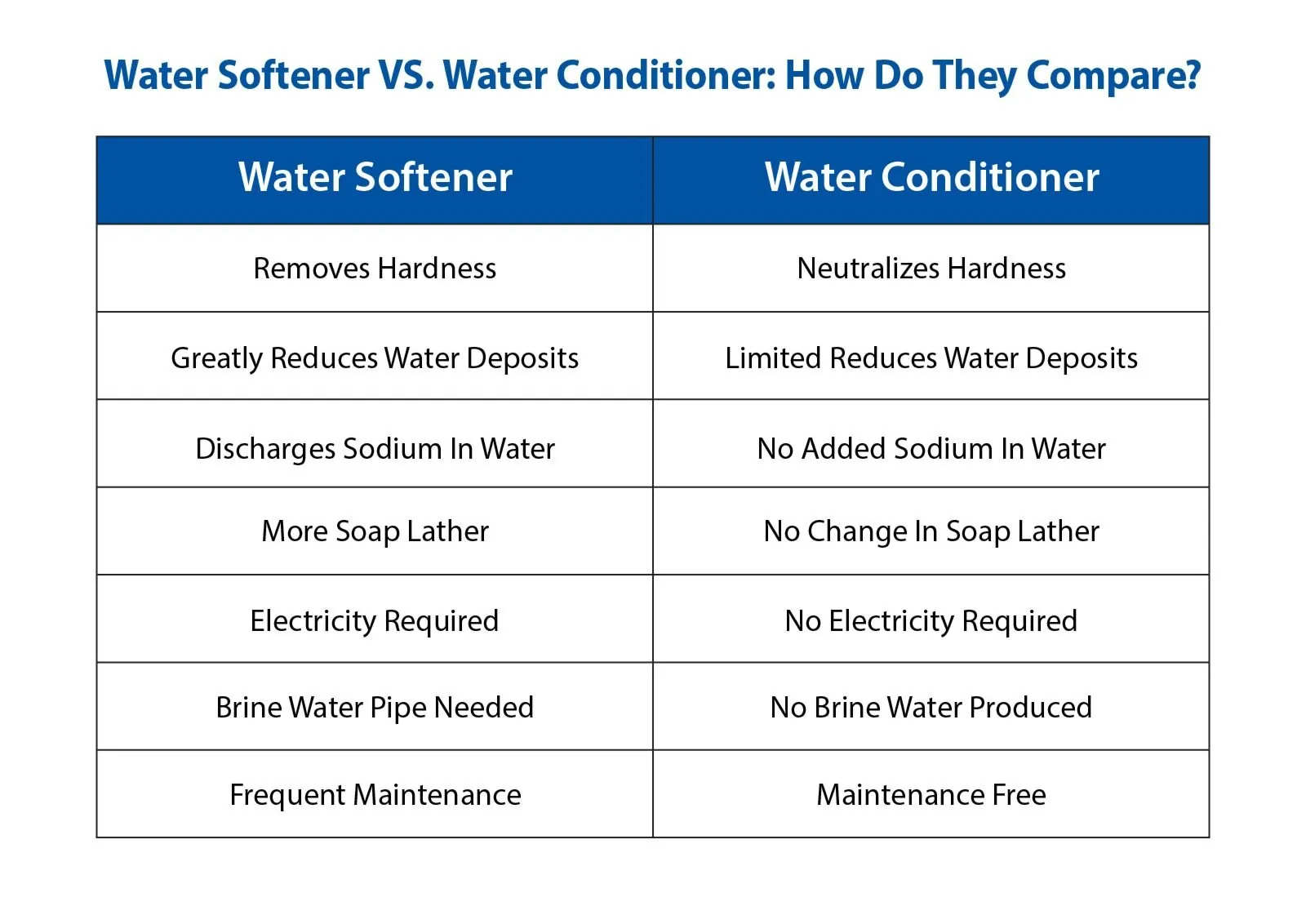
- Water softeners use ion exchange to physically remove calcium and magnesium ions from your water supply.
- Water conditioners don’t remove minerals; they use template assisted crystallization to prevent scale from sticking to pipes.
- Softened water feels “slippery” or soft on the skin, whereas conditioned water retains the mineral content of hard water.
- Check your local plumbing codes before installation, as some municipalities restrict the discharge of brine from traditional softeners.
- Maintenance for softeners requires regular salt replenishment, while conditioners usually require media replacement every three to five years.
Understanding Hard Water Basics
Hard water is defined by a high concentration of dissolved minerals, primarily calcium and magnesium. These minerals aren’t inherently dangerous to human health, but they cause significant issues for plumbing systems, appliances, and skin health. When water is heated, these minerals precipitate out of the solution to form limescale deposits. This buildup can narrow pipe diameters, reduce the efficiency of water heaters, and leave unsightly spots on glass shower doors and faucets.
The Role of Calcium and Magnesium
In most residential settings, water hardness is measured in grains per gallon (GPG). The Water Quality Association guidelines on water hardness categorize water with more than 7 GPG as “hard” and anything above 10.5 GPG as “very hard.” These minerals interact with soaps and detergents, preventing them from lathering effectively. This lack of lathering forces homeowners to use more soap, which can lead to residue on clothing and a film on the skin.
How Water Softeners Work
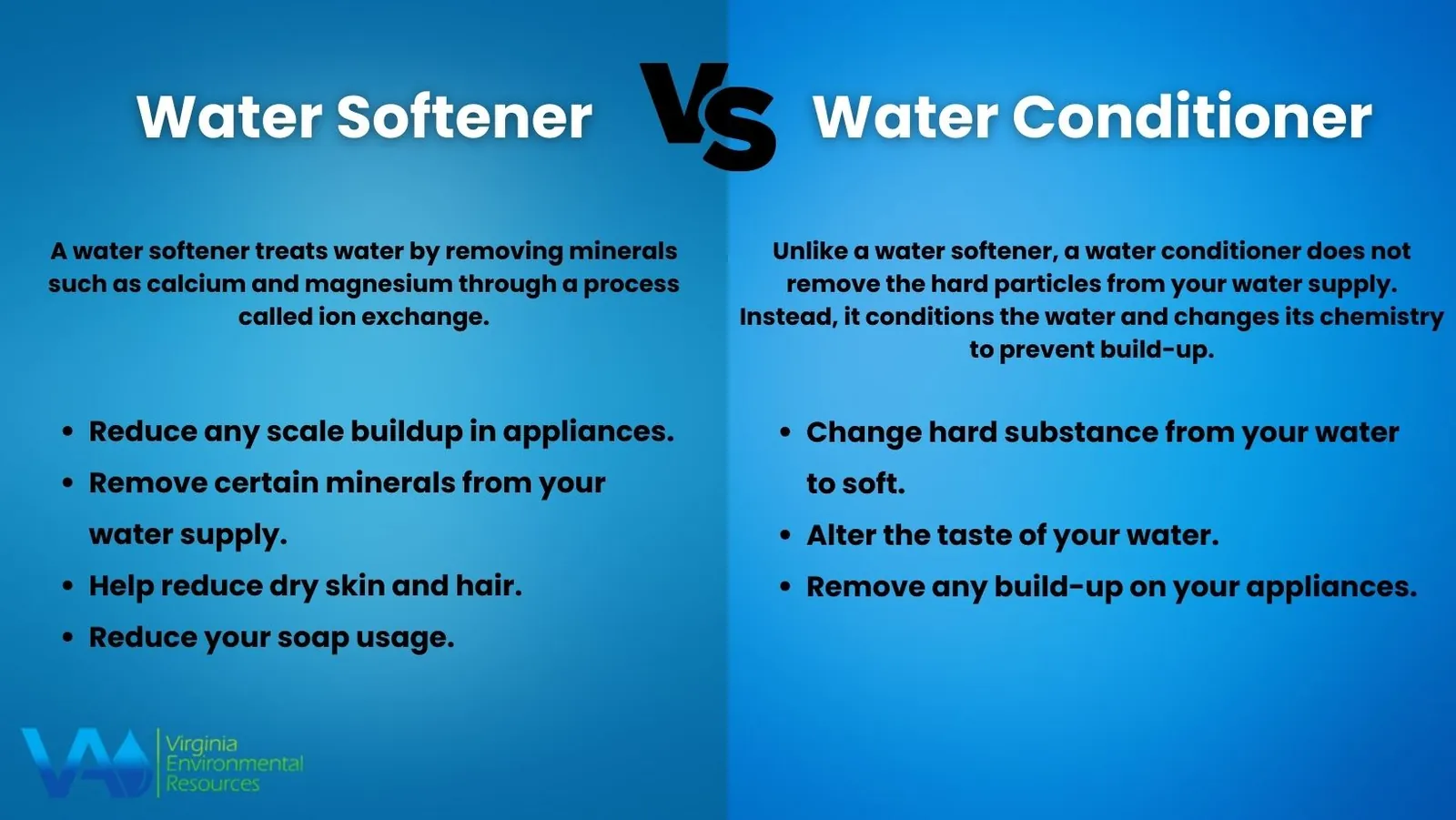
A water softener is a sophisticated appliance that utilizes a process called ion exchange. Inside the tank, there’s a bed of negatively charged resin beads. As hard water passes through this resin, the calcium and magnesium ions—which carry a positive charge—are attracted to the beads. The beads swap these hardness ions for sodium or potassium ions. This process effectively “softens” the water by removing the minerals that cause scale.
The Regeneration Cycle
Because the resin beads have a finite capacity, they eventually become saturated with hard minerals. The softener then enters a regeneration cycle, where it flushes the resin with a concentrated brine solution. This brine knocks the trapped minerals off the beads and flushes them down the drain. This cycle is why softeners require a salt supply and a drain line.
| Feature | Water Softener | Water Conditioner |
|---|---|---|
| Primary Method | Ion Exchange | Crystallization (TAC) |
| Mineral Removal | Yes (Physical removal) | No (Structure altered) |
| Maintenance | Monthly salt refills | Media change every 3-5 years |
| Electricity Use | Required for control head | Generally not required |
| Water Waste | Periodic backwash discharge | Zero water waste |
Understanding Water Conditioners
Water conditioners, often referred to as salt-free softeners or descalers, are designed to address the symptoms of hard water without removing the minerals themselves. They utilize a process known as Template Assisted Crystallization (TAC). In this process, the media inside the tank acts as a catalyst, encouraging the calcium and magnesium ions to clump together into microscopic, stable crystals.
Benefits of Salt-Free Systems
Because these crystals are stable, they don’t stick to surfaces like copper or PEX piping. They remain suspended in the water as it travels through your plumbing. This is an excellent solution for homeowners who want to protect their water heaters and pipes from scale accumulation without the environmental impact or maintenance requirements of a salt-based system. It’s important to note that you’ll still see mineral spots on dishes, as the minerals are still present in the water.
Comparing Installation and Maintenance
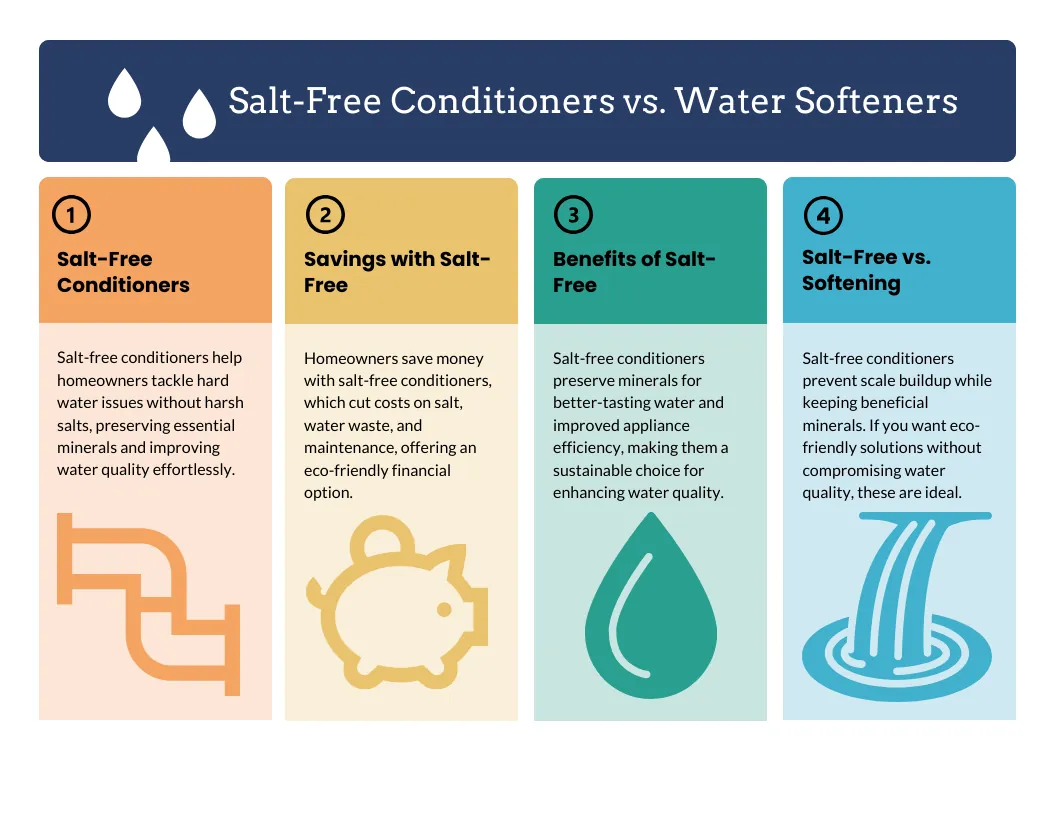
When choosing between these systems, you must consider the physical space available and your willingness to perform ongoing maintenance. Softeners require a drain line to handle the brine discharge, which can be difficult to install in certain parts of a home. Conditioners are often more compact and don’t require a drain, making them easier to install in tight utility closets or under cabinets.
Ongoing Operational Costs
- Water Softeners: You must budget for bags of salt or potassium chloride, which typically cost between $6 and $12 per bag. Depending on your water hardness and usage, a family of four might use one to two bags per month.
- Water Conditioners: These systems are “set it and forget it” for years at a time. The primary cost is the periodic replacement of the catalytic media, which can range from $200 to $600 depending on the specific model and manufacturer requirements.
Troubleshooting Common System Issues
If you notice that your water is no longer soft or that scale is returning, the first step is to check your system’s settings. For softeners, ensure the salt tank isn’t bridged, which happens when a hard crust of salt forms over the top, preventing the salt from dissolving into the water. For conditioners, verify that the flow rate isn’t exceeding the manufacturer’s maximum capacity, as high flow rates can prevent the media from effectively crystallizing the minerals.
Warning: Never use rock salt or block salt in a high-efficiency water softener, as these contain high levels of impurities that can damage the resin bed and the control valve. Always use high-purity solar salt or evaporated salt pellets designed specifically for water treatment.
Impact on Household Appliances
Softened water is widely considered the gold standard for protecting appliances like dishwashers, washing machines, and tankless water heaters. By removing the minerals entirely, you prevent the insulating layer of scale that forces heating elements to work harder. In contrast, conditioned water protects your pipes from buildup, but it doesn’t prevent mineral spots on your dishwasher’s interior walls. If your primary goal is to eliminate hard water spots on glassware, a softener is the superior choice.
Environmental Considerations
Traditional softeners discharge saline brine into local wastewater systems. In some regions, this has led to increased salinity in groundwater and surface water, causing some cities to regulate or even ban the use of salt-based softeners. If you live in an area with strict environmental regulations, a salt-free conditioner is often the only permitted option for residential water treatment.
Choosing the Right System
To decide which system is right for you, start by testing your water. You can purchase a simple GPG test strip kit online or have a local water professional perform a lab analysis. If your water hardness is extreme—above 15 GPG—a softener is usually the most effective way to ensure your plumbing remains free of scale. If your water is moderately hard and your main concern is protecting your home’s infrastructure, a conditioner will likely suffice.
Pro Tip: If you have a tankless water heater, check the manufacturer’s warranty requirements regarding water quality. Many modern tankless units require a water treatment system to maintain the warranty, and some specifically recommend a salt-free scale inhibitor to prevent heat exchanger failure.
Related guides
Frequently Asked Questions
Does a water conditioner make water soft?
No, a water conditioner doesn’t make water soft. It’s a common misconception that they’re the same. A conditioner leaves the mineral content in the water but changes the structure of those minerals so they don’t stick to pipes. You won’t get the “slippery” feel associated with soft water, and you may still experience some spotting on your dishes and shower doors.
Can I install a water softener myself?
Yes, if you have basic plumbing knowledge and the necessary tools like pipe cutters, wrenches, and soldering equipment or shark-bite fittings. However, it’s a significant project that involves cutting into your home’s main water line. If you aren’t comfortable working with high-pressure plumbing, it’s safer to hire a licensed professional to ensure the system is installed correctly and to avoid potential leaks.
How often should I test my water?
You should test your water hardness at least once a year, or whenever you notice a change in the taste or appearance of your water. If you use a softener, testing helps you determine if your regeneration settings are still appropriate for your water supply. If you notice scale returning, a test will confirm whether your system is still effectively treating the water or if the media needs replacing.
Do I need a water softener for well water?
Well water is frequently very hard and may also contain iron or manganese, which can stain fixtures. While a conditioner can help with scale, it won’t address iron staining. In many cases, a water softener is highly recommended for well water, often paired with a separate iron filter or a multi-stage system that handles both hardness and heavy metals to ensure your home’s water is truly usable.
Which system is better for my skin?
If you suffer from dry skin or eczema, a water softener is generally the better choice. By removing the calcium and magnesium, soft water allows soap to rinse away completely, preventing the mineral-soap residue that can irritate sensitive skin. Conditioned water doesn’t remove these minerals, so the water will still interact with soaps in the same way as untreated hard water, providing no relief for skin sensitivity.
Conclusion
The final decision between these two technologies should be based on your specific water test results, your local environmental regulations, and your personal tolerance for maintenance tasks. If you’re still unsure, consult a local water treatment specialist who can provide a site-specific recommendation based on your home’s plumbing configuration and the mineral composition of your local water supply.