
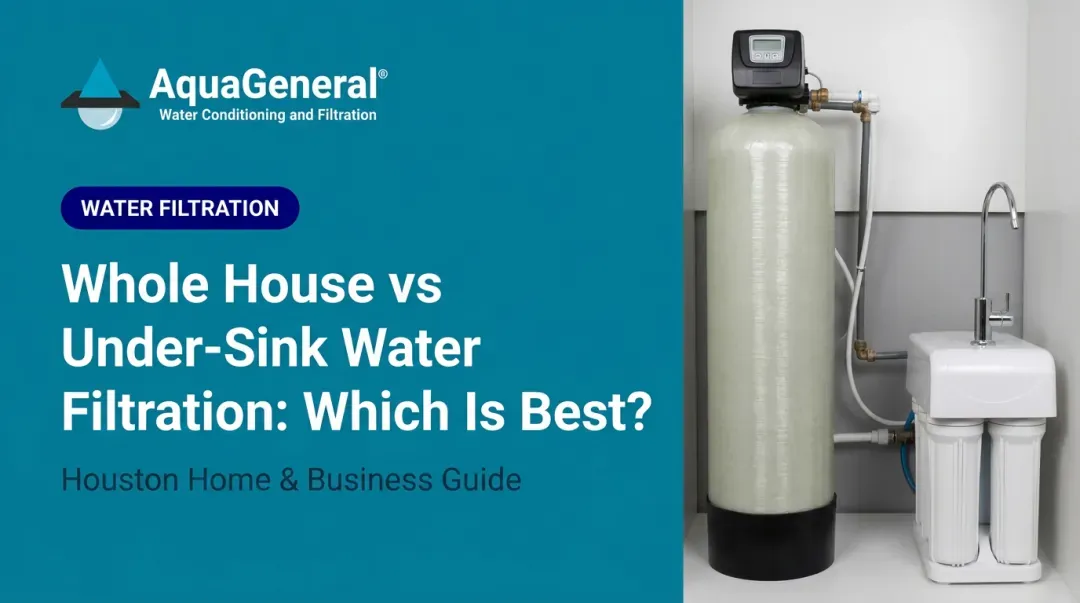
Deciding between a whole house vs under sink water filter depends entirely on whether you need to protect your entire plumbing system or simply ensure the highest quality drinking water for your kitchen. A whole house system, or point-of-entry (POE) filter, treats all the water entering your home, while an under sink system, or point-of-use (POU) filter, focuses on one specific faucet. Installing a whole house system typically costs between $600 and $2,500, whereas an under sink setup generally ranges from $150 to $800, depending on the complexity of the filtration technology involved.
Key Takeaways
- Whole house filters protect your pipes and appliances from sediment, rust, and scale buildup.
- Under sink filters offer superior contaminant removal, often utilizing reverse osmosis for maximum purity.
- Flow rate is a critical factor; whole house systems must handle the total water demand of your home.
- Maintenance for whole house filters involves changing large cartridges every 6–12 months.
- Under sink units are easier to install and maintain for individuals living in rental properties.
Why Choose a Whole House System?
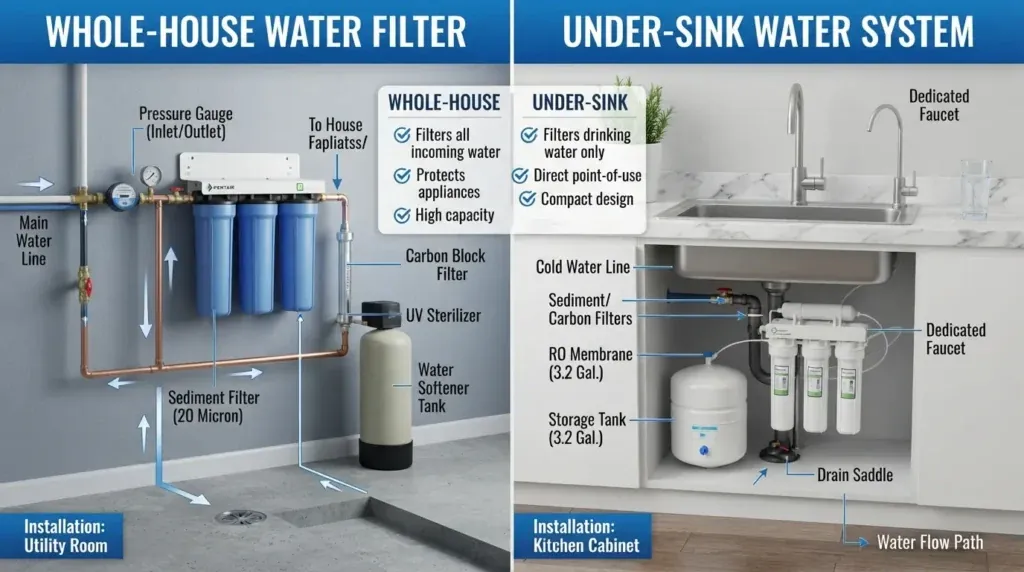
If you’re concerned about the quality of water in your shower, laundry, and dishwasher, a whole house filter is the most effective solution. These systems are designed to remove sediment, chlorine, and heavy metals before the water reaches your fixtures. By filtering the water at the main line, you prevent sediment buildup from damaging your water heater, washing machine, and faucets.
Most whole house systems consist of large housings that hold replaceable cartridges. You must choose a system based on your home’s flow rate, measured in gallons per minute (GPM). If the system is too small, your water pressure will drop significantly when multiple faucets are running simultaneously. For most families, a system rated for 10–15 GPM is standard to ensure consistent pressure throughout the entire property.
Benefits of Under Sink Filtration
When your primary goal is to improve the taste and safety of your drinking and cooking water, an under sink filter is the superior choice. Because these systems treat a much lower volume of water, they can utilize more advanced filtration methods, such as reverse osmosis (RO) or sub-micron carbon blocks. These technologies can remove microscopic contaminants that larger, whole-home systems often miss.
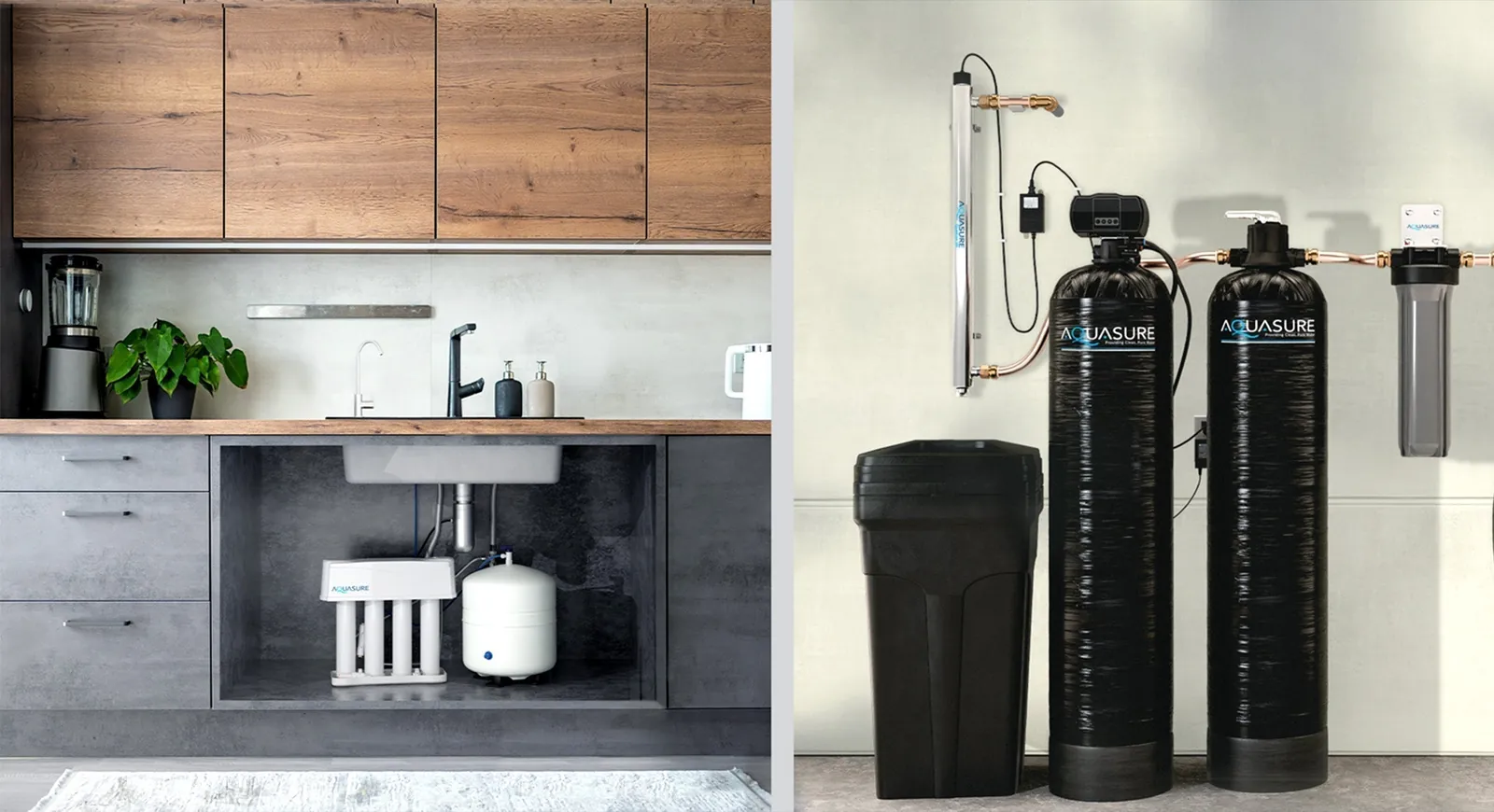
Under sink filters are installed directly onto the cold water line leading to your kitchen faucet or a dedicated drinking water tap. Because they’re compact, they fit neatly inside a cabinet, making them ideal for homeowners who want high-performance filtration without modifying their home’s main plumbing infrastructure.
| Feature | Whole House Filter | Under Sink Filter |
|---|---|---|
| Coverage | Every faucet and appliance | Dedicated tap/kitchen sink |
| Primary Goal | Pipe/appliance protection | Drinking water purity |
| Installation | Complex (Main line) | Simple (Cold water line) |
| Maintenance | High (Heavy cartridges) | Low (Small filters) |
| Water Waste | Minimal | High (RO systems) |
Comparing Filtration Performance
The level of purification is the most significant differentiator between these two categories. Whole house systems generally focus on “macro” contaminants like dirt, sand, rust, and large particles. Some advanced models include carbon stages to reduce chlorine, but they rarely reach the level of purity required for drinking water.
Under sink systems, specifically those using reverse osmosis, are tested to reduce a wider array of chemicals and dissolved solids. According to the NSF International drinking water standards, these units are often certified to remove specific contaminants like lead, arsenic, and nitrates. If your municipal water report indicates high levels of specific toxins, an under sink unit is often the only way to effectively lower those concentrations to safe levels.
Installation and Maintenance Requirements
Installing a whole house system requires a high degree of plumbing skill. You must shut off the main water supply, cut into the main pipe, and install bypass valves to ensure you can perform maintenance without turning off water to the entire house. If you aren’t comfortable sweating copper or working with PEX piping, this is a job for a licensed professional.
Under sink filters are far more accessible. Most kits include quick-connect fittings that require only basic tools like a wrench and a drill for the faucet mount. Maintenance is also simpler; you typically swap out the cartridges once or twice a year, which takes about ten minutes.
Which System Fits Your Budget?
Your budget should account for both the initial purchase price and the recurring costs of replacement filter cartridges. Whole house cartridges are larger and more expensive, often costing $50 to $150 per set. Under sink cartridges are smaller but may require more frequent replacement depending on the filter type.
Estimated Lifetime Costs (5-Year Horizon)
| Expense Type | Whole House Filter | Under Sink Filter |
|---|---|---|
| Initial Unit | $600 – $2,500 | $150 – $800 |
| Annual Filters | $100 – $300 | $50 – $150 |
| Professional Labor | $300 – $800 | $0 – $200 |
Choosing Between Whole House and Under Sink Water Filters
Before purchasing any system, you must test your water. You can buy a simple home testing kit or send a sample to a state-certified laboratory. If your water is “hard,” a whole house system alone won’t soften it; you’ll need a dedicated water softener.
Pro Tip: If you have well water, a whole house sediment filter is almost always a necessity to protect your plumbing from silt, whereas city water users may only need an under sink filter to remove the taste of chlorine.
Solving Common Flow Rate Issues
If you notice a sudden drop in pressure after installing a whole house unit, the filter is likely clogged with sediment. This is a common issue for homes with older pipes or high mineral content. To mitigate this, consider installing a high-capacity sediment pre-filter. This sacrificial filter catches the bulk of the debris, allowing the more expensive carbon or chemical filters to last their full lifespan.
What About Rental Properties?
If you rent your home, a whole house system is usually not an option because it involves permanent plumbing modifications. In this case, an under sink filter is your best solution. Look for models that use a simple “T-adapter” to connect to the cold water line. These can be removed without leaving a trace when you move out, ensuring you get your security deposit back while enjoying clean water during your stay.
Managing Wastewater and Efficiency
One drawback of high-end under sink systems is water waste. Reverse osmosis units typically send 2 to 4 gallons of water down the drain for every 1 gallon of purified water produced. While this is negligible for drinking purposes, it’s a factor to consider if you’re on a metered water bill or a private septic system.
Warning: Always check the drain line installation for your RO system to ensure it’s compliant with local building codes, as improper connections can lead to cross-contamination or sewer gas leaks.
Considering Combination Systems
Many households choose to use both. You might install a basic whole house sediment filter to protect your appliances and, simultaneously, an under sink reverse osmosis system in the kitchen for drinking and cooking. This “hybrid” approach provides the best of both worlds: protection for your home’s infrastructure and peace of mind regarding the water you consume.
Assessing Space and Accessibility
When planning your installation, measure your available space carefully. Whole house systems require a dedicated area near the main water shut-off valve, often in a garage or basement. Under sink systems require space beneath the sink, which can be limited if you have a garbage disposal or large cleaning supplies stored there. Always check the height clearance to ensure you can reach the filter housing to twist it off during maintenance.
Related guides
- Best Camping Tents Under 150: Top 10 Picks That Perform in 2026
- 8 Best Smart House System Picks for Seamless Home Automation in 2026
Frequently Asked Questions
Do I need a whole house filter if I have a water softener?
A water softener is designed to remove calcium and magnesium, not chemicals or sediment. While some softeners have integrated filters, they aren’t a substitute for a dedicated filtration system. If you want to remove chlorine, lead, or sediment, you should install a separate filter alongside your softener to ensure your water is both soft and purified.
Can an under sink filter remove all contaminants?
No single filter can remove every contaminant. Under sink filters are highly effective at removing chlorine, lead, and volatile organic compounds, but they aren’t designed to remove bacteria or viruses unless specifically rated for that purpose. Always check the manufacturer’s performance data sheet to see exactly which contaminants the specific model has been tested to reduce.
How often should I change my filters?
Most manufacturers recommend changing filters every 6 to 12 months. However, this depends entirely on your water usage and the quality of your source water. If you notice a drop in water pressure or a change in taste, change the filter immediately. Using a filter past its intended lifespan can lead to bacterial growth inside the housing.
Are all under sink filters compatible with my faucet?
Most under sink filters come with their own dedicated faucet that you install next to your primary kitchen sink. If you want to use your existing faucet, you need an “inline” filtration system. These systems connect directly to the cold water line under the sink and filter all the water coming out of your current tap, though they may slightly reduce flow.
What is the difference between carbon and sediment filters?
Sediment filters are designed to trap physical particles like sand, dirt, and rust. Carbon filters, on the other hand, use activated carbon to absorb chemical impurities like chlorine, pesticides, and unpleasant odors. Most high-quality systems use a multi-stage approach, starting with a sediment filter to protect the carbon stage from clogging, ensuring both longevity and maximum efficiency.
Conclusion
Start by testing your water to identify the specific contaminants you’re trying to remove, as this will dictate your hardware needs. If you’re a homeowner dealing with hard water or sediment, begin with a whole house system. If you’re concerned primarily with drinking water quality, prioritize a high-quality under sink reverse osmosis system to achieve the best results.