
A frost-free faucet is the better choice for most homes in cold climates because it prevents pipe bursts by keeping the water shut-off valve inside the warm wall of the house. You should only use a standard outdoor faucet if you live in a climate that never drops below freezing, or if you have a reliable way to shut off and drain the water line from inside your home every autumn.
Comparing outdoor water tap designs
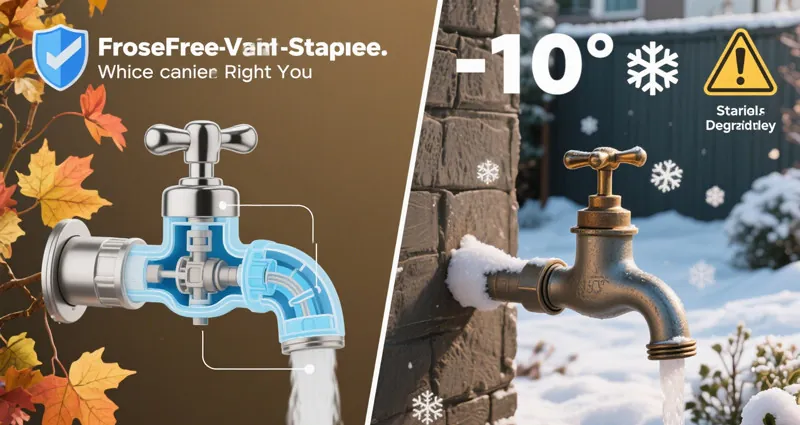
Choosing between these options depends on your local climate and your tolerance for seasonal maintenance. While both types deliver water, their internal mechanisms differ significantly in how they handle cold weather and pressure.
| Method | How long | Effort | Cost | Best for |
|---|---|---|---|---|
| Frost-free faucet | Long | Low | Medium | Cold climates |
| Standard faucet | Short | High | Low | Warm climates |
| Ball valve setup | Medium | Medium | Medium | Heavy irrigation |
If you live where temperatures stay above freezing, a standard faucet is sufficient. However, if you see frost, a standard faucet requires you to manually shut off the interior valve and drain the exterior pipe. If you forget this step even once, the trapped water will freeze, expand, and likely burst the supply line inside your wall.
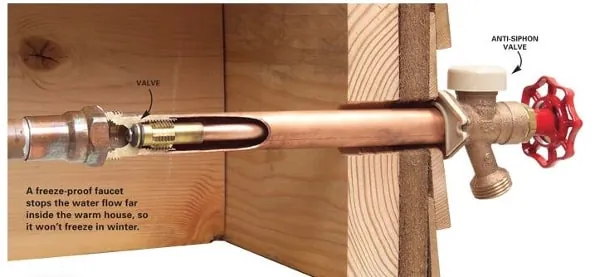
Frost-free models solve this by placing the valve seat inside the heated envelope of your home, several inches behind the wall. If your wall thickness exceeds twelve inches, you must measure the specific reach of the faucet stem to ensure the valve sits safely indoors.
Choose a ball valve setup if you frequently connect high-flow irrigation systems. Unlike traditional compression faucets that restrict water volume, ball valves provide a full-port flow path. This prevents the pressure drops that cause pump cycling in irrigation zones. If your system runs for more than an hour daily, the durability of a stainless-steel ball valve will save you from annual washer replacements.
Installing a frost-free faucet
This design features a long stem that places the washer and valve deep inside the house. When you turn the handle, the rod pulls back to release water; when you turn it off, the water drains out of the pipe head, leaving it empty.
- Turn off the main water supply to the house and open the old faucet to drain any remaining pressure.
- Disconnect the old faucet from the interior pipe using two wrenches, one to hold the pipe still and one to unscrew the fitting.
- Clean the threads on the interior pipe and apply plumber’s tape to create a tight, leak-proof seal.
- Insert the new frost-free unit through the wall, ensuring the body of the faucet has a slight downward slope toward the outside so water can drain away from the house.
- Tighten the connection, turn the water back on, and check for leaks at the joint.
This method is excellent for preventing frozen pipes, but it requires enough space inside your wall to fit the long valve stem. If your wall is too thin, the valve won’t reach the warm air, which makes the unit useless.
Using a standard outdoor faucet
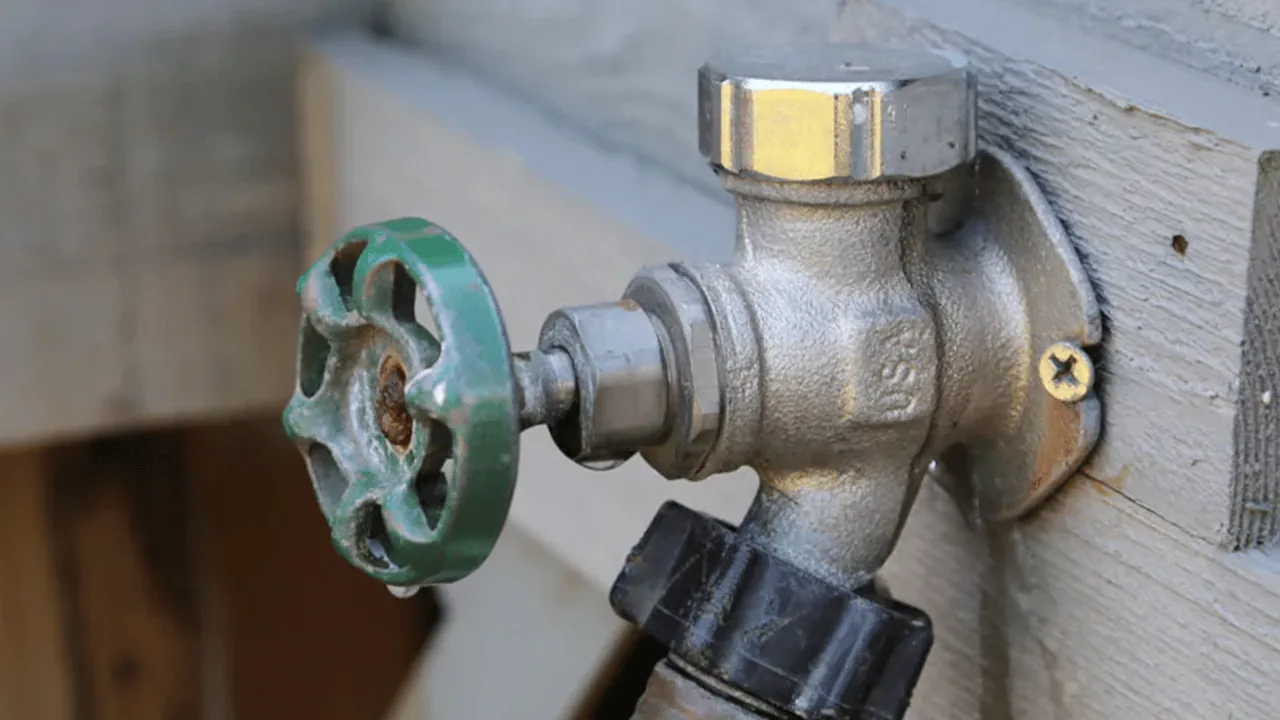
A standard faucet is a simple compression-style valve that sits right against the exterior siding. It doesn’t have a long stem, meaning the water stays right at the wall’s surface where it’s exposed to the outside temperature.
- Locate the shut-off valve for the outdoor line inside your basement or crawlspace before the first frost arrives.
- Turn this interior valve to the “off” position to stop water from reaching the outside pipe.
- Walk outside and open the standard faucet completely to let all remaining water flow out of the pipe.
- Leave the exterior handle in the open position throughout the winter to allow for expansion if any moisture remains.
- Close the exterior handle only after the risk of frost has passed in the spring.
This is a low-cost solution, but it’s dangerous if you’re forgetful. The International Residential Code requires that outdoor water pipes are installed in a way that allows them to be drained to prevent freezing, which is why this manual process is so critical for standard units.
Installing a ball valve system
Some homeowners prefer a separate ball valve installed on the interior line that feeds the outdoor faucet. This acts as a secondary safety measure, allowing you to control the water flow with a high-quality, reliable shut-off mechanism that’s less likely to leak than a standard gate valve.
- Cut the interior water line at a spot that’s easy to reach for future maintenance.
- Install a brass ball valve using compression fittings or sweat-soldered connections, depending on your pipe material.
- Keep the ball valve closed during the winter months, even if you have a frost-free faucet outside.
- Open the valve in the spring to restore water flow to your garden or hose bib.
- Test the valve under pressure to ensure no drips occur at the new connection point.
This method is great for people who want the security of a properly sealed connection. The weakness here is that it requires basic plumbing skills, such as cutting pipe or soldering, which can be intimidating for a beginner. If you’re uncomfortable working with pressurized water lines, hire a licensed plumber to ensure the connection is secure.
Which one should you use?
The choice depends on your local weather and your willingness to maintain your home. When you’re in a hurry and want a “set it and forget it” solution, choose a frost-free faucet because it protects your pipes without manual work.
If you’re doing this for the first time and want to save money, use a standard faucet, but mark your calendar to drain the lines every October. Finally, if you want the best possible result regardless of the effort required, install a frost-free faucet and an interior shut-off valve to provide two layers of protection against freezing.
If your region sees temperatures drop below 20 degrees Fahrenheit for more than three consecutive nights, a frost-free faucet alone may not suffice. In these climates, the interior shut-off valve is mandatory. Close the interior valve and open the exterior spigot to bleed the line completely before the first hard freeze.
The main trade-off is between the upfront cost of the hardware and the long-term risk of a flooded basement. A frost-free unit is more expensive than a standard model, but it eliminates the risk of human error. A standard faucet is inexpensive, but it carries a high cost if you forget to drain it.
The rules that apply whichever way you choose
Regardless of the faucet type, you must ensure the exterior pipe slopes slightly downward toward the outside. Aim for a pitch of at least one-quarter inch per foot of pipe length. This gravity-fed drainage prevents water from pooling inside the wall cavity, where it would otherwise trigger structural rot or hidden mold growth. If you can’t achieve this pitch, install a specialized frost-proof sillcock that features an internal check valve to mitigate backflow risks.
Before you start any plumbing work, verify the material of your existing lines. Galvanized steel, copper, and PEX require distinct fittings and specialized tools. Using a push-to-connect fitting on old, pitted galvanized steel is a common mistake that leads to catastrophic leaks; always transition to a clean, smooth pipe section first. If you’re unsure about your material or feel nervous about soldering, contact a professional plumber to avoid a leak that could damage your foundation.
Always test your work by turning the water on slowly while a second person watches the connection inside the house. If you see even a small drip, turn the water off immediately and tighten the fitting. Small, slow-motion leaks often go unnoticed until they saturate your drywall or warp your flooring. If the connection remains dry after this initial window, you can safely assume the seal is secure and the joint is properly seated.
Related guides
Frequently asked questions
Can I install a frost-free faucet myself?
You can install one yourself if you have basic plumbing tools and access to the interior pipe. You’ll need two pipe wrenches, thread-seal tape, and a way to shut off the main water supply. Consult a professional if you aren’t confident in your ability to seal the joint.
How long does a frost-free faucet last?
The rubber washer at the end of the long stem is the part that fails most often, causing the faucet to drip. Replace the entire unit if the metal stem becomes bent or corroded.
Is it safe to leave a hose attached in winter?
No, you should never leave a hose attached to a frost-free faucet during freezing weather. Even if the faucet is designed to be frost-free, the hose holds water against the spout, which prevents the unit from draining properly. This trapped water will freeze, expand, and crack the internal pipe or the faucet body itself. Always disconnect your garden hose and store it inside before the first hard freeze of the year.
What happens if I forget to drain a standard faucet?
If you forget to drain a standard faucet before a freeze, the water inside the pipe will expand as it turns to ice. This pressure is strong enough to split copper pipes and crack brass fittings. You may not notice the damage until you turn the water on in the spring.
How much does it cost to fix a burst pipe?
The cost varies significantly based on where the pipe is located and how much damage the water caused. A simple repair behind an open basement ceiling is inexpensive, while a burst pipe hidden inside a finished wall requires costly plumbing and drywall repairs. This is why many homeowners choose to install frost-free faucets as a form of insurance against the high cost of emergency winter repairs.
Conclusion
Choosing between these faucets is about balancing your budget against the level of maintenance you’re willing to perform every year. If you live in a region with long, deep freezes, the extra cost of a frost-free model is almost always worth the investment to protect your home from water damage.