
Handheld manual ratchets, power drives, and stationary threaders are the best tools for creating secure, watertight connections on metal pipes. These tools use hardened steel dies to cut precise grooves into the pipe end. The choice depends on the number of pipes and available space, with manual ratchets ideal for tight corners and power drives best for large projects.
Pipe Threading Tool Comparison
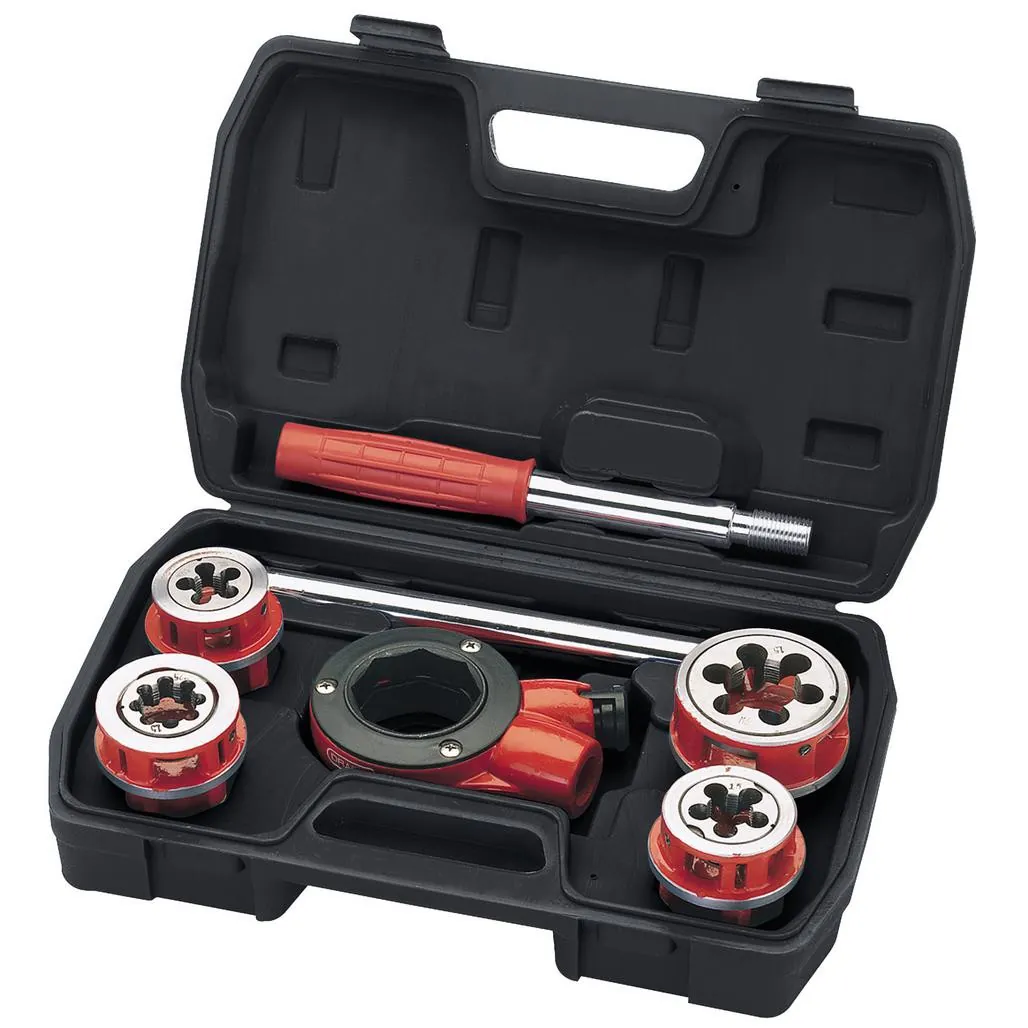
| Tool Type | Best For | Concrete Example |
|---|---|---|
| Manual Ratchet | Quick repairs | Ridgid 12-R |
| Power Drive | High volume | Rothenberger ROPOWER |
| Stationary Machine | Workshop use | Reed 600 Series |
| Handheld Power | Field work | Milwaukee 2874-22 |
Choose the manual ratchet only if you’re threading fewer than five pipes per week. If you exceed this threshold, the physical fatigue will lead to inconsistent thread depth and inevitable leaks at the joints.
Use a stationary machine if your workflow involves pipes larger than two inches in diameter. These units provide the necessary torque to prevent the die head from binding. If you attempt to use a handheld power tool on pipe of this size, the sudden torque reaction can cause wrist injuries or damage the tool’s internal gears.
When working in cramped utility closets, prioritize a handheld power tool with a dedicated support arm. This arm absorbs the rotational force that would otherwise strain your grip. A common mistake is using a handheld unit without this support, which often results in crooked threads that fail pressure tests.
If you’re working with stainless steel, you must use a machine with an adjustable oil flow system. Stainless steel work-hardens rapidly; if the die teeth don’t stay flooded with cutting oil, they will dull within three to five cuts. For carbon steel, standard manual application is sufficient.
Apply this rule: if your project requires more than ten threads per day, move to a power drive. If you’re moving between multiple job sites daily, invest in a cordless handheld unit to eliminate the need for extension cords and power drops.
Manual Ratchet Threaders
Manual ratchets are the most common tools for small-scale plumbing work because they don’t require electricity or a heavy stand. They suit homeowners or maintenance workers who only need to thread a few pipes per year. These tools provide a reliable, low-cost way to create tapered threads that comply with ASME B1.20.1 pipe thread standards for plumbing joints.
- They allow you to work in tight spaces where large machines can’t fit.
- They provide full control over the cutting speed, which helps prevent die damage.
- They’re lightweight and portable, making them easy to store in a standard toolbox.
If you’re threading a 1-inch black iron pipe, you should use a ratchet handle compatible with your die head to maintain leverage. A mistake many people make is failing to use enough cutting oil, which causes the dies to overheat and lose their sharpness. If the pipe is steel, always apply a generous amount of sulfur-based threading oil; if you’re working with stainless steel, use a specialized synthetic lubricant to prevent galling.
Power Drive Threaders
Power drives use a motor to rotate the pipe while the operator holds the die head steady. This tool suits professional contractors who need to thread multiple pipes quickly without the physical strain of manual turning. These machines are significantly faster than manual ratchets and ensure that every thread is cut to the same depth and pitch.
They reduce the time required to complete a thread by about 80 percent compared to hand tools. They include automatic oiling systems that keep the dies cool and clean during operation. They offer better consistency for high-pressure systems where a perfect seal is mandatory.
If you’re threading 20 or more pipes in a single day, a power drive is the only efficient choice. If you only thread pipes occasionally, the setup time and transport effort will outweigh the speed gains. Use a power drive if you value throughput; stick to a hand ratchet if your work is strictly occasional or confined to tight, overhead spaces where a 100-pound unit can’t fit.
The main trade-off is the weight; these units often weigh over 100 pounds and require a sturdy metal stand for safe operation. Many beginners make the mistake of using a folding plastic table or a makeshift wood bench. This creates vibration that ruins the thread quality and risks tipping the entire unit. Use a dedicated steel tripod stand designed to absorb the torque of the motor.
Always secure the pipe in the front and rear chucks before starting the motor to prevent the pipe from whipping. This motion occurs when the chuck fails to grip the pipe firmly, causing the long end to swing violently. It can cause serious injury or snap the pipe off at the threads.
Before hitting the switch, rotate the pipe by hand to ensure it’s centered in the rear centering device. If the pipe wobbles in the rear chuck, tighten the jaws immediately. A secure setup is the difference between a clean, leak-free joint and a wasted length of pipe.
Stationary Threading Machines
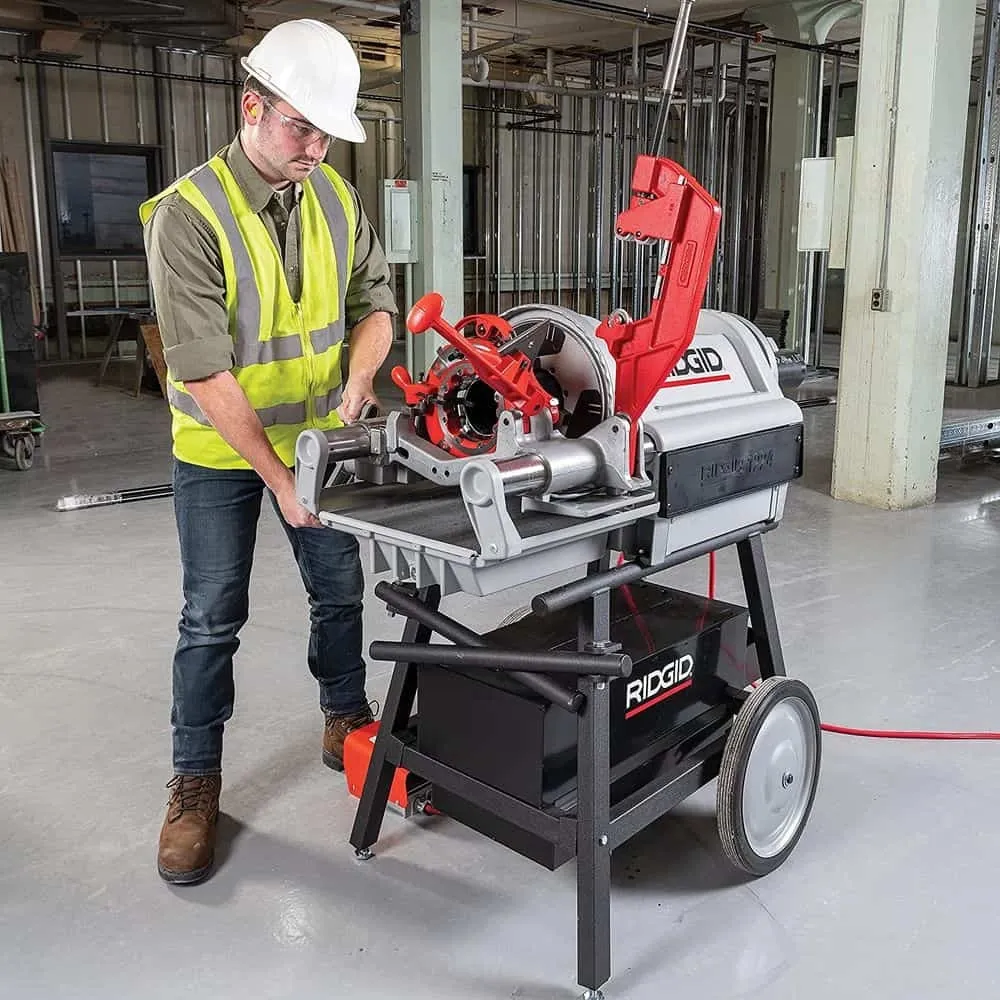
Stationary threading machines are heavy-duty units bolted to a workshop floor or a heavy workbench. They suit industrial facilities or large plumbing shops that process pipe daily. These machines handle large-diameter pipes that are too heavy for portable tools, providing the highest level of precision and stability for long-term production.
They feature built-in pipe cutters and reamers, allowing you to prep the pipe in one station. They handle a wide range of pipe sizes, often from 1/8 inch up to 4 inches. They’re built to run for hours without needing a break, unlike portable handheld motors.
A significant limit for stationary machines is the fixed location; if your pipes are already installed in a wall or ceiling, this machine can’t help you. You must bring the pipe to the tool. If you’re managing a job site where the pipe is already hung, you’re better served by a portable power drive. Using a stationary unit for field work creates a logistical bottleneck that can add hours of transit time to a single installation.
If the machine begins to produce chatter or uneven threads, check the die alignment immediately. Misaligned dies are the most common cause of thread tearing, which ruins the pressure seal of the pipe. If the threads appear thin or tapered incorrectly, inspect the oil flow first. A lack of high-quality threading oil causes the metal to gall, which permanently ruins the die teeth within minutes.
Don’t attempt to adjust the internal gears unless you have the manufacturer’s service manual. Improper settings can lead to permanent damage to the spindle. If you notice the machine struggling under load, check the motor brushes before assuming the gearbox has failed. Worn brushes are a common, inexpensive maintenance oversight that mimics the symptoms of a dying motor.
Stainless steel work-hardens rapidly; if the die speed is too high, the metal will become brittle and snap the teeth off your dies. Always use a dedicated sulfur-free oil for stainless projects to prevent chemical contamination that leads to premature rust.
Handheld Power Threaders
Handheld power threaders are electric tools that replace the manual ratchet handle while keeping the portability of a hand tool. They suit service plumbers who move between different job sites and need to thread pipes in place. These tools use a high-torque motor to drive the die head, allowing you to cut threads in locations where a large floor machine can’t go.
- They offer the speed of a power drive with the mobility of a manual ratchet.
- They’re designed to be held by the operator, making them ideal for vertical pipe runs.
- They usually feature a support arm that prevents the tool from spinning when it encounters resistance.
If you’re working above your head, ensure the support arm is braced against a solid surface like a wall stud. Using these tools without the support arm is a common mistake that can lead to wrist injuries when the die head catches on the pipe. If you feel the tool twisting in your hands, stop the trigger immediately to reset your bracing position.
Additional Pipe Threading Options
Die heads are the cutting components that hold the actual steel teeth. They’re interchangeable across most manual and power systems. You should reach for these if you already own a handle or motor but need to cut a different diameter of pipe.
When selecting a die head, verify the thread standard—NPT for tapered pipes or NPS for straight mechanical joints. Using the wrong die head will result in a joint that leaks under pressure, regardless of how much thread sealant you apply.
Pipe vises hold the pipe firm so it doesn’t rotate during manual threading. They’re essential for anyone using manual ratchets, as holding a pipe by hand is impossible and unsafe. Reach for a yoke-style vise for maximum grip on round surfaces. If you’re working with delicate finishes or plastic-coated pipe, swap the standard steel jaws for a set of rubber-coated inserts to prevent surface gouging.
A common mistake is mounting the vise on a portable stand that lacks sufficient weight. If the stand shifts while you apply force to the ratchet, the pipe will slip and mar the threads. You should anchor the base to a heavy workbench or use a tripod stand with a spreader plate to ensure stability.
If the pipe rotates even slightly during the cut, the teeth will strip the metal rather than carving a clean groove. Always tighten the vise until the pipe is immobile before you begin the first turn.
Choosing the Right Tool
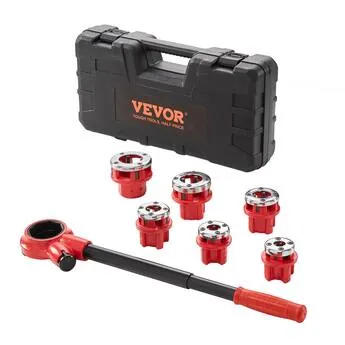
Choosing the right tool depends on your project volume, the location of the pipe, and your physical strength. If you’re a homeowner doing a one-time repair on a basement sink, a manual ratchet is the only tool you need. It costs a fraction of power alternatives and requires zero maintenance.
If you’re a contractor installing a new gas line for a commercial building, a power drive is the only way to meet your deadlines without excessive fatigue. These units typically weigh over 100 pounds, so ensure your workspace can support the gear weight before you commit to the rental. If you’re working in a workshop on a large project with heavy pipe, a stationary machine provides the necessary stability.
For small jobs in tight spaces, choose a manual ratchet; for high-volume work, choose a power drive. These tools are generally not interchangeable in their intended use cases. Using a stationary machine for a quick field repair is impractical, and using a handheld tool for a large-scale industrial job will lead to premature tool wear.
If you find yourself threading more than five pipes in a single session, abandon the manual ratchet immediately. The repetitive motion causes significant wrist strain that can sideline you for days. If the pipe diameter exceeds two inches, move directly to a power drive regardless of the job size. Manual force is rarely sufficient to achieve the consistent, clean threads required for high-pressure gas or water lines.
If you’re unsure which category you fall into, look at your pipe diameter. Anything under one inch is a manual job. Anything over two inches requires power. If you’re working on a one-inch to two-inch pipe, choose based on quantity. If you have fewer than three joints to complete, stay manual. If you have four or more, the time saved by power equipment justifies the rental cost.
Frequently asked questions
Can I use a manual threader on stainless steel pipe?
Yes, you can use a manual threader on stainless steel if you use specialized dies and high-quality synthetic cutting oil. Stainless steel is much harder than black iron and will dull standard carbon steel dies quickly. Always verify your die head is rated for your specific grade of stainless steel.
How long do pipe threading dies last?
Threading dies typically last for 500 to 1,000 cuts if you use proper lubrication for every cut. The exact lifespan depends on the hardness of the pipe material and how often you clear metal shavings. If threads look torn or the tool is harder to turn, the dies are likely dull.
Is it safe to thread pipe by hand?
It’s safe to thread pipe by hand if you use a secure pipe vise to hold the material. Never attempt to hold the pipe with your hands or pliers, as the torque generated can cause injury. Always wear safety glasses, as threading produces sharp metal chips that can fly off.
What happens if I don’t use threading oil?
You must use threading oil because the heat generated by friction will ruin your dies and create leaky threads. Cutting oil acts as a coolant and lubricant, washing away metal chips that clog the teeth. Without oil, the metal will gall or weld itself to the dies, ruining the cut.
Does it matter which brand of dies I buy?
The thread profile must precisely match your fitting because cheap dies often fail to meet standard tolerances. Always buy dies compatible with your specific die head brand to ensure they lock in securely. Mismatched parts can lead to threads that are too deep or shallow, causing joints to leak.
How do I know when the thread is deep enough?
The thread is deep enough when the end of the pipe is flush with the edge of the die head. You can verify this by using a ring gauge to test the fit against a standard pipe fitting. Always check the manufacturer’s guide on your specific die head for precise depth requirements.
Conclusion
Start by securing your pipe in a high-quality bench vise to ensure it stays perfectly still during the threading process. Once you begin, apply a steady, even pressure and add fresh cutting oil after every half-turn of the handle to keep the teeth cool. You’ll know you have a successful thread when the pipe end sits flush against the dies and the threads look clean, smooth, and free of jagged edges.