
The short answer is no, liquid chlorine isn’t heavier than water in the way most people think. While pure liquid chlorine is actually denser than water at standard temperatures, household bleach or chlorine gas is usually what people mean. Liquid chlorine weighs about 1.4 times as much as an equal volume of water, but it turns into a gas instantly if you open the container. That gas sinks in air because it’s heavier than oxygen and nitrogen, yet it doesn’t sink in water like a stone would.
This difference depends entirely on the state of the element and what you’re comparing it to. You need to know whether you’re handling a pressurized tank of liquid, a dilute solution for your pool, or just the smell of gas escaping. The numbers change based on temperature and pressure, so the safe action changes with each form.
Who this page serves best
You might be asking this because you saw a spill at a pool, read a safety label, or heard a myth about chlorine gas sinking in water. If you’re a homeowner checking pool chemistry, you need to know that the liquid in your bottle will mix with water, not float or sink as a separate layer.
If you’re a student studying density, you need the exact numbers for liquid versus gas states under standard conditions. This page serves the person who needs a clear, safe answer about physical properties before they act around the chemical.
We assume you’re dealing with common scenarios: pool maintenance, industrial safety training, or basic science homework. We don’t serve someone looking for instructions on how to extract or handle pure elemental chlorine without proper licensing and equipment. That work requires specialized training and gear that ordinary people don’t have. If you’re trying to manufacture chemicals at home, stop reading and seek professional guidance immediately.
What decides the outcome
The state of matter is the biggest factor here. Chlorine exists as a greenish-yellow gas at room temperature, but it becomes a pale yellow liquid when cooled or pressurized. In its liquid form, it has a density of roughly 1.47 grams per cubic centimeter, which makes it heavier than water’s 1.0 gram per cubic centimeter. However, once it escapes into the air, it behaves completely differently.
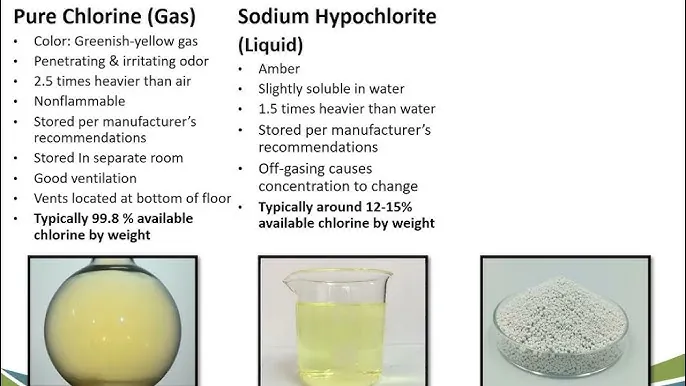
Temperature plays a huge role in how dense the substance feels. As the temperature rises, liquid chlorine expands and becomes less dense until it boils away into a gas. At standard room temperature, it’s a gas that’s about 2.5 times heavier than air.
This means it stays low to the ground, which is why you should never crawl into a pit where a leak might happen. People often get this wrong by thinking the gas will rise like steam, but it pools in low areas instead.
Pressure determines whether you can even see it as a liquid. Without high pressure or very cold temperatures, chlorine can’t stay liquid; it flashes into gas. If you’re holding a tank, the pressure inside keeps it liquid and heavy. If the valve opens, the pressure drops, and the liquid boils off instantly. You must check the manufacturer’s data sheet for the specific pressure limits of your container to understand these shifts.
Step by step to check density safely
Never try to pour pure chlorine to test its weight yourself. Instead, follow these steps to understand the property using safe, public information.
- Find the Material Safety Data Sheet (MSDS) for the specific product you have, such as sodium hypochlorite bleach or liquid chlorine. Look for the section labeled “Physical and Chemical Properties.”
- Locate the “Density” or “Specific Gravity” line in that document. Compare the number listed there to 1.0, which is the value for water.
- Check the temperature condition listed next to the density figure. Most sheets list values at 20°C or 25°C, so note if your environment is much hotter or colder.
- Read the “Boiling Point” to see at what temperature the liquid turns to gas. If your current temperature is above this point, the substance is already a gas.
- Verify the state of matter in your container. If it’s a sealed cylinder, it’s likely liquid under pressure. If it’s an open bottle, it’s a solution mixed with water.
- Confirm the ventilation requirements listed in the safety section. If the sheet says “use in well-ventilated areas,” the gas is heavy enough to displace oxygen near the floor.
The key judgment call here is knowing when to trust a number on a sheet versus trusting your senses. If you smell a sharp, bleach-like odor, you’re dealing with gas, regardless of what the liquid density says. Don’t rely on sight alone, as the gas is invisible in small amounts but dangerous in large ones. Stop here if you suspect a leak; don’t attempt to measure or move the container yourself. Call emergency services or a hazardous materials team immediately.
Comparing chlorine and water density
Different forms of chlorine behave differently in water and air, often with dangerous consequences if you misidentify the state. Liquid chlorine stored under high pressure will instantly boil into a dense gas cloud if a tank ruptures, sinking rapidly to the ground rather than rising like smoke. This cold vapor can freeze skin on contact before it even causes chemical burns.
Pool bleach is simply chlorine dissolved in water, so it mixes evenly and stays where you pour it. The risk here isn’t inhalation but direct skin contact; undiluted splashes cause immediate irritation that worsens if you rub the area. Never assume this solution behaves like the gas version.
Chlorine gas leaks are distinct because they pool in low areas like basements or ditches at room temperature.
Solid calcium hypochlorite tablets dissolve slowly but generate significant heat when mixed with water. A common mistake is adding too many granules at once, which can cause the container to crack or the water to scald. Always add solids to water, never water to solids, to control the reaction speed.
Vapor in still air stays low near the ground until wind disperses it. In enclosed spaces without ventilation, this vapor displaces breathable oxygen, creating an invisible suffocation hazard long before the smell becomes overwhelming.
Signs of proper handling
Experienced handlers focus on the signs that show a safe environment rather than guessing at the weight of the chemical. They always check the ventilation first before opening any container. A good handler knows that if the air feels still, the gas will settle where people walk or sit.
They place sensors or detectors at floor level, not at eye level, because that’s where the heaviest concentration builds up. Sensors mounted at breathing height miss a low cloud until it has already spread across the room.
They also respect the temperature limits strictly. If the sun is beating down on a storage tank, they cover it or move it to shade. Heat increases the pressure inside the tank, which raises the risk of a rupture.
Beginners often ignore the heat warning until the pressure gauge spikes, but experts watch the ambient temperature every day. They also never store chlorine near acids, as the reaction creates toxic gas instantly.
A proper handler checks the valve stem for moisture before connecting a line. Dry stems mean intact seals, while wet ones signal a slow leak. That small drip costs hours of emergency cleanup if you connect under pressure.
Troubleshooting common issues
If you notice something strange, match the sign to the cause and fix it right away.
| What you notice | What it usually means | What to do first | How to stop it happening again |
|---|---|---|---|
| Strong bleach smell indoors | Gas leak or poor venting | Open windows and leave area | Seal containers tightly after use |
| Cloudy water in pool | Over-chlorination or shock | Test pH and wait 24 hours | Dose carefully according to size |
| White powder on skin | Dry chlorine contact | Wash with plenty of water | Wear gloves and long sleeves |
| Hissing sound from tank | Pressure release or leak | Evacuate and call pros | Store in cool, dry place |
| Rust on metal tools | Corrosion from moisture | Replace damaged tools | Keep tools dry and oiled |
Rules and safety standards
Safety rules for chlorine come from strict government bodies like the Occupational Safety and Health Administration (OSHA) and the Environmental Protection Agency (EPA). OSHA sets the limit for how much chlorine gas workers can breathe in a day. The standard is 0.5 parts per million over an eight-hour shift, and anything above 1 part per million is considered immediately dangerous to life and health. You can find these exact limits on the OSHA official website.
In many countries, storing more than a certain amount of chlorine requires a special permit. If you keep large tanks for industrial use, local fire codes dictate exactly where they must go. These rules exist because a breach can hurt everyone nearby, not just the person holding the tank.
Always check your local regulations before buying bulk supplies. If you’re unsure about the legal limits in your area, contact your local fire department or environmental agency directly. Never guess on storage rules, as fines can be severe and risks are real.
Real costs to consider
Handling chlorine properly costs money in equipment, time, and risk management. You can’t just buy a bottle and ignore the rest. Protective gear like respirators, goggles, and chemical-resistant gloves adds up quickly. A decent respirator for chlorine gas is inexpensive relative to the alternative, and filters need replacing every few months depending on use.
Time is another cost. You must spend minutes before every task checking seals, testing air quality, and ensuring ventilation works. If you skip this, you risk a medical emergency that costs far more in hospital bills and lost work days.
The risk of injury is real if you mix it with the wrong substances. Ammonia and chlorine create chloramine gas, which can cause permanent lung damage. The cost of prevention is always lower than the cost of cleanup. Prices for these items change, so check current catalogs for today’s rates.
Keeping it safe later
Once you have used or stored chlorine, keeping it safe is your main job. Store all containers in a cool, dry place away from direct sunlight. Heat causes pressure to build, which can crack plastic bottles or burst metal tanks. Check the date on every container regularly. Household bleach loses strength over time, usually becoming ineffective after six months to a year.
Look for signs of wear on caps and seals. If a lid looks loose or corroded, replace the container immediately. Don’t try to tighten a leaking cap with force, as this can make the seal worse. Dispose of old or empty containers according to your local waste rules. Never pour leftover chemicals down the drain unless the label says it’s safe to do so. Regular checks prevent accidents before they start.
If you keep bleach near ammonia-based cleaners like window sprays, you risk creating toxic chloramine gas instantly. Keep these products in separate cabinets or on opposite shelves to avoid accidental mixing during cleaning. A common mistake is assuming that a cloudy appearance means the bleach is still strong; often, it has already degraded into useless salt water. When in doubt, test a small amount on a white cloth; if it doesn’t whiten within thirty seconds, discard it safely.
Store large jugs on the bottom shelf where children can’t reach them, but never on the floor where leaks might go unnoticed until they eat through wood. Metal lids can rust shut over time, making emergency access impossible when you need it most.
If you live in an area with extreme temperature swings, move your supply indoors during winter freezes to prevent the liquid from expanding and shattering the bottle. These simple habits ensure your supply remains effective and harmless until you actually need it.
When not to use this method
Don’t try to handle pure liquid chlorine if you don’t have industrial training. This guide covers general safety and understanding, not hands-on manipulation of the raw element.
If you’re working in a factory setting with large tanks, follow your company’s specific safety plan, not this article.
Liquid chlorine expands roughly 460 times its volume when it turns into gas at room temperature. A small spill becomes a large toxic cloud in seconds. That ratio is why even minor container failures require immediate evacuation.
If you suspect a major leak, don’t try to plug it or clean it up yourself. The gas is too dangerous for untrained people to manage. Leave the area immediately and call emergency services.
People often mistake the sharp smell of a small release for something they can air out by opening windows. Chlorine is heavier than air, so it pools in basements and low spots instead of drifting away. Ventilation alone won’t clear it.
Also, don’t use chlorine to treat water if you’re unsure of the dosage. Too much can poison fish in a pond or make drinking water unsafe. In these cases, consult a professional water treatment specialist.
Frequently asked questions
Is chlorine gas heavier than air?
Yes, chlorine gas is about 2.5 times heavier than air. It sinks and stays close to the ground, filling low spots like basements or ditches. This is why you should never enter a low area where a leak might be present.
Does liquid chlorine sink in water?
Yes, pure liquid chlorine is denser than water and will sink if poured in. However, it rapidly dissolves and reacts with the water to form acidic solutions. You won’t see it sitting at the bottom for long.
Can I mix chlorine with vinegar?
No, never mix chlorine with vinegar or any acid. This combination releases toxic chlorine gas that can damage your lungs and throat immediately. Always keep these chemicals separate.
How long does chlorine last in a pool?
Chlorine levels drop faster in hot weather or strong sunlight. Typically, you need to add more every few days to maintain safe levels. Check your test strips daily for accurate readings.
Is it safe to swim right after adding chlorine?
Wait at least 20 to 30 minutes after adding chlorine before swimming. This allows the chemical to mix fully and reach a safe concentration. Higher doses may require waiting longer.
What happens if I breathe chlorine gas?
Breathing chlorine gas irritates your nose, throat, and lungs. High exposure can cause coughing, chest pain, and fluid buildup in the lungs. Seek fresh air and medical help immediately.
Does chlorine evaporate quickly?
Liquid chlorine evaporates very quickly at room temperature, turning into gas. In a pool, the chlorine dissipates slowly due to sunlight and usage. Indoor pools need better ventilation to remove gas buildup.
Your first step now
Start by checking the label on any chlorine product you own. Look for the hazard warnings and the specific gravity number if available. Expect to see clear instructions on ventilation and protective gear. If you see any damage to the container or smell a strong odor, stop everything and call for professional help.
Don’t assume all bleach is safe to mix with other cleaners. Combining chlorine with ammonia creates chloramine gas, which burns your lungs instantly. Mixing it with acids like vinegar releases chlorine gas, a weapon used in World War I. If you’re unsure what was in a bottle last week, treat it as hazardous waste immediately. Never pour unknown liquids down the drain to “flush” them away.
Check the expiration date printed on the bottom of the jug. Chlorine loses strength over time, often degrading significantly after six months in a warm garage. Using expired bleach might make you think you have sanitized a surface when bacteria remain alive. If the liquid looks cloudy or has separated into layers, discard it safely at a local hazardous waste facility. Don’t guess; when in doubt, buy fresh.