
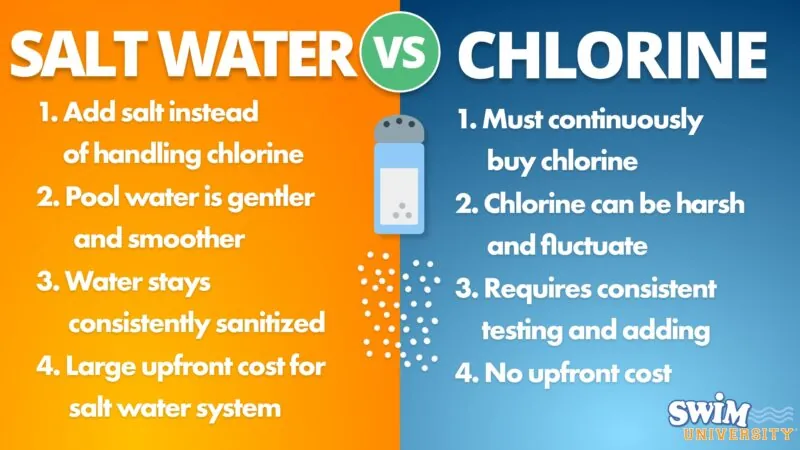
A saltwater pool costs $1,500 to $3,000 more to build than a chlorine pool of the same size. When people ask if saltwater pools are more expensive, the answer is yes upfront but often no over ten years. You’ll pay more for the salt cell and control board on day one. You’ll spend less buying chemicals every month after that.
The real cost depends on your local electricity rate, how big the pool is, and whether you’re building new or converting an old one. A high power bill eats the savings fast. The rest of this page breaks down exactly where the money goes.
Who makes saltwater pools more expensive
Three different people usually look up these numbers, and they need different things from the page. The first is someone planning a brand-new inground pool who hasn’t picked a sanitation system yet. They’ve got contractor quotes in hand and want to know if the salt option fits their budget.
The second person already owns a traditional chlorine pool. Their skin itches, their eyes burn, and they’re tired of hauling liquid bleach home every week. They want to know what it costs to swap the equipment over.
The third is a homeowner comparing monthly bills. They don’t care about the pump or the plaster. They just want to know if the salt saves them enough money on chemicals to justify the higher electric bill.
This page serves the first two readers best. It assumes you’re looking at a standard 15,000-gallon inground pool in the US, with average local labor rates. If you’re only tracking monthly chemical costs, you’ll find those numbers here too, but the heavy focus is on installation and conversion. Readers with above-ground vinyl pools under 5,000 gallons should look for guides specific to small kits instead.
What changes the final price
Five things decide what you actually pay, and getting one wrong throws off the whole estimate. The biggest factor is whether you’re building new or converting. Adding a salt system during construction costs $1,500 to $2,500 because the plumber runs the extra lines right away.
Retrofitting an existing pool jumps to $2,000 to $3,000. The plumber has to cut into finished plumbing, mount the cell, and wire the controller to your breaker panel. That extra labor is where the money goes.
Pool volume comes next. A salt chlorine generator must match the water it treats. A unit rated for 15,000 gallons works fine for that size. Put it on a 30,000-gallon pool and the cell runs at maximum output constantly. It burns out in two seasons instead of five. Always buy a cell rated for at least one-third more water than your pool holds.
Electricity rates matter more than people think. The cell needs power to split salt into chlorine. If your utility charges 25 cents per kilowatt-hour instead of 12, your operating cost doubles. Check your latest power bill for your exact rate before you calculate savings.
The brand of the generator shifts the price by hundreds of dollars. Hayward, Pentair, and Jandy all make reliable units, but their replacement cells carry different price tags. Look up the replacement cell cost before you buy the main unit, since you’ll replace it eventually.
Local climate is the thing people get wrong most often. Cold water slows the chemical reaction inside the cell. If your pool drops below 60°F for months, the system’s chlorine production slows significantly, and you may need to supplement with manual shocking depending on usage.
Setting up a saltwater pool
Installing the system follows a strict order. Rushing the wiring or skipping the water test causes failures later. These steps assume you’re retrofitting a standard 15,000-gallon inground pool with a 240-volt system.
- Test your current water chemistry. Use a drop kit to check pH, alkalinity, and stabilizer levels. Your cyanuric acid should typically be between 30 and 50 ppm before the salt cell turns on.
- Balance the water. Adjust the pH to 7.4 and total alkalinity to 100 ppm. Add the required pounds of pool-grade salt directly to the deep end. For 15,000 gallons, reaching 3,200 ppm usually takes about 400 pounds of salt.
- Run the circulation pump for 24 hours without the cell connected. This dissolves the salt completely. Undissolved salt sitting on the floor can stain the plaster.
- Cut the return pipe after the filter and heater. Glue in the union fittings that came with your salt cell. Make sure the flow direction arrow on the cell points toward the pool returns.
- Mount the control box on a wall at least 5 feet from the pool edge. Many manufacturers and local codes recommend mounting the control box at least 5 feet from the pool edge to prevent shock hazards. Drill the anchors level so rain doesn’t pool inside the housing.
- Wire the control box to a dedicated GFCI breaker. Connect the cell cable to the terminal block inside the box. Don’t plug the unit into a shared outlet.
- Turn on the pump and check every joint for leaks. Tighten the unions by hand first, then use strap wrenches if needed. Never use metal pipe wrenches on plastic fittings.
- Power up the controller. Set the output percentage to 50% for the first week. Test the water again after 48 hours to confirm free chlorine sits between 1 and 3 ppm.
The single judgment call that separates a lasting install from a failing one is sizing the cell. If your pool gets full afternoon sun and hosts swimmers three days a week, set the output higher or buy the next size up. If it’s shaded and rarely used, run it lower. You can read your exact required output percentage on the digital display of the control board once the water reaches temperature.
If the wiring step requires running a new line from your main electrical panel, stop and hire a licensed electrician. Working inside a breaker panel carries a fatal shock risk and violates building codes in most US counties when done without a permit.
How different setups compare
Every pool situation changes the math. The table below covers the five most common scenarios readers face, showing what to do, what it takes, and what to watch out for.
| Situation | What to do | Effort needed | Watch for |
|---|---|---|---|
| New inground build | Install cell during plumbing | $1,500 to $2,500 | Buy oversized cell |
| Existing concrete pool | Retrofit plumbing and wire box | $2,000 to $3,000 | Acid wash first |
| Vinyl liner pool | Add inline cell gently | $1,500 to $2,000 | Low salt targets |
| Above ground pool | Use hang-on kit | $400 to $800 | Pump flow rate |
| Indoor pool | Skip salt entirely | Zero | Ventilation limits |
A new build is always cheaper because the plumber adds the fittings while the pipes are exposed. Retrofitting concrete means cutting cured PVC and patching deck space. Vinyl pools need lower salt levels, usually around 2,800 ppm, to protect the seams from corrosion.
Above-ground kits skip the hardwiring. They plug into standard 120-volt outlets and clamp onto the return hose. Indoor pools require careful consideration of ventilation and humidity control when using salt systems to prevent corrosion of metal fixtures.
Getting the details right
Sizing and placement
A cell rated exactly for your pool’s volume will fail early. Manufacturers test their units in perfect conditions: balanced water, moderate heat, and light use. Your backyard doesn’t match a laboratory.
Buy a generator rated for one-third more gallons than you actually hold. If you own a 20,000-gallon pool, install a 30,000-gallon unit. The larger cell runs at 60% capacity instead of 100%. It lasts two extra seasons before the plates wear out.
Placement matters just as much as size. Mount the cell horizontally if your manual allows it. Vertical mounting traps air bubbles against the titanium plates. Those bubbles block the electrical current and cause scaling in isolated spots.
Check the flow switch position too. It must sit downstream from the pump but upstream from any automatic chlorinators. If water flows backward through the cell during a pump failure, the sensor won’t shut off the power.
Chemistry habits
Salt doesn’t mean zero maintenance. You still test the water weekly. The difference is what you’re testing for and how you fix it.
Keep your cyanuric acid between 60 and 80 ppm. Without this stabilizer, sunlight destroys the chlorine the cell makes within two hours. Don’t let it climb past 100 ppm, or the cell can’t produce enough sanitizer to keep up.
Watch the pH closely. Salt electrolysis naturally pushes pH upward. If yours hits 7.8, add muriatic acid immediately. High pH causes calcium to fall out of solution and crust over the cell plates. Once that scale hardens, you have to soak the cell in an acid bath, which shortens its lifespan.
Leave the salinity alone unless the meter drops below 2,800 ppm. Splashing and backwashing remove salt slowly. Adding bags every week without testing leads to over-salination, which forces you to drain thousands of gallons to fix.
When the system fails
Troubleshooting a salt system relies on matching the symptom to the physical cause. Guessing leads to replacing parts that aren’t broken. Here is what actually goes wrong and how to handle it.
| What you notice | What it usually means | What to do first | How to stop it happening again |
|---|---|---|---|
| No chlorine reading | Cell scaled over | Inspect plates visually | Keep pH under 7.6 |
| Low salt light on | Actual low salinity | Test with drop kit | Measure after heavy rain |
| Control board blank | Tripped GFCI breaker | Reset breaker panel | Seal outdoor connections |
| White flakes in pool | Calcium buildup | Acid wash the cell | Lower calcium hardness |
| Loud clicking noise | Flow switch stuck | Tap switch gently | Clean skimmer baskets |
| Green water returns | Stabilizer too low | Add cyanuric acid | Test weekly during summer |
Never bypass the flow switch to force the cell on when the pump is struggling. Running the cell without water flow allows explosive hydrogen gas to accumulate inside the cell housing instead of being swept away by circulation. If the flow switch trips repeatedly, the problem is your pump or filter, not the switch. Fix the circulation issue first.
Rules you have to follow
Building codes and electrical standards dictate how this equipment goes in. The National Electrical Code (NEC) requires the power supply to be at least 5 feet from the inside wall of the pool.
You also need a dedicated Ground Fault Circuit Interrupter (GFCI) breaker. Sharing a circuit with landscape lighting or a shed outlet violates code and creates a shock hazard.
Draining a saltwater pool introduces environmental rules. The EPA regulates storm drain discharges, and dumping 15,000 gallons of salted water into a municipal storm sewer is illegal in most US jurisdictions. Storm drains lead to rivers, not treatment plants. You must route drained water to a sanitary sewer cleanout or hire a truck to haul it away. Check your local public works department website for your city’s exact discharge rule.
If your municipality requires a permit for pool equipment upgrades, pulling one isn’t optional. An unpermitted electrical job can void your homeowner’s insurance if a fire starts in the control box. Call your local building inspector’s office before cutting any pipes.
What you actually spend
The money leaves your bank account in two phases: the day you install it, and every month afterward. Upfront, expect to pay between $1,500 and $3,000 for a complete inground setup, including the cell, the control board, the plumbing fittings, and the labor.
That number assumes a standard 15,000-gallon pool. If yours is 30,000 gallons, the larger cell adds about $400 to $600 to the equipment cost. Labor stays roughly the same unless the plumbing run is unusually long.
Monthly, the math flips. A traditional chlorine pool costs $50 to $100 a month in liquid bleach, tablets, and shock treatments during the swimming season. A salt pool drops that chemical bill to about $15 to $30 a month, mostly for muriatic acid and occasional stabilizer.
But you trade chemical savings for electricity. The cell draws between 100 and 200 watts while the pump runs. If your pump operates 8 hours a day and your utility charges 16 cents per kilowatt-hour, the cell adds roughly $4 to $8 to your monthly power bill. Calculate your exact cost by multiplying your cell’s wattage by your daily pump hours, then dividing by 1,000 to get kilowatt-hours. Multiply that by your utility’s rate.
The hidden expense is the replacement cell. Titanium plates wear out. Expect to buy a new one every 3 to 7 years, depending on how hard you run it. Replacement cells cost between $400 and $900. Divide that price by the expected lifespan in months to find your true monthly cost.
Keeping the system running
Maintenance isn’t optional; it just changes shape. Instead of pouring jugs of bleach, you’re managing the machine that makes it.
Inspect the salt cell every 3 months during the swimming season. Unscrew the unions and pull the cylinder out. Shine a flashlight through it. If the titanium plates look white or chalky, calcium is building up.
Soak a scaled cell in a 4-to-1 mixture of water and muriatic acid for 10 minutes. Never leave it longer. The acid eats the scale but also attacks the protective coating on the plates if you lose track of time. Rinse it thoroughly with a garden hose before reinstalling.
Test your salinity monthly using a liquid drop kit, not just the digital readout on the control box. Digital sensors drift out of calibration after a year. If the screen says 3,400 ppm but your drop test says 2,900 ppm, trust the drop test and add salt.
Wipe down the control board enclosure twice a year. Dirt and spider webs trap moisture against the terminals. Corrosion on the circuit board is the most common reason the entire unit dies prematurely.
When salt is the wrong choice
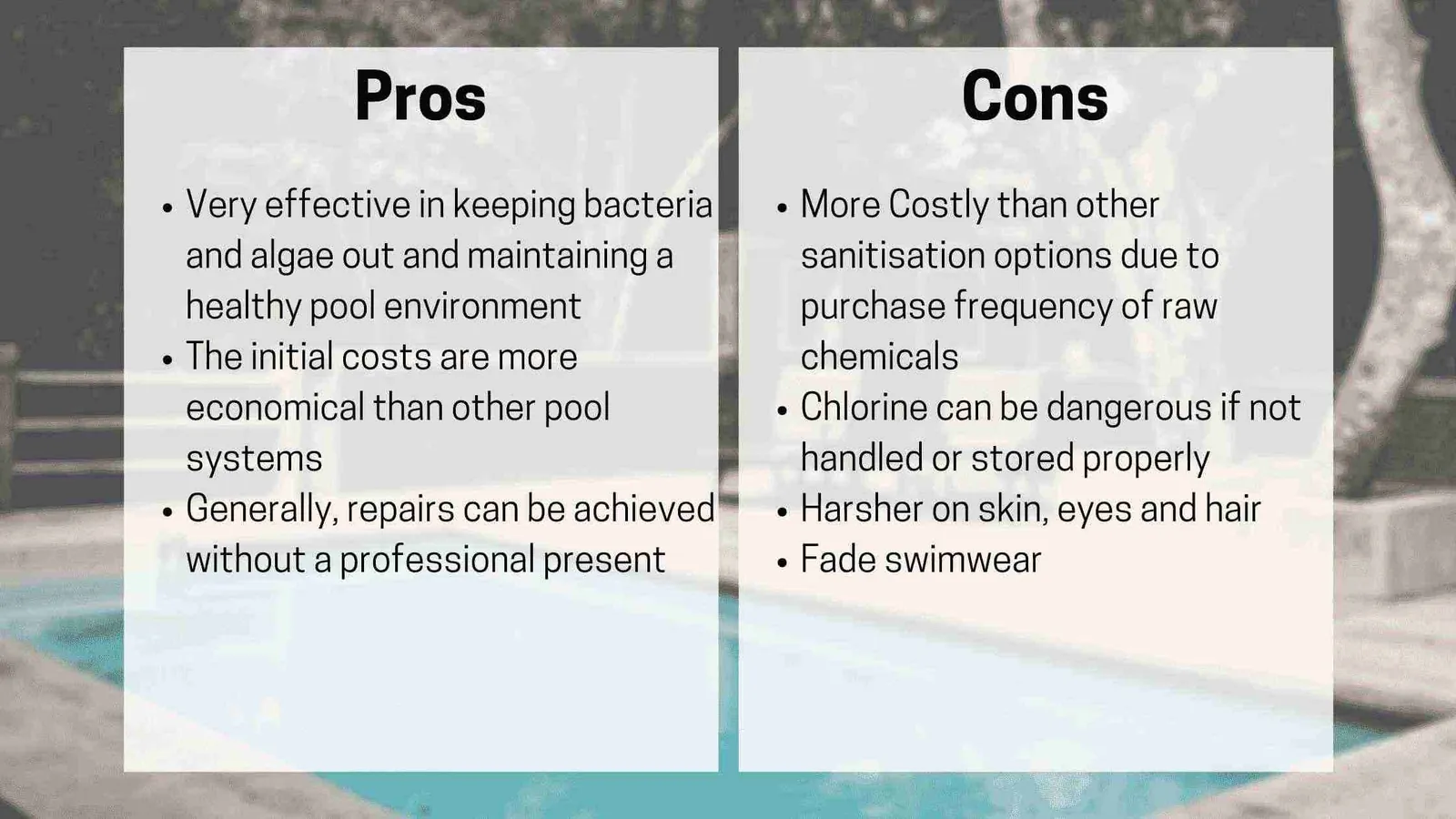
A salt system doesn’t fit every pool or every owner. If your pool is indoors, skip it entirely. The off-gassing damages metal HVAC components and light fixtures. Use a standard inline chlorinator or UV sanitation instead.
If your pool has galvanized steel walls or older bronze fittings, salt accelerates rust and dezincification. The water tastes softer, but the structure rots faster. Stick to traditional chlorine and keep the salt content near zero.
If your electricity rate exceeds 30 cents per kilowatt-hour, the monthly operating cost might erase the chemical savings. Compare your annual power addition against your annual liquid chlorine bill before committing.
If you close your pool completely for six months of the year due to freezing temperatures, the high upfront cost takes much longer to pay back. A seasonal user spending $40 a month on chlorine tablets only swims four months anyway. The salt system sits idle half the year while its warranty ticks down. In that case, a floating chlorinator is the better financial move.
Related guides
Frequently asked questions
Can you convert a chlorine pool to salt?
Yes, you can convert any standard inground pool. The process involves adding a salt cell to the return plumbing and wiring a control box to a dedicated breaker. You’ll also need to add about 400 pounds of salt per 15,000 gallons to reach the target salinity.
Why does my salt pool turn green?
Green water means your chlorine production can’t keep up with algae growth. This usually happens when cyanuric acid drops below 50 ppm, allowing sunlight to destroy the chlorine instantly. Test your stabilizer level and add granular cyanuric acid if it’s low.
How long does a salt cell last?
A salt cell typically lasts 3 to 7 years. Running it at 100% output in a hot climate wears the titanium plates out closer to 3 years. Oversizing the cell so it runs at 50% output pushes the lifespan toward 7 years.
Is it safe to swim while the cell runs?
Yes, it’s completely safe to swim while the system operates. The voltage inside the cell is low, and the plumbing isolates the electrical components from the water returning to the pool. The water feels identical to a mildly salted bath.
What happens if I add too much salt?
Adding too much salt won’t damage the cell, but it makes the water taste noticeably salty and can corrode stainless steel ladders or lights. The only way to lower salinity is to partially drain the pool and refill it with fresh water.
Does a salt pool still need chlorine added?
No, you don’t add liquid or tablet chlorine to a functioning salt pool. The generator makes it continuously from the dissolved salt. However, you may still need to shock the pool with granular chlorine occasionally if algae appears or after a heavy swimmer load.
How often should I test the water?
Test the water once a week during the swimming season. You need to check pH, free chlorine, and alkalinity. Test the salinity and cyanuric acid levels once a month, as those numbers change much slower than the daily sanitizer readings.
Starting your saltwater pool
Check your current pool volume and your local electricity rate on your latest utility bill before buying anything. Match those two numbers to a generator rated one-third higher than your gallon count, and you’ll see stable chlorine readings within 48 hours of turning it on. If the control board shows a persistent red fault light after balancing the chemistry, stop troubleshooting and call a licensed pool technician.