
The latest trends in microwave oven technology focus on smart connectivity, inverter power delivery, and specialized convection features that replace traditional countertop ovens. These modern appliances prioritize precise energy control over simple on-off heating cycles, which prevents the uneven “hot spots” found in older models.
The primary shifts in the market involve moving away from basic magnetron cycling toward sensor-driven cooking. If you seek convenience, look for models with Wi-Fi integration; if you prefer culinary performance, prioritize inverter technology that allows for true low-power simmering rather than just pulsing heat.
Latest microwave oven trends
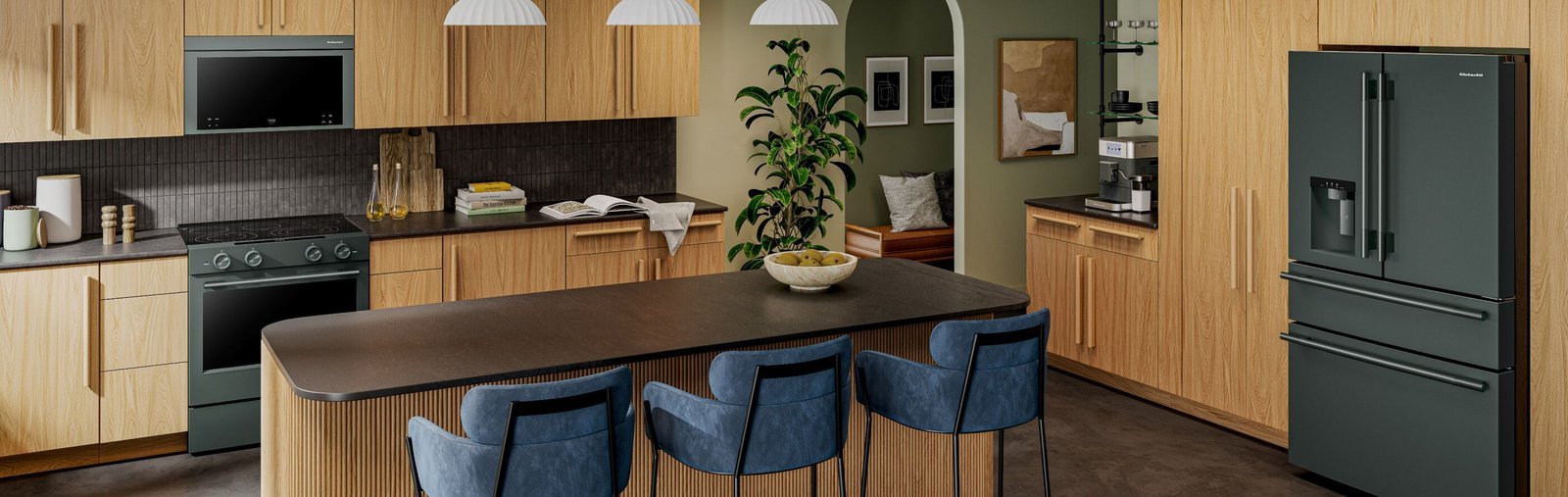
Home chefs today look for appliances that bridge the gap between a quick heater and a full-sized oven. These units often include air-frying capabilities, steam injection systems, and sensors that detect humidity levels to prevent overcooking.
Many users choose these appliances because they save kitchen space by combining three tools into one. This isn’t for the person who only needs to reheat coffee, as these high-tech models require more maintenance and cost significantly more than basic units. The assumption here is that you want to cook entire meals, not just defrost frozen snacks.
The primary mistake buyers make is ignoring the ventilation requirements.
Use this decision rule: if you cook for more than three people, the air-fry feature is worth the investment for the speed alone. If you’re cooking for one or two, the preheat time for a combo unit often matches that of a standard toaster oven, rendering the extra cost unnecessary.
Finally, check the sensor logic. Premium models use infrared sensors to detect surface temperature, while cheaper units rely on steam detection. If you frequently reheat dense items like lasagna, infrared is superior. If you mostly heat soups or liquids, the basic steam sensor is sufficient and less prone to calibration errors over time.
Technology Driving Performance
Several factors change how a modern microwave performs during daily use. The most significant is the power delivery system, which dictates how food texture and heat distribution are managed.
Inverter technology is the most important upgrade for consistent results. Unlike traditional microwaves that turn the magnetron on and off to simulate low heat, inverter models provide a constant stream of energy at a set power level. This prevents the edges of your food from boiling while the center remains frozen.
Sensor cooking is the second major factor. These units use internal humidity sensors to monitor the steam released by food. When the sensor detects a specific level of moisture, it stops the cycle automatically. This requires you to keep the sensor window clean, as grease buildup will cause the timer to stop prematurely.
Convection and air-fry modes change the heat source from electromagnetic waves to heated air circulation. This requires specific metal accessories that come with the unit. If you use standard metal foil or non-compatible cookware, you risk arcing and potential fire hazards.
Installing Your New Appliance
- Check the cabinet dimensions and ensure at least 2 inches of clearance on all sides for proper ventilation.
- Verify that your electrical outlet matches the wattage requirements listed on the manufacturer’s label.
- Place the glass turntable on the center rollers, ensuring it rotates freely without catching on the walls.
- Plug the unit directly into a grounded wall outlet; avoid using extension cords, as they can overheat under high loads.
- Run a “water test” by heating 1 cup of water for 2 minutes to ensure the unit heats without unusual noise.
- Program the clock and test the door interlock switches by opening the door mid-cycle to verify it stops instantly.
The most important judgement call is ensuring the unit is level. A tilted microwave will cause the turntable to slide off its track, leading to uneven heating and potential motor failure. If the unit doesn’t sit flat, use shims to stabilize the frame before you start cooking.
Appliance Capability Comparison
| Situation | Best Feature | Primary Advantage | Watch For |
|---|---|---|---|
| Quick Reheating | Inverter Power | Even heat distribution | Overheated edges |
| Daily Cooking | Humidity Sensors | Automatic timing | Dirty sensor ports |
| Multi-Meal Prep | Convection Mode | Crispy textures | Longer cook times |
| Smart Kitchen | Wi-Fi Control | Remote notifications | Network setup issues |
| Small Kitchens | Air-Fry Combo | Multi-use space | High energy draw |
Inverter power is the gold standard for reheating because it delivers constant energy rather than pulsing on and off. If your leftovers have cold centers and burnt rims, your current unit likely uses a traditional magnetron. Switch to inverter models to ensure internal temperatures reach 165°F without scorching the exterior.
Humidity sensors rely on a small vent that detects steam released by food. If this port is blocked by grease or debris, the sensor will fail to trigger the shut-off, leading to rubbery textures. Clean the vent with a damp cloth monthly to maintain accuracy.
Convection mode functions like a miniature oven by circulating hot air. While this adds 15% to your total cook time, it’s the only way to achieve a Maillard reaction on proteins.
Smart features are best for busy households, but they require a stable 2.4GHz network. If your router is tucked behind a metal appliance, your phone will frequently lose the connection.
Finally, air-fry combos often pull 1,500 watts or more. If you plug one into a shared circuit with a toaster or coffee maker, you’ll likely trip the breaker. Dedicate a single outlet to the appliance to avoid power failures during peak meal times.
Achieving Consistent Results
Proper Preparation
Experienced users always arrange food in a circle with the thickest parts facing the outer edge. This is necessary because microwaves heat the outer 1 to 2 centimeters of food first, relying on conduction to carry that heat to the center. Covering your dish with a microwave-safe lid retains steam and prevents the surface from drying out during longer cycles. Always check the internal temperature of leftovers using a food thermometer to ensure they reach 165°F, as outlined in the safe minimum internal temperatures chart.
Maintenance Habits
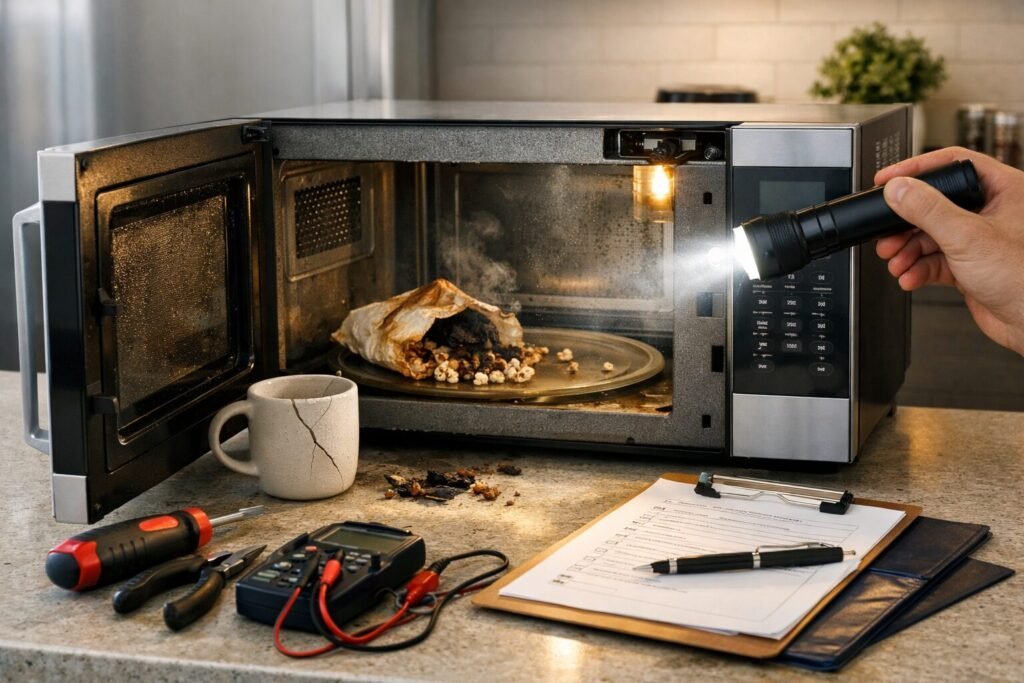
Clean the interior walls with a damp cloth after every use to prevent food splatters from absorbing energy meant for your food. If you notice a burnt smell, inspect the waveguide cover—a small rectangular piece on the inner wall—for food debris. Never attempt to remove the housing or touch internal components like the capacitor; these parts hold a lethal charge even when the unit is unplugged. If the unit fails to heat or the turntable stops moving, contact a professional technician for repairs instead of attempting a DIY fix.
Troubleshooting Common Issues
| What you notice | What it usually means | What to do first | How to stop it |
|---|---|---|---|
| Food stays cold | Magnetron failure | Check power level | Use correct settings |
| Arcing/Sparks | Metal contact | Remove metal items | Use glass/ceramic |
| Door won’t seal | Debris in latch | Clean door frame | Wipe after use |
| Turntable stuck | Food buildup | Clean the ring | Rotate regularly |
| Excessive noise | Motor misalignment | Level the unit | Check the base |
If your food remains cold despite the timer running, check the power level setting immediately. Many users accidentally toggle to “Defrost” or “Low,” which provides insufficient wattage for heating. If the setting is correct but the unit hums silently, the magnetron has likely failed. Don’t attempt to replace this component yourself; it holds a high-voltage charge that can be fatal even when unplugged.
Sparks, or arcing, almost always indicate metal interference. Check for hidden foil edges or decorative gold-rimmed plates. If you see sparks without metal present, the waveguide cover—a small, rectangular piece of mica—is likely scorched. Replace this cover immediately to prevent permanent damage to the magnetron.
A door that won’t seal triggers a safety interlock, preventing the unit from starting. If the latch feels “mushy,” check for caked-on grease inside the frame. A single hardened crumb can prevent the safety switch from engaging.
If the turntable grinds, check the plastic guide ring for hairline cracks. If the ring is intact, clean the track with warm, soapy water. Never force the tray to rotate by hand, as this strips the drive motor gears. If the noise persists, ensure the unit sits on a perfectly level surface.
Regulatory and Safety Standards
The performance and safety of these appliances are governed by strict standards to prevent radiation leakage and fire. In the United States, the Food and Drug Administration (FDA) regulates radiation emissions under the Electronic Product Radiation Control Law. Every microwave must include a safety interlock system that cuts power the moment the door is opened.
Always verify the wattage of your unit, as this changes your cooking times. A 1,000-watt microwave is the standard for most recipe instructions. If your unit is 700 watts, you must increase your cooking time by approximately 40% to achieve the same result. Never modify the door or the seals, as these are critical safety components designed to contain electromagnetic energy. If you suspect your unit is leaking radiation, the FDA recommends contacting the manufacturer to request a test or replacement, as home-use radiation detectors are often inaccurate.
Real Costs of Ownership
The true cost of a modern microwave goes beyond the purchase price. You’re paying for energy efficiency, extra features, and the convenience of a multi-purpose machine. High-end units with inverter technology and convection features often cost three times more than basic models.
Electricity consumption is another factor. While microwaves are generally efficient, using high-power convection modes for 30 minutes daily will increase your monthly utility bill compared to simple reheating. If you use the convection setting for a daily 30-minute roast, expect to add a small amount to your monthly electric bill.
The lifespan of a microwave typically ranges from 7 to 10 years depending on daily usage and cleaning habits. If you choose a model with complex digital displays and Wi-Fi, expect the control board to be the first part that requires repair. These electronic modules are often expensive, frequently making a professional repair more expensive than a new basic unit.
Always check the manufacturer’s warranty, as some models offer extended coverage on the magnetron, which is the most expensive internal part to replace. If the unit fails to heat but the lights and fan still function, the magnetron has likely expired.
A simple decision rule applies here: if the repair cost exceeds 40 percent of the original purchase price, replace the unit entirely. Avoid units with integrated smart features if you prioritize longevity over novelty. Complex software interfaces are prone to glitches that render the entire machine unusable, even if the heating element remains in perfect working order. Maintenance is the final hidden cost; failing to wipe down the interior leads to arcing, which permanently damages the waveguide cover and shortens the appliance’s life by years.
Care and Long-Term Use
Keep your unit in top shape by wiping down the interior weekly with mild soap and water. Never use harsh abrasive pads, as these can scratch the interior coating and lead to rust. If you notice the light inside has failed, check the owner’s manual; some models allow for a simple bulb change, while others require a technician to access the internal panel.
Monitor the door hinges for any sagging, as a misaligned door can impact the safety interlocks. If the door doesn’t click shut firmly, stop using the unit immediately and have it inspected. Periodically check the exterior air vents for dust buildup, which can trap heat and shorten the life of the internal electronics. By keeping these vents clear, you ensure the cooling fan operates at full capacity, which is essential for the long-term health of the magnetron.
When to Choose a Conventional Oven
There are cases where a microwave, no matter how advanced, is the wrong tool for the job. If you’re baking artisan bread that requires a hard, crusty exterior, a microwave can’t provide the dry heat needed for a proper crust. In this case, use a conventional oven for the best texture.
The convection setting is the specific decision rule here. If your recipe calls for a delicate rise, such as a soufflé or a sponge cake, avoid the convection fan. The forced air can cause the top to set before the center has fully expanded, resulting in a lopsided or sunken appearance. Stick to the standard thermal setting for these items.
Similarly, if you’re searing a large steak, a microwave will only steam the meat, leaving it grey and unappealing. Always use a cast-iron skillet on the stovetop for browning. If you can’t fit your cuts with at least an inch of space between them, sear in two batches.
Finally, if you’re cooking for a large crowd, a microwave’s limited capacity makes it inefficient compared to a full-sized oven. Don’t attempt to fit too many items into a small space, as this blocks airflow and leads to raw or cold spots in the center of your dishes. If you must use multiple racks, rotate your pans halfway through the cook time to compensate for uneven heat distribution near the heating elements.
Frequently asked questions
Can I use metal in a modern microwave?
No, you should never use metal in a microwave unless the specific manual for your convection-capable model states that a provided rack is safe. Metal reflects electromagnetic waves, which causes arcing, sparks, and potential damage to the magnetron. Always use glass, ceramic, or microwave-safe plastic containers.
How long does a microwave usually last?
A microwave typically lasts for a significant period with daily use. You can extend this lifespan by keeping the interior clean, ensuring the door seals remain free of food, and avoiding overloading the unit. If the unit makes loud humming or grinding noises, it may be nearing the end of its life.
Is it safe to reheat food multiple times?
No, you should only reheat food once to maintain safety and quality. Repeatedly heating and cooling food allows bacteria to grow if the temperature stays in the “danger zone” for too long. Always ensure your food reaches an internal temperature of 165°F during the single reheat cycle.
Why does my microwave cook unevenly?
Uneven cooking usually happens because the food isn’t arranged correctly or the power level is too high. Try arranging food in a circle with the thickest pieces on the outside, and use a lower power setting for longer periods to allow heat to conduct to the center of the dish.
Does a microwave change the nutrients in food?
No, microwaves don’t change the molecular structure of food in a way that destroys nutrients. In fact, because microwaves cook food quickly with little added water, they often preserve more vitamins and minerals than boiling or steaming on a stovetop for long periods.
What happens if I run the microwave empty?
Running a microwave empty can damage the magnetron because the energy has nowhere to go. Without food or water to absorb the waves, the energy reflects back into the internal components, which causes overheating and can lead to permanent failure of the unit.
Latest trends, in short
Start by measuring your kitchen space to ensure a proper fit before you purchase any new unit. Expect the best results when you use the sensor settings for vegetables and the inverter power levels for delicate items like fish. If the unit begins to emit a burning smell or the door fails to latch securely, stop using it immediately and contact the manufacturer for professional assistance.
Related guides