
Choosing the right septic tank for your home is a big decision that affects your property’s safety and your peace of mind. You might be wondering whether a concrete or plastic septic tank is better for your needs.
Both options have their strengths, but knowing which one suits your situation can save you time, money, and hassle down the road. You’ll discover the key differences between concrete and plastic septic tanks, helping you make an informed choice that works best for you and your home.
Keep reading to find out which tank will protect your investment and keep your system running smoothly.
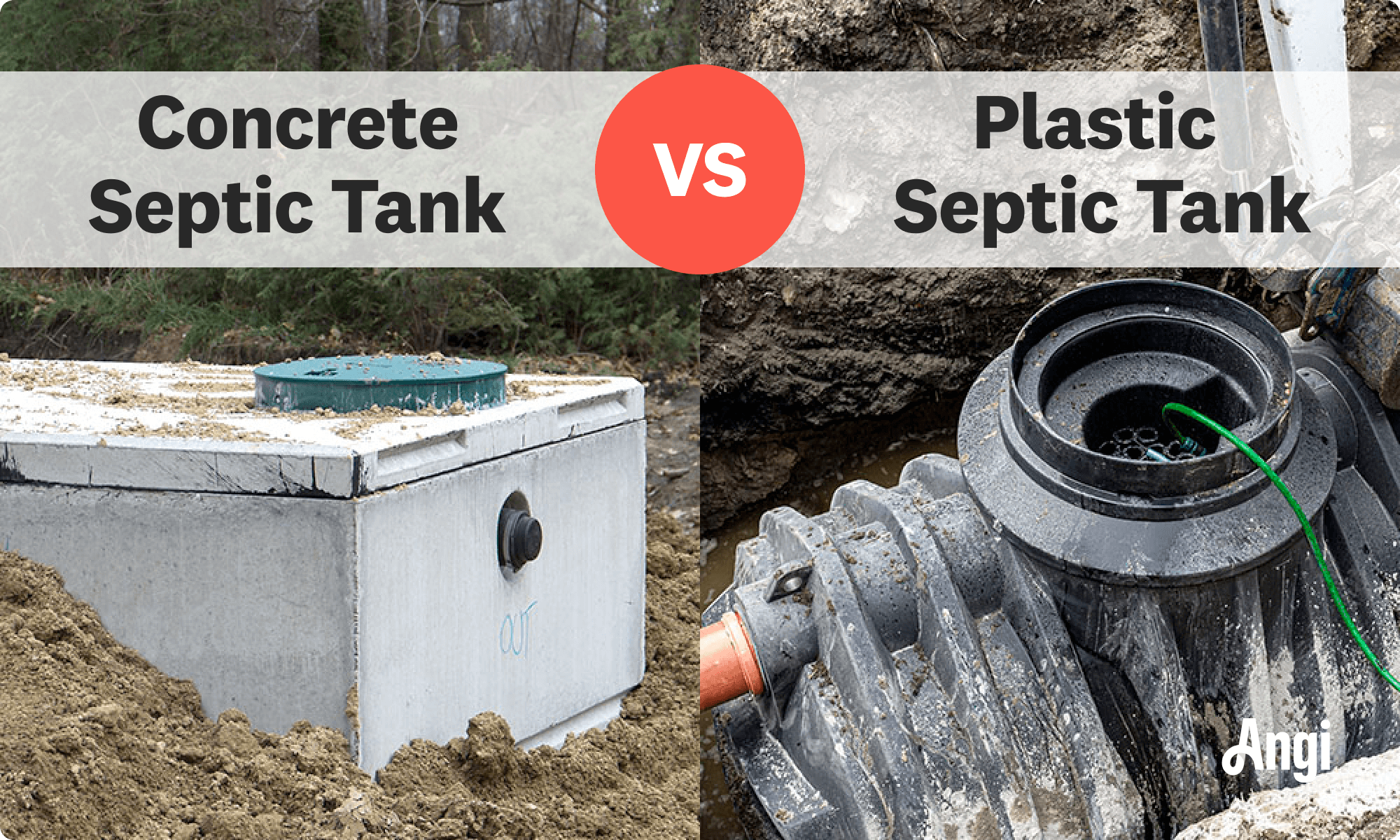
Credit: www.angi.com
Septic Tank Basics
Septic tanks are a key part of many homes’ waste systems. They hold and treat wastewater safely underground. Understanding how these tanks work helps you choose the right type for your property.
Septic tanks prevent pollution and keep your environment clean. They break down solid waste and let liquids drain away. Choosing between concrete and plastic tanks depends on what suits your needs best.
Role In Waste Management
Septic tanks collect wastewater from toilets, sinks, and drains. Solids settle at the bottom, forming sludge. Liquids flow out into a drain field for further filtering. This process stops harmful germs from reaching water sources. It also protects your home from backups and leaks.
Common Materials Used
Concrete and plastic are the most common septic tank materials. Concrete tanks are heavy and strong. They last a long time and resist damage. Plastic tanks are light and easy to install. They resist rust and cracking but may not be as durable. Both types serve the same purpose but differ in weight, cost, and lifespan.
Features Of Concrete Septic Tanks
Concrete septic tanks are a popular choice for many homeowners. Their strong build and long-lasting nature make them reliable for waste management. Understanding their key features helps in choosing the right septic tank for your property.
This section highlights the main traits of concrete septic tanks. From their strength to maintenance needs, each feature plays a role in their effectiveness and cost.
Durability And Strength
Concrete septic tanks are very strong and heavy. They resist cracks and damage better than many other materials. These tanks can last for decades under normal conditions. Their weight keeps them stable in the ground, reducing the risk of shifting or floating.
Installation Process
Installing a concrete septic tank requires heavy equipment. The tank must be carefully lowered into a prepared hole. This process takes more time and effort than installing plastic tanks. Skilled workers usually handle the installation to avoid damage.
Maintenance Needs
Concrete tanks need regular inspections to check for cracks or leaks. Cleaning the tank every few years helps avoid buildup and blockages. Proper maintenance ensures the tank lasts longer and works efficiently.
Cost Factors
Concrete septic tanks often cost more upfront than plastic ones. The price includes the tank, delivery, and installation. Their durability can reduce repair costs over time. Homeowners must consider both initial expense and long-term value.
Features Of Plastic Septic Tanks
Plastic septic tanks offer several features that make them a popular choice. They differ significantly from concrete tanks in many ways. These features affect their use, maintenance, and overall value.
Understanding the qualities of plastic septic tanks helps in making a better decision for your property. Their design, material, and cost play important roles in their performance.
Lightweight And Flexibility
Plastic septic tanks are much lighter than concrete ones. This makes them easier to transport and handle at the site. Their flexible material can absorb small ground movements without cracking. This flexibility reduces the risk of damage over time. It also allows the tank to adapt better to uneven surfaces.
Installation Ease
Installing plastic tanks is faster and simpler. Their light weight means fewer workers and less heavy equipment are needed. They can fit into tight spaces more easily due to their shape and size options. Quick installation saves time and lowers labor costs on site.
Maintenance Requirements
Plastic tanks need less maintenance compared to concrete ones. They do not corrode or crack easily. Cleaning and inspecting are straightforward tasks. Plastic tanks resist chemicals and bacteria that may damage other materials. This helps keep the system working well for longer periods.
Cost Considerations
Plastic septic tanks usually cost less upfront than concrete tanks. The lower weight and easy installation reduce overall expenses. They also have longer lifespans with fewer repairs. Over time, plastic tanks can provide better value for budget-conscious buyers.
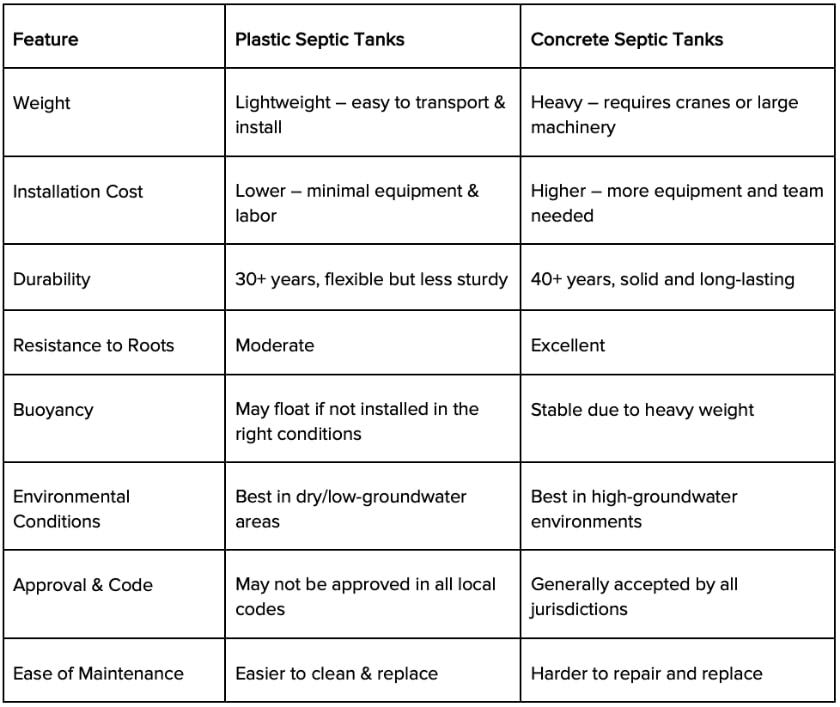
Credit: www.tank-depot.com
Performance Comparison
Choosing between concrete and plastic septic tanks means comparing their performance. Each material offers unique strengths and weaknesses. Understanding these can help pick the right tank for your needs.
Leak Resistance
Concrete tanks are heavy and solid, which helps prevent leaks. Cracks can form over time, but proper installation reduces this risk. Plastic tanks resist corrosion and rust. Their one-piece design limits leak points. Plastic may flex under pressure, which can cause damage if not supported well.
Environmental Impact
Concrete is made from natural materials like cement and stone. It is less harmful to the environment during production. Plastic tanks use petroleum-based materials, which affect the environment more. However, plastic tanks are lighter, reducing fuel use during transport. Both types need proper disposal to avoid pollution.
Longevity
Concrete tanks can last 40 years or more with good care. They resist damage from heavy soil and weather well. Plastic tanks usually last 20 to 30 years. They can crack or warp if exposed to harsh sunlight or heavy loads. Regular checks help extend the life of any tank.
Capacity And Size Options
Concrete tanks come in many sizes but are limited by weight and transport. They suit larger systems well. Plastic tanks are easier to move and install in tight spaces. They come in various sizes, but very large tanks may be less common. Choose based on your property size and wastewater needs.
Site And Soil Compatibility
Choosing the right septic tank depends a lot on the site and soil where it will go. The soil type affects how well the tank works and how easy it is to install. Some soils hold water, while others drain quickly. This changes how the tank needs to be placed and supported.
Both concrete and plastic septic tanks react differently to soil conditions. Knowing how each type behaves helps in picking the best option. This section explains how site and soil affect installation and which terrains suit each tank.
Impact On Installation
Concrete tanks are heavy and need strong equipment to place. This can be tough on soft or wet soils. The weight may cause the tank to sink or crack if the ground is not firm. Extra work is often needed to prepare the soil.
Plastic tanks are light and easier to move. They float if the soil is too wet or sandy. To stop this, the tank must be anchored or filled with water during installation. This makes installation faster but needs care in loose soil.
Suitability For Different Terrains
Concrete tanks suit rocky or firm soil well. Their weight helps keep them stable on uneven ground. They resist damage from shifting soil better than plastic tanks.
Plastic tanks work best on flat, stable terrain. They handle shifting soil poorly because they can crack or move. In high water table areas, plastic tanks need extra securing to avoid floating.
Regulatory And Warranty Aspects
Understanding the regulatory and warranty aspects of septic tanks is important. These factors affect installation, maintenance, and overall safety. Both concrete and plastic tanks must meet certain rules. Warranties protect your investment in case of defects or damage.
Building Codes And Permits
Building codes set rules for septic tank size and placement. Local authorities require permits before installation. Concrete tanks often need extra approval due to their weight and size. Plastic tanks are lighter and easier to install, which may simplify permits. Both types must follow local health and safety standards. Ignoring codes can cause fines or removal orders.
Manufacturer Warranties
Concrete septic tanks usually have longer warranties. They cover cracks, leaks, and structural issues for several years. Plastic tanks often come with shorter warranties but resist corrosion well. Warranties vary by brand and model, so check details carefully. Proper installation is key to keeping warranty valid. Always keep warranty papers for future reference.
Cost-benefit Analysis
Choosing between a concrete and plastic septic tank involves more than just picking a material. The cost-benefit analysis helps understand the true value of each option. It looks at how much you pay now and what you save or gain later. This approach helps make a smart decision that fits your budget and needs.
Initial Investment
Concrete tanks usually cost more upfront. They are heavy and need special equipment to install. Plastic tanks are lighter and easier to handle. This makes their installation cheaper and faster. The price difference can be significant depending on your location and soil type.
Long-term Savings
Concrete tanks last longer and resist damage well. They need less frequent repairs, saving money over time. Plastic tanks can crack or shift in certain soils. This may lead to extra repair or replacement costs. Still, plastic is less likely to corrode and can resist some chemicals better.
Resale Value
Homes with concrete septic tanks often have higher resale value. Buyers see them as durable and reliable. Plastic tanks may lower home value if buyers doubt their strength. Proper maintenance boosts value for both types. A well-kept system shows care and saves future costs.
Making The Right Choice
Choosing between a concrete or plastic septic tank can be confusing. Each type has benefits and limits. Making the right choice depends on several factors. Understanding your needs and getting expert advice helps you pick the best option for your home.
Assessing Household Needs
Start by looking at your home’s size. Larger families produce more wastewater. This means you may need a bigger tank. Think about your water use habits too. Frequent use of washing machines or dishwashers adds to the load. The soil type on your property affects drainage. Some soils absorb water better than others. This impacts the tank’s location and type. Climate also matters. Cold areas may require tanks that resist freezing. Assess your budget as well. Concrete tanks usually cost more upfront. Plastic tanks are lighter and may save on installation.
Consulting Professionals
Talk to septic system experts before deciding. They can inspect your property and soil. Professionals know local rules and codes. This ensures your tank meets all legal standards. They help you understand the pros and cons of each tank type. Installation experts can explain site preparation needs. They also share maintenance tips for long tank life. A good professional can prevent costly mistakes. Trust their advice to make a smart choice.

Credit: southernirrigation.com
Frequently Asked Questions
What Are The Main Differences Between Concrete And Plastic Septic Tanks?
Concrete tanks are heavy and strong, while plastic tanks are lightweight and flexible. Concrete lasts longer but costs more. Plastic tanks resist cracks and are easier to install.
Which Septic Tank Type Is More Durable: Concrete Or Plastic?
Concrete tanks generally last longer because they resist heavy soil pressure well. Plastic tanks can crack if exposed to sharp objects but resist corrosion better. Durability depends on installation and soil conditions.
How Does The Cost Compare Between Concrete And Plastic Septic Tanks?
Concrete tanks usually cost more due to materials and delivery weight. Plastic tanks are cheaper and easier to transport. Installation costs may vary based on tank size and site access.
Can Plastic Septic Tanks Handle Heavy Soil Better Than Concrete?
Plastic tanks are flexible but may deform under heavy soil pressure. Concrete tanks are rigid and handle heavy loads without damage. Soil type and compaction affect tank performance.
Are Plastic Septic Tanks Easier To Install Than Concrete Ones?
Yes, plastic tanks are lighter and easier to move into place. Concrete tanks need heavy equipment for installation. Plastic tanks reduce labor time and overall installation hassle.
Which Septic Tank Type Requires Less Maintenance?
Both types need regular pumping and inspection. Concrete tanks may develop cracks over time, needing repairs. Plastic tanks resist corrosion but can be damaged by UV rays or sharp objects.
Is One Septic Tank Type Better For Cold Climates?
Concrete tanks handle freezing temperatures well because they insulate better. Plastic tanks can become brittle in extreme cold but usually survive with proper burial depth. Insulation and soil cover help protect both types.
Conclusion
Choosing between concrete and plastic septic tanks depends on your needs. Concrete tanks offer strength and durability. Plastic tanks are lighter and easier to install. Both types require regular maintenance to last long. Consider your budget, soil type, and space.
Think about how often you want to service the tank. Both options have pros and cons. The right choice matches your home and lifestyle. Keep these points in mind when deciding. Your septic system should work well for years. Simple care keeps it running smoothly.