
As an Amazon Associate, we earn from qualifying purchases. This post contains affiliate links – if you buy through them, we may earn a commission at no extra cost to you.
You’re choosing between 10 solid tents under 150 that deliver real camping performance. What sets them apart is how they help you sleep more people, set up faster, hike farther, or stay drier in tough weather. Each pick wins in one clear way.
Best overall: Coleman Sundome – Tough build, weatherproof design, and simple setup make it the go-to for first-timers and regular campers alike. Fastest setup: Coleman Instant Tent – Pre-attached poles mean you can pitch it in under a minute, great when time or light is short. Largest capacity: Castle Unicorn Cabin Tent – Two rooms and 71 sq ft of space fit families or groups who want comfort and privacy.
This guide helps you pick the right tent based on how you camp — not just what fits your budget.
How We Picked the Best Camping Tents Under 150
We selected tents with clear details on size, season rating, materials, and weather protection. Each listing provides setup time, included components, and warranty info so buyers know exactly what to expect before purchasing.
1. Coleman Sundome Camping Tent with Rainfly

Best for: First-time car campers
The Coleman Sundome uses a WeatherTec system with welded corners and inverted seams to seal out water, keeping you dry in sudden storms. Large windows and a ground vent also improve airflow and reduce condensation.
It’s roomy enough for two people and their gear, with good airflow from large windows and a ground vent. That cuts down on condensation, which means less dampness inside on cool nights. The durable frame handles winds over 35 mph, making it reliable for weekend trips in most seasons.
Pros
- Stays dry in heavy rain
- Sets up fast with simple clips
- Handles strong wind well
Cons
- Not meant for backpacking
- Heavier than hiking tents
This tent isn’t for anyone planning long hikes — it’s made for car camping, not carrying miles into the woods.
2. Coleman 4/6/8/10 Person Instant Camping Tent with 1-Minute Setup

Best for: Campers who hate setup
If you’ve ever struggled with poles at dusk, this one will feel like a win. It opens in under a minute because the poles are already attached. Just unfold it, raise the frame, and lock it in place. No threading, no frustration. That speed makes it perfect for festivals, quick getaways, or camping with kids.
The double-thick Polyguard fabric holds up to sun and rain, and the integrated rainfly adds extra protection. With 8 x 7 feet of floor space and nearly 5 feet of headroom, it fits a queen airbed and leaves room to move. Two large windows help air flow and keep condensation low.
Pros
- Sets up in under 60 seconds
- Fits a queen air mattress
- Strong fabric for lasting use
Cons
- Works best with two people during setup
- Bulkier carry bag
This tent prioritizes comfort and fast setup, making it ideal for casual campers who value space and convenience over portability.
3. CAMPROS CP 8 Person Camping Tent

Best for: Big groups needing space
With straight walls and 6-foot center height, this tent feels bigger inside than most. You can stand up, change clothes, and move around without crouching. That layout gives more usable floor space, which matters when sleeping six to eight people.
A room divider lets you split the tent into two sections — handy for families or mixed groups who want privacy. Setup takes two people about five minutes, thanks to color-coded poles that match each spot. The high-tech coating and sealed seams keep water out, even in steady rain.
Pros
- Tall interior for standing
- Room divider adds privacy
- Easy color-coded setup
Cons
- Heavy for car camping only
- Ventilation could be better
This tent isn’t ideal for cold or windy mountain trips — it’s made for fair-weather group camping.
4. Forceatt 3-4 Season Tent

Best for: All-year backpackers
This tent handles snow, wind, and rain thanks to a 3000mm waterproof rating and full-coverage rainfly. The welded floor keeps moisture out, even on wet ground. Aluminum poles are strong yet lightweight, so it’s stable without weighing you down.
At just 5.5 pounds, it’s easy to carry on long hikes. Two D-shaped doors and vestibules let you store gear outside while staying dry. Quick to pitch, even when camping alone Mesh panels and ceiling vents allow airflow, so you don’t wake up sweaty.
Pros
- Works in winter or summer
- Packs small and light
- Good airflow with mesh roof
Cons
- Floor space is snug for two
- Limited headroom
Not the best choice for tall campers or couples who want lots of room — it’s built for performance, not luxury.
5. Amazon Basics Dome Tent
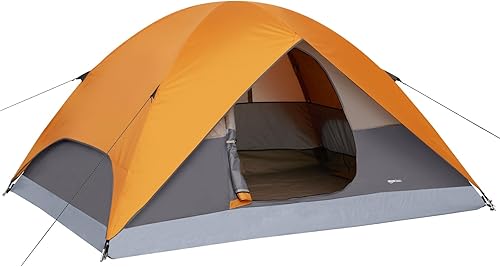
Best for: Budget-first beginners
Simple and solid, this tent gives you the basics without extras. It’s a classic dome design with a removable rainfly, welded seams, and water-resistant fabric. Sets up in under four minutes with shock-corded poles that slide smoothly into sleeves.
The 7 x 5 foot floor fits two adults, though it’s cozier than larger models. At 45 inches high, you can sit up but not stand. A mesh storage pocket holds small items like phones or flashlights. Comes with a compact bag for stakes, poles, and the tent.
Pros
- Low cost, high value
- Easy setup for new users
- Includes all needed parts
Cons
- Less ventilation than others
- Fabric not as tough long-term
Skip this if you plan frequent trips in heavy rain — it’s good for mild conditions, not extreme weather.
6. BISINNA 2/4 Person Camping Tent Lightweight Waterproof Backpacking Tent
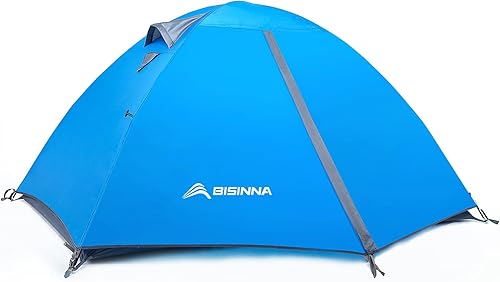
Best for: Lightweight hikers
Weighing just under 5 pounds, this tent is made for carrying long distances. The 7001 aluminum poles are strong and light, and the whole packed size is smaller than a water bottle — only 16.9 x 5.9 x 5.9 inches. Beginners can manage setup alone, thanks to the freestanding design and two-pole system
Two D-shaped doors with dual zippers allow easy entry and excellent cross-ventilation. Large mesh panels prevent condensation and keep bugs out, while the inner tent uses 190T polyester with no-see-um mesh for breathability and durability. The rainfly is 190T polyester with PU2000mm coating, keeping you dry in most conditions, though it doesn’t extend fully to the ground on all sides.
Includes 10 alloy stakes, 2 wind ropes, carry bag, flysheet, and inner tent — everything you need out of the box. If something’s wrong, BISINNA offers direct support.
Pros
- Super light for backpacking
- Good ventilation with mesh
- Full setup kit included
Cons
- Rainfly could cover more
- Not for high winds
Not the best for exposed ridges or stormy areas — it’s built for three-season trails, not alpine storms. For hiking, fishing, or car camping in spring through fall, it delivers space and comfort without the weight.
7. Night Cat 2-Persons Backpacking Tent

Best for: Couples or solo hikers
Spacious for two, with 6.8 x 4.6 feet of floor space and dual vestibules for gear. The 3000mm waterproof rating and seam-taped floor keep you dry in downpours. Aluminum poles and guylines add stability in wind.
Pitchable in moments, with no need for a second person Smooth zippers won’t snag, and interior pockets keep small items handy. Full mesh walls and ceiling vents let air flow freely, reducing condensation on warm nights.
Pros
- Built for speed, so you can pitch it solo without help
- Excellent airflow
- Waterproof in heavy rain
Cons
- Packed size not ultra-small
- Stakes could be stronger
Skip it if you’re packing into tight spaces — it’s light but not the tiniest pack.
8. camppal 1 Person Tent
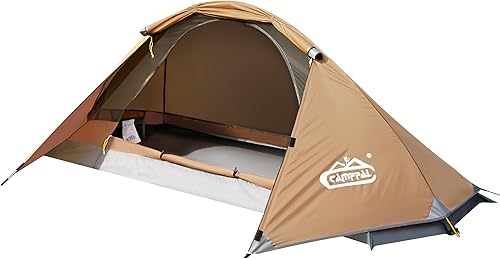
Best for: Solo adventurers
At only 3.75 pounds and 8.2 feet long, this tent is made for one. It fits taller hikers and leaves room for gear inside. The single-pole design means setup in three minutes — even beginners can do it fast.
With 3500–4000mm water resistance, it handles heavy rain and wind. Fire-retardant fabric meets safety standards. Ripstop material resists tears, and reinforced corners keep seams sealed. Great for hunting, hiking, or backcountry trips.
Pros
- Very light and compact
- High waterproof rating
- Uses a simple pole system that one person can handle easily
Cons
- No extra storage pockets
- Limited headroom
Designed for solo campers who prioritize quick shelter over shared space
9. Castle Unicorn 4-6 Person Camping Tent

Best for: Families who glamp
With 71 square feet and two rooms, this tent sleeps 4–6 comfortably. The cabin-style walls stand nearly vertical, giving you more headroom and floor space than most dome tents—enough for two air mattresses or six sleeping bags without crowding. A built-in room divider adds privacy, and the back wall works as a projector screen, turning movie night into a stargazing event.
The front and side doors open to an expandable porch—use the included poles plus two more (sold separately or substitute with tree branches) to create a shaded area for lounging or storing muddy gear. When rain hits, the PU1500mm waterproof rainfly and oxford cloth body keep everything dry. Large mesh windows, dual doors, and a full mesh roof promote airflow and let you see the sky at night, all while keeping mosquitoes out.
Set up takes about 10 minutes with two people. The carry bag measures 22.4 x 10.6 x 10.6 inches and weighs 21 lbs—manageable for car camping but too bulky for backpacking.
Pros
- Two rooms for privacy
- Can project movies inside
- Spacious for family use
Cons
- Extra poles not included
- Heavy for car camping only
Not for backpacking or rough terrain — it’s built for comfort, not portability.
10. Purebox Tent 4 Person Tents

Best for: Campers who want two doors
Dual D-shaped doors make entering and exiting easy — no crawling over someone else. Each door has mesh windows that boost airflow and reduce condensation. The extended floor gives more legroom than standard 4-person tents.
Setup is quick with a sleeve-pole system and fiberglass poles. Weighs only 10.8 pounds, so it’s easy to carry on road trips. Includes a door mat to keep dirt out, plus a one-year warranty backed by responsive customer service.
Pros
- Two doors for easy access
- Includes door mat
- Light and portable
Cons
- Fiberglass poles less durable
- Rainfly coverage could be better
Skip it if you face high winds — fiberglass isn’t as strong as aluminum.
Also worth considering: The Clostnature Waterproof Camping Tent offers basic shelter for 2 or 4 people with easy setup, though it lacks detailed specs. The Person Easy Pop Up Tent claims instant setup and a skylight, but doesn’t list materials or weather ratings clearly. The Coleman Skydome Camping Tent gives 20% more headroom than older models and sets up in 5 minutes, making it a solid alternative for casual campers.
How to Choose in Sixty Seconds
Should I pick a dome or cabin tent?
Go for a dome tent if you camp in wind or rain — they’re more aerodynamic and stable. Dome tents like the Coleman Sundome or Forceatt 3-4 Season Tent shed wind better and are easier to pitch on uneven ground. Choose a cabin tent like the Castle Unicorn if you want space and comfort. Straight walls give more room to move and stand, great for families or longer stays. But cabin tents are heavier and need more setup time. Your call depends on where you camp: domes for rugged trips, cabins for relaxed ones.
Is a 3-season tent enough for winter?
Most 3-season tents work in light snow or cold snaps, but not heavy winter storms. The Forceatt 3-4 Season Tent is built for winter use with a 3000mm waterproof rating, welded floor, and full-coverage rainfly to handle snow and wind. If you’re camping above tree line or in deep snow, step up to a dedicated winter model. For fall, spring, or occasional snow, a 3-4 season tent is often enough.
Do I really need a rainfly?
Yes, especially if rain is possible. A rainfly covers the tent body and stops water from soaking through. Even tents labeled “water-resistant” need a fly to stay dry in real storms. The Coleman Sundome and Night Cat 2-Person Tent both include full-coverage rainflies that seal out rain and wind. Without one, moisture can enter through mesh or seams. Some ultralight backpackers skip it to save weight, but they accept the risk. For most campers, a rainfly is essential protection — not optional.
Closing
The Coleman Sundome remains our top pick for its balance of durability, weather protection, and ease of use. Its WeatherTec system with welded corners and inverted seams keeps water out even during heavy showers, and the tent handles winds up to 35+ mph thanks to a sturdy frame and durable Polyguard fabric. Two campers fit comfortably inside, and the large windows plus ground vent ensure steady airflow to cut down on condensation. Setup takes about 10 minutes with snag-free pole sleeves and Insta-Clip attachments—ideal for car campers or weekend backyard use.
For those who value speed, the Coleman Instant Tent sets up in under 5 minutes, with instant setup possible in as fast as 1 minute thanks to pre-attached poles. It has enough space to fit a queen-size air bed, making it suitable for families or groups needing extra room., making it strong for family outings where space and quick deployment matter. The integrated rainfly adds extra weather protection while improving ventilation. Backpackers should consider lightweight options like the Forceatt, which weighs 5.5 lb and has a 3000mm waterproof rating, while families might prefer room dividers and porches found in the Castle Unicorn. That choice shapes which tent truly fits you best.
Related guides
- Are Camping Ovens Safe to Use in Tents? The Safety Verdict in 2026
- 5 Best Foosball Tables Under 1000 in 2026
- Best Hepa Air Purifier Under 100 Dollars in 2026
Frequently Asked Questions
What do I need to make my tent last longer?
A footprint and proper drying extend your tent’s life. The Forceatt 3-4 Season Tent’s PU-coated fabric resists wear, but moisture buildup can weaken it over time if stored wet.
Does tent weight matter for car camping?
Weight matters less when driving to camp—prioritize space and durability. Heavier models like the Castle Unicorn Cabin Tent offer more room, while lighter ones like the BISINNA Backpacking Tent help if you walk from the car.
What part of a tent fails first?
Zippers and poles are the most common failure points. Zippers jam if grit gets in or if you force them. Poles break at joints, especially fiberglass ones. Aluminum poles like those in the BISINNA and camppal tents resist snapping better. Check manufacturer specs for seam sealing details.
Is the simplest tent good enough for most trips?
Yes, for fair-weather camping. The Amazon Basics Dome Tent offers basic rain protection and quick setup for two, ideal for parks or backyards, but lacks advanced ventilation and durable fabric for harsh conditions.