
Selecting the best bathroom faucets depends on the number of holes in your vanity, the water pressure in your home, and the finish that matches your existing hardware. Single-hole, widespread, center-set, and wall-mounted faucets make up the main categories for residential bathrooms. Each type functions differently based on its installation requirements, though they all serve the primary purpose of controlling water flow and temperature at the sink. While their internal valves vary, the most reliable models use ceramic disc technology to prevent leaks and ensure smooth handle operation over many years of daily use.
Bathroom faucet types at a glance
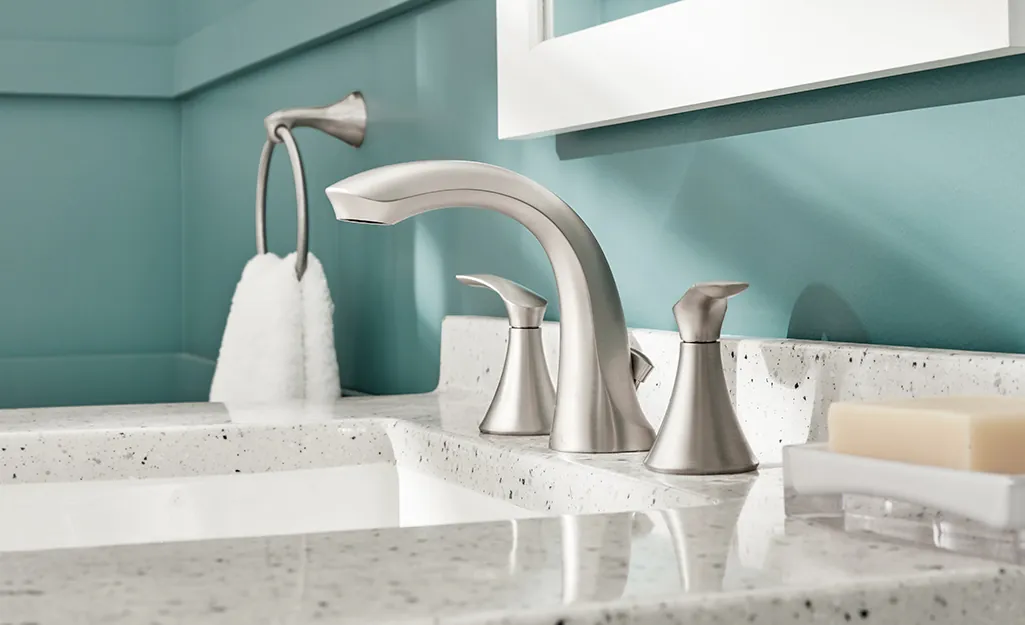
The following table outlines the common styles available for bathroom sinks and their typical use cases.
| Faucet Type | Best For | Typical Example |
|---|---|---|
| Single-hole | Small vanities | Lever handle |
| Center-set | Standard sinks | Three-piece unit |
| Widespread | Large vanities | Three separate pieces |
| Wall-mounted | Minimalist design | Extended spout |
| Vessel | Elevated sinks | Tall body |
Choose a single-hole faucet if your vanity top has only one pre-drilled hole. These units combine the spout and handle into one compact footprint, saving precious counter space in tight powder rooms. If you try to force a center-set unit into this configuration, you’ll be left with unsightly, exposed holes in your stone or porcelain.
Center-set faucets feature handles and a spout mounted on a single six-inch base plate. They’re the standard for most residential bathrooms because they cover the common four-inch spread between outer holes. If your sink has three holes spaced exactly four inches apart from center to center, this is your only practical choice.
Widespread faucets use three independent pieces. You should select this style only if your vanity holes are spaced at least eight inches apart. These offer a high-end look, but they require more complex plumbing connections beneath the sink. Installers often charge double the labor fee for these because of the restricted access under the basin.
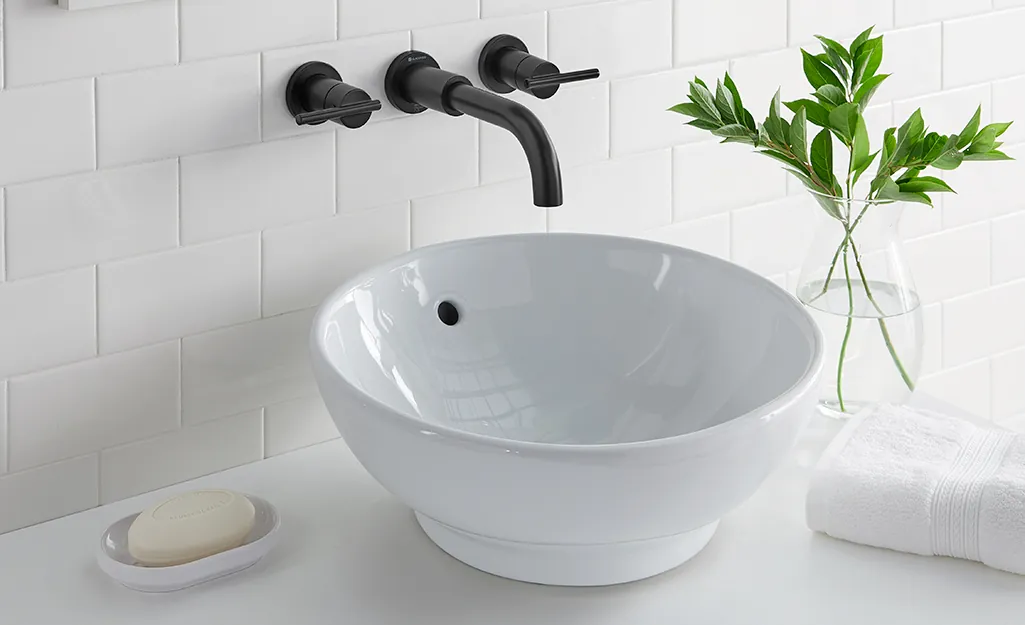
Wall-mounted faucets free up the entire deck surface, making cleaning easier. However, you must verify that your rough-in plumbing is already positioned inside the wall studs. If you install these without checking the depth of your sink basin, water will splash back against the wall every time you wash your hands.
Vessel faucets are taller to clear the rim of above-counter sinks. Measure the height of your basin wall before buying. If the spout is too short, you’ll struggle to reach the water flow; if it’s too tall, the spray will hit the bottom of the sink with excessive force.
Single-hole bathroom faucets
Single-hole faucets integrate the spout and the handle into one compact unit, making them ideal for small bathrooms or pedestal sinks. They suit spaces where you want a clean, minimalist look without cluttering the vanity top.
They allow for easy temperature control with a single lever movement. The compact footprint makes cleaning the countertop around the base simple. They often come with an optional deck plate to cover extra holes if you’re replacing a center-set model.
If you have a tight space, this design helps keep the area functional. You should check your vanity surface for pre-drilled holes; if your sink has three holes, you’ll need a deck plate to hide the outer two.
A common mistake is ignoring the reach of the spout relative to the drain. If the water stream lands too close to the edge of the basin, you’ll struggle to wash your hands comfortably. If it lands too far back, it will splash against the rear wall of the sink. Aim for the water to hit directly over the drain opening for the best flow.
Measure the distance from the mounting hole to the center of the drain. If that distance is less than four inches, look for a compact faucet with a shorter reach. If your vanity is wider than 24 inches, a standard faucet might look undersized and out of proportion. In those larger spaces, a high-arc model provides the necessary visual weight to anchor the room.
Check the height of your medicine cabinet or mirror before choosing a tall, gooseneck style. If the faucet spout is taller than the bottom edge of your mirror, you’ll have limited clearance for tasks like washing your face. If you have less than 10 inches of clearance between the deck and the mirror, stick to a low-profile model. This prevents the faucet from hitting the glass or creating an awkward, cramped aesthetic that defeats the purpose of a minimalist design.
Center-set bathroom faucets
Center-set faucets feature a spout and two handles mounted on a single base unit, designed to fit standard sinks with three holes spaced 4 inches apart. They suit homeowners who want a classic, symmetrical look that’s easy to install as a single piece.
- The 4-inch spacing is the industry standard for most residential bathroom vanities.
- Dual handles allow for precise mixing of hot and cold water.
- The single-base design reduces the number of joints that need sealing on the countertop.
This style is perfect if your existing vanity already has the 4-inch configuration. If your holes are spaced wider, this faucet won’t fit properly. A mistake many people make is failing to check the reach of the spout; if the spout is too short, water will land against the back of the sink rather than the basin.
You can verify the reach by measuring from the center of the faucet base to the center of the drain. For a typical sink, a 5-inch reach is usually sufficient to clear the basin.
Widespread bathroom faucets
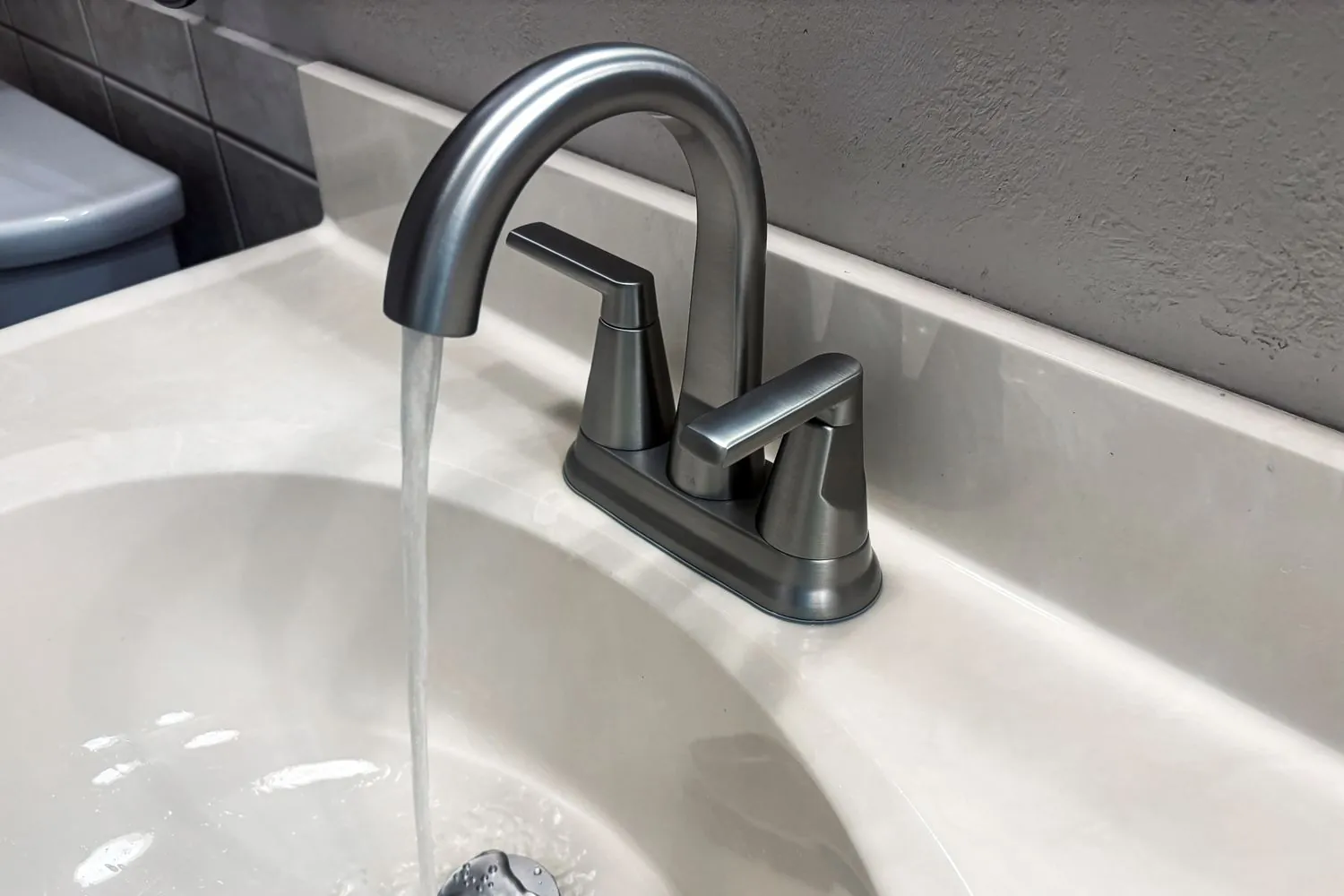
Widespread faucets consist of three separate pieces—two handles and one spout—that allow for adjustable spacing, usually between 6 and 16 inches. They suit larger vanities where a grander, more custom appearance is desired.
They offer the most flexibility for installation on custom-cut countertops. The separate components create a high-end, professional look. They provide more room for cleaning between the handles and the spout.
This option requires more complex plumbing under the sink because each piece needs its own connection. If your vanity has limited cabinet space, the extra piping might interfere with storage. Before purchasing, check your vanity deck for pre-drilled holes. If the holes are spaced exactly 4 inches apart, you must choose a centerset faucet instead, as a widespread model won’t fit the existing configuration.
When installing these, ensure the water supply lines are long enough to reach the separate valves. If the valves are more than 8 inches apart, you may need extended supply hoses to complete the connection correctly. Many installers make the mistake of using rigid pipes for these connections, which often leads to leaks when the vanity shifts over time. Use flexible braided stainless steel lines instead to accommodate minor movements.
The Environmental Protection Agency provides guidelines on water efficiency that help you identify models which reduce flow without sacrificing performance. Look for the WaterSense label to ensure a flow rate of 1.5 gallons per minute or less.
If you’re replacing an existing faucet, measure the distance from the center of the left handle hole to the center of the right handle hole. If that distance is under 6 inches, a widespread faucet won’t fit properly. In that case, look for a mini-widespread model, which mimics the three-piece look but fits into a tighter footprint. Always verify the valve body diameter, as some high-end luxury faucets require a larger mounting hole than standard builder-grade fixtures.
Wall-mounted bathroom faucets
Wall-mounted faucets attach to the wall behind the sink rather than the countertop, keeping the vanity surface completely clear. They suit vessel sinks or modern bathrooms where you want to emphasize the countertop material.
They make wiping down the vanity extremely fast and easy. The elevated position creates a striking visual focal point. They free up valuable space on narrow countertops.
Installing these is significantly more difficult than deck-mounted options because it requires moving the plumbing inside the wall. If you aren’t comfortable opening your wall or working with supply lines behind the drywall, you should hire a professional plumber.
A common mistake is mounting the faucet too high above the sink, which causes water to spray everywhere when it hits the basin. The ideal height is 4 to 6 inches above the rim of the sink.
Check your sink’s basin depth before you finalize the rough-in plumbing. If you have a shallow vessel sink, mount the spout closer to the 4-inch mark to minimize splashing. If you have a deep, high-walled basin, you can safely move toward the 6-inch limit.
Verify that your chosen faucet spout has enough reach to extend past the edge of the sink. If the spout is too short, you’ll be forced to wash your hands against the back of the basin. Aim for the water stream to land directly over the drain.
Ensure your wall structure can support the weight of the faucet. If you’re mounting to a tiled wall, use a diamond-tipped hole saw to prevent the tile from cracking during installation.
If you’re renovating an existing bathroom, confirm that your wall cavity has enough depth to house the valve body. Always confirm the valve depth before closing the wall.
Remaining faucet styles
Vessel faucets are tall models designed specifically for sinks that sit on top of the counter rather than inside it. They’re for homeowners with high-profile basins who need extra height to clear the rim.
Measure the distance from the mounting hole to the center of your drain before you buy. If your spout reach falls short of the drain, water will splash against the basin wall rather than flowing smoothly into the pipe. A spout that’s too short creates a messy vanity top every time you wash your hands.
Touchless faucets use sensors to turn water on and off without physical contact. They’re for busy households wanting to improve hygiene and reduce water waste. These models are ideal for families with young children who often leave handles dripping.
They require batteries or a power outlet under the sink. If you choose a battery-operated model, expect to replace the power pack every six to twelve months depending on usage. If you opt for an AC adapter, ensure you have a GFCI-protected outlet within reach of the cord.
Avoid installing these in bathrooms with highly reflective mirrors directly behind the faucet. The infrared beam can bounce off the glass and trigger the sensor unexpectedly. If the water runs continuously after you step away, the sensor is likely picking up a reflection. Move the faucet or adjust the sensor sensitivity settings to stop the ghost activations. If you can’t adjust the sensitivity, a standard manual handle remains the more reliable choice for your specific layout.
How to choose the right faucet
Choosing the right faucet begins with measuring your current setup to see how many holes are in your vanity. If you have a single hole, you must choose a single-hole faucet or use a deck plate; if you have three holes, you must decide between a center-set or widespread model based on the distance between the outer holes.
Measure the distance from the center of the left hole to the center of the right hole to determine if you need a 4-inch center-set or a wider, adjustable unit.
Next, consider your sink depth and how you use the space. If you wash your face often, a taller faucet with a longer reach provides more room to maneuver without splashing. If you have a small sink, a compact center-set model prevents the faucet from overwhelming the basin.
Finally, look at your existing plumbing. If you aren’t replacing the vanity, you’re limited by the current configuration. Mixing these styles is possible if you have a custom countertop, but most people find it best to stick to the layout that matches their existing sink to avoid costly modifications.
Related guides
- 10 Best Rated Toilet Seats for Your Bathroom Upgrade in 2026
- 10 Best Bidet Toilet Seats Under 200 for Your Bathroom in 2026
- 10 Best Wood to Use for Bathroom Shelving: Expert Picks in 2026
Frequently asked questions
How long do bathroom faucets typically last?
Quality bathroom faucets typically last between 10 and 15 years in standard residential settings. Lifespan depends primarily on the quality of the internal cartridge and local water mineral content. Hard water may cause mineral buildup that clogs aerators or damages valve seals prematurely.
Is it safe to install a new faucet myself?
Most homeowners can safely install a new faucet using basic tools if the existing plumbing is in good condition. Always shut off the water supply valves under the sink before beginning work. If you discover corroded pipes or leaking valves, contact a licensed plumber immediately.
What happens if the faucet leaks?
A leaking faucet is usually caused by a worn-out washer, faulty O-ring, or damaged ceramic disc cartridge. You can often identify the source by checking if the leak originates from the handle or the spout. Consult your manufacturer’s documentation to identify the correct replacement part before starting repairs.
Does it matter if I choose a metal or plastic faucet?
Metal faucets generally offer superior durability and weight compared to plastic versions, making them ideal for long-term use. Solid brass construction withstands daily wear significantly better than plastic or composite materials. Always check product descriptions to confirm if the body is solid metal rather than a plastic shell.
How do I know if the faucet will fit my sink?
Faucet fit depends on the number and spacing of your vanity’s pre-drilled holes, which you must measure before shopping. Center-set faucets require 4-inch spacing, while widespread models typically require 8 inches. If your sink has only one hole, you’re limited to single-hole faucets unless you drill additional holes.
Can I mix different finishes in my bathroom?
Mixing finishes is possible if you repeat both colors elsewhere in the room to ensure the design looks intentional. Using too many different finishes can make a space feel disorganized. Sticking to one consistent finish remains the safest way to create a cohesive, timeless look in your bathroom.
Conclusion
Start by turning off the water supply valves under your sink and placing a bucket underneath to catch any remaining water. After you disconnect the supply lines and remove the mounting nuts, clear away any old sealant from the sink surface to ensure a watertight fit for your new fixture.