
To seat bounce a dirt bike, use your body weight to compress the rear shock right before a jump face so the rebound launches you higher and farther. You stay seated in second or third gear, keep a steady throttle, and let the seat push your hips up at the lip. This technique suits riders who need extra lift straight out of a tight corner.
Gear for seat bouncing your dirt bike
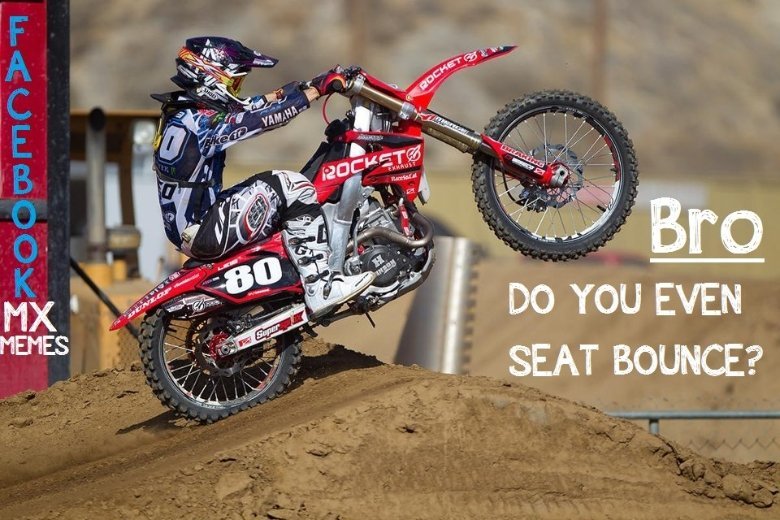
- A motocross or trail motorcycle with fully functioning front and rear suspension.
- Rigid motocross boots that provide essential ankle support and protection.
- Riding pants, jersey, gloves, and chest protection.
- A small, familiar tabletop jump with a clean, predictable takeoff face.
- A basic T-handle wrench set to adjust your rear shock clickers at the track.
A standard gripper seat cover works well because it keeps you planted, but a slick vinyl stock cover won’t work because your hips will slide backward during acceleration. Suspension tuning requires dedicated mechanical knowledge, so visit a certified suspension shop if your shock needs a rebuild or internal re-valving.
Step-by-step
- Select second gear for a short approach or third gear for a longer run, keeping your engine right in the middle of its powerband.
- Approach the jump in a standard seated position, placing the balls of your feet firmly on the pegs with your knees gripping the fuel tank.
- Keep the throttle opening smooth and steady at about half-open, avoiding any sudden twists as your front wheel touches the jump face.
- Drop your full upper-body weight directly onto the middle of the seat as the rear wheel meets the bottom transition of the ramp, compressing the rear shock fully. Careful: If you chop the throttle closed while sitting down, the engine braking will drop the front wheel instantly and pitch you over the handlebars.
- Remain seated while the bike travels up the face, letting your core stay firm so the bike doesn’t kick sideways.
- Stand up smoothly with the rebound as the rear tire leaves the lip of the jump, matching the upward push of the motorcycle seat with your legs. Tip: If the front wheel climbs too high, tap the rear brake pedal in mid-air to bring the nose back down.
- Level the bike out in the air by centering your chest over the handlebars, absorbing the impact on the downside of the landing with both wheels touching together.
Adjusting for track conditions
Track surfaces change how much bounce you get from the rear shock.
| Track condition | Approach speed change | Body position adjustment | Visual focus point |
|---|---|---|---|
| Hard-packed dirt | Normal approach in second or third gear | Centered firmly over the middle of the seat | The very lip of the jump |
| Deep sand or mud | Add about a quarter more throttle | Lean slightly behind the middle of the seat | The cleanest line through the rut |
| Rutted takeoff face | Drop down one gear and hold steady revs | Squeeze knees tight to stop lateral sway | The exit slot of the rut |
| Steep jump face | Cut approach speed by roughly two bike lengths | Lean chest forward toward the bars | The downside landing transition |
Starting with a small tabletop jump lets you feel the rebound safely, because overshooting a jump face on your first try risks a harsh flat landing that can damage wheels and sprain ankles.
How to tell you did it right
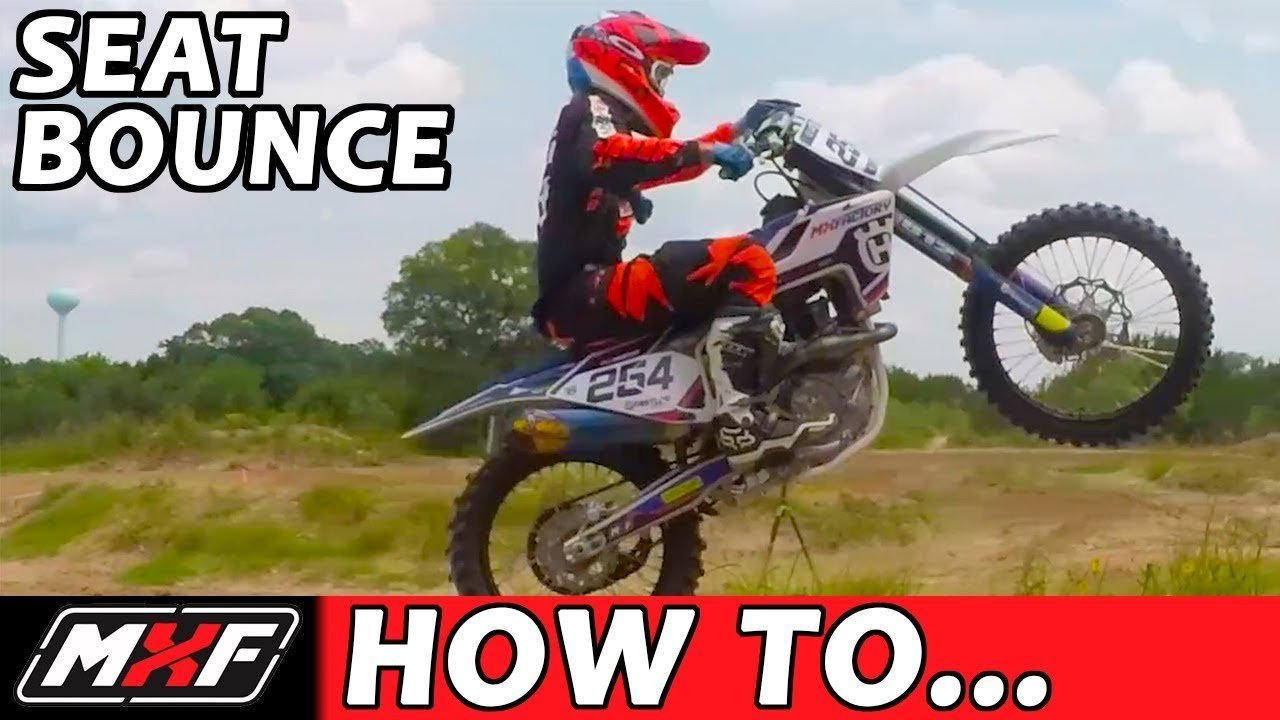
A good attempt feels fluid and silent, sending the bike in a smooth arc with both wheels staying relatively level from takeoff to landing. A poor attempt feels like a violent buck, throwing your rear end high into the air while the front wheel points straight down. This scary endo motion happens because the rider cuts the engine power on the face of the jump, which instantly unloads the shock before the rear wheel clears the lip. You can prevent this error by holding a constant throttle, keeping your toes tucked inward on the pegs, and allowing your knees to rise naturally with the seat rather than fighting the bike.
AMA rules and track safety
Sanctioning bodies like the American Motorcyclist Association enforce strict rules regarding track flags, meaning you can’t jump or seat bounce while a yellow caution flag is waving. After finishing your practice session, clean the dried mud off your shock shaft, wipe down the fork seals, and inspect the rear spring preload collar for loose lock nuts. The rebound damping settings on your shock generally remain stable across a riding weekend; consult your owner’s manual for recommended suspension service intervals. If you notice fluid leaking from the shock seal head, take the unit to a certified motorcycle technician immediately.
Different jumping methods
Standing jump approach
You stand on the pegs with knees bent across the jump face. This gives you far more stability and control on rough takeoffs, but it yields much less upward pop, demanding a longer run-up distance to clear the landing.
Scrubbing the jump
You stay standing, lean the motorcycle flat off the lip, and keep your body low over the bars. This keeps your flight trajectory very low to drop lap times, though it requires high approach speeds and elite timing.
Foot-peg pre-load
You compress the suspension by pushing down hard with your feet while standing instead of sitting. It gives you moderate lift without risking the seat kicking your hips forward, serving as a safer middle ground on unfamiliar jumps.
Frequently asked questions
Can beginners try this technique right away?
No, beginners shouldn’t try this jump method until they can comfortably clear standard jumps while standing. It carries a high risk of kicking the rear wheel up if your throttle timing slips. This technique isn’t for riders who still struggle with clutch and throttle control.
Why does my bike kick sideways off the jump?
Your bike kicks sideways because your knees are loose or you’re sitting off-center on the seat. Squeeze the frame firmly with your lower legs on the jump face to keep the rear end tracking in a straight line.
Is seat bouncing safe on every jump?
No, it’s dangerous on jumps with cupped lips, kickers, or braking bumps. Those sharp bumps will compress the spring unevenly and throw you over the front bars. If the face is rough, stand up instead; if the face is smooth, you can bounce safely.
How do I stop the front end from flying too high?
You tap the rear brake pedal in mid-air while pulling in the clutch lever. The stopping force of the rear wheel pulls the front end down.
What happens if I sit too far back on the seat?
The rear wheel will absorb your weight poorly and you might slip off the back under hard acceleration. Sitting too far back costs you control and often leads to looped-out crashes on steep jump faces.
Does bike displacement change how much I compress the seat?
Yes, a heavy four-stroke motorcycle compresses the rear spring deeper than a light small-bore two-stroke. You must sit down with more force on smaller bikes to get the same rebound pop off the ramp face.
Final Thoughts
Practice this move on small, familiar jumps before you try it on larger obstacles. It’s a powerful tool, but it takes time to find the right rhythm. Once you’re comfortable, you’ll find it’s much easier to clear gaps that once felt impossible. Just keep your eyes up and have some fun.
Related guides