
How to do referrals in a medical office: Handling patient care smoothly requires verifying insurance network rules, submitting clinical notes with the order, and tracking the consultation report back into the chart. Most routine requests clear insurance within 3 to 5 business days, while urgent reviews take 24 to 48 hours. This guide details tracking methods, prior authorization protocols, and communication steps that prevent delayed care.
Clinical care transitions
 Photo: www.stjude.org on Google
A medical referral transfers part of a patient’s care to an outside specialist, imaging facility, or therapy clinic. Administrative staff and medical assistants run this process daily for primary care providers and health systems. Many people assume a referral is just an informal recommendation letter. In practice, commercial health plans treat it as an authorization contract that ties payment directly to medical necessity. Under managed care agreements, claims face immediate denial if the specialist renders treatment before the primary clinic logs an approved authorization number.
The basic method
- Review the provider order. Confirm the primary physician documented a valid diagnosis code, the target specialty, and the urgency level within the electronic health record (EHR).
- Verify insurance coverage. Check the payer portal to see if the patient’s plan requires a formal referral, prior authorization, or an in-network facility match.
- Assemble the clinical packet. Attach the recent office encounter note, relevant lab panels from the last 90 days, and current diagnostic imaging reports.
- Submit the request. Send the paperwork through the payer web portal or direct fax to the receiving clinic within 24 hours of the patient visit.
- Secure the authorization. Record the approval code, start date, expiration date, and the allowed visit count inside the referral management tab of the EHR.
- Notify the patient. Call the patient or send a secure portal message with the specialist clinic’s contact details, instructions, and authorization limits within 48 hours of approval.
- Track the return report. Follow up with the receiving office 14 days after the scheduled consultation date to request the specialist’s notes for provider review.
Closing the referral loop is the single judgement call that separates safe clinical workflows from bad ones. Dropping communication after sending records leaves patients lost in the system, whereas auditing open referrals weekly ensures critical diagnoses aren’t delayed. If an authorization appeal involves disputing a medical denial, clinic administrative staff must hand that task directly to a licensed clinician.
Key numbers and settings at a glance
Managing referral volume requires balancing clinical urgency against payer turnaround windows.
| Situation | What to use | How long | What to watch for |
|---|---|---|---|
| Routine specialty visit | Standard payer portal submission | 3 to 5 business days | Expiration dates on 90-day approvals |
| Urgent surgical consult | Phone authorization with electronic upload | 24 to 48 hours | Incomplete chart notes triggering manual audits |
| HMO plan specialist care | Primary care formal referral form | 2 to 3 business days | Unlisted secondary diagnoses causing claim rejections |
| In-office diagnostic imaging | Radiology scheduling order and clinical notes | 1 to 3 business days | Missing prior conservative therapy documentation |
| Physical or speech therapy | Initial evaluation order with visit limit | 3 to 7 business days | Exceeding the standard 6 to 12 visit cap |
| Out-of-network consult | Extenuating necessity exception waiver | 10 to 14 business days | Out-of-pocket balance risks for the patient |
What separates good results from bad ones
Preparation and workflow order
Efficient coordinators never submit an authorization without reviewing the target insurer’s medical necessity guidelines first. If an MRI request requires 6 weeks of physical therapy notes before approval, submitting imaging requests early triggers an automatic denial. Staff review the chart, confirm matching ICD-10 diagnosis codes, and submit all records at once. They don’t send multiple piecemeal faxes that clutter administrative queues.
Ongoing tracking limits
Tracking requires active scheduling rather than passive waiting. If the referral status is marked pending after 72 hours, call the payer directly; if it remains untouched, send an electronic inquiry. You must accept that workflow capabilities vary by electronic health record vendor—check the administrative manual to see if automated order-tracking modules exist. Letting orders sit unchecked creates severe care gaps that risk patient health and expose practices to liability.
Common problems and quick fixes
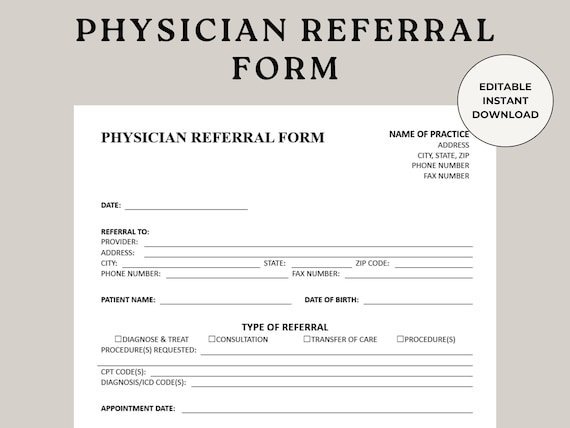 Photo: www.etsy.com on Google
Billing delays and miscommunication happen when clinics fail to monitor outgoing orders.
| What you notice | What it usually means | What to do first |
|---|---|---|
| Payer denies authorization | Chart lacked conservative treatment documentation | Submit physical therapy or medication records from previous visits |
| Specialist turns patient away | Authorization expired or matched wrong national provider identifier (NPI) | Reissue the authorization under the specific treating specialist |
| Patient never booked appointment | Specialty office failed to call or has no open slots | Contact the patient with phone numbers for 2 alternate in-network clinics |
| Missing consult summary notes | Specialist finished care without transmitting charts | Fax a direct chart records release request citing the original order |
Regulatory compliance standards
Every transfer of health records must obey federal privacy guidelines. The HHS HIPAA privacy guidance allows covered entities to share minimum necessary protected health information for treatment purposes without waiting for independent authorization forms. However, standard privacy rules apply whenever clinic staff contact third-party testing centers. Sending chart notes to the wrong fax number breaches privacy laws and creates mandatory reporting duties.
State-level medical boards mandate that delegating orders to medical assistants must happen under active physician supervision. If staff must write an appeal letter challenging a commercial payer’s denial, a physician or nurse practitioner must review the medical content to prevent administrative practice-of-medicine violations.
Post-consultation record maintenance
The referral loop ends only after the outside provider’s consultation report is filed into the local EHR. Clinic staff must monitor open referral worklists regularly to identify overdue notes. Once the specialist sends their evaluation summary, assign the file to the referring physician’s electronic inbox for review and signature.
File the signed report under the corresponding internal encounter order to clear the open tracking flag. Keep referral tracking logs and authorization forms in the patient’s record for at least 6 years to satisfy Medicare and Medicaid audit requirements. If the patient misses their outside specialist visit, flag the chart so your physician can address the treatment delay at the next encounter.
When to use a different approach
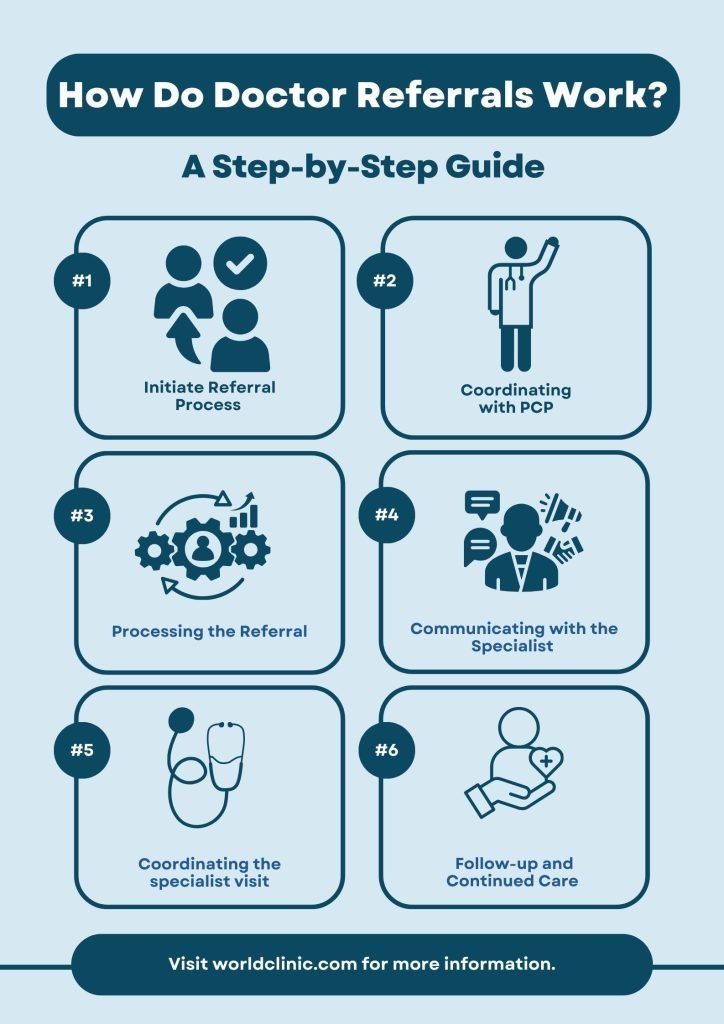 Photo: worldclinic.com on Google
This routine referral workflow is the wrong choice for acute patient distress. It isn’t for unstable emergencies like chest pains, severe bleeding, or acute neurological deficits. In those conditions, direct the patient to the nearest emergency department immediately.
Sending written authorization requests is also ineffective for patients with preferred provider organization (PPO) plans that don’t require formal specialist gatekeeping. For those patients, give them a written order and let them schedule directly. Choosing formal referral paperwork when the insurer doesn’t require it costs staff valuable hours without providing any payment protection.
Frequently asked questions
Can a patient see a specialist without a referral?
Yes, if their health plan is a preferred provider organization (PPO) that permits direct specialty access. Patients enrolled in health maintenance organization (HMO) plans generally can’t see specialists without an approved referral from their primary care provider, or insurance will deny the claim.
How long does a medical referral stay valid?
Most routine insurance referrals remain active for 90 to 365 days, depending on the payer’s rules. If the allocated timeframe passes before the patient attends their appointment, clinic staff must submit a new request to avoid denied claims.
What happens if an authorization is denied?
The primary doctor can request a peer-to-peer discussion with the insurance medical director or submit an administrative appeal. Submitting extra treatment records, such as recent laboratory work or prescription histories, often reverses initial coverage rejections.
Why do some referrals take weeks to process?
Delays happen when insurance payers require extensive prior authorization checks, or when specialty clinics face high patient backlogs. Incomplete diagnostic documentation sent by the primary clinic also forces insurance coordinators to halt reviews until missing records arrive.
Is an order the same as a referral?
No, a provider order is an internal clinical instruction directing a specific treatment or consultation. A referral is the administrative and financial authorization sent to insurers and outside clinics so the patient can receive that ordered care.
Related guides