
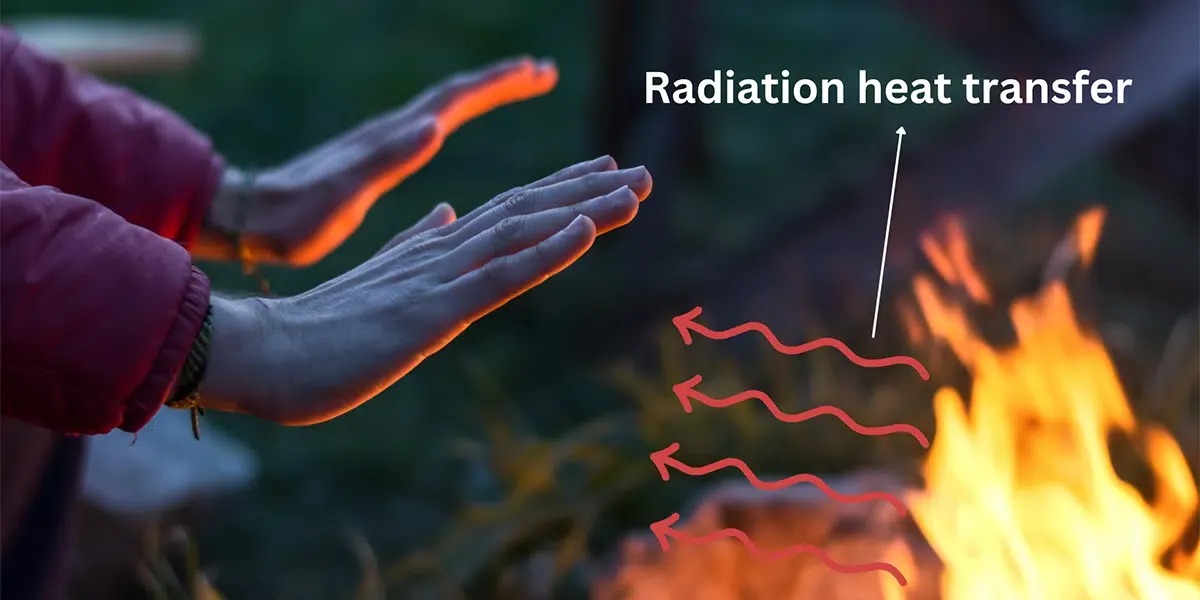
Radiation heat transfer works through the emission of electromagnetic waves, allowing thermal energy to travel across a vacuum or through transparent mediums without requiring direct physical contact. Unlike conduction, which requires molecular collisions, or convection, which relies on the movement of fluids, radiation involves the conversion of internal thermal energy into radiant energy. Every object with a temperature above absolute zero constantly emits this energy in the form of photons, primarily in the infrared spectrum, which then strike and heat other surfaces.
Key Takeaways
- Objects don’t need a medium like air or water to transfer heat via radiation.
- The intensity of thermal radiation increases significantly as the temperature of the source rises.
- Surfaces that are dark and matte are highly efficient at both absorbing and emitting radiant energy.
- Shiny, polished surfaces act as reflectors, minimizing the absorption or emission of thermal radiation.
- You can control heat gain or loss by selecting materials with specific emissivity ratings for insulation or cooling.
How Does Radiation Heat Transfer Work?
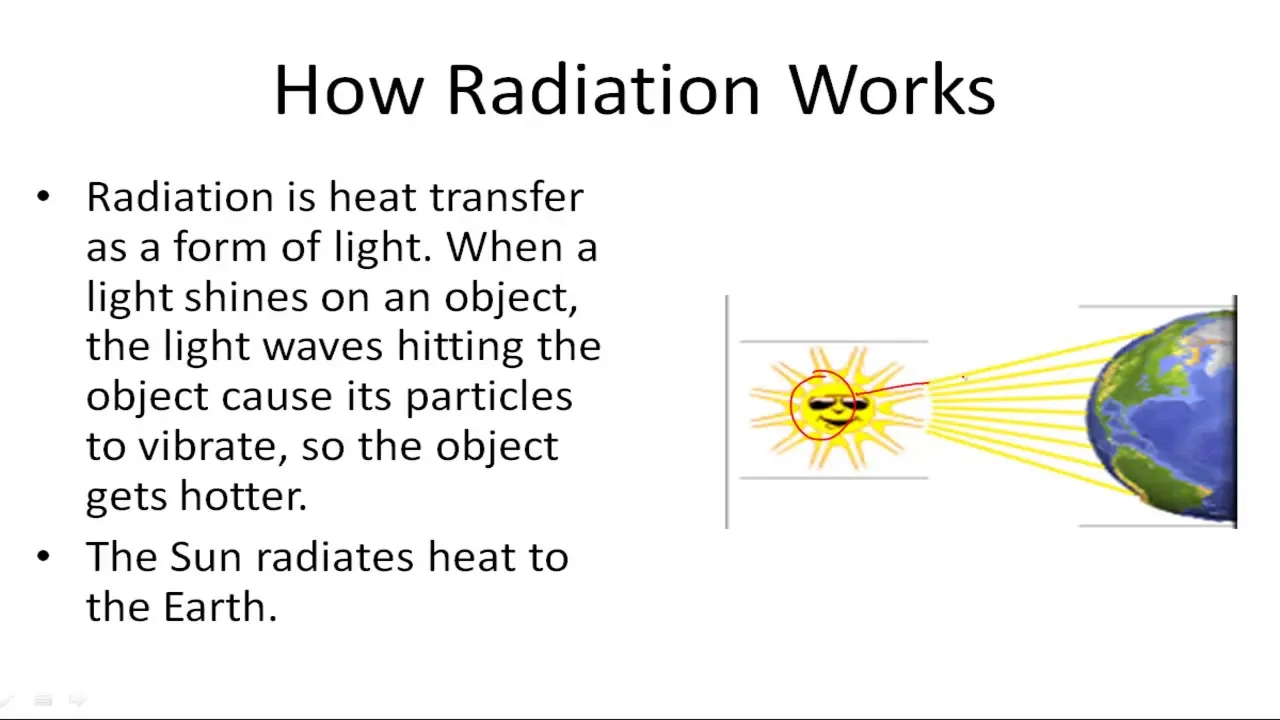
At its core, this process is an energy conversion mechanism. Atoms within a material vibrate due to their internal thermal energy, and these vibrations cause electrons to shift energy levels, resulting in the emission of electromagnetic waves. When these waves reach another object, they’re either absorbed, reflected, or transmitted.
If absorbed, the energy increases the kinetic energy of the atoms in the receiving object, thereby raising its temperature. This is the fundamental principle behind how the Sun warms the Earth across the vast, empty vacuum of space.
The Role of Electromagnetic Waves
Thermal radiation exists primarily as infrared light, though objects at very high temperatures also emit visible light. The wavelength of the emitted energy is dictated by the temperature of the object, a relationship described by Wien’s Displacement Law. As an object gets hotter, it shifts its peak emission toward shorter, more energetic wavelengths. This is why a heating element in a toaster begins to glow red as it reaches high temperatures, transitioning from invisible infrared radiation to visible light.
Surface Properties and Heat Exchange
The efficiency of radiation transfer is heavily dependent on the surface characteristics of the materials involved. A theoretical “blackbody” is an idealized object that absorbs all incident radiation and emits the maximum possible amount of radiation for its temperature. In reality, most materials have an emissivity value between zero and one.
| Material Surface | Emissivity Range | Reflectivity |
|---|---|---|
| Polished Aluminum | 0.02 – 0.05 | Very High |
| Oxidized Copper | 0.50 – 0.70 | Moderate |
| Flat Black Paint | 0.90 – 0.98 | Very Low |
| Polished Steel | 0.07 – 0.20 | High |
| White Enamel Paint | 0.85 – 0.95 | Low |
Comparison of Heat Transfer Methods
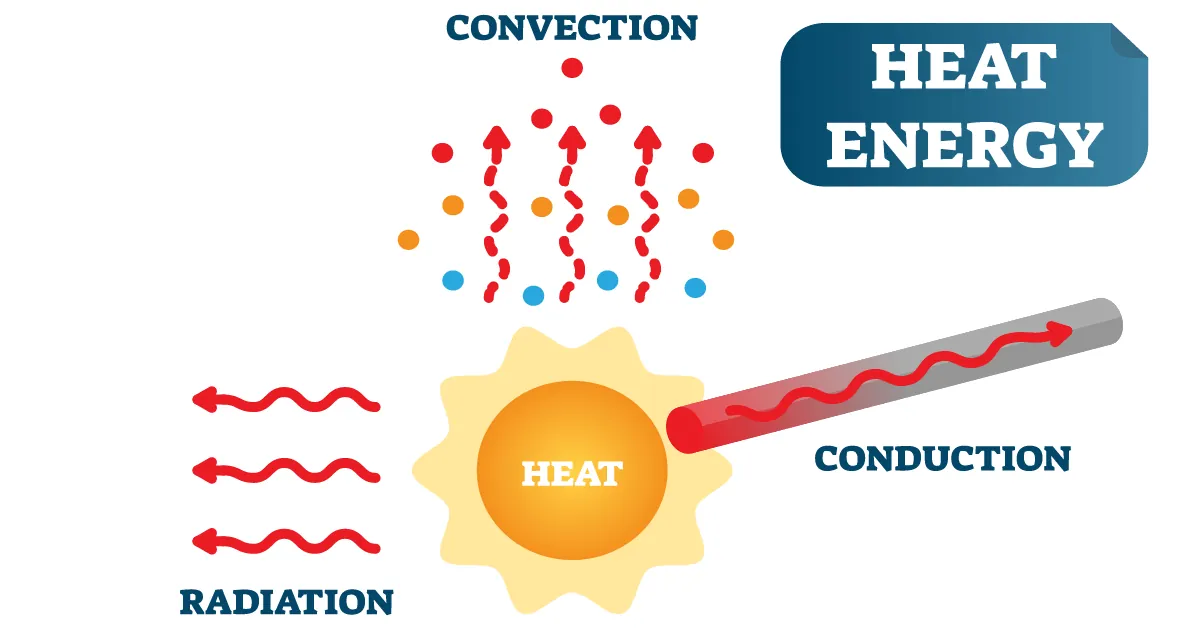
To understand radiation, it’s helpful to contrast it with the other two primary modes of heat transfer. While radiation can operate in a vacuum, the others are strictly dependent on physical matter.
| Feature | Conduction | Convection | Radiation |
|---|---|---|---|
| Medium Required | Solid or Fluid | Fluid (Liquid/Gas) | None (Vacuum) |
| Mechanism | Molecular Collision | Fluid Movement | Electromagnetic Waves |
| Speed | Slow | Moderate | Speed of Light |
| Direction | High to Low | High to Low | High to Low |
Can You Stop Radiant Heat?
You can’t stop radiation entirely, but you can block it effectively. By placing a barrier between the source and the target, you intercept the electromagnetic waves. Materials such as aluminum foil are excellent for this purpose because they have high reflectivity.
When radiant energy hits the foil, the majority of the waves bounce off rather than being absorbed and transferred through the material. This is the primary reason why emergency blankets are made of reflective Mylar; they reflect the body’s own infrared radiation back to the wearer to prevent heat loss.
What Factors Affect Thermal Radiation?
Several physical variables determine the rate at which an object radiates heat. The most significant factor is the surface temperature, which follows the Stefan-Boltzmann law, stating that the power radiated per unit area is proportional to the fourth power of the absolute temperature.
- Temperature: Even small increases in temperature lead to massive jumps in radiant output.
- Surface Area: Larger objects provide more space for waves to escape, increasing total heat loss.
- Emissivity: This measures the material’s ability to emit energy compared to a blackbody.
- Geometric View Factor: This accounts for how much of the emitted radiation actually hits the target surface.
Applications in Household Heating
Many common household items utilize radiation to provide comfort or perform tasks. Electric space heaters often use glowing coils to emit infrared waves that warm people directly rather than heating the air. Similarly, glass-fronted fireplaces allow heat to radiate into a room while preventing smoke and air from escaping. Understanding these applications helps in positioning furniture to maximize comfort during winter months.
Warning: Always ensure that portable radiant heaters are kept at a safe distance from curtains, upholstery, and paper products, as the focused infrared intensity can ignite flammable materials even if the air around them is relatively cool.
Industrial Uses for Radiation
Beyond the home, industry relies heavily on radiation for manufacturing and energy production. Heat treatment furnaces use radiation to harden metals, while solar thermal power plants use large arrays of mirrors to concentrate the sun’s radiant energy onto a single point to generate steam. This concentrated energy is powerful enough to melt salt or drive high-pressure turbines.
Troubleshooting Radiant Heat Issues
If a room feels cold despite the air temperature being sufficient, radiation might be the cause. Cold windows or uninsulated walls can “suck” heat out of your body via radiation.
- Cold Walls: Use thermal curtains to block the radiative exchange between you and a cold surface.
- Drafty Windows: Apply reflective window film to reduce heat loss while maintaining visibility.
- Low-E Glass: Consider installing Low-Emissivity glass which reflects radiant heat back into the interior.
Pro Tip: If you’re trying to keep a room cool in the summer, use white or reflective exterior blinds to bounce sunlight away from the building before it can be absorbed by the structure.
Radiation in Space Exploration
Spacecraft engineering is essentially a giant exercise in thermal management because radiation is the only way to shed heat in a vacuum. Satellites are often wrapped in gold or silver-colored multi-layer insulation (MLI) to regulate their internal temperature. Without these reflective layers, the intense solar radiation would quickly overheat the sensitive electronics, while the lack of convection would prevent the internal components from cooling down.
Common Myths Regarding Heat Transfer
Many people mistakenly believe that radiation only happens at very high temperatures. In truth, your own body is currently radiating heat at a wavelength of about 10 micrometers. Another common misconception is that radiation is inherently harmful. While ionizing radiation (like X-rays or gamma rays) carries enough energy to damage DNA, thermal radiation (infrared) is generally limited to the non-ionizing part of the spectrum and serves as a vital component of the Earth’s natural climate system.
Related guides
- How Thermal Modelling Predicts Heat and Temperature Accurately
- Electric Oven Heating Element Exploded: Causes and Fixes
- The Science of Boiling Heat Transfer: How It Cools Surfaces
Frequently Asked Questions
Does air absorb radiant heat?
Air is largely transparent to most thermal radiation, meaning radiant energy passes through the atmosphere with minimal absorption. However, certain greenhouse gases like carbon dioxide and water vapor can absorb specific infrared wavelengths. This absorption is what causes the greenhouse effect, as the atmosphere traps thermal energy that would otherwise escape into space, keeping the planet at a habitable temperature for living organisms.
Why do we wear black in the winter?
Wearing black clothing in the winter is often suggested because dark colors absorb more solar radiation than light colors. When sunlight hits a black jacket, the material absorbs the electromagnetic waves and converts them into heat, which is then conducted to your skin. However, this effect is only significant when you’re in direct sunlight; once you move indoors, the color of your clothing makes little difference.
Does radiation work at night?
Yes, objects continue to radiate thermal energy regardless of whether there’s sunlight. Because the Earth is warmer than the cold vacuum of space, it constantly emits infrared radiation upward. This is why clear nights are often colder than cloudy nights; clouds act as a blanket, absorbing the Earth’s outgoing infrared radiation and reflecting a portion of it back toward the surface, which helps to retain heat.
Can radiation travel through glass?
Glass is transparent to visible light but opaque to most long-wavelength infrared radiation. This is why a greenhouse stays warm; visible light from the sun passes through the glass, warms the interior surfaces, and those surfaces emit long-wavelength infrared radiation. The glass blocks this infrared energy from escaping, effectively trapping the heat inside the structure. This phenomenon is why cars become so hot when parked in the sun.
Conclusion
The study of radiation reveals how deeply interconnected energy and matter are, governing everything from the warmth of the sun to the cooling of satellites. By understanding these principles, you can better manage the temperature of your home and appreciate the invisible forces shaping your environment. Start by identifying one surface in your living space that feels cold to the touch and consider adding a reflective barrier or thermal window treatment to improve your comfort today.
