
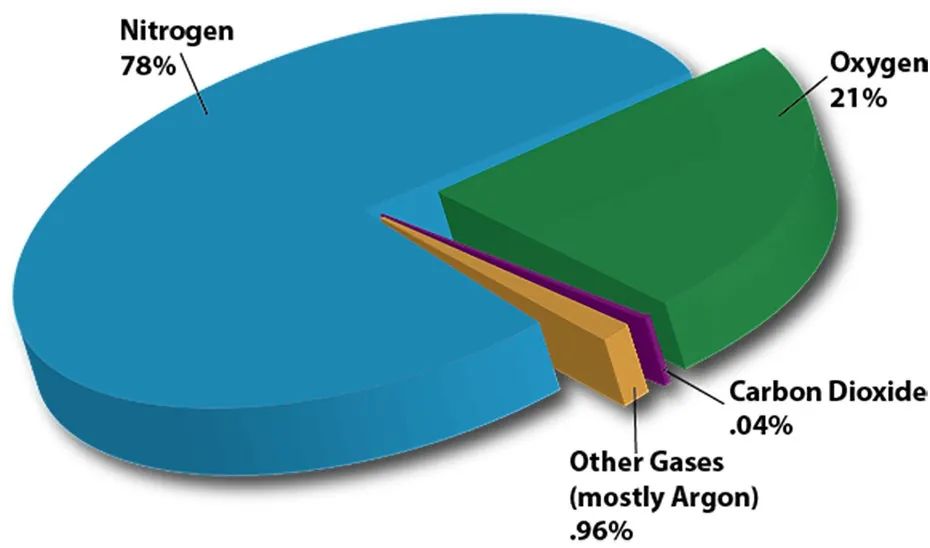
Atmospheric nitrogen is a colorless, odorless gas that makes up about 78% of the air we breathe, and it’s inert because its two nitrogen atoms are held together by an extremely strong triple bond. This chemical structure requires a massive amount of energy to break apart, which prevents the gas from reacting with other elements under normal conditions. It remains stable and non-flammable in our environment.
This stability is the main reason why nitrogen doesn’t react with oxygen in the air around us. If nitrogen were highly reactive, it would readily combine with oxygen to form nitrogen oxides, which could then react with water vapor to form nitric acid, potentially acidifying the atmosphere. The strength of the triple bond is measured by its bond dissociation energy, which is 945 kilojoules per mole.
The primary mistake people make is assuming that nitrogen is “dead” or useless because it’s inert. In reality, this inertness is a protective feature that prevents rapid combustion. Without nitrogen diluting the oxygen in our atmosphere, fires would burn out of control and be nearly impossible to extinguish.
Converting inert atmospheric nitrogen into usable forms

Because the nitrogen molecule is so stable, most plants and animals can’t use it directly from the air. Specialized bacteria must perform “fixation” to convert this gas into ammonia or other compounds that living organisms can absorb.
Locate the specific nitrogen-fixing bacteria, such as Rhizobium, which live in the root nodules of legumes like beans and peas. If your soil hasn’t hosted these crops for a significant period, the native population of these bacteria is likely too low to be effective.
Observe the plant’s health; if the soil lacks these bacteria, you must add a commercial inoculant to the seeds before planting to ensure the process begins. Apply the inoculant by coating the seeds with a small amount of water followed by the dry bacterial powder, using about 1 gram of powder per 500 grams of seed.
Monitor the soil pH, keeping it between 6.0 and 7.0. Nitrogen fixation slows down significantly if the soil becomes too acidic or alkaline, as these extremes inhibit the bacterial enzymes responsible for the chemical conversion.
Avoid over-fertilizing with synthetic nitrogen. When soil nitrogen levels exceed 50 parts per million, the plant halts its energy investment in the root nodules. This causes the plant to suppress nodule formation and reduce the energy it provides to the bacteria, effectively halting the symbiotic process.
If you notice dark green leaves but stunted root development, you have likely over-applied nitrogen, signaling the plant to abandon its symbiotic partnership. In this case, stop all synthetic applications immediately to allow the bacterial colonies a chance to recover during the next growth cycle.
Time requirements for nitrogen processes
The time it takes for nitrogen to move through the environment depends on the specific biological or industrial path it takes. Natural processes are much slower than industrial ones, often taking years to complete a full cycle.
| Situation | How long | What changes it | What to watch for |
|---|---|---|---|
| Bacterial fixation | 1–3 months | Soil temperature | Plant growth rate |
| Industrial synthesis | 1–2 days | Pressure levels | Catalyst efficiency |
| Atmospheric recycling | 100+ years | Lightning frequency | Rain acidity levels |
If the nitrogen fixation process in your garden is sluggish, check the soil temperature; biological activity slows significantly if the ground is below 50 degrees Fahrenheit.
Most gardeners mistakenly add extra fertilizer when fixation stalls, but this only leads to nitrogen runoff and wasted money. If the soil is warm enough yet fixation remains sluggish, test the pH levels. Bacteria struggle to thrive in acidic soil below 6.0.
In industrial settings, watch the catalyst closely. If synthesis takes longer than 48 hours, the catalyst is likely fouled by impurities. Replace the material immediately to prevent a total production bottleneck.
Signs of successful nitrogen activity
You can tell the nitrogen cycle is working by looking at the color and vigor of your plants. Healthy plants that are successfully fixing nitrogen will have deep green leaves, which indicates they’re receiving a steady supply of nitrogen compounds. If the leaves are yellow or stunted, the bacteria may not be active or the soil may be too cold.
The most reliable test is to dig up a root of a legume plant and look for small, round nodules on the roots. These nodules should look pink or reddish inside when cut open, which proves the bacteria are actively fixing nitrogen. If the nodules are white, they aren’t yet active; pink or red interiors indicate active nitrogen fixation.
A common mistake is assuming that any nodule presence equals success. If you find nodules only on the primary taproot near the surface, the plant is likely struggling to establish a deep, self-sustaining system. Effective fixation requires clusters distributed along the lateral roots. If you see nodules only at the very base, check your soil pH; acidic soil often inhibits bacterial colonization. Aim for a neutral range between 6.5 and 7.0 to ensure these colonies thrive.
Common errors in managing nitrogen
Adding too much nitrogen fertilizer kills the natural relationship between plants and bacteria, making crops dependent on external chemicals. Test your soil nitrogen levels first and only add what is missing to maintain the natural balance. If your soil test shows more than 30 parts per million of nitrogen, skip the synthetic fertilizer entirely to avoid burning root systems.
Nitrogen-fixing bacteria require oxygen to function, so compacted soil prevents them from working. Use a garden fork to loosen the top 6 inches of soil around your plants to allow for better air movement. If you can push a screwdriver into the soil with only one hand, the aeration is sufficient. If it requires two hands or your full body weight, the soil is too dense for biological nitrogen fixation.
Many common insecticides inadvertently kill beneficial bacteria living in the soil or on the roots. Switch to organic pest control methods if you want to support a healthy nitrogen-fixing environment. Avoid broad-spectrum sprays during the peak flowering stage, as these chemicals often linger in the root zone for weeks.
Frequently asked questions
Is atmospheric nitrogen safe to breathe?
Yes, atmospheric nitrogen is completely safe to breathe because it makes up the majority of the air we inhale every day. It’s an inert gas, meaning it doesn’t react with your body’s tissues or participate in your metabolism. Your body simply exhales the nitrogen in the same amount it inhaled, playing no active role in the breathing process.
Why is nitrogen gas used in food packaging?
Nitrogen gas is used in food packaging to displace oxygen, which prevents food from spoiling or oxidizing over time. By replacing the air inside a bag of chips with pure nitrogen, manufacturers keep the product crispy and fresh for months. Since the gas is inert, it doesn’t change the flavor, smell, or safety of the food inside the container.
Can humans get nitrogen from the air?
No, humans can’t get nitrogen from the air because our lungs are only designed to extract oxygen from the atmosphere. We must obtain all our necessary nitrogen by eating plants or animals that have already processed it into proteins. Our bodies lack the biological machinery to break the strong triple bond that holds atmospheric nitrogen molecules together.
What happens if nitrogen levels in the air change?
If nitrogen levels in the air were to drop significantly, the concentration of oxygen would increase, which would cause fires to burn much hotter and faster. Conversely, if nitrogen levels increased too much, oxygen levels would drop, making it difficult for humans and animals to breathe. The current 78% concentration is a perfect balance that keeps our planet’s atmosphere stable and safe.
How do plants get nitrogen if they don’t have bacteria?
Plants without nitrogen-fixing bacteria must absorb nitrogen compounds directly from the soil through their roots. These compounds usually come from decaying organic matter, such as compost or dead leaves, which break down into nitrates. If the soil is poor, gardeners must add organic fertilizer to provide the nitrogen that the plants can’t gather from the air or the soil itself.
Conclusion
While this gas doesn’t easily react on its own, it’s essential for life once it’s converted into usable forms by lightning or specific bacteria. You shouldn’t worry about its stability, as it’s what keeps our atmosphere safe. Look into how farmers use natural fertilizers to help plants thrive in your own garden.

1 thought on “What Is Atmospheric Nitrogen and Why Is It Inert Explained”