
Standard toilet seats often sit too low, so the best elevated seats provide a safer height to reduce strain on the hips and knees. These tools come in various designs, including models with arms or locking mechanisms, to make sitting and standing easier. Choosing the right one depends on your specific balance needs and the level of stability required for daily use.
Comparing common seat types
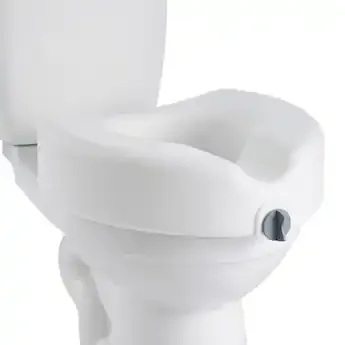
Different models offer unique features to help you sit and stand safely. The following table breaks down the main options you’ll encounter when shopping for a bathroom aid.
| Seat Type | Primary Benefit | Example |
|---|---|---|
| Standard Raised Seat | Adds simple height | 4-inch plastic riser |
| Seat With Arms | Provides extra leverage | Padded side-arm model |
| Locking Elevated Seat | Offers secure grip | Screw-down clamp seat |
| Hinged Raised Seat | Allows easy cleaning | Lift-up folding seat |
| Commode Combo | Versatile multi-use | Frame with bucket |
Choose a standard riser only if your balance is rock solid and you have sturdy wall-mounted grab bars nearby. Without those bars, you lack the lateral support needed to transition safely, increasing the risk of a sideways slip.
Prioritize models with arms if you suffer from hip weakness or chronic arthritis. These provide the necessary leverage to push your weight upward, sparing your joints from excessive strain. If you weigh over 250 pounds, verify that the armrests are reinforced steel rather than plastic, as standard models often buckle under sustained pressure.
Locking seats are essential for anyone using a walker or cane, as they prevent the seat from shifting during the sit-to-stand transition. If your toilet bowl has a non-standard or elongated shape, avoid universal locking clamps. They will fail to seat flush, creating a dangerous wobble that leads to tipping.
If you share a bathroom with others, the hinged seat is your best compromise. It allows the seat to be lifted for standard use, preventing the constant need for removal and reinstallation. Frequent removal eventually strips the mounting bolts, leaving the seat permanently loose and unstable.
Standard fixed height risers
A standard fixed riser is a simple plastic seat that sits directly on top of your existing toilet bowl. It’s ideal for individuals who just need a few extra inches of height to prevent deep knee bending. These seats are usually lightweight, making them easy to move if you need to take them to another bathroom or store them away.
- Increases the seat height by 2 to 6 inches, which reduces the distance you must travel to sit down.
- Uses a contoured surface to distribute weight evenly across your thighs.
- Requires minimal maintenance because there are no complex moving parts or hinges.
- Fits most standard or elongated bowls without the need for tools.
If you are 5 feet 4 inches tall, a 4-inch riser is often enough to align your hips with your knees. To check if this height works, sit on your current toilet and measure the distance from the floor to your knee; the top of the seat should be near this measurement.
A common mistake is choosing a seat that’s too high, which can leave your feet dangling and create a fall risk. If your heels can’t rest firmly on the floor, the seat is too tall. This instability forces you to shift your weight forward, which often leads to a loss of balance during the transition from sitting to standing.
If you have limited mobility in both knees, opt for a model with integrated armrests. These provide the leverage needed to push off safely. Conversely, if you have full upper body strength and value portability, a simple riser without arms is better. It allows you to clean the bowl thoroughly without removing bulky hardware.
Always check the weight capacity printed on the underside, as most plastic models are rated for 250 to 300 pounds. Exceeding this limit can cause hairline cracks in the plastic, leading to sudden failure.
Elevated seats with integrated arms
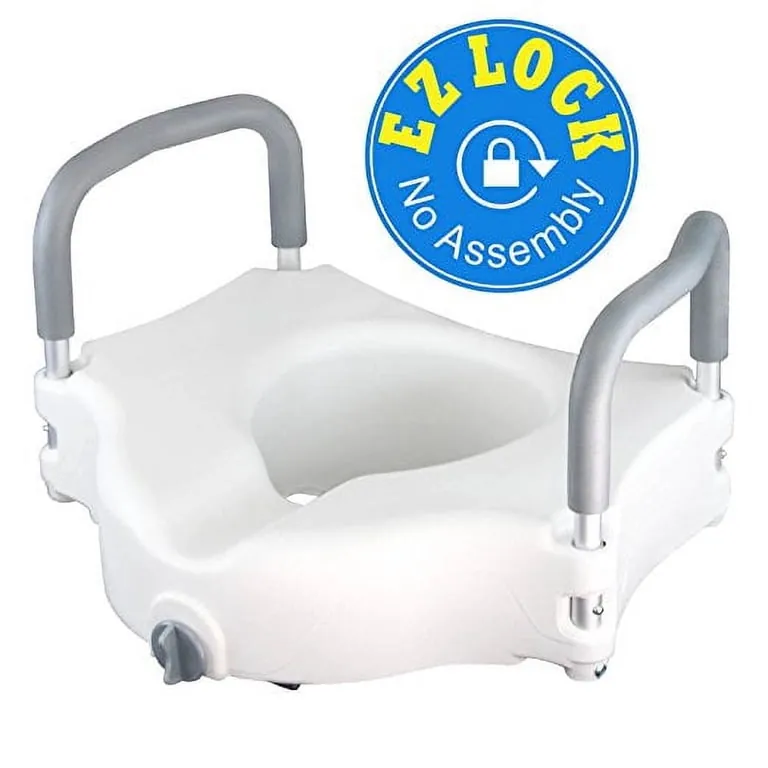
Seats with built-in arms offer extra stability for people who need to push up with their hands to stand. They’re best for those with muscle weakness in the legs or those who struggle with balance when transitioning from sitting to standing. The arms provide a firm point of contact that a wall-mounted grab bar might not reach effectively.
- Provides two sturdy armrests that support your weight while you sit or rise.
- Reduces the pressure on your joints by allowing your upper body to help with the movement.
- Offers a wider footprint for stability, which keeps the seat from shifting during use.
- Features padded grips that prevent your hands from slipping when they’re wet.
If you have arthritis in your hands, choose a model with thick, foam-covered armrests to reduce pressure. These seats are wider than standard risers, so ensure your bathroom layout has enough side clearance to fit the frame comfortably. If your bathroom is very narrow, you might find that the arms hit the wall or vanity, making it impossible to install the seat correctly.
Measure the distance between your vanity and the toilet bowl before buying. If you have less than six inches of clearance on either side, the arms will likely collide with your fixtures. In these cramped quarters, a seat with drop-down arms is the superior choice. These models allow you to lower the arm only when you’re ready to sit, saving precious floor space.
Check the weight capacity of the frame against the user’s weight. Many standard models are rated for 300 pounds, but if you rely heavily on the arms to hoist your entire body weight, look for a heavy-duty frame rated for 400 pounds or more. A frame that flexes under pressure creates a false sense of security that leads to dangerous slips.
Locking elevated toilet seats
Locking seats use a mechanical clamp to attach firmly to the rim of the toilet bowl. This is the most secure option for anyone who worries about the seat sliding or shifting while they’re moving. These are essential if you have limited core strength, as they prevent the seat from tipping if you lean to one side.
- Uses a screw-down knob to lock the seat tightly against the bowl rim.
- Eliminates the wobble found in cheaper, non-locking plastic risers.
- Stays in place during transfers, which is vital for users who can’t adjust their position mid-sit.
- Provides a seamless look that integrates well with the porcelain of the toilet.
These seats often require a bit more effort to install, as you must align the clamp perfectly with the bowl’s edge. If you have a toilet with a non-standard shape, such as a square or very rounded rim, the locking mechanism might not grip the surface evenly. Always check the manufacturer’s manual for the specific bowl shape compatibility before you buy.
Hinged raised toilet seats
Hinged seats allow you to lift the raised portion like a regular toilet lid, which makes cleaning the bowl much easier. They’re perfect for households where others use the same toilet and don’t need the extra height. These seats provide a more discreet look while maintaining the safety benefits of an elevated platform.
- Lifts upward to provide full access to the toilet bowl for cleaning.
- Maintains a low profile that blends in with your existing bathroom decor.
- Allows for normal toilet use by family members who don’t require assistance.
- Includes a secondary lid in many models to maintain a tidy appearance.
If you share a bathroom with someone who doesn’t need a raised seat, a hinged model is your best choice. These seats are typically bolted to the toilet using the same holes as a standard seat. If you find the seat feels loose after installation, tighten the mounting bolts with a wrench, but be careful not to overtighten them, as this can crack the plastic base.
Check your toilet’s shape before purchasing. Round bowls require a different hinge configuration than elongated bowls; installing the wrong type will leave the seat unstable and prone to shifting under weight. Measure from the center of the mounting holes to the front of the bowl. If that distance is roughly 16.5 inches, you need a round seat. If it exceeds 18 inches, select an elongated model.
Many users fail to check the height of their existing toilet base before buying. If your toilet is already a “comfort height” model, adding a four-inch riser may make your feet dangle, which compromises balance. In that case, choose a two-inch hinge to maintain stability. If you struggle to stand from a seated position, prioritize a model with integrated armrests that move with the hinge. This provides the leverage needed to push off safely without the seat shifting sideways.
Other bathroom safety options
Padded foam cushions add about 2 inches of height and extra comfort. These are best for users experiencing skin breakdown or pressure sores from prolonged contact with hard surfaces. If you notice redness or skin irritation after sitting, switch to a closed-cell foam model that resists moisture absorption. Porous foam often traps bacteria, which can lead to infections in vulnerable skin.
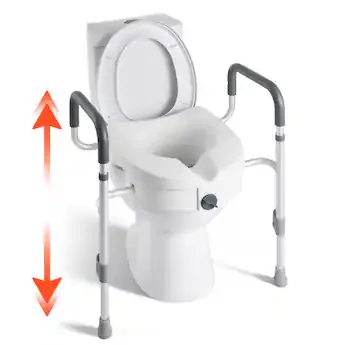
Toilet safety rails provide a stable frame that stands on the floor around the porcelain base. Use these if you can’t modify your existing seat but require arm support to lower yourself safely. Ensure the feet have non-slip rubber tips, as a frame that slides even an inch during use creates a significant fall risk. If your bathroom floor is uneven, look for models with independently adjustable legs to ensure a level base.
Bariatric elevated seats use reinforced steel or high-density plastic to support higher weight capacities than standard risers. While standard models often cap at 250 pounds, bariatric versions typically accommodate 400 to 600 pounds. Always check the width of your toilet bowl before purchasing, as these wider seats can conflict with narrow bathroom layouts.
If the seat feels unstable or wobbles when you shift your weight, stop using it immediately and check the locking bolts. A loose seat is the leading cause of bathroom-related fractures in elderly patients. If you weigh within 20 pounds of a seat’s maximum limit, always choose the next tier up to prevent structural fatigue.
How to choose the right seat
Your physical strength and your bathroom layout determine which seat is right for you. If you have good upper body strength but struggle with hip pain, a simple fixed riser is usually enough to make sitting more comfortable. However, if you have poor balance or weakness in your legs, you should choose a model with integrated arms to ensure you have a stable way to push yourself up.
If you share your bathroom with family members, prioritize a hinged seat so you don’t have to remove the aid every time someone else uses the toilet. If you live alone and are worried about slips, a locking seat is the safest choice because it remains stationary even if you shift your weight suddenly. You can combine these features by looking for a locking seat that also includes fold-down arms.
If you have a very small bathroom, you must measure the distance between the toilet and the nearest wall or vanity. A seat with wide arms won’t fit if there’s less than 6 inches of clearance on either side of the bowl. If your space is tight, look for a standard riser or a hinged model without arms to ensure it fits within your current footprint.
Frequently asked questions
Can I install an elevated seat myself?
Most elevated seats are designed for simple home installation without special tools. You simply unscrew the existing seat bolts, position the new riser, and tighten the included hardware. If you can’t reach behind the toilet, ask a family member or professional to assist.
Is it safe to use a raised seat on any toilet?
Most seats fit standard and elongated bowls, but you must verify your toilet’s shape before purchasing. Some toilets have decorative skirts or non-standard rims that prevent clamps from attaching correctly. If your toilet has a unique shape, consider a universal-fit model or a freestanding safety frame.
How long do these seats typically last?
These seats typically last several years, though plastic can eventually become brittle or hardware may wear down. Inspect your seat every few months for cracks or loose bolts to ensure stability. If the seat wobbles or the locking mechanism fails, replace the unit immediately to prevent falls.
What happens if the seat is too high for my legs?
Your feet must touch the floor while sitting to maintain stability and prevent restricted blood flow. If your seat is too high, switch to a lower-profile riser or use a footstool to provide a solid base. Never stand on the raised seat, as this can cause it to tip.
Does it matter if I have a round or elongated bowl?
Yes, the shape of your toilet bowl dictates which seat will fit securely. Round bowls are shorter, while elongated bowls require a longer seat to prevent gaps and ensure comfort. Measure from the center of the seat bolts to the front edge of the bowl before ordering.
How do I clean a raised toilet seat?
Clean your seat using mild soap and warm water to avoid weakening the plastic with harsh chemicals. Scrub the area where the seat meets the porcelain monthly to remove moisture and residue buildup. Always dry the seat completely to ensure it isn’t slippery for the next user.
Why does my elevated seat keep sliding?
If your seat is sliding, the mounting hardware is likely loose or the clamp isn’t properly engaged. Tighten the bolts or locking knob firmly without cracking the plastic. If the seat still moves, replace the worn rubber pads before using it again to avoid safety hazards.
Conclusion
Measure the height from the floor to your current seat to determine if you need a 2-inch or 4-inch riser. Once attached, apply light pressure to ensure the seat doesn’t shift or rock. If you detect any movement, don’t use the seat until the hardware is secure.