
The fix for a polaris 280 wheel not touching the pool floor is usually to adjust the height of the wheels or clear debris from the drive mechanism. This happens when the unit sits too high or gets stuck on a ledge, causing it to miss the bottom and stop cleaning effectively. You can solve this by checking the wheel settings and ensuring the track moves freely. This guide covers how to adjust the wheels, clean the tracks, and check the drive system so your robot cleans the whole floor again.
Why the Polaris wheel stops touching
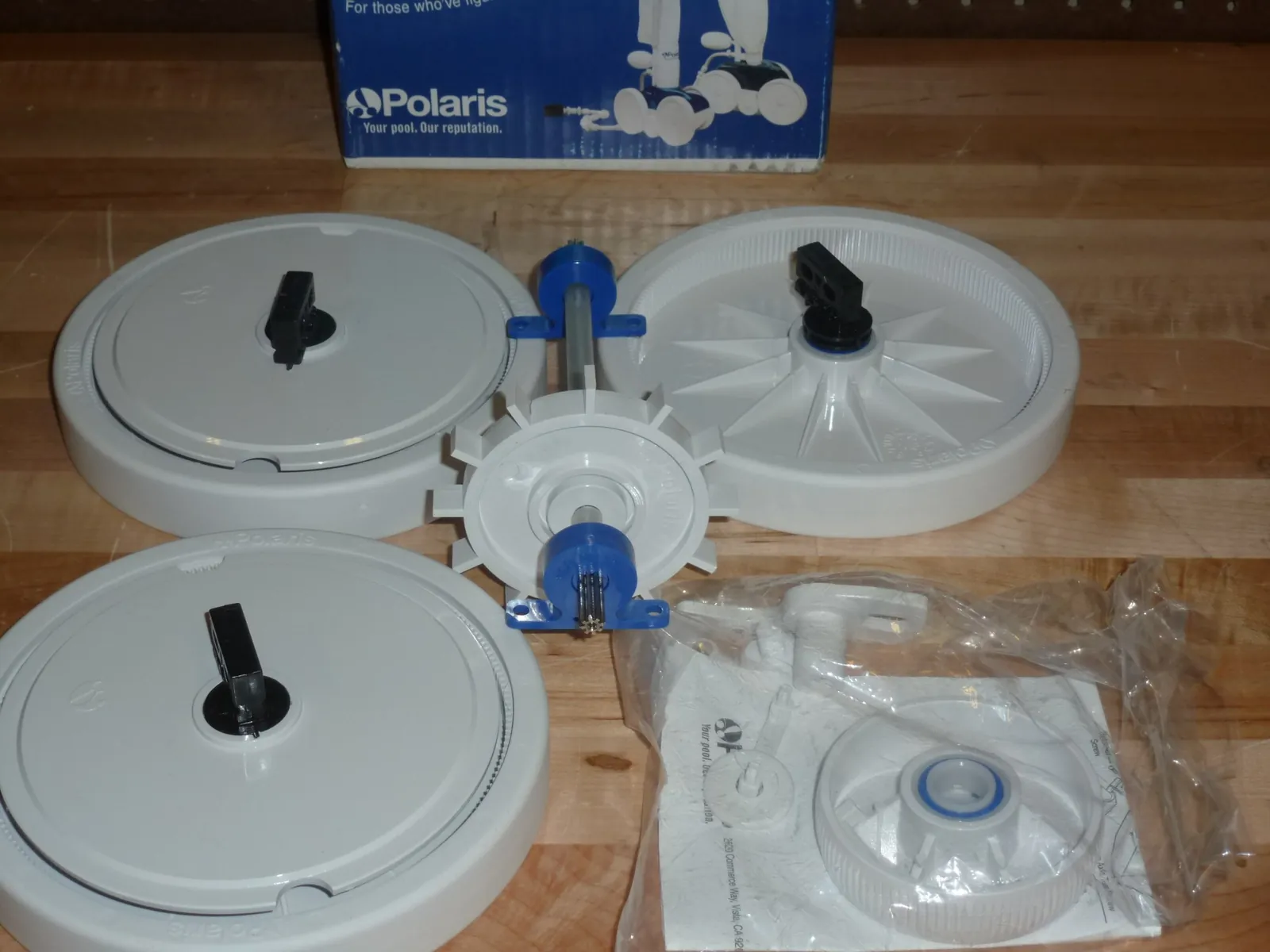
This issue happens when the robot’s wheels sit too far above the pool floor or get blocked by dirt. If the wheels are set too high, the unit just floats over stains instead of grinding them up. Many people think the motor has failed, but the real cause is often a simple setting error or a small piece of trash jammed in the gears.
The machine relies on friction with the pool surface to push itself along, so any gap stops the motion completely. You need to ensure the wheels are low enough to grip but not so low they drag and wear out fast.
How to fix the wheel height
You can restore proper contact by adjusting the wheel assembly and clearing any blockages in the track system. Follow these steps to get the unit moving correctly again:
- Turn off the booster pump and remove the robot from the pool water.
- Lay the unit face down on a soft towel to protect the plastic housing.
- Locate the wheels on the bottom of the unit.
- Inspect the swivel head and impeller for leaves, hair, or sand.
- Use a flat-head screwdriver to gently remove debris from the swivel head or impeller area.
- Spin the wheels by hand to ensure they rotate freely without hitting the casing.
- Place the robot back in the shallow end of the pool and watch it engage the floor.
The single judgement call here is how low you set the wheels. If you lower them too much, the robot will scrape the floor and make noise, which wears the tracks quickly. If you leave them too high, it will skip over dirty spots. Aim for a setting where the wheels touch firmly but don’t create a loud grinding sound when the unit moves.
Key numbers and settings at a glance
| Situation | What to use | How long | What to watch for |
|---|---|---|---|
| Standard tile floor | Medium wheel height | 2-3 hours | No scraping sounds |
| Rough plaster finish | Low wheel height | 3-4 hours | Extra track wear |
| Debris in tracks | Clean with screwdriver | 10 minutes | Bent track edges |
| Shallow end only | High wheel height | 1 hour | Unit floating |
| Heavy algae buildup | Low wheel height | 4+ hours | Motor overheating |
| New installation | Factory default | 2 hours | Uneven movement |
Don’t assume the “rough plaster” setting works for textured concrete. Concrete is harder and often has sharp aggregate that grinds the wheels down twice as fast as plaster. Switching to the medium height here might save your motor, but it will leave streaks on the surface. You must choose between a perfect clean or preserving your equipment; you can’t have both on this specific surface type without accepting slower progress.
The “heavy algae” row hides a critical timing trap. The debris clumps together when the water flow slows down after the initial surge. If the water looks cloudy again after two hours, pause the machine for five minutes to let the particles settle before resuming. This prevents the filter from choking and keeps the motor temperature stable. Ignoring this pause often leads to a burnt smell and a costly replacement part within the first season.
New installations rarely run perfectly on the factory default because the floor slope is never exactly level. If the unit drifts toward one corner during the first hour, don’t force it back by hand. Instead, adjust the wheel height by one notch lower on the side pulling away.
This small change creates enough friction to correct the path without stressing the gears. Forcing a straight line on an uneven floor damages the drive belt in less than three months. Let the machine find its own balance, then lock the settings once it runs smoothly for twenty minutes.
Details that separate good results from bad ones
Experienced users know that the condition of the rubber tracks matters more than the wheel height alone. A worn or cracked track can’t grip the floor even if the wheels are perfectly adjusted. Before changing settings, run your finger along the inside of the track to feel for smoothness.
If the rubber feels hard or brittle, the unit will slip no matter what you do. The angle of the robot as it enters the deep end is also critical. If the hose pulls the front up, the rear wheels lose contact with the bottom.
You should also check the swivel casters on the sides. These help the robot turn, but if they’re stuck, the unit pushes sideways instead of forward. This wastes energy and makes it seem like the drive wheels are failing.
Clean these small wheels with warm water and a brush to free them up. Finally, never force the tracks by pulling the robot while it’s running. This damages the internal gears and creates a permanent gap between the wheels and the floor.
Common problems and quick fixes

| What you notice | What it usually means | What to do first |
|---|---|---|
| Robot spins in place | Track is full of hair | Remove and clean the track |
| Loud grinding noise | Wheels set too low | Raise the wheel height one notch |
| Unit skips over dirt | Wheels set too high | Lower the wheel height one notch |
| One side lifts up | Caster wheel is stuck | Clean and lubricate the caster |
| Tracks look shiny | Rubber is worn out | Replace the track assembly |
| Moves slowly | Hose is dragging | Shorten the hose or add float |
Spinning often happens when a single strand of pet hair wraps around the drive gear, not just the treads. If you only wipe the surface, the robot will spin again within minutes. You must remove the entire track assembly to reach the internal gears where debris hides. Use a small pick tool to scrape out the packed fibers before wiping with a dry cloth. Wet cloths leave moisture that causes the rubber to slip on smooth floors.
Grinding noises can also mean a loose screw inside the wheel housing rather than incorrect height settings. Before adjusting the wheels, check if the axle spins freely by hand. If the axle wobbles, tighten the mounting bolt until the wheel sits flush against the chassis. Raising the height without fixing a loose axle will only increase the vibration and damage the motor bearings faster.
Skipping dirt frequently occurs on thick rugs even when wheels are at the correct height for hard floors. If your home has mixed flooring, lower the wheels for carpeted areas but raise them slightly for tile. A universal setting rarely works well; adjust based on the room you’re currently cleaning.
Shiny tracks indicate the rubber has glazed from friction, losing its grip. Cleaning them won’t restore traction because the texture is gone. Replace the assembly immediately, as forcing a glazed track to work will burn out the drive motor.
Slow movement is sometimes caused by a kinked hose near the base station, not just drag on the floor. Check the connection point where the hose enters the unit. If the hose bends sharply, the suction power drops significantly, making the robot struggle to move forward.
The rules that apply
Polaris sets specific limits on how their units should be used to avoid damage. The manufacturer states that the robot must not be used in pools with salt levels higher than 3,000 ppm unless it’s a specific salt-tolerant model. Exceeding this limit corrodes the metal parts and ruins the seals within months.
You can find the exact specifications for your model on the official product page. Also, never operate the unit if the filter bag is missing or torn. This sends unfiltered debris into the motor and voids the warranty immediately. A small tear lets sand enter the pump housing, grinding down bearings that cost hundreds to replace.
Check the water chemistry before every run. If your pool uses a salt generator, test the salinity first. Standard models fail quickly in high-salt environments because the corrosion eats through the plastic housing seams. Salt-tolerant units have reinforced gaskets, but they still require monthly rinsing to remove mineral buildup.
Temperature matters just as much as chemistry. Don’t run the cleaner if the water is below 50 degrees Fahrenheit. Cold water makes the rubber seals brittle, causing them to crack under pressure. In freezing climates, store the unit indoors during winter months to prevent permanent deformation of the wheels and tracks.
Voltage stability is another silent killer. If your home experiences frequent power surges, use a dedicated surge protector rated for outdoor equipment. Sudden spikes fry the internal circuit board, leaving the robot dead even if the motor is fine. Most homeowners skip this step until the unit stops responding to the control panel.
Run time also follows strict rules. Operating the robot for more than four hours continuously overheats the drive system. Let it rest for at least an hour between cycles to cool down. Pushing the machine beyond its thermal limit warps the internal gears, leading to noisy operation and eventual failure.
Follow these boundaries to keep the warranty valid. Ignoring any single rule shifts the repair cost entirely to you. The difference between a five-year lifespan and a two-year disaster often comes down to one overlooked detail like salt concentration or cold storage.
Keeping it working afterwards
Store the robot in a cool, dry place away from direct sunlight when not in use. UV rays break down the rubber tracks and fade the plastic body over time. A garage shelf or closet corner works best, but avoid unheated sheds where freezing temperatures can make the rubber brittle within weeks.
Rinse the unit with fresh water after every cleaning cycle to remove chlorine and calcium deposits. Don’t let saltwater or pool chemicals sit on the surface, as they eat through seals and cause internal corrosion that no amount of oil can fix.
Check the tracks once a month for signs of cracking or stretching. Run your fingers along the inner edge; if you feel hard ridges or see hairline fractures, replace them immediately before a chunk snaps off inside the motor housing.
Many owners wait until the track slips, but by then the damage is usually done to the drive gears. If you store the robot for winter, keep the tracks loose and don’t fold the unit tightly. This prevents the rubber from taking a permanent shape that stops it from rolling smoothly later.
If you must stack items above the storage spot, ensure nothing heavy rests directly on the wheels. Even a light box can deform the suspension springs over six months, leading to uneven wear when you finally take it out. Before putting it away for the season, run the robot on a clean, flat surface for five minutes to warm up the internal lubricants.
Cold grease thickens and leaves metal parts exposed during long idle periods. When spring arrives, inspect the battery terminals for white powder. If you see any residue, wipe it with a damp cloth and apply a thin layer of dielectric grease to prevent future corrosion.
A fully charged battery left unused can swell and leak acid, while an empty one may drop below recovery voltage and die permanently. Check the charge level periodically during storage and top it up if it falls too low, following the owner’s manual for specific guidance based on your usage. These small steps extend the life of the machine far beyond what basic rinsing alone can achieve.
When to use a different approach

If your pool has very rough surfaces like exposed aggregate or sharp stone, the standard track system may struggle to maintain contact. In these cases, a suction-side cleaner might work better because it relies on water pressure rather than mechanical traction.
Exposed aggregate wears down soft rubber tires in a single season. The constant friction shreds the tread until the wheels spin freely against the concrete. Suction cleaners avoid this problem entirely by gliding on flat discs instead of gripping with treads.
Also, if your pool has a very steep drop-off or an irregular shape, the Polaris 280 might not navigate it well. For these complex layouts, consider a robotic cleaner designed specifically for variable depths and tight corners.
The 280 uses a backup valve that reverses the unit every few minutes to prevent it from getting stuck. That timed reversal fails when a wall curves sharply inward before dropping straight down into the deep end.
A robotic cleaner carries its own onboard mapping software to handle those sudden transitions. It reads the floor as it moves instead of relying on a timer to guess when a turn is needed.
Finally, if the motor makes a buzzing sound but the wheels don’t turn, the internal gear train is likely broken. At this point, don’t try to force it; replace the drive assembly or buy a new unit.
Leaving a buzzing cleaner running burns out the motor windings within twenty minutes. That turns a simple plastic gear replacement into a full motor failure costing three times as much to fix.
Pull the unit from the water immediately and unplug the booster pump. Open the bottom plate to inspect the small nylon gears inside the transmission box for missing teeth.
If more than two teeth are gone, swap the entire gear block rather than picking out individual pieces. A partial repair will strip again under the torque required to pull the hose across the pool.
Related guides
Frequently asked questions
Can I fix this without tools?
Yes, you can often fix this by simply adjusting the wheel height dial or removing visible debris by hand. Most blockages are caused by leaves or hair that you can pull out with your fingers. However, if the track is twisted or the gears are jammed, you’ll need a flat-head screwdriver to pry things apart safely.
Why does my robot float instead of sink?
The unit floats when the wheels are set too high or the tracks are full of air bubbles trapped inside. This prevents the weight of the robot from pressing the wheels onto the floor. Check the wheel settings first, then inspect the tracks for trapped air pockets that need to be released.
How long do the tracks last?
Tracks typically last a considerable time with normal use in a residential pool. If you have a saltwater pool or heavy debris, they may wear out faster, sometimes in just one season. Look for cracks or a loss of grip as signs that it’s time to replace them.
Is it safe to run with the wheels high?
No, running with the wheels set too high causes the robot to skip over dirt and fail to clean properly. It also puts extra strain on the motor because the unit has to work harder to move without traction. Always adjust the wheels until they touch the floor firmly before starting a cycle.
What happens if I ignore the problem?
Ignoring this issue leads to poor cleaning results and wasted electricity since the robot runs longer without doing its job. Over time, the lack of traction can cause the motor to overheat and burn out, requiring an expensive repair or replacement. Fixing the wheel height early saves money and keeps your pool clean.
Conclusion
With your wheels adjusted and tracks clear, you’re all set for a spotless swim. Keep an eye on the unit during its next cycle to ensure it hugs the floor perfectly. If it still skips spots, check the power cord or filter basket next. You’ll be enjoying crystal-clear water in no time.