
Keep your foosball table playing smooth by applying a light, non-sticky lubricant to the rods and bearings every six months.
What you’ll need
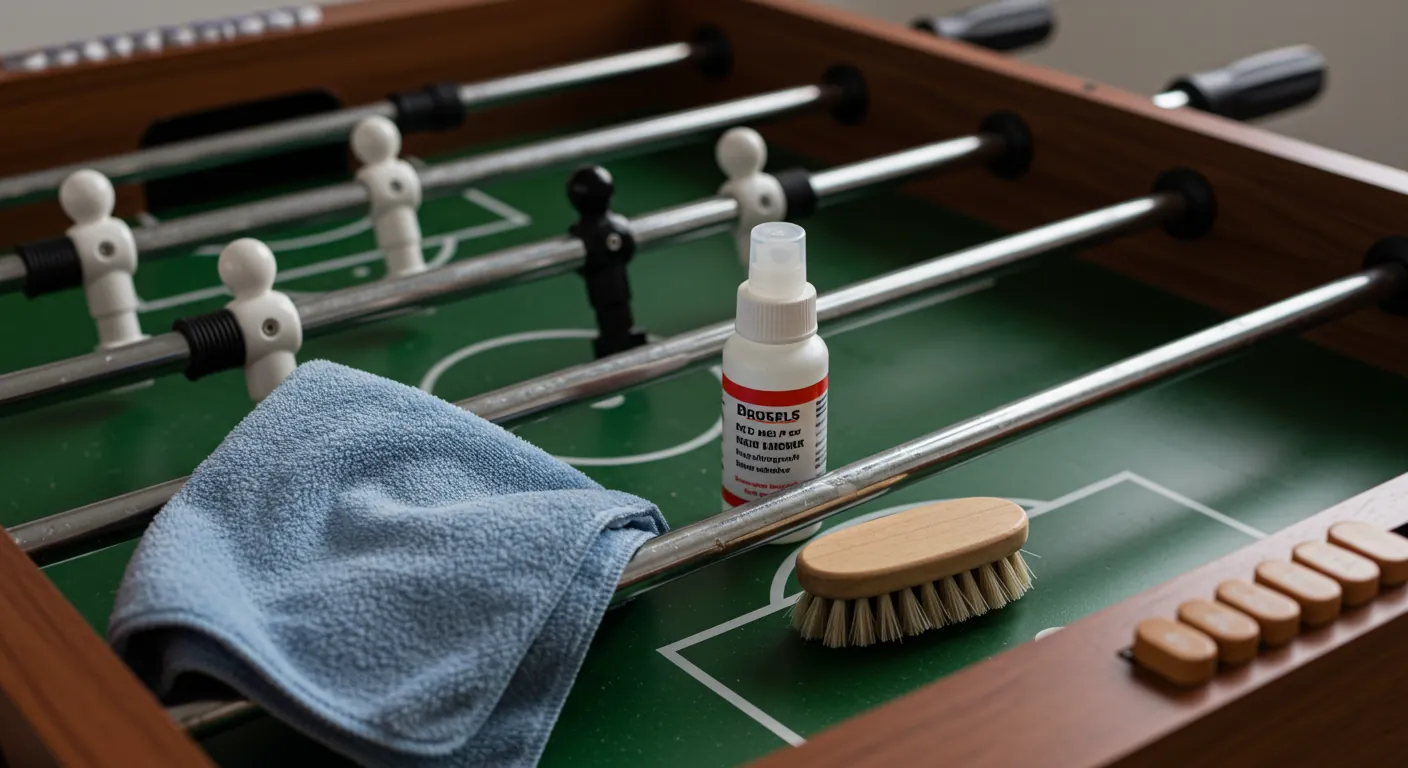
Gather these items before you begin so you don’t have to stop halfway through. Having everything ready makes the job quick and mess-free.
- Silicone spray or dry lubricant: Use a product designed for sports equipment or electronics. Avoid WD-40 or heavy motor oil as they attract dirt. A small can of silicone spray is usually enough for one full table.
- Microfiber cloths: You need at least two or three lint-free cloths. Paper towels leave fibers that mix with oil and create sludge. Microfiber traps the grime without leaving residue behind.
- Screwdriver set: Most tables have screws holding the player figures in place. A Phillips head screwdriver is common, but check your specific model first. Some rods are removable without tools, but many require loosening a nut.
- Cotton swabs: These help reach tight spaces around the bearings where a cloth can’t fit. They’re essential for cleaning old, black gunk from inside the bearing housings.
- Rags for waste: Keep some old rags handy to catch drips. Lubricant can stain wood finishes if it spills on the frame.
You can substitute vegetable-based oil in an emergency, but it will go rancid and sticky within weeks. Never use cooking oil as a long-term solution. If your table has sealed bearings that can’t be accessed, you may need a professional technician instead of doing it yourself.
How to lubricate a foosball table
Cleaning and lubricating takes about thirty minutes if you work carefully. Follow these steps to ensure every rod moves freely without attracting dust.
-
Prepare the workspace. Move the table to a well-lit area if possible. Lay down newspaper or a drop cloth under the table to catch any drips. This protects your floor from oil stains and makes cleanup easier later.
-
Remove the player figures. Loosen the nuts or screws holding the plastic or wooden men to the rods. Pull them off gently. If they’re stuck, wiggle them back and forth rather than pulling hard, which can bend the rod. Set the figures aside in a safe place.
-
Clean the rods thoroughly. Take a microfiber cloth dampened with a little rubbing alcohol or mild soap water. Wipe down each rod from end to end. Remove all old grease, dust, and black buildup. The rod should look shiny and silver when you’re done. Dry it completely with a second clean cloth.
-
Lubricate the bearings. Apply two or three drops of silicone spray or dry lube directly into the bearing housing where the rod enters the table base. Spin the rod by hand to work the lubricant into the internal washers or ball bearings. Repeat for every rod on the table. Don’t soak the bearings; excess oil attracts more dirt.
-
Reattach the figures. Slide the player figures back onto the cleaned and lubed rods. Tighten the nuts or screws securely. Make sure the figures sit straight and don’t wobble. If they’re loose, the game feels unstable. If too tight, the rod won’t spin.
-
Wipe away excess. Go over every rod and bearing one last time with a dry cloth. Any visible oil on the surface should be wiped off. The goal is internal lubrication, not a slick exterior. Surface oil will just pick up dust from the air.
-
Test the movement. Spin each rod quickly by hand. It should move freely with minimal resistance. Listen for grinding sounds. If a rod still feels stiff, add one more tiny drop of lubricant and repeat the spinning motion.
Tip: Work on one rod at a time. Don’t remove all the figures at once unless you label them. Mixing up the positions can lead to incorrect reassembly.
Careful: Avoid getting lubricant on the playing surface. Silicone spray can make the table slippery and affect ball roll. Mask off the field with tape if you’re spraying near the edges.
- Final inspection. Check that all screws are tight. Ensure no tools or cloths are left under the table. Play a few practice shots to confirm smooth operation. The rods should snap back into position easily after being spun.
The effort required depends on your table’s age and build quality. Older tables often have more corrosion and dried grease, requiring deeper cleaning. Newer tables with sealed bearings may only need a surface wipe.
| Situation | Time Required | Cost Estimate | What Differs | Watch For |
|---|---|---|---|---|
| Light maintenance (new table) | 15 mins | $0 – $5 | Minimal dirt, fresh rods | Over-spraying bearings |
| Standard service (2-3 years) | 30 mins | $5 – $10 | Moderate buildup, routine | Stiff player connections |
| Deep clean (5+ years) | 60 mins | $10 – $20 | Heavy grime, potential rust | Bent rods or worn bearings |
| Professional repair | Varies | $50+ | Sealed units, complex gears | Warranty voiding risks |
Starting with less lubricant is safer than overshooting. Too much oil creates a sticky paste that slows the game down significantly. It’s better to add more later if needed than to deal with a messy table immediately.
How to tell you did it right
A successful job means the rods spin freely and quietly. You should feel zero resistance when turning them by hand. The movement should be consistent across all four rows. If any rod feels gritty or sticks, the cleaning was incomplete.
A poor result looks like slow, jerky motion. The rods might wobble or make squeaking noises. This happens when old grease mixes with new oil, creating a thick sludge. Dust also clumps together if the surface isn’t clean before lubrication.
To prevent this, always clean the rod completely before adding lube. Use a dry cloth to remove any moisture or solvent residue. Only apply lubricant to bare metal surfaces. This ensures the oil spreads evenly without trapping particles.
Check the player figures for alignment. They should sit flush against the rod without gaps. Misaligned figures can drag against the table walls, causing friction. Tighten the connection points firmly but don’t overtighten, which can strip threads.
If the table still feels stiff after lubrication, the bearings might be worn out. In this case, no amount of oil will fix the issue. You may need to replace the bearing sleeves or the entire rod assembly. Always test the movement after every step to catch issues early.
The rules, and what to do afterwards
Check your user manual for specific intervals, as some heavy-duty tables may need more frequent care.
After finishing, dispose of used cloths and rags properly. Store them in a sealed metal container or rinse them thoroughly before tossing. Clean your tools and put them away in a dry place.
Store the table cover over the playing surface when not in use. This prevents dust from settling on the rods and bearings. Dust is the main enemy of smooth movement, as it mixes with oil to form abrasive paste. Keeping the table covered extends the time between lubrications.
If you notice any leaks or unusual noises later, stop using the table immediately. Continuing to play with a faulty mechanism can damage the gears or break rods. Contact the manufacturer or a certified repair service for diagnosis. Regular maintenance prevents major repairs down the line.
Other ways to do it
Hiring a pro
A technician can disassemble the entire unit for a deep clean. This takes longer but ensures every internal part is serviced. It costs more but saves you from guesswork. Best for expensive or antique tables.
Using dry wax
Some players prefer graphite powder or dry wax sticks. These leave no liquid residue, so dust doesn’t stick. They’re cleaner to apply but may wear off faster. Ideal for dusty environments or outdoor setups.
Replacing rods
If rods are bent or bearings are shot, lubrication won’t help. Buy replacement rods from the manufacturer. Install them according to the guide. This restores original performance levels completely.
Related guides
Frequently asked questions
Can i use wd-40 on my foosball table?
No, standard WD-40 isn’t suitable for foosball tables. It’s a solvent-based penetrant that evaporates quickly, leaving behind a sticky residue. This residue attracts dust and grit, which eventually gums up the bearings. Instead, use a dedicated silicone spray or dry lubricant designed for sports equipment. These products provide long-lasting slip without the gummy aftermath that ruins smooth play.
How long does it take to lubricate a foosball table?
It typically takes thirty minutes for a standard home table. Simple maintenance on a newer table might only take fifteen minutes. Older tables with significant buildup could require up to an hour. The time varies based on how dirty the rods are and whether you need to remove player figures. Plan for extra time if you’re doing a thorough deep clean.
Is it safe to use cooking oil as a substitute?
No, cooking oil is unsafe for long-term use. It oxidizes and goes rancid, becoming thick and sticky over time. This creates a paste that jams the bearings and damages the finish. Vegetable oils also attract insects and mold in humid environments. Always use a synthetic lubricant specifically made for mechanical or sporting goods to protect your investment.
Why does my foosball table smell bad after lubricating?
A strong chemical smell usually comes from using the wrong type of oil. Petroleum-based products release volatile organic compounds that linger in enclosed spaces. Silicone sprays have a faint odor that dissipates quickly. Ensure you’re using a low-VOC or dry lubricant. Open windows during application to ventilate the room until the scent fades completely.
What happens if i put too much lubricant on the rods?
Excess lubricant pools on the surface and traps dust particles. This forms an abrasive sludge that increases friction rather than reducing it. The rods will feel sluggish and may make grinding noises. You’ll need to strip the old oil and clean the rods again. Start with just two or three drops per bearing to avoid this common mistake.
Conclusion
Give the rods a quick spin after each game to keep things moving freely. If you hear any grinding or feel resistance, it’s time to clean and re-lube sooner than six months. Your table will thank you with years of smooth play.