
If you have too much clarifier, run the filter continuously and backwash once pressure rises, as the excess product clumps and gets trapped by the media. This guide explains how to identify overdosing symptoms, clear water without damaging equipment, and avoid wasting money by adding unnecessary chemicals.
What pool clarifier actually does
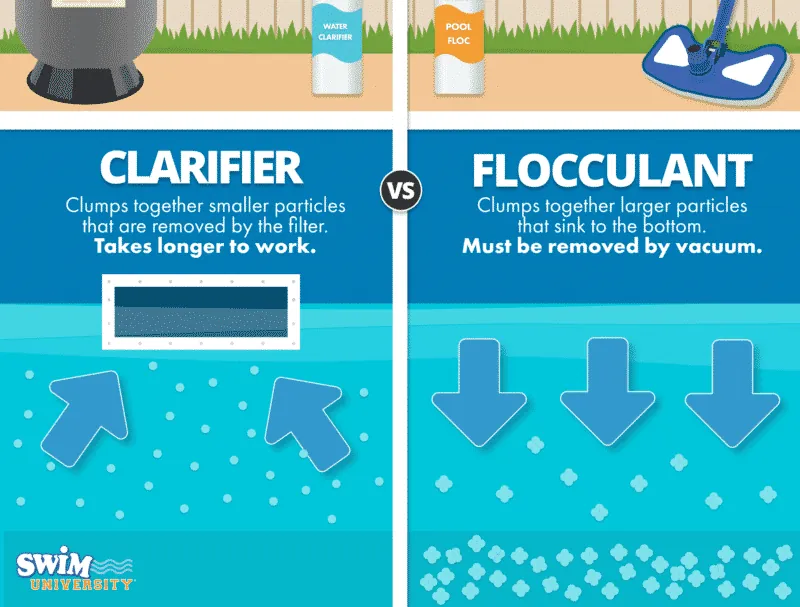
Pool clarifier works by gathering tiny particles that are too small for your filter to catch on its own. These particles include dust, pollen, dead algae cells, and body oils that float freely and make the water look hazy or milky. The chemical formula in most clarifiers contains polymers that act like magnets, pulling these microscopic bits together into larger clumps called flocs.
Once the particles stick together, they become heavy enough to sink to the bottom or large enough to be trapped by your sand, cartridge, or DE filter. This process is purely physical and doesn’t kill bacteria or change the pH of your water significantly.
Many people misunderstand how this product works and think it acts like an algaecide or a shock treatment. It doesn’t kill living organisms; it only helps remove the debris that causes cloudiness after those organisms are dead or if the dirt is just suspended from wind or rain. A common mistake is assuming that if one dose clears the water, double the dose will clear it faster. This logic fails because the polymer needs a specific ratio to work correctly.
If you add too much clarifier in pool water, the excess chemical can actually coat the filter media with a sticky film that blocks flow and reduces efficiency. Instead of cleaning the water, the filter gets clogged, and the water may turn even cloudier as the system struggles to push water through the blocked layers.
The mechanism typically relies on polymer chains bridging tiny particles together or, in some formulations, charge attraction between the clarifier and the suspended debris. When the balance is right, they form a solid mass that the filter catches easily. However, when there’s an overdose, the excess polymer physically blinds the filter media, plugging the pores and preventing water from flowing through properly.
This creates a cycle where the filter stops working effectively, and the water remains cloudy despite running the pump for days. Understanding this distinction is vital because treating a filter clog requires different steps than treating normal cloudiness. You must know that the solution to an overdose is mechanical removal, not adding more chemicals to fix the chemical imbalance.
Steps to fix an overdose
- Turn off the pump immediately and let the water sit undisturbed for at least 4 to 6 hours. This pause allows the excess clarifier and the clumped particles to settle to the bottom of the pool floor rather than circulating back up into the skimmer. Don’t try to vacuum or brush the pool during this time, as stirring the water will re-suspend the heavy clumps and spread the sticky residue throughout the entire volume.
- Check your filter pressure gauge before restarting the system. If the needle is already in the red zone or significantly higher than your clean baseline, you must backwash or clean the filter first. Running a dirty filter with too much clarifier in pool water will only pack the gunk deeper into the sand or clog the cartridge fibers further, making the cleanup much harder later.
- Restart the pump and set it to “Filter” mode, running it continuously for 24 to 48 hours without interruption. The constant flow is necessary to pull the floating clumps through the filter media over and over until they’re trapped. Keep the pump running even if the water looks slightly cloudy at first, as the filter needs time to process the heavy load of aggregated particles.
- Monitor the pressure gauge closely every few hours and backwash or clean the filter as soon as the pressure rises 8 to 10 psi above the starting clean level. With an overdose, the filter will fill up much faster than usual, so you may need to perform multiple cleaning cycles in a single day to maintain proper flow rates. If you skip this step, the pump could overheat or the filter media could become permanently coated with the sticky polymer.
- Once the water runs clear and the pressure stabilizes, vacuum the pool floor manually using the “Waste” setting if possible. This removes any remaining settled clumps directly out of the system instead of sending them back through the filter, which saves time and prevents re-clogging. If your system doesn’t have a waste setting, vacuum slowly to the filter but watch the pressure gauge constantly and stop to clean it immediately if it spikes.
- Test your water chemistry levels, specifically chlorine and pH, to ensure they’re balanced within the standard range. An overdose of clarifier doesn’t usually alter these numbers, but the stress on the system might reveal other underlying issues that were masked by the cloudiness. Adjust the levels if needed, but avoid adding any more clarifier or algaecide until the water has been crystal clear for at least two days.
The single most important judgment call here is deciding when to switch from filtering to vacuuming to waste. If you keep filtering a massive amount of sludge, you risk coating the internal parts of your filter permanently, which requires expensive replacement or professional acid washing.
You should switch to vacuuming to waste once the water looks mostly clear but the pressure keeps rising rapidly after every backwash. This tells you that the filter is saturated and can’t hold any more of the clumped particles, so removing them directly from the bottom is the only way to save the equipment.
Key settings and numbers to track
| Situation | Clarifier Amount | Filter Run Time | Pressure Watch Point |
|---|---|---|---|
| Normal Maintenance Dose | 1 capful per 10,000 gallons | 8-12 hours daily | Clean when +8 psi |
| Mild Cloudiness Fix | 2 capfuls per 10,000 gallons | 24 hours continuous | Clean when +10 psi |
| Severe Overdose (Current) | Stop adding product | 48+ hours continuous | Clean when +5 psi |
| After Backwashing | Wait 1 hour before restart | Resume normal cycle | Check baseline pressure |
| Vacuum to Waste | N/A | Run pump 2-4 hours | No pressure limit (bypass) |
These numbers assume a standard residential pool with a functioning sand or cartridge filter. If you have a very large commercial pool or a unique filter type like a diatomaceous earth (DE) unit, the times may vary slightly, but the principle of frequent cleaning remains the same.
For pools with low pump horsepower, you might need to extend the run time by another 12 hours to move the same volume of water through the filter. Always check your specific manufacturer’s manual for the exact capacity of your filter media, as older filters hold less debris than new ones. The pressure rise is the most reliable indicator, not the time on the clock, so trust the gauge over the schedule.
Why some fixes fail while others work
Experienced pool owners know that patience is the most critical factor when dealing with an overdose. Beginners often panic and try to speed up the process by adding more chemicals or turning the pump on and off frequently. This approach breaks the filtration cycle and spreads the sticky clarifier residue around the pool walls and plumbing.
Instead, successful cleanup requires a steady, uninterrupted flow that forces the particles through the filter media repeatedly. The order of operations matters immensely: you must let the water settle first, then filter aggressively, and finally vacuum the remainder. Skipping the settling period means you’re fighting against gravity and circulating the mess you’re trying to remove.
Another detail experts check is the condition of the filter media itself before starting the cleanup. If your sand is old and channelized, or if your cartridge is torn, no amount of clarifier management will clear the water. The filter must be in good shape to trap the clumps created by the clarifier.
Experienced users also verify that the pump basket is empty and the skimmer boxes are free of leaves before restarting the system. A clogged basket restricts flow and causes the pump to lose prime, which stops the circulation needed to clear the cloudiness. They also avoid brushing the pool walls vigorously during the first 12 hours, as this knocks settled particles back into suspension and delays the process.
What experienced people leave alone is the temptation to add shock or algaecide while the clarifier is still active. Experts wait until the water is perfectly clear and the clarifier has done its job before addressing any biological growth. They also don’t drain the pool unless absolutely necessary, as refilling introduces new minerals and variables that can complicate the balance. The goal is to use the existing equipment to solve the problem, not to start over with fresh water.
Quick Fixes for Too Much Clarifier in a Pool
| What you notice | What it usually means | What to do first |
|---|---|---|
| Water stays cloudy after 24 hours | Filter is clogged with polymer film | Backwash immediately and repeat |
| Pump sounds loud or straining | Flow is restricted by stuck debris | Turn off pump and check baskets |
| White flakes floating in water | Excess clarifier precipitating out | Vacuum to waste setting |
| Filter pressure never drops | Media is coated and needs replacement | Clean or replace filter media |
| Water feels slimy to touch | Chemical overload creating gel | Dilute with fresh water if severe |
Each of these signs points to a specific failure in the cleanup process. If the water remains cloudy, it almost always means the filter is full and can’t grab any more particles. The fix is simple: stop filtering and clean the media. Loud pump noises indicate that the system is starving for water due to a blockage, which requires an immediate shutdown to prevent damage.
White flakes are a visual sign that the clarifier has exceeded its binding capacity and is falling out of solution, requiring physical removal via vacuuming. Slimy water suggests the situation has progressed beyond simple cloudiness, and dilution might be the only safe option left.
Rules that apply to pool chemicals
You must follow local regulations regarding the discharge of pool water, especially if you need to vacuum to waste. Many municipalities prohibit draining chlorinated or chemically treated water into storm drains or streets, as it can harm local ecosystems.
The Environmental Protection Agency (EPA) provides guidelines on safe disposal methods, and you should check their resources for specific rules in your area. In many cases, you’re required to dechlorinate the water before releasing it into the sanitary sewer system, which may involve waiting for the chlorine to dissipate naturally or adding a neutralizing agent.
There are also safety thresholds for handling concentrated clarifier products. Most manufacturers recommend wearing gloves and eye protection when pouring the chemical, as direct contact can irritate skin and eyes. While clarifier is generally less hazardous than strong acids or bleach, it’s still a synthetic polymer that shouldn’t be ingested or allowed to splash into the face.
If you accidentally spill the product, you should rinse the area with plenty of water and consult the Safety Data Sheet (SDS) provided by the manufacturer for first aid measures. Never mix clarifier with other pool chemicals, such as shock or algaecide, in the same container or bucket, as this can cause dangerous reactions.
If the water becomes too contaminated to clear with standard filtration, you may need to seek professional help. This is particularly true if the pool water turns into a thick gel that the pump can’t move. In such cases, the cost of repairing the pump or replacing the filter media might exceed the value of the water, and a professional service can safely drain and refill the pool.
Always document the amounts of chemicals you add to your logbook, as this record helps professionals diagnose issues quickly if you ever need assistance. Remember that prevention is cheaper than repair, so sticking to the recommended dosage is the best rule of all.
Keeping your pool clear afterwards
Once the water is clear, establish a routine by testing chlorine and pH weekly and adjusting them to the ideal range. Add clarifier only when water looks slightly hazy, never more than once a month unless facing specific issues like heavy pollen, and clean your filter based on pressure gauge readings rather than a fixed schedule.
Store your clarifier in a cool, dry place away from direct sunlight and other chemicals. Heat and moisture can degrade the polymer over time, making it less effective when you eventually need it. Check the expiration date on the bottle, as old clarifier may not bond with particles properly.
If you notice the liquid has separated or changed color significantly, discard it and buy a fresh bottle. It’s also wise to keep a spare bottle on hand so you don’t run out during peak swimming season, but avoid buying in bulk if you rarely use it.
Bring the pool back to normal operation by reducing the pump run time gradually over a few days. If you ran the pump for 48 hours straight to fix the overdose, cut it back to 12 hours a day once the water is clear. This saves energy and reduces wear on the equipment.
Continue to monitor the water clarity for a week; if it stays clear, you have successfully resolved the issue. If it clouds up again quickly, you may have an underlying problem like a leak, a broken return jet, or a failing heater that needs attention.
When to choose a different method
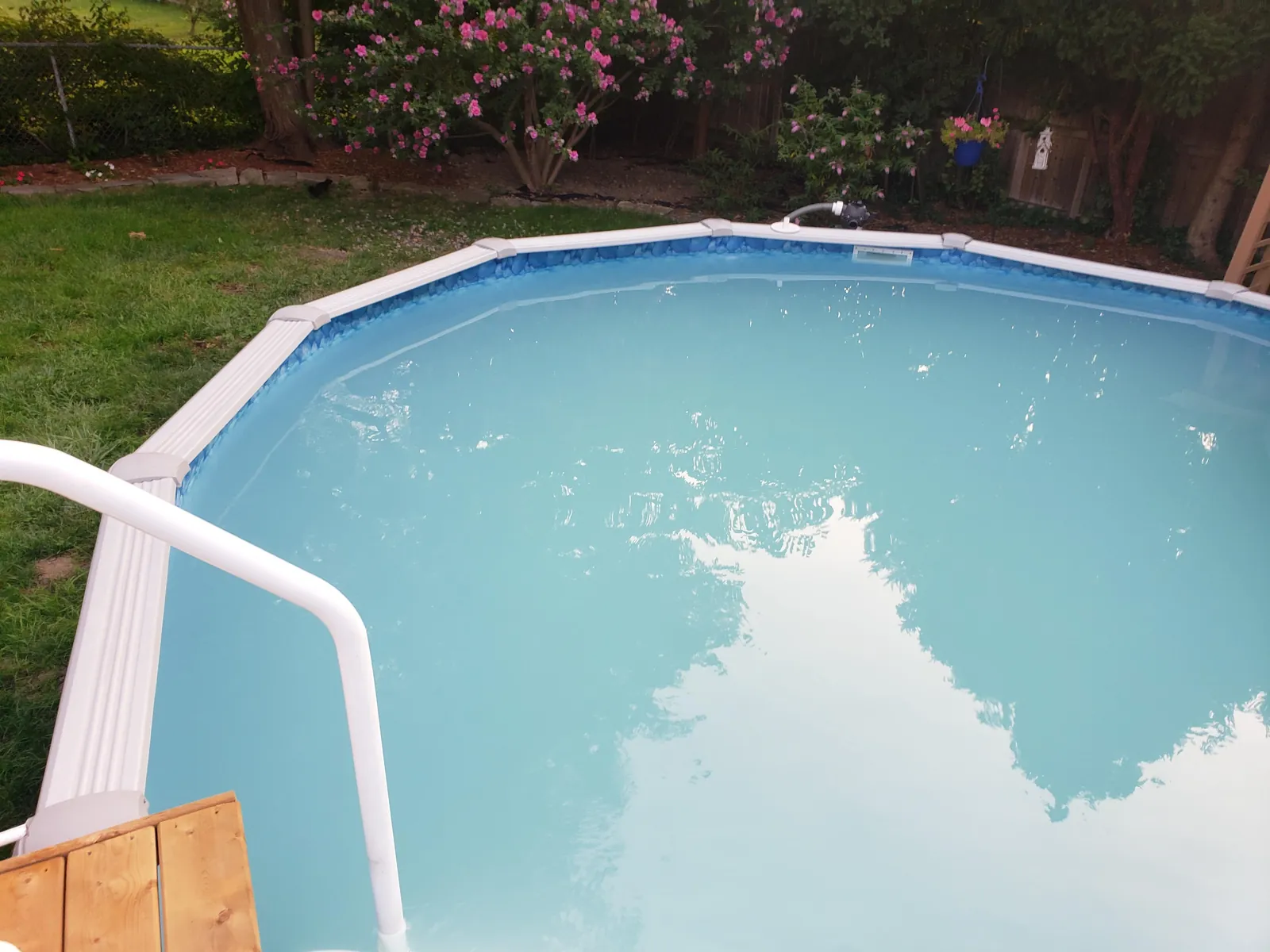
This approach is the wrong choice if your pool water is green due to a massive algae bloom rather than just cloudiness. Clarifier won’t kill the algae, and adding it to green water can make the algae clump into hard-to-remove masses that stick to the walls.
In this case, you must shock the pool with a high dose of chlorine and use an algaecide first, then wait for the algae to die and settle before considering clarifier. Trying to clarify green water is a waste of product and time.
Another situation where this method fails is if your filter is broken or missing entirely. If your sand filter has a cracked lateral line or your cartridge is torn, no amount of clarifier will clear the water because the filter can’t trap the clumps. You must repair or replace the filter media before attempting to use clarifier. Running clarifier with a broken filter just coats the broken parts with sticky goo, making the repair more difficult and expensive.
Finally, if the water is cloudy because of a calcium hardness imbalance or scaling issues, clarifier won’t help. High calcium levels cause white, chalky cloudiness that’s dissolved in the water, not suspended particles. Adding clarifier to this type of cloudiness adds unnecessary chemicals to the water and can worsen the scaling on your equipment.
In these cases, you need to lower the pH and alkalinity or partially drain and refill the pool to reduce the mineral content. Know the cause of the cloudiness before you reach for the clarifier bottle.
Related guides
Frequently asked questions
Can too much clarifier make the pool cloudy?
Yes, adding too much clarifier can make the pool cloudy because excess chemical coats the filter media and prevents dirt trapping. The overloaded filter pushes sticky polymer back into the water, creating a haze that requires continuous filtration and frequent cleaning to remove.
How long does it take to clear an overdose?
Clearing an overdose typically takes 24 to 48 hours of continuous pumping and frequent filter cleaning. The exact duration depends on pool size, filter type, and the amount added, so patience is essential as stopping early resets the process.
Is it safe to swim in a pool with too much clarifier?
No, it isn’t safe to swim until the water is completely clear and the filter is cleaned. Excess chemical can irritate skin and eyes, while cloudy water hides hazards and indicates compromised filtration that fails to remove contaminants effectively.
Will backwashing remove too much clarifier?
Yes, backwashing is the primary way to remove excess clarifier by flushing out the sticky polymer film from the filter media. You may need to repeat this several times or combine it with vacuuming to waste if the overdose was severe enough to clog the system.
What happens if I add more clarifier to fix the cloudiness?
Adding more clarifier to fix cloudiness caused by an overdose will worsen the problem by increasing sticky residue in the water. This action clogs the filter further, potentially turning the water into a gelatinous slime that damages equipment and requires costly repairs.
Can I use a different brand of clarifier to fix the issue?
No, switching brands won’t fix the issue because the problem is the quantity of polymer in the water, not the specific brand. All clarifiers work on the same principle of binding particles, so adding a different product just adds more of the same substance that’s already causing the clog. The solution remains the same regardless of the brand: run the filter, clean it often, and vacuum the settled debris.
Does clarifier affect the pH or chlorine levels?
Generally, clarifier doesn’t significantly affect pH or chlorine levels since it’s a non-reactive polymer. However, extreme cloudiness can hinder circulation, making chlorine less effective at killing bacteria even if test readings appear high, so always retest after clearing the water.
Conclusion
Once the water clears up, don’t forget to test your levels again before adding anything else. You’ll save money and keep your equipment safe by letting nature do some of the work. Just run the pump a bit longer tonight, then enjoy your sparkling pool tomorrow without worrying about extra chemicals.