
When you’re working on plumbing or fixing leaks, choosing the right sealant can make all the difference. You might have heard about Teflon tape and thread sealant, but which one is truly better for your project?
Picking the wrong option could lead to leaks, wasted time, and frustration. You’ll discover how Teflon tape and thread sealant work, their pros and cons, and which one suits your needs best. By the end, you’ll feel confident making the right choice to get the job done right the first time.
Keep reading to find out what you need to know!
Teflon Tape Basics
Teflon tape is a common tool for sealing pipe threads. It helps stop leaks and makes connections tighter. Many people use it in plumbing and other projects. Understanding the basics of Teflon tape can help you decide if it fits your needs.
Below, you will find simple explanations about what Teflon tape is, how it works, and where it is used the most.
What Is Teflon Tape
Teflon tape is a thin, white tape made from polytetrafluoroethylene (PTFE). It is also called plumber’s tape. The tape is flexible and easy to wrap around pipe threads. It does not stick like glue but fills small gaps.
How It Works
The tape acts as a seal between pipe threads. It fills tiny spaces that allow water or air to leak. When pipes are screwed together, the tape prevents leaks by blocking these gaps. It also helps pipes turn more smoothly.
Common Uses
People use Teflon tape mainly in plumbing jobs. It works well for sealing water, gas, and air pipes. It is also useful for fixing leaks in showers, faucets, and garden hoses. Many DIYers keep it handy for quick repairs.
Thread Sealant Essentials
Thread sealants are important for joining pipe threads securely. They stop leaks and keep connections tight. These sealants come in many forms. Each type has its own use and benefits. Understanding thread sealants helps you pick the right one for your project.
Using the correct thread sealant improves safety and prevents damage. It also saves time by avoiding repairs. Below are key points about thread sealants to guide your choice.
Types Of Thread Sealants
Thread sealants come as paste, tape, or liquid. Paste sealants are thick and spread easily on threads. Tape sealants, like Teflon tape, wrap around threads. Liquid sealants cure after application, forming a strong bond. Some sealants work better with certain materials. Choose based on pipe type and the environment.
Application Methods
Applying thread sealants is simple but requires care. For paste, apply a thin layer on male threads. Avoid excess to prevent clogging pipes. Tape must wrap in the thread direction, overlapping slightly. Liquid sealants need to dry before joining parts. Follow manufacturer instructions for best results. Proper application ensures a secure, leak-free seal.
Typical Applications
Thread sealants are common in plumbing and gas lines. They protect against water, air, and gas leaks. Industrial machines and automotive parts also use them. Sealants work well in high pressure and temperature conditions. Choose the right sealant to match the application’s needs. Using the correct one prevents costly failures and downtime.
Performance Comparison
Comparing Teflon tape and thread sealant helps you choose the right tool for pipe connections. Both products seal joints but work differently. Understanding their performance can prevent leaks and ensure safe plumbing.
Sealing Effectiveness
Teflon tape wraps around pipe threads. It fills gaps and prevents leaks. It works well for water and gas lines. Thread sealant is a paste that fills spaces between threads. It creates a strong, flexible seal. It often seals better on irregular threads or damaged pipes.
Temperature Resistance
Teflon tape can resist heat up to about 500°F (260°C). It holds up well in most household uses. Thread sealants vary in heat tolerance. Some handle temperatures over 600°F (315°C). Choose sealant for high-heat systems like boilers or engines.
Chemical Compatibility
Teflon tape resists many chemicals and oils. It stays stable in water and gas systems. Thread sealants come in different formulas. Some protect better against acids and solvents. Select a sealant that matches the chemicals in your system.
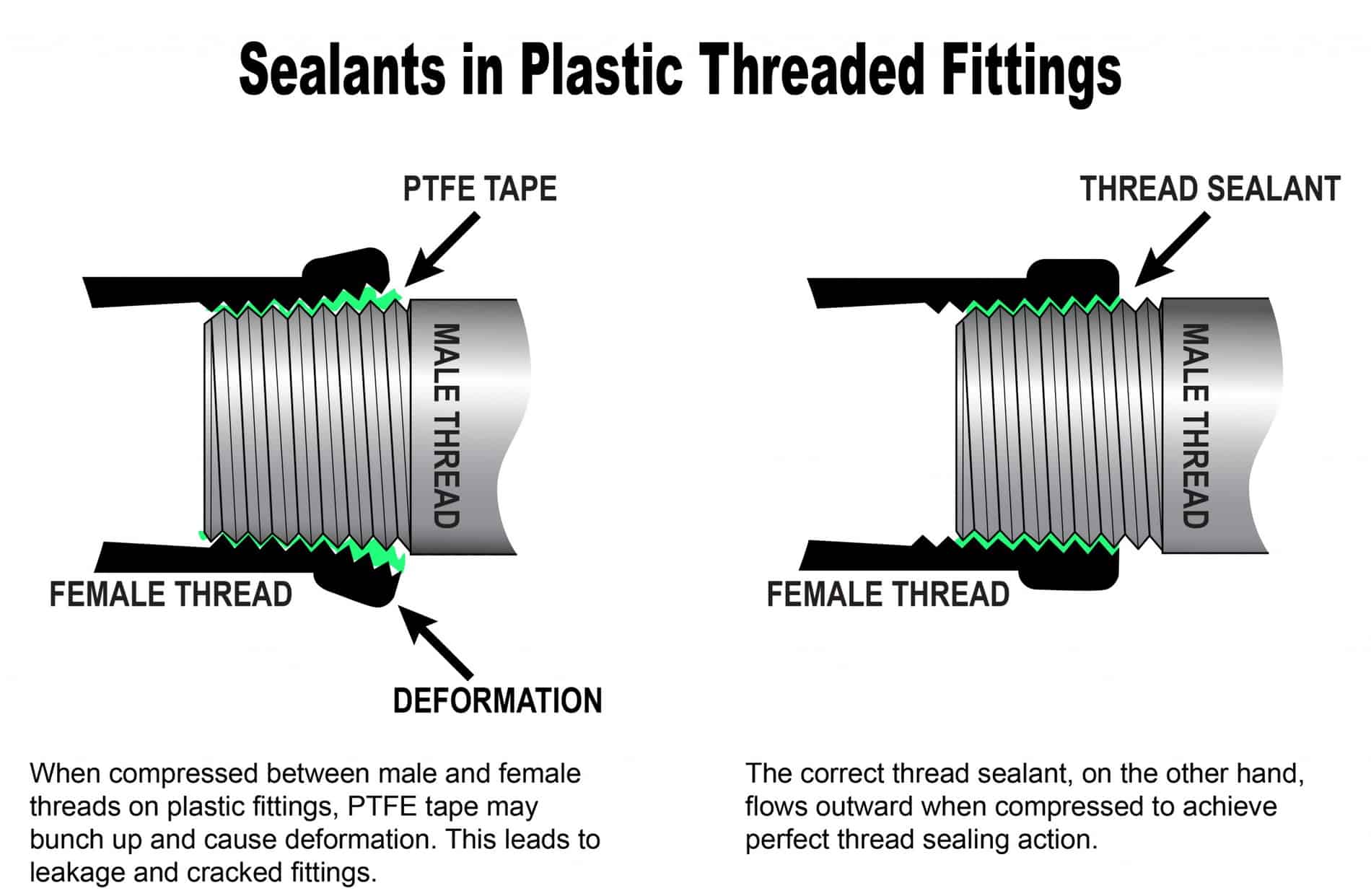
Credit: www.fluoramics.com
Ease Of Use
Ease of use is a key factor in choosing between Teflon tape and thread sealant. Both have unique features that affect how simple they are to apply and maintain. Understanding these differences helps in making the right choice for your project.
Application Process
Teflon tape wraps around the thread by hand. It takes only a few seconds to apply. The tape must be wrapped evenly to avoid leaks. Thread sealant is a paste applied with a brush or finger. It spreads smoothly and fills gaps better. The paste may take longer to dry. Teflon tape is usually quicker but requires careful wrapping. Sealant needs more time but can create a stronger seal.
Cleanup And Maintenance
Teflon tape leaves little mess after use. Any excess tape can be easily removed. It does not stick to surfaces outside the thread. Thread sealant can be sticky and messy. It may require cleaning tools or solvents. Over time, sealant can harden and crack. Teflon tape is easier to clean up and maintain. Sealant may need more attention to keep parts leak-free.
Skill Level Required
Teflon tape is beginner-friendly. Most people can apply it with minimal practice. Proper technique helps prevent leaks but is simple to learn. Thread sealant needs a bit more skill. Applying the right amount is important to avoid mess. It suits those comfortable with tools and patience. Both methods can work well with practice. Teflon tape is best for quick, easy jobs. Sealant fits tasks needing extra sealing strength.
Durability And Reliability
Durability and reliability are key factors when choosing between Teflon tape and thread sealant. Both products aim to prevent leaks and ensure tight connections. Yet, they perform differently over time and under stress. Understanding these differences helps pick the best option for your project.
Long-term Performance
Teflon tape holds up well in dry environments and low temperatures. It does not degrade easily and maintains a good seal for years. Thread sealant, a paste that hardens, often lasts longer in harsh conditions. It resists water, chemicals, and extreme heat better. For long-lasting repairs, thread sealant usually offers a stronger bond.
Resistance To Vibration And Pressure
Teflon tape can loosen under constant vibration or heavy pressure. It may slip or tear if pipes move often. Thread sealant sticks firmly to threads and fills gaps completely. It absorbs vibrations and stays intact under high pressure. This makes thread sealant more reliable in machines and plumbing systems with movement.
Cost Considerations
Cost plays a key role when choosing between Teflon tape and thread sealant. Both options vary in price and can affect the overall budget of a project. Understanding these costs helps in making a smart choice.
Initial Costs
Teflon tape is usually cheaper upfront. It is sold in rolls and can be used many times. One roll covers many joints and lasts long.
Thread sealant costs more at first. It comes in tubes or cans and is applied by hand. A small amount is needed for each joint.
Maintenance And Replacement
Teflon tape may need replacement if joints loosen or leak. Removing old tape takes time and effort.
Thread sealant forms a strong bond that may last longer. It can reduce the need for frequent repairs.
Choosing the right option depends on how often maintenance is expected. Lower initial cost may mean higher upkeep later.
Safety And Environmental Impact
Choosing between Teflon tape and thread sealant involves safety and environmental concerns. Both products help seal pipe threads but differ in their effects on health and nature. Understanding these differences can guide better choices for home or professional plumbing.
Health Concerns
Teflon tape is generally safe when used properly. It is non-toxic and does not release harmful fumes. Still, avoid inhaling dust from the tape or swallowing it. Thread sealants contain chemicals that can irritate skin and eyes. Some sealants release fumes that may cause headaches or dizziness. Always work in a well-ventilated area and wear gloves when applying sealant.
Environmental Effects
Teflon tape is made from plastic materials that do not biodegrade easily. It can add to plastic waste if not disposed of properly. Thread sealants often contain solvents and other chemicals. These substances may harm water sources and soil if spilled or discarded carelessly. Choosing sealants with safer ingredients reduces environmental risks. Recycle or dispose of both products according to local regulations.

Credit: pigeasy.com
Choosing The Right Option
Choosing the right option between Teflon tape and thread sealant can impact your project’s success. Both materials seal pipe threads but differ in use and benefits. Understanding these differences helps you pick the best one for your needs.
Factors To Consider
Think about the temperature of the application. Teflon tape works well with cold and moderate temperatures. Thread sealant handles higher temperatures better. Also, check the type of fluid in the pipes. Some chemicals can break down Teflon tape. Thread sealant resists many chemicals. Consider ease of use. Teflon tape is quick and clean to apply. Thread sealant takes longer and can be messier.
Application Scenarios
Use Teflon tape for water pipes and gas lines with low pressure. It is great for small plumbing repairs at home. Thread sealant fits heavy-duty jobs like industrial pipes. It seals leaks in compressed air systems and oil lines. Choose thread sealant for metal-to-metal connections needing strong bonds. Teflon tape suits plastic or metal connections where flexibility is needed.
Expert Recommendations
Experts suggest using Teflon tape for DIY home plumbing. It is safe and simple for beginners. For professional or industrial use, thread sealant is often better. It offers a more durable seal under tough conditions. Always follow manufacturer instructions. Use the recommended product for your pipe type and job. Test the seal after application to avoid leaks.

Credit: www.youtube.com
Frequently Asked Questions
What Is The Main Difference Between Teflon Tape And Thread Sealant?
Teflon tape is a thin film wrapped around threads, while thread sealant is a paste applied on threads. Both prevent leaks but work differently.
Can Teflon Tape And Thread Sealant Be Used Together?
Yes, they can be used together for extra sealing strength. But using both is often unnecessary for most jobs.
Which Is Better For High-pressure Plumbing, Teflon Tape Or Sealant?
Thread sealant works better for high-pressure systems due to its thicker, stronger seal. Teflon tape suits low to medium pressure.
How Long Does Teflon Tape Last Compared To Thread Sealant?
Teflon tape lasts longer in dry conditions but may degrade with heat. Thread sealant can last longer in harsh environments.
Is Teflon Tape Safe For Drinking Water Pipes?
Yes, Teflon tape is safe for potable water when labeled as NSF-approved. Always check the product specifications.
How Easy Is It To Apply Teflon Tape Versus Thread Sealant?
Teflon tape is quick and clean to apply by wrapping threads. Thread sealant requires careful spreading and drying time.
Can Thread Sealant Be Removed Easily Like Teflon Tape?
Thread sealant is harder to remove and may need scraping or solvents. Teflon tape peels off easily before assembly.
Conclusion
Choosing between Teflon tape and thread sealant depends on your project needs. Teflon tape works well for small pipes and quick fixes. Thread sealant offers stronger, longer-lasting seals for bigger jobs. Both prevent leaks and protect threads from damage. Consider the materials and pressure involved before deciding.
Using the right product helps avoid costly repairs later. Remember, safety and durability matter most in plumbing tasks. Select wisely and apply carefully for the best results.