
A metal out product removes dissolved iron, copper and manganese from pool water by clumping them into particles your filter can catch. Using this treatment properly means adding the right dose for your water volume, running the pump long enough to circulate it, then cleaning the filter once the metals are trapped. The exact amount depends on your pool’s size and how heavy the staining is.
Three things change what you’ll actually do: whether the water is already stained or just cloudy, which sanitizer you run, and the type of filter installed on your system. Each one shifts the dose, the wait time and the cleanup step that follows.
Who needs a metal remover for their pool
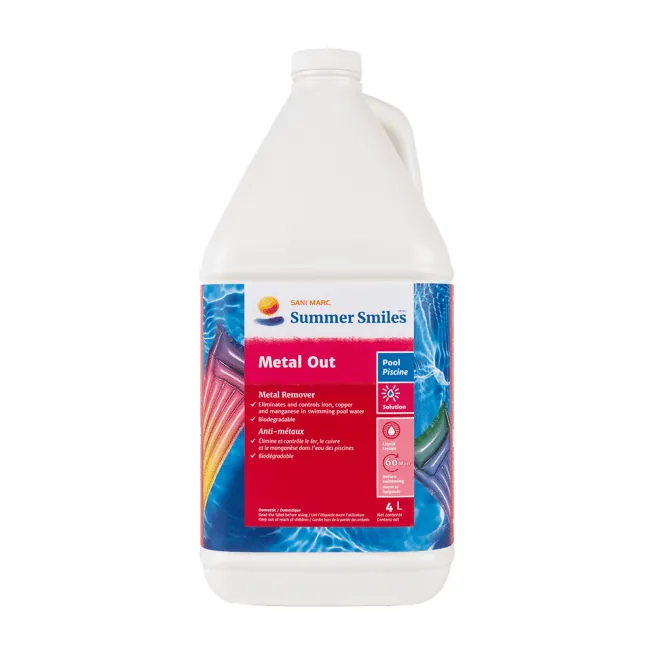
Three different situations send people looking for a way to clear metals from pool water. The first is someone who just filled a pool from a well. Well water often carries high iron levels, turning the basin brown or green the moment chlorine hits it. They need a sequestering agent added before any sanitizer goes in.
The second reader has an older pool with copper plumbing or a saltwater chlorine generator. Salt cells erode metal fittings over time, leaving blue-green stains on plaster and vinyl. They’re trying to lift existing marks without draining thousands of gallons of water.
The third person simply noticed purple or black spots appearing after shocking their pool. Oxidized manganese causes those dark stains when standard chemicals trigger a reaction that makes the discoloration worse.
This page serves the first two readers best. If your water is perfectly clear and you’ve never tested positive for metals, you don’t need this treatment yet. Adding a chelating chemical to balanced, metal-free water wastes money and introduces unnecessary compounds.
The instructions below assume you have a standard residential pool between 10,000 and 20,000 gallons, using either a cartridge or sand filter. If you run a commercial facility or a diatomaceous earth system under strict local codes, check your equipment manual first.
What changes how much metal remover you need
Five factors decide exactly how much product you pour in and how long the job takes. Getting the biggest one wrong leaves stains exactly where they started.
Water volume matters most. A 10,000-gallon pool needs roughly half the dose of a 20,000-gallon one. You can’t guess this number. Measure your pool’s length, width and average depth, then calculate the total gallons before opening the bottle.
The severity of the staining comes next. Clear water with trace metals needs a maintenance dose, usually printed on the label as the lower number. Heavy rust stains or deep blue plaster discoloration requires the maximum initial dose. If the walls are visibly marked, use the higher figure; if the water just looks slightly off-color, stick to the lower one.
Your sanitizer type creates a trade-off. Chlorine oxidizes dissolved metals, causing them to stain surfaces faster. That’s why you add the sequestering agent before you chlorinate a fresh fill. Saltwater pools generate chlorine continuously, so metals get oxidized constantly. You’ll need to repeat the treatment more often than someone using a mineral system or bromine.
Filter type dictates your cleanup step. Cartridge filters trap metal clumps inside the pleats, requiring you to pull the element out and hose it down. Sand filters let you backwash the waste straight out, but fine iron particles sometimes pass through the sand bed and return to the water.
pH level is the thing people misjudge most often. Metals dissolve easily in low-pH water (under 7.2) and fall out of solution quickly when pH rises above 7.6. Test your pH with liquid drops or strips before dosing. If it sits outside the 7.2 to 7.6 range, adjust it first. Pouring metal remover into highly acidic water makes the chemical work much harder than it should.
Steps to add metal out to pool water
Clearing dissolved metals takes a specific order. Skipping ahead to filtration while the chemical is still mixing leaves stains untouched.
- Test the water’s pH and total alkalinity using a reliable kit. Adjust the pH to sit between 7.2 and 7.6 before doing anything else.
- Calculate your pool’s exact volume in gallons. Check the product label for the dosage rate per 10,000 gallons. For a fresh well-water fill, use the initial heavy dose listed; for weekly upkeep, use the smaller maintenance amount.
- Turn the pump on and set the multiport valve to “recirculate” if you have a sand filter, bypassing the filter media so the chemical mixes freely. Cartridge filter owners simply leave the pump running normally.
- Pour the measured liquid slowly around the perimeter of the deep end while the pump runs. Don’t dump it all in one spot, because concentrated acid-based removers can bleach vinyl liners.
- Let the pump run continuously for at least 24 hours. This gives the sequestering agent enough time to bind every free-floating metal ion. You’ll know it’s working when the water stops changing color.
- Switch the sand filter valve back to “filter,” or leave the cartridge system running. Add your normal sanitizer now, keeping free chlorine between 1 and 3 parts per million. Watch the water closely over the next 48 hours.
- Check the filter pressure gauge. Once it reads 8 to 10 psi above its clean starting pressure, the trapped metals have clogged the media. Backwash a sand filter or remove and spray down a cartridge element.
- Retest the water for metals using test strips designed for iron and copper. If the strips still show high levels, repeat the initial dose once more before returning to the maintenance schedule.
The single judgment call separating a clean pool from a ruined liner happens during step four. If you pour too fast near shallow steps, the undiluted chemical sits against the surface. Walk steadily and pour thin streams. If your pool has structural damage exposing rebar, stop here—a licensed pool contractor must handle exposed steel before chemicals go in.
Situations that change the approach
Different water conditions require different timing and effort. Here is what each scenario actually demands.
| Your situation | What to do | Effort needed | Watch for this |
|---|---|---|---|
| Fresh well water fill | Add heavy dose before any chlorine | High, full day | Water turning brown instantly |
| Weekly upkeep | Add small maintenance dose | Low, ten minutes | Stains creeping back slowly |
| Blue copper stains | Brush walls, then add double dose | Medium, two days | Plaster pitting underneath stains |
| Rust colored water | Lower pH slightly, add iron remover | Medium, one day | Filter clogging very fast |
| After heavy shocking | Wait three days, then add dose | Low, ten minutes | Chlorine bleaching the chemical |
| Saltwater pool | Dose monthly instead of weekly | Medium, recurring | Cell plates corroding faster |
If you’re dealing with a freshly filled pool drawn from a well, treat the water immediately. Waiting even a few hours allows dissolved oxygen and sunlight to start oxidizing the iron. That turns a simple chemical binding job into a stubborn stain removal project.
For saltwater systems, the continuous low-level chlorine generation means metals are always on the edge of falling out of solution. You’ll spend less effort overall by staying on a strict monthly schedule rather than waiting for the water to turn green.
Details that keep pool metal treatments working
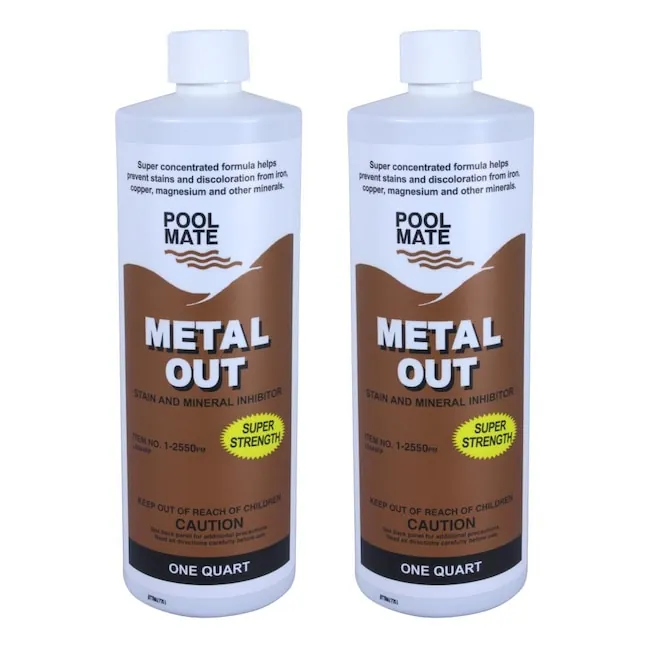
Mixing and circulation matter most
Pouring the bottle into the skimmer is generally safe and ensures rapid circulation, but never pour concentrated acid-based removers directly onto the vinyl liner or mix them with other chemicals in the skimmer basket. Always pour it directly into the pool basin.
Walking the entire perimeter ensures the chemical dilutes evenly. If you only stand at the deep end drain, the far corners won’t see the sequestering agent for hours. You want the water moving past the return jets to carry it everywhere within the first thirty minutes.
Don’t shock the water too soon
Adding granular chlorine shock immediately after pouring in the metal remover destroys the chemical bonds you just paid for. The strong oxidizer breaks the sequestering agent apart, releasing the metals right back into the water to stain your walls again.
Wait a full 24 hours with the pump running before raising your chlorine levels. You can verify the chemical has circulated by checking that the water clarity hasn’t worsened. If the pool turns milky white after you finally add chlorine, you didn’t wait long enough, and the metals are crashing out of solution.
Fixing common pool metal problems
When something goes wrong during treatment, the symptoms tell you exactly what happened. Match what you see to the table below.
| What you notice | What it usually means | What to do first | How to stop it happening again |
|---|---|---|---|
| Water turns dark brown | Iron oxidized before chemical bound it | Lower pH, add ascorbic acid | Treat water before adding chlorine |
| Blue marks on plaster | Copper fell out of solution | Brush stains, apply heavy dose | Keep pH strictly below 7.6 |
| Cloudy white water | Sequestering agent was destroyed | Stop adding chlorine, wait 48 hours | Never shock immediately after dosing |
| Filter pressure spikes fast | Heavy metals successfully trapped | Backwash or clean cartridge element | Expect rapid clogs during first treatment |
| Stains return next week | Maintenance dose was skipped | Apply weekly maintenance amount | Set a calendar reminder |
| Vinyl liner faded near steps | Chemical poured directly onto surface | Dilute remaining chemical with fresh water | Always walk perimeter while pouring |
Brown water right after filling a pool means the iron content in your source water is extremely high. Don’t panic and dump in more chlorine to “burn it off”—that locks the rust color into the plaster permanently. Instead, lower the pH slightly and introduce an ascorbic acid treatment alongside your metal remover.
Fundamental water chemistry principles dictate that unbalanced pH accelerates metal precipitation, a concept covered in standard pool maintenance training and resources.
Rules for handling pool chemicals safely
Metal removers are often acid-based solutions, typically containing phosphonic or hydrochloric acid derivatives. The US Environmental Protection Agency regulates pool chemicals under the Federal Insecticide, Fungicide, and Rodenticide Act when they make sanitizing claims, but sequestering agents primarily fall under consumer safety labeling laws.
Always read the Safety Data Sheet provided by the manufacturer. It lists the exact protective gear required—usually chemical-resistant gloves and splash goggles. Never mix a metal remover directly with dry chlorine tablets in a bucket. Combining acids and oxidizers produces toxic chlorine gas, which is a severe respiratory hazard.
Storage rules vary by region, but the baseline requirement is keeping the container sealed, out of direct sunlight, and away from any oxidizing chemicals. If you spill a concentrated acid-based remover, consult the Safety Data Sheet for specific cleanup procedures; for small spills, carefully neutralize with an appropriate agent like sodium bicarbonate, but avoid hosing until the reaction is complete and the area is safe.
Local health departments govern public and commercial pools differently than backyard setups. If you manage a community pool, your county’s environmental health division sets the allowable limits for chemical additions. Check their published guidance online before treating a shared body of water, as unauthorized chemical adjustments can result in fines or closure orders.
What clearing pool metals actually costs
The price of fixing metal-stained pool water depends entirely on the volume you’re treating and how bad the damage is. A standard 32-ounce bottle of sequestering agent treats about 10,000 gallons for a single initial dose. These bottles are inexpensive relative to the alternative, though prices shift based on the brand concentration.
If you have a 20,000-gallon pool with heavy iron staining, you might burn through two or three bottles during the first week alone. That increases your immediate material cost accordingly. Even so, this approach remains inexpensive relative to draining and refilling the entire pool, which costs significantly more in municipal water fees and wastes thousands of gallons.
Time is the hidden expense. The initial treatment ties up your pump for 24 to 48 hours, meaning you can’t swim during that window. Cleaning the filter afterward adds another hour of labor, especially if you have to hand-scrub a cartridge element covered in brown sludge.
Ongoing maintenance costs much less. The weekly upkeep dose is usually a fraction of the initial amount, keeping ongoing expenses inexpensive relative to the alternative. Prices shift based on where you buy supplies, so check current rates at your local pool supply store rather than relying on old figures. Buying in bulk online lowers the per-ounce cost if you deal with chronic well-water issues.
Keeping pool water clear after treatment
Once you’ve pulled the metals out of the water, keeping them out requires a routine. The sequestering agent doesn’t last forever. Sunlight, heat and regular chlorine additions break the chemical bonds down over time.
Add a maintenance dose of your chosen metal remover as needed. The exact interval depends on use, and the owner’s manual is the authority.
Keep your pH locked between 7.2 and 7.6. When pH drifts too high, the metals you worked hard to suspend will drop out of the water and stain the floor again. Test the water twice a week using liquid drops rather than cheap paper strips, which fade quickly in the sun and give false readings.
Watch the filter pressure gauge. A slow, steady climb over several days means the filter is catching new debris. A sudden spike the day after adding chemicals means the metals crashed out of solution too fast. Clean the filter whenever the gauge reads 10 psi above its normal resting state.
When a metal remover won’t fix your pool
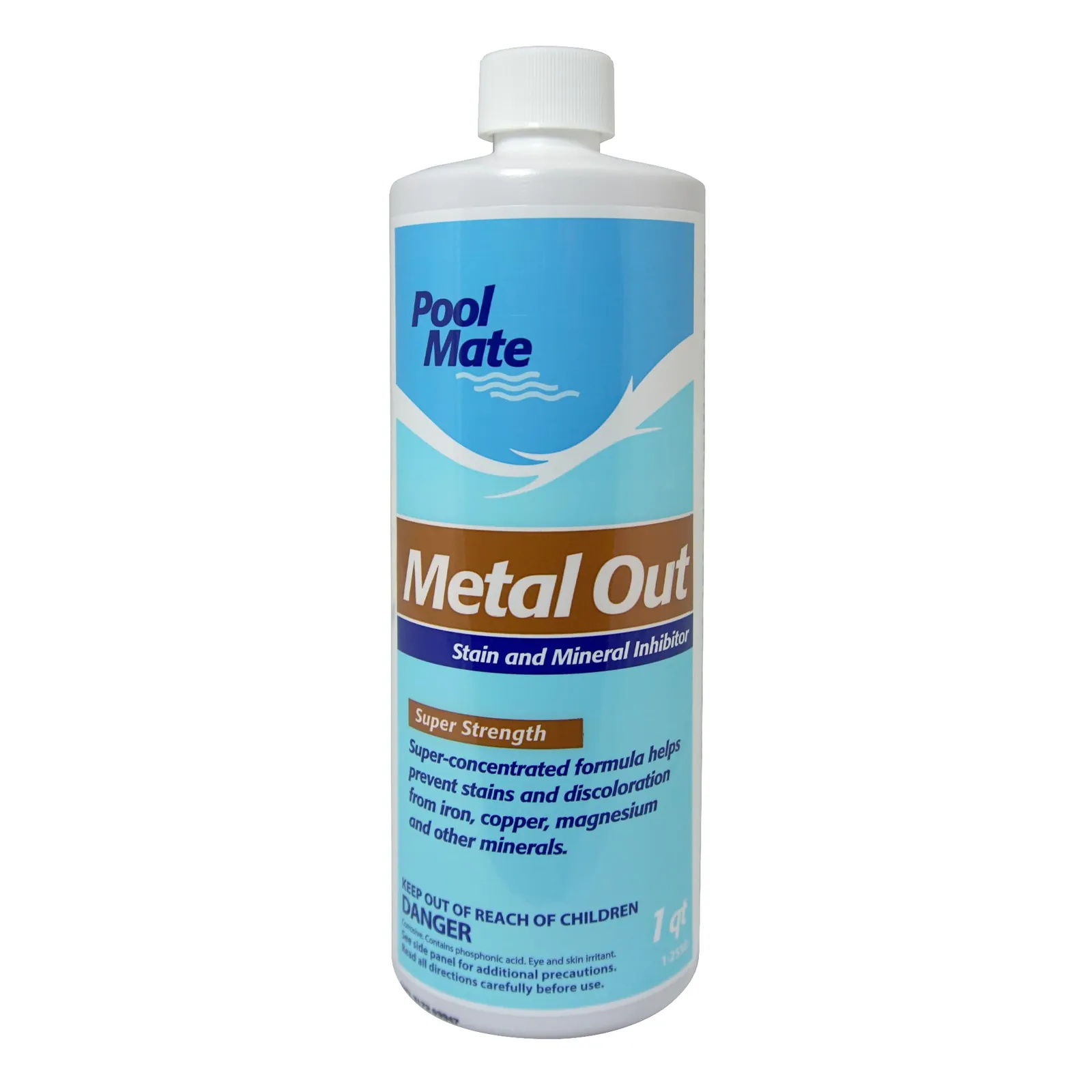
Not every stain responds to a liquid poured from a bottle. If the discoloration is deeply embedded in old plaster, a sequestering agent can only hold the water clear—it won’t erase marks that have bonded to the calcium matrix over years. Acid washing the plaster is the alternative, but that strips away a layer of the surface and requires a professional crew.
If your pool has a vinyl liner that has already turned permanently brown from prolonged iron exposure, no chemical will reverse the dye job. Replacing the liner is the only option left. Don’t keep pouring expensive remover into the water hoping it will bleach the plastic back to blue.
Pools with severely corroded copper heat exchangers leak metal continuously. Treating the water fixes today’s problem, but tomorrow the heater dumps more copper in. You must replace the damaged equipment first. If you suspect internal plumbing corrosion, hire a licensed pool technician to pressure-test the lines before spending money on water chemistry.
Finally, if your water tests positive for metals but also shows dangerously low pH (below 6.8), don’t add acid-based removers yet. Correct the alkalinity and pH with sodium bicarbonate first. Adding acidic chemicals to already corrosive water damages pumps and heaters rapidly.
Related guides
- 5 Best Shop Vacs for Blowing Out Pool Lines: Expert Picks in 2026
- How to Smooth Out Bumps in Carpet: Simple DIY Fixes
- 8 Best Pool Vacuum for Leaves Picks for a Clean Pool in 2026
Frequently asked questions
Can I swim after adding metal out to my pool?
No, wait at least 24 hours. The chemical needs uninterrupted pump circulation to bind the metals fully. Swimming too early disrupts the mixing process and exposes your skin to concentrated, unmixed solution. Once the water is clear and chlorine returns to 1-3 ppm, it’s safe.
Why did my pool turn brown after adding chlorine?
Chlorine oxidized dissolved iron in the water, turning it into solid rust particles. This happens when you sanitize a fresh fill before adding a sequestering agent. Lower the pH slightly, add an ascorbic acid treatment, and follow up with a heavy dose of metal remover.
How long does metal out take to clear pool water?
It takes 24 to 48 hours for the water to clear completely, assuming the pump runs nonstop. Light iron tint might vanish overnight, while heavy copper contamination can take two full days of circulation. If it stays cloudy past 48 hours, your filter is likely clogged.
Is it safe to mix metal out with algaecide?
Yes, but don’t pour them into the skimmer at the same time. Add the metal remover first, let it circulate for a few hours, then introduce the algaecide. Mixing concentrated liquids directly in a bucket or skimmer basket can cause unexpected reactions that reduce both products’ effectiveness.
What happens if I add too much metal out?
Overdosing rarely damages the pool surface, but it can cause foaming along the waterline. It also wastes money. If you accidentally pour in double the required amount, run the pump continuously and let the filter catch the excess bound particles. Don’t drain the pool to fix it.
Does metal out lower pool chlorine levels?
No, sequestering agents don’t consume chlorine directly. However, if you add them at the same time as a heavy shock treatment, the oxidizer destroys the metal remover before it works. Keep your chlorine at normal maintenance levels (1-3 ppm) during the initial 24-hour treatment window.
How often should I test my pool for metals?
Test once a month if you use municipal tap water, and every two weeks if you fill from a well. Standard test kits don’t include metal checks, so buy specific iron and copper test strips. Catching a rise early means you only need a small maintenance dose instead of a heavy rescue treatment.
Do saltwater pools need more metal remover?
Yes, because salt chlorine generators produce oxidizers constantly. This ongoing oxidation forces metals out of solution faster than in manually chlorinated pools. Plan to add a maintenance dose every two to four weeks, and inspect your salt cell plates for metallic buildup during your regular cleaning schedule.
First steps for your pool metal treatment
Start by testing your water’s pH and calculating your pool’s exact gallon count today. Once you pour the correct dose in and run the pump for 24 hours, the water should shift from tinted to clear, confirming the metals are trapped in the filter. If the water turns milky white or dark brown immediately after adding your normal chlorine back, stop adding chemicals and contact a licensed pool service to evaluate the water balance.