
A standard foosball table holds ten players, with five on each side. This count applies to the most common 5-a-side tables found in homes and bars. If you have a 4-a-side or 3-a-side table, the total drops to eight or six players respectively. Always check your table’s rod configuration before setting up for a game.
How many players play foosball
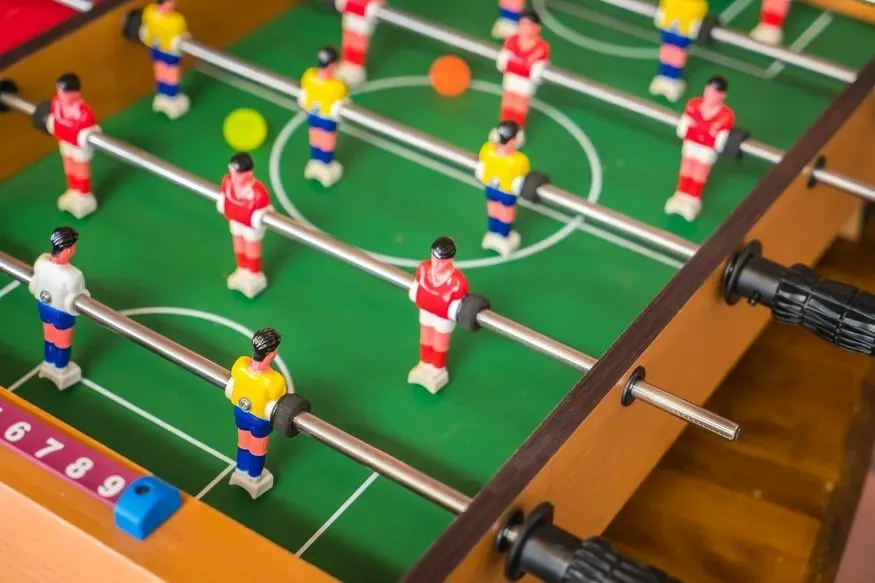
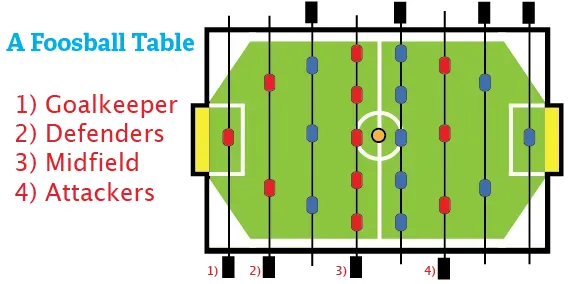
Standard tables use five rods per side, totaling ten player figures. This count isn’t arbitrary; it mirrors the structure of a real soccer team on the pitch. Each rod typically holds three or four connected figures depending on the model.
The goalie rod usually has one figure and sits at the end of the bar. You need two teams of five people to play a full match. Check your table’s manual to confirm if it supports 3, 4, or 5 players per side. Most competitive leagues require the 5-a-side format for consistent gameplay.
The configuration you choose dictates the rhythm of the game. A three-player setup places two rods in the hands of each participant. This forces rapid switching between defense and attack. It creates a chaotic, high-energy style that favors quick reflexes over strategic positioning. Players often struggle with the transition speed. They must learn to trust their partner’s coverage while maintaining their own offensive pressure.
A four-player arrangement offers a middle ground. One person controls the goalie and the defensive line. Another handles the midfield rods. The remaining two manage the forward lines. This division allows for more specialized focus. Defenders can concentrate solely on blocking shots. Forwards can dedicate their attention to finding gaps in the opposition’s backline. Communication becomes critical here. Misunderstandings about who covers which zone lead to easy goals.
Five players provide the most granular control. Each person manages a single rod. This setup demands precise coordination. It resembles actual soccer tactics more closely than other formats. Teams can execute complex passing sequences. They can shift formations seamlessly during play. However, this requires significant practice. New groups often find the complexity overwhelming. Start with basic drills before attempting advanced maneuvers.
Why ten players define the sport
The number ten isn’t random; it comes from how the game evolved in Europe. Early versions used fewer figures, but the modern standard settled on five rods per side. This layout balances defense and attack perfectly. Five allows enough coverage to block shots while leaving gaps for clever passes. Fewer players make the game too fast and hard to control. More players crowd the field and slow down play.
Each rod controls a line of figures. The goalie rod is separate and critical for saving shots. The next rods handle defense, midfield, and attack. This structure mimics real soccer formations. It lets players switch between blocking and shooting smoothly. The design ensures no single person dominates every part of the table.
Manufacturers followed this pattern because it works best for skill development. Beginners learn positioning with five distinct zones. Experts master timing across those same zones. The International Table Soccer Federation (ITSF) recognizes 5-a-side as the primary competitive format. They also allow variations, but ten remains the core number.
If you buy a table online, look for specs that list “five rods.” Some cheap models skip a rod to save costs. These aren’t true foosball tables. They lack the depth needed for serious play. Stick to brands that publish their rod counts clearly. International Table Soccer Federation sets the official rules for these standards.
When the answer changes
Four players fit comfortably around a standard compact table. The space allows for full swing clearance without elbow collisions. You can maintain a steady rhythm throughout the match. Lower scoring games suit this environment because defense dominates. Players have less room to generate power. Focus on placement rather than force. This strategy reduces errors and keeps the ball in play longer.
Five players per side creates a crowded bar-style setting. Noise levels rise and attention spans shorten. Standard competitive rules become difficult to enforce consistently. Use simplified regulations that prioritize flow over precision. Allow quick resets after goals. Keep the pace brisk to maintain engagement. This approach prevents frustration from overly strict interpretations.
Three players on a mini travel table demand speed. The surface is smaller and reactions must be faster. Simpler matches work best here because complexity slows things down. Avoid intricate spin techniques that require more time to execute. Stick to direct shots and basic blocks. This ensures the game remains fun and accessible for all participants.
Vintage European tables often seat three players per side. These setups prioritize tradition over modern efficiency. Adjust your expectations for speed accordingly. Matches may take longer due to deliberate play styles. Embrace the slower tempo as part of the experience. It adds character and nostalgia to the session.
Custom pro tables might include extra rods or mechanisms. These features change how the ball behaves during play. Verify the specific rules before starting any match. Different configurations require different strategies and skill sets. Misunderstanding these details leads to unfair advantages or disputes. Always clarify equipment specifics with the host or organizer beforehand.
How to set up your team
- Place the table on a flat surface away from walls. Ensure there’s room for players to stand comfortably behind the table without bumping into anything.
- Identify the two sides. One side faces the door, the other faces the wall. Assign Team A to one side and Team B to the other. Make sure both teams have equal space.
- Count the rods on your side. Confirm you have five rods: goalie, defense, midfield, attack, and another defense or attack depending on layout. Adjust if your table differs.
- Position your figures correctly. Goalie stays fixed on the first rod. Defense rods stay back. Attack rods move forward. Don’t let figures overlap or jam against each other during setup.
- Check the ball position. Place the ball in the center circle. Ensure it can roll freely without sticking. A stuck ball ruins the first few minutes of play.
- Start the game by spinning the ball. One player spins it gently. The first team to touch it gains possession. Keep spins light to avoid popping the ball out.
Common mistakes that ruin play
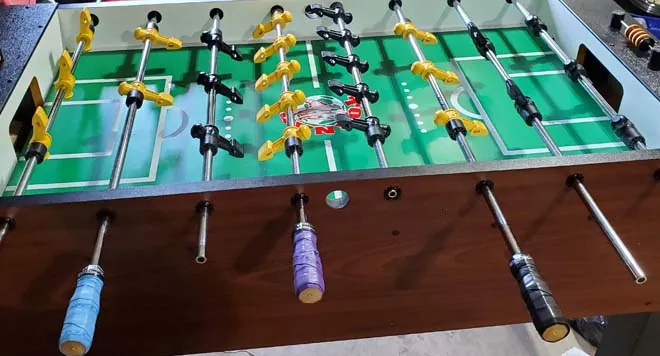
Ignoring rod limits causes jamming. Players often push too hard, bending rods or breaking figures. This costs time fixing rather than playing. The mistake is assuming force equals power. It does. Force equals friction. When you yank a rod sideways to snap a shot, you strip the plastic gear teeth inside the handle mechanism. These gears are cheap but fragile.
A single violent pull can shear the internal drive. You then spend twenty minutes disassembling the table just to access the broken part. Don’t use your body weight to leverage the rod. Use wrist snap. If the rod resists, stop. Check for obstruction. Forcing it breaks the table. Breaking the table stops the game. Fixing it delays the match. Respect the mechanical limit of the component.
Using wrong balls damages the surface. Tennis balls are too soft and roll poorly. Hard plastic balls scratch the wood. Use only designated foosball balls. The error here is confusing durability with performance. A standard tennis ball absorbs impact, killing momentum. It creates a dead, sluggish game that frustrates skilled players.
Conversely, generic hard plastic spheres from toy stores are often slightly irregular in shape. They wobble on the felt. This wobble introduces random variables into every pass. You can’t trust your aim if the ball dances unpredictably. Designated foosball balls are weighted and perfectly spherical. They provide consistent speed and true roll. Check the manufacturer’s specifications before buying replacements. Avoid any ball marketed as “indoor soccer” unless it meets official tournament standards.
Standing too close blocks vision. If you lean over the table, you can’t see angles. Stand back slightly to view the whole field. This improves passing accuracy. The common failure is tunnel vision. Leaning forward narrows your focus to the immediate action near the goal. You miss defenders positioning themselves in the midfield.
You also lose perspective on open lanes for long passes. Step back one foot. This simple adjustment widens your peripheral vision. You see the entire defensive line. You spot gaps before they close. Better positioning leads to better decision-making. You react to threats earlier. You create opportunities instead of chasing them. Distance gives clarity. Clarity wins games.
Forgetting to rotate rods evenly. Only moving one rod makes defense weak. Rotate all rods together to maintain a solid wall. This prevents easy goals. Defensive collapse happens when players isolate specific rods. They might focus solely on the goalie or the center midfielders. This leaves wide channels open for opponents. Effective defense requires synchronized movement.
Move all three defensive rods simultaneously. Keep them aligned horizontally. This creates an impenetrable barrier across the width of the table. Opponents can’t slip through narrow gaps because no gaps exist. Practice this muscle memory until it becomes automatic. Isolated movements are reactive. Coordinated movements are proactive. Proactive defense saves energy and reduces stress.
Playing on uneven floors tilts the table. The ball rolls to one side constantly. Use shims under legs to level it. An unlevel table makes fair play impossible. Gravity dictates the ball’s path regardless of skill. If the table slopes, the ball accelerates toward the lower corner. This favors one player unfairly. It also distorts shooting trajectories.
Shots intended for the top corner drift downward. Passes curve unexpectedly. Always check levelness before starting. Place a small object like a coin on the center line. If it rolls, adjust the feet. Use wooden shims or adjustable caps to correct the tilt. A level surface ensures skill determines the winner, not physics. Fair play requires a stable foundation.
Related guides
- Best Foosball Tables Under 500: Top 5 Picks in 2026
- Foosball Resources: Where to Find Tactics and Gear in 2026
Frequently asked questions
How many players are in foosball?
Ten players total, with five on each side. This is the standard for most tables. Some smaller tables have fewer. Check your specific table’s rod count to be sure. The five-per-side setup offers the best balance of play.
Can I play foosball with just two people?
Yes, you can play 1v1 on any table. Each person controls all five rods on their side. This version is faster and more intense. It requires quick reflexes since you cover the whole field alone. Many pros train this way to improve skills.
Is foosball safe for kids?
Yes, it’s generally safe for children aged six and up. Supervise younger kids to prevent pinched fingers. Ensure the table is stable so it doesn’t tip. Avoid letting kids climb on the table. Proper supervision keeps the game fun and injury-free.
How long does a typical game last?
Games usually last five to ten minutes. This depends on the score limit agreed upon. Most casual games go to five goals. Competitive matches might play to eleven or fifteen. Time varies based on skill level and scoring pace.
Does the number of players affect skill?
More players mean more complex teamwork. Five-a-side requires coordination between rods. Four-a-side is faster but less strategic. Three-a-side is very fast and chaotic. Choose based on your group’s experience level.
Are there professional foosball leagues?
Yes, several leagues exist worldwide. The ITSF organizes major international tournaments. National associations run local competitions. Teams compete in 5-a-side formats mostly. Joining a league helps improve your technique significantly.
What happens if a rod breaks?
Replace the broken rod immediately. Playing with a bent rod hurts performance. Contact the manufacturer for parts. Most companies sell replacement rods easily. Don’t try to fix metal rods yourself.
Conclusion
Grab a friend and head to the nearest bar or game room. You can test your skills on any table type, whether it’s the standard five-a-side or something smaller. The best way to learn is by playing, so don’t overthink the rules. Just jump in and have fun with the game today.