
Choosing the best wood filler for screw holes depends on whether you need a cosmetic finish or a structural repair. While latex fillers and wax sticks effectively hide small blemishes, epoxy-based products are necessary to create permanent anchors for loose screws. We have evaluated these options based on their durability, versatility, and ease of use to help you select the right solution for your specific repair.
1. Gorilla All Purpose Wood Filler

Best for: Someone who wants one versatile tub for various home repairs.
This filler is designed to be a strong, water-resistant solution for many types of damage, including cracks and gouges. Because it’s formulated to anchor nails and screws, it provides more utility than a standard cosmetic putty. It spreads easily for a smooth finish and works for both indoor and outdoor projects.
The natural finish is meant to be sanded, stained, or painted to match your existing wood. However, this product may not be the best choice for those who need a rapid, structural fix for a severely stripped hole, as it’s primarily a filler rather than a heavy-duty anchor.
Good if:
- You have multiple types of wood damage to fix.
- You need a filler that handles both indoor and outdoor settings.
- You want a product that allows for staining or painting afterward.
Skip it if:
- You have a critical, high-stress structural hole that needs to hold a heavy hinge.
2. DAP Plastic Wood-X with DryDex Wood Filler

Best for: Beginners who want to know exactly when their repair is dry.
This latex-based filler features a color-changing indicator that turns from pink to natural when it’s ready for sanding. It’s highly versatile, as it can be cut, drilled, and screwed once it has fully cured. The thick formula is easy to mold, which helps when filling irregular shapes or corners.
The dry time varies significantly based on the depth of the hole, ranging from a few hours for shallow repairs to over a day for deep ones. It’s an excellent choice for those who are unsure about their timing, but it may not be suitable for those who need an instant, “no-wait” repair.
Good if:
- You often struggle to tell if filler has dried completely.
- You need a formula that you can drill or screw into later.
- You’re working on vertical surfaces where a thick paste is needed.
Skip it if:
- You’re in a rush and can’t wait several hours for a cure.
3. Minwax 42851000 Stainable Wood Filler

Best for: Someone matching a specific wood stain on furniture or trim.
Minwax is a recognized name in wood finishing, and this filler is formulated specifically to accept their line of stains. It’s a durable, latex-based product that works for cracks, nail holes, and small gouges. The application is straightforward: press it into the hole, leave it slightly raised, and sand it flush once dry.
This product is fast-drying for small repairs, but deep holes require a layered approach to ensure they cure correctly. It’s a top-tier choice for visual touch-ups, though it doesn’t claim the same structural holding power as an epoxy or a mechanical screw anchor.
Good if:
- You want a seamless look with a specific wood stain.
- You’re working on indoor trim or furniture.
- You prefer a brand with a long history in wood care.
Skip it if:
- You’re trying to fix a hole that must bear a heavy load.
4. 3M Bondo Wood Filler 30 oz (850.49 g) with Bondo

Best for: Someone needing a permanent, heavy-duty repair on rotted wood.
This is a two-part epoxy system that chemically bonds to the surface, creating a repair that doesn’t shrink or crack. It’s ideal for exterior repairs on decks, window sills, and siding where moisture resistance is vital. Because it hardens quickly, you can sand it in just 15 minutes.
Using a two-part system requires mixing, which makes it less convenient than a pre-mixed tube for simple nail holes. You’ll also need to have your own spreader and safety gear on hand. It isn’t designed for small, quick fixes but is perfect for restoring rotted sections.
Good if:
- You have significant wood rot or deep gouges to repair.
- You need a repair that stays put outdoors for a long time.
- You want a very fast sanding time after application.
Skip it if:
- You want a simple, one-step filler that requires no mixing.
5. J-B Weld Tan KwikWood Wood Repair Epoxy Putty

Best for: Structural repairs where you need to drill or tap the material.
KwikWood is a hand-mixable epoxy putty that cures into a solid, tan-colored material. It’s remarkably strong, with a high PSI rating, making it suitable for rebuilding rotted wood or fixing hinge holes. Once cured, you can drill, tap, and shape it just like real wood.
The setting time is short, so you must work quickly once the components are kneaded together. While it’s perfect for structural DIY, it might be overkill for someone just looking to cover a small scratch on a picture frame.
Good if:
- You need to rebuild a missing piece of wood structure.
- You need to drill or tap a new screw hole.
- You want a very high-strength, permanent bond.
Skip it if:
- You’re only looking to hide a surface-level scratch.
6. PC Products PC-Woody Wood Repair Epoxy Paste
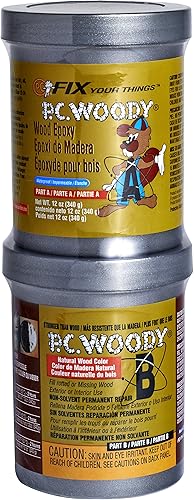
Best for: Large-scale rot repairs where you need a long working time.
This two-part epoxy paste is designed to replace missing or rotted wood. Its high tackiness helps it stay in place without dripping, which is useful for overhead or vertical repairs. It has a wide temperature service range, making it reliable for outdoor use in various climates.
Combining the resin and hardener in equal amounts is necessary for the product to harden correctly. It’s a heavy-duty professional-grade product that requires more effort to prep and mix compared to simple squeezable fillers.
Good if:
- You have a large area of wood that needs to be replaced.
- You need a filler that resists water and UV light.
- You’re working on a project that requires a high-tack paste.
Skip it if:
- You want a small, quick fix for a single nail hole.
7. FamoWood 40022118 Latex Wood Filler

Best for: Woodworkers who want a professional finish without solvent fumes.
This filler offers the handling properties of solvent-based products but without the strong odor. It’s known for its ability to take stains and paints, making it a favorite for those who want their repairs to disappear. It dries quickly and is formulated to resist shrinking and crumbling.
It’s a great all-around performer, but like many latex fillers, it’s best suited for filling holes rather than providing structural support for loose screws. If your main concern is the appearance of your wood project, this is a solid choice.
Good if:
- You want a professional-quality finish that takes stain well.
- You’re sensitive to strong chemical odors.
- You need a fast-drying solution for multiple holes.
Skip it if:
- You need to repair a hole that must hold a heavy weight.
8. Kreg Solid-Wood Pocket-Hole Plugs

Best for: Covering visible pocket holes in furniture and cabinetry.
These aren’t fillers in the traditional paste sense; they’re solid wood plugs designed to fit perfectly into pocket-hole joints. They provide a much cleaner, more professional look than simply filling a hole with putty. You glue them in, trim them flush, and sand them down.
These are highly specific to pocket-hole joinery and won’t work for general wood gouges or cracks. If you’re a fan of Kreg jigs, these are essential for finishing your work, but they aren’t a general-purpose repair tool.
Good if:
- You use pocket-hole joinery for your furniture projects.
- You want the most professional-looking finish possible.
- You want to stain the plug to match your wood perfectly.
Skip it if:
- You’re looking to fix a crack, a gouge, or a stripped screw hole.
9. Mohawk Fil-Stik

Best for: Quick, low-effort touch-ups on furniture and cabinetry.
This wax stick is the easiest way to hide a small scratch or nail hole. You simply rub it over the imperfection and wipe away the excess. It requires no heat, no drying time, and no sanding, making it the ultimate tool for a quick furniture refresh.
Because it’s a semi-hard wax, it’s only suitable for low-traffic areas. It won’t provide any structural support, and it can be wiped away if it’s bumped or cleaned too aggressively.
Good if:
- You have minor scratches or nail holes in finished furniture.
- You want a repair that’s done in seconds.
- You don’t have the time or space for sanding and staining.
Skip it if:
- You need to fix a structural hole or a high-traffic area.
10. Pluggies Screw Repair

Best for: Fixing stripped screw holes in doors and cabinets.
Pluggies are a mechanical solution for stripped holes. Instead of trying to fill the hole with a paste that might just crumble, you insert a Pluggies anchor. This allows the screw to bite into the anchor, restoring the original strength of the connection.
This is a functional fix rather than a cosmetic one. It’s excellent for loose hinges or drawer slides, but it won’t help you if you’re trying to hide a crack on the surface of a table.
Good if:
- You have a screw that just spins in a loose hole.
- You need a repair that’s strong enough for hinges or doors.
- You want a solution that requires no drying time.
Skip it if:
- You’re trying to hide a visible blemish on a wood surface.
Choosing the best wood fillers for screw holes
Most of these products fall into two clear groups: cosmetic fillers and structural anchors. The cosmetic fillers—like Gorilla All Purpose Filler, Minwax Stainable Filler, and FamoWood Latex Filler—are very similar in their application and goal. They’re meant to be spread, sanded, and finished so that the repair is invisible. Choosing between them often comes down to personal preference for the brand or the specific color match you need.
Conversely, products like J-B Weld KwikWood, 3M Bondo Wood Filler, and PC Products PC-Woody are in a different league. They’re epoxy-based, which means they’re stronger, harder to work with, and better suited for major repairs. If you have a hole that needs to support a screw, the choice is between a structural epoxy or a mechanical anchor like Pluggies. The mechanical options are faster, while the epoxy options are better for rebuilding large, rotted areas.
Still Not Sure?
Do I need to support a screw or just hide a hole?
If you’re trying to fix a loose door hinge or a drawer slide, a standard paste filler will likely fail. You need a structural solution that can withstand torque, such as Pluggies or an epoxy like J-B Weld KwikWood. If you’re just covering a nail hole or a small gouge on a piece of furniture, you don’t need structural strength; you need a product that matches your wood’s color and texture, such as Minwax Stainable Filler or Mohawk Fil-Stik.
How much time am I willing to spend on the repair?
If you need an immediate fix, avoid products that require long drying times or multi-step mixing. Pluggies can be installed in seconds, and Mohawk Fil-Stik is ready the moment you rub it on. If you have a larger project, like repairing a window sill, you should expect to spend time mixing, applying, and waiting for the product to cure.
Does the repair need to match a stain?
If the area you’re repairing will be stained, you must choose a product that’s labeled “stainable.” Not all fillers accept stain in the same way, and some may leave a visible patch. Kreg Pocket-Hole Plugs are excellent for this because they’re made of real wood, which absorbs stain just like the surrounding board. For smaller holes, Minwax Stainable Filler is specifically formulated to work with their own staining products, which helps ensure a consistent final look across your project.
As an Amazon Associate, we earn from qualifying purchases. This post contains affiliate links – if you buy through them, we may earn a commission at no extra cost to you.
For quick repairs, look at the Mohawk Fil-Stik or Pluggies, while larger structural jobs will require the strength of J-B Weld KwikWood or 3M Bondo Wood Filler. If you’re still unsure, pick the product that best matches your immediate goal: hide the blemish or fix the connection. Start by assessing whether your hole needs to hold a screw or just look clean, and go from there.
Related guides
Frequently Asked Questions
Can I use wood filler on a hole that’s already stripped?
The listing doesn’t mention the structural limitations of wood filler. For stripped holes, you should use a mechanical anchor like Pluggies or a structural epoxy like J-B Weld KwikWood. These options provide the necessary density to grip the screw and prevent it from spinning, ensuring your cabinet hinge or door hardware stays secure.
How do I know if a filler is truly paintable or stainable?
Latex-based fillers like Minwax and FamoWood are generally paintable and stainable. Conversely, epoxy-based fillers like Bondo or PC-Woody often resist uniform staining because they lack wood-like absorption. Always verify the manufacturer’s label for finish compatibility and test the product on a scrap piece before applying it to your project.
Do I need to drill a pilot hole after filling?
If you’re using a structural filler like J-B Weld KwikWood or a drillable latex filler like DAP Plastic Wood-X, you should drill a pilot hole before reinserting your screw. This prevents the filler from cracking or splitting as you drive the screw in. Products like Pluggies are designed to accept the screw directly without a pilot hole, acting more like a wall anchor than a traditional putty.
Why does my wood filler shrink after it dries?
Shrinkage often occurs if the filler is applied too thick in a single layer or if the product isn’t designed for deep holes. Many manufacturers, such as Minwax, recommend filling deep holes in layers, allowing each layer to dry completely before adding the next. If you need a repair that resists shrinking, 3M Bondo Wood Filler is listed as a non-shrinking, dual-component formula.
Conclusion
Once you’ve selected the right product, take a moment to test it on a scrap piece of wood first. This simple check ensures the color matches your project perfectly before you commit. You’ll find that a little patience during the drying process makes a huge difference in the final result.