
Finding the best polyurethane for table tops depends on your experience level and how much time you want to spend on the project. Some products prioritize a fast, simple application, while others focus on building a thick, protective shell that withstands daily spills and scratches. Your final choice will balance the need for a specific sheen against your ability to manage dry times and proper ventilation. If you prefer a traditional, oil-based finish for deep durability, look at Minwax Fast Drying Polyurethane, while those wanting an easy, soap-and-water cleanup should consider the Varathane Ultimate Polyurethane.
As an Amazon Associate, we earn from qualifying purchases. This post contains affiliate links – if you buy through them, we may earn a commission at no extra cost to you.
1. Minwax Fast Drying Polyurethane Protective Wood Finish

Best for: Someone who wants a classic, durable finish on wood furniture.
This oil-based finish is designed for those who value long-term protection against the daily wear of a busy table top. It creates a robust barrier against scratches and spills, which is ideal for high-traffic surfaces. The satin sheen provides a soft, modern look that enhances the wood’s natural grain.
Because it’s oil-based, you must ensure your workspace is well-ventilated during application. It requires 4-6 hours between coats, meaning you should plan your project schedule accordingly. This product isn’t for users who need a quick, same-day finish or those who prefer to avoid the scent of traditional oil-based coatings.
Good if:
- You want a traditional, long-lasting wood finish.
- You’re working on interior furniture or cabinets.
- You prefer a soft, modern satin appearance.
Skip it if:
- You need to finish your project in a few hours.
- You can’t provide adequate ventilation for oil-based fumes.
2. Varathane Water-Based Ultimate Satin Polyurethane

Best for: First-time users who want an easy, low-odor finishing experience.
This water-based formula is built for simplicity and speed. It dries to the touch in just 30 minutes, allowing you to recoat after two hours, which is helpful if you have a tight timeline. It offers a clean, clear look that resists scratches and stains effectively.
The primary benefit here is the soap-and-water cleanup, which saves you from needing harsh solvents. However, because it’s water-based, it may not provide the same depth of color that some traditional oil-based products offer. It isn’t ideal for those who demand the specific amber tone associated with classic oil finishes.
Good if:
- You want a fast-drying, easy-to-clean product.
- You’re a beginner worried about complex cleanup.
- You need a clear finish for indoor wood surfaces.
Skip it if:
- You want the warm, amber glow of an oil-based varnish.
- You require the highest level of solvent-based chemical resistance.
3. Varathane Triple Thick Polyurethane Gloss Wood Finish
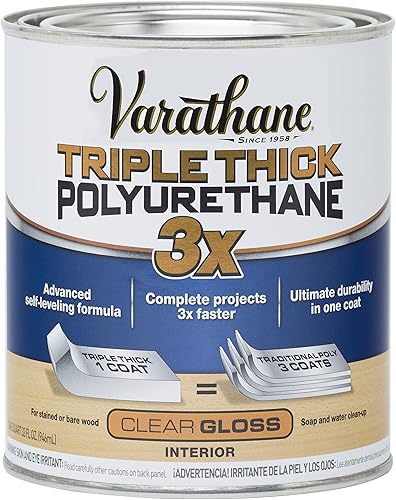
Best for: Someone who wants to minimize the number of coats applied.
This product is formulated for one-coat coverage, making it a time-saver for large furniture projects. The water-based formula is designed to build a thick protective layer quickly, which helps in resisting stains and scratches. It provides a gloss finish that makes wood grain stand out.
The trade-off for its thickness is that you must be careful to avoid drips or uneven buildup during application. It isn’t suitable for those who prefer building up many thin, subtle layers over several days to achieve a specific hand-rubbed look.
Good if:
- You want to finish your project with fewer coats.
- You prefer a high-gloss, protective surface.
- You need a water-based product that covers up to 50 sq ft.
Skip it if:
- You’re worried about managing thick, runny coatings.
- You prefer a low-sheen or matte aesthetic.
4. Minwax 63333444 Polycrylic Protective Finish

Best for: Light-colored woods that require a crystal-clear, non-yellowing finish.
Polycrylic is a water-based finish that is clear, making it a suitable choice for maple, birch, or painted wood projects. It’s low-odor and dries quickly, allowing for recoats every two hours. It’s an excellent choice for indoor projects where you want to avoid the ambering effect of oil-based products.
Because it’s thin, you may need multiple coats to achieve a deep, protective feel on a table top. This product isn’t intended for high-moisture outdoor use or for users who want the heavy-duty, traditional oil-based feel.
Good if:
- You’re working with light-colored or white-painted wood.
- You want a finish that won’t turn yellow.
- You need a product with very low odor.
Skip it if:
- You want an oil-based look.
- You need a single-coat, heavy-duty solution.
5. Minwax Oil-Based Wipe-On Polyurethane

Best for: Achieving a smooth, professional look without using a brush.
This oil-based wipe-on finish is perfect for those who struggle with brush marks or drips. You apply it with a clean cloth, which gives you more control and results in a thin, uniform layer. It provides a classic, hand-rubbed appearance that’s very durable.
The trade-off is that you’ll need to apply more coats than you would with a brush-on product to get the same level of total protection. It isn’t for someone who wants to finish a large table in a single afternoon, as the process requires patience and multiple thin applications.
Good if:
- You want a smooth finish with no brush marks.
- You prefer a classic, hand-rubbed look.
- You’re comfortable applying multiple thin coats.
Skip it if:
- You want to finish the job quickly with one thick coat.
- You prefer to use a brush for application.
6. General Finishes High Performance Water Based Topcoat

Best for: The user who demands professional-grade durability and clarity.
This is a high-performance water-based topcoat that’s often cited for its hardness. It’s designed to be very durable, making it a strong contender for table tops that see heavy, daily use. It dries quickly, allowing you to move through your project stages in just 1-2 hours.
As with other water-based products, you must be careful when applying it over certain paints, as it may react with the substrate. It is a specialized product for those seeking high-end results.
Good if:
- You want a professional-grade, durable finish.
- You need a fast-drying, water-based solution.
- You’re finishing interior furniture that sees heavy use.
Skip it if:
- You’re applying it over bright white paint.
- You want the traditional oil-based aesthetic.
7. ZAR 33912 Oil Based Polyurethane Wood Finish

Best for: Someone who wants a tough, abrasion-resistant finish for floors and tables.
This oil-based polyurethane is built to be tough, with a focus on abrasion resistance. It uses a self-leveling formula that helps the finish lay down smoothly, reducing the need for extensive sanding between coats. It’s a reliable choice for surfaces that get a lot of physical contact.
Because it’s an oil-based finish, it doesn’t offer the quick cleanup of water-based alternatives. It isn’t for users who are sensitive to fumes or those who need to keep their workspace completely odor-free.
Good if:
- You need a finish that resists heavy abrasion.
- You want a self-leveling product for a smooth surface.
- You prefer the durability of oil-based chemistry.
Skip it if:
- You want a water-based product with easy cleanup.
- You’re sensitive to strong chemical odors.
8. Minwax Fast Drying Polyurethane Spray

Best for: Small touch-ups or intricate furniture parts.
The spray version of the classic Minwax formula is excellent for reaching corners or surfaces where a brush would be difficult to use. It offers the same durable, oil-based protection as the brush-on version, including resistance to spills and scratches.
The aerosol application isn’t designed for large, flat table tops, as it’s difficult to maintain a perfectly even coat over a wide area. It isn’t for users who are looking to cover large square footage efficiently or those who want to avoid the mess of overspray.
Good if:
- You’re doing touch-ups on small or detailed areas.
- You want the durability of oil-based polyurethane.
- You need a fast-drying finish.
Skip it if:
- You’re finishing a large table top.
- You want to avoid the mess of aerosol spray.
9. Masters Armor Interior Finish

Best for: A low-sheen, durable finish on high-use surfaces.
Masters Armor is designed for superior durability, making it suitable for tables, floors, and cabinets. It offers excellent clarity, which means it won’t hide the natural beauty of the wood. The satin finish is a good middle ground for those who want protection without a high-gloss shine.
It’s a specialized product that focuses on performance, so it might be harder to find than mass-market brands. It isn’t for the casual DIYer who wants a simple, easily accessible hardware store finish.
Good if:
- You need a durable finish for a table top.
- You prefer a low-sheen, satin look.
- You want excellent clarity to show off wood grain.
Skip it if:
- You want a high-gloss finish.
- You prefer a widely available brand found in any local shop.
10. Furniture Clinic Wood Varnish

Best for: Protecting wood in areas where liquid spills are common.
This is a versatile, water-based varnish that forms a strong sealant against liquid damage and stains. It’s low-odor and easy to clean up with water, making it a pleasant choice for indoor projects. It works well on both new wood and older, restored pieces.
The satin finish is designed to enrich the wood’s grain, but it isn’t intended for those who want the heavy-duty ambering of an oil-based product. It isn’t for users who need a finish that cures in extreme high-moisture environments.
Good if:
- You need a strong sealant against liquid damage.
- You want a low-odor, water-based product.
- You’re refinishing a kitchen table or dresser.
Skip it if:
- You want an oil-based finish.
- You prefer a high-gloss aesthetic.
Also worth considering: Minwax Fast Drying Polyurethane (Clear Gloss) is great for a shiny, reflective table; Varathane Triple Thick Gloss Spar Urethane provides a robust, high-build finish; and ZAR Max Oil Modified Polyurethane offers a hybrid solution that balances oil-based durability with water-based convenience.
Choosing the best polyurethane for table tops
Many of the products here fall into two clear groups: water-based and oil-based. The water-based options, such as Minwax Polycrylic and Varathane Ultimate, are very similar in their ease of use, quick dry times, and simple soap-and-water cleanup. These are often interchangeable for the average user who wants to protect a table top without dealing with harsh chemicals. If you’re choosing between these, the decision often comes down to brand availability or specific sheen preferences rather than a massive difference in quality.
On the other hand, the oil-based products, like Minwax Fast Drying Polyurethane and ZAR Oil Based Polyurethane, share a similar profile of deep, amber-toned protection and high durability. They’re generally closer to each other in terms of application and long-term performance. The real differences only emerge when you look at specific features like “wipe-on” application or “triple thick” formulas, which change how you physically apply the product to the wood.
Still Not Sure?
How often will I actually use this table?
If the table is for heavy daily use, like a kitchen or dining area, you need a finish that prioritizes scratch and stain resistance. Look for products labeled as “durable” or “high performance,” as these are built to withstand constant contact and cleaning. The General Finishes High Performance topcoat is a strong candidate for these high-traffic surfaces. If the table is for display or light use, you have more flexibility and can prioritize the sheen or ease of application over raw durability.
What do I already own that this has to work with?
Think about the wood stain or color you have already applied. If you have a light-colored wood or white paint, you can use a water-based finish like Minwax Polycrylic to avoid yellowing. If you have a dark-stained wood and you want to enhance the richness, an oil-based finish like Minwax Fast Drying Polyurethane is often the better choice. Always check if your current finish is compatible with the new topcoat to ensure proper bonding.
What am I most likely to regret choosing?
The most common regret is choosing a finish that’s too difficult to apply for your skill level. If you’re a beginner, avoiding thick, high-build products that drip is wise; instead, go for a user-friendly option like the Minwax Wipe-On Polyurethane. Conversely, if you’re an experienced user, you might regret choosing a thin, water-based finish that requires too many coats for your liking. Consider your patience and your comfort level with brushes and rollers before you buy.
The best finish for your table depends on whether you value speed and easy cleanup or long-lasting, traditional oil-based protection. For a quick, clear finish on light wood, Minwax Polycrylic is the top choice. If you want a deep, durable, and classic look for a busy table, Minwax Fast Drying Polyurethane remains a reliable standard. Before you start, always check the Safety Data Sheets provided by the manufacturer to ensure you’re using the product safely in your home environment.
Related guides
- 5 Best Foosball Tables Under 1000 in 2026
- Best Foosball Tables by Size: Top 5 Picks in 2026
- Best Foosball Tables by Use Case: 5 Picks in 2026
Frequently Asked Questions
Do I need to sand between coats of polyurethane?
Using a fine-grit sandpaper allows you to smooth the surface without removing the protective layer you just applied. If you’re using a self-leveling product like ZAR Oil Based Polyurethane, you may find that you need less sanding, but a quick pass is usually still necessary for a professional-grade, smooth-to-the-touch table top.
Can I apply water-based polyurethane over oil-based stain?
Yes, you can apply water-based finishes like Minwax Polycrylic over oil-based stains once the stain is completely dry. You must wait for the solvents to evaporate fully, which can take longer than the label suggests. Always perform a test on scrap wood to ensure there is no reaction, preventing potential peeling or cloudiness.
How many coats of polyurethane should I apply to a table?
For a table top, three coats are generally the minimum to provide sufficient protection against spills, heat, and daily wear. If you’re using a “triple thick” product, you might achieve the necessary thickness in fewer passes, but the goal is always a uniform, sealed surface. Remember that thin, even coats are always better than one thick, uneven coat, as they prevent drips and ensure the finish dries properly without soft spots.
What is the difference between satin and gloss finishes?
The difference is purely visual, as both provide similar levels of protection. A gloss finish is reflective and makes the wood grain pop, which can highlight imperfections in your sanding or application. A satin finish, like that found on Minwax Fast Drying Polyurethane, offers a lower sheen that’s more forgiving to apply and provides a modern, soft look that hides dust and minor scratches better than a high-gloss surface.
Conclusion
Before you start, grab a small piece of scrap wood to test your chosen product. You’ll see exactly how the finish looks and how quickly it dries in your workspace. Don’t rush the process; take your time with each coat, and you’ll be proud of the beautiful, lasting surface you’ve created.