
Ever wondered what goes into those sleek, affordable IKEA kitchen cabinets? You’re not alone!
Many homeowners choose IKEA for their kitchens, drawn by the style and price. But when you’re investing in your home, you want to know exactly what you’re getting. This post will break down the materials IKEA uses for their cabinets, so you can make an informed decision for your dream kitchen.
Let’s dive in and discover what makes IKEA cabinets tick!
:max_bytes(150000):strip_icc()/IKEA-Sektion-Kitchen-Cabinets-56a4a1413df78cf772835321.JPG)
Credit: www.thespruce.com
Ikea Cabinet Anatomy
Understanding IKEA cabinet construction reveals smart design. It explains their affordability. We will explore each part. This helps you know what you are buying. It is like looking inside.
The Core Material
IKEA cabinets use particleboard. This is a common material. It is made from wood chips. These chips are pressed together. Resins bind them. Particleboard is cost-effective. It is also stable.
The Protective Layer
A thin laminate covers particleboard. This is the visible surface. It comes in many styles. It protects against scratches. It also resists moisture. Wipe it clean easily. It looks good too.
The Strong Edges
Edges get extra protection. They have edge banding. This is often plastic. It seals the particleboard. It prevents chipping. It adds durability. It completes the look.
The Back Panel
A thin back panel finishes the cabinet. It is usually fiberboard. It slides into grooves. This adds rigidity. It keeps the cabinet square. It is a simple but vital part.
Particleboard’s Role
Particleboard plays a vital role in IKEA kitchen cabinets. It forms the cabinet’s core. This material offers a budget-friendly option. It impacts the cabinet’s overall structure. Understanding particleboard is key. It helps you choose wisely.
Core Composition
Particleboard uses wood chips. These chips are small pieces. They get mixed with resin. Heat and pressure bind them. This creates a dense board. It’s a composite material. Wood fibers are not long. Sawdust and wood shavings are common. They form the main part.
Durability Factors
Particleboard can be strong. It depends on its density. High-density boards last longer. Moisture is its main enemy. Water can cause swelling. It can also lose its shape. Proper care is essential. Avoid direct water contact. Sealing the edges helps. This protects the wood chips. It prevents moisture absorption. Its strength is good for light use. Heavy loads might be a concern. Consider your kitchen needs.
Mdf: The Smoother Surface
IKEA kitchen cabinets often use MDF. This material offers a very smooth surface. It’s great for painted finishes.
IKEA often uses MDF. It is a popular material. MDF stands for Medium-Density Fiberboard. It offers a very smooth finish. This makes it ideal for painted cabinets.Finer Fibers
Finer Fibers
MDF starts with wood. Wood fibers are ground up. They become very fine. These fibers are mixed with resin. Heat and pressure bind them. This creates a dense board. It has no grain like solid wood.Finishing Capabilities
Finishing Capabilities
The smooth surface is key. It takes paint very well. Paint goes on evenly. It looks very sleek. IKEA uses this for many styles. It provides a clean, modern look. It is also quite durable. It resists warping. This is a big advantage.
Credit: erinzubotdesign.com
Veneers And Laminates
IKEA uses veneers and laminates. These materials give cabinets a certain look. They also provide protection. Understanding these is key. It helps you choose wisely.
Wood Grain Illusion
Veneers are thin wood slices. They show natural wood patterns. Laminates use printed paper. This paper mimics wood grain. It creates a realistic look. You get the beauty of wood. Without the high cost. Many styles are available. Find the look you love.
Protective Layers
Both materials offer defense. They protect against scratches. They resist stains too. Laminates are very durable. They handle daily wear well. Veneers also provide a shield. They are a good choice for kitchens. These layers keep cabinets looking new. They ensure longevity. Your kitchen stays beautiful.
Solid Wood Accents
Ikea kitchen cabinets often use particleboard or fiberboard. These are covered with plastic laminate or veneer. Solid wood accents appear on some doors and drawer fronts.
IKEA kitchens often feature solid wood accents. These add a touch of natural beauty. They bring warmth to your home. Solid wood pieces elevate the look. They make your kitchen feel more premium.Drawer Fronts And Doors
IKEA uses solid wood for some drawer fronts. They also use it for cabinet doors. This gives a classic feel. It adds a touch of elegance. You can see the wood grain. This makes each piece unique.Natural Beauty
Wood brings natural beauty. Its patterns are one-of-a-kind. This offers a timeless appeal. Solid wood accents are durable. They can last for many years. They age gracefully too. This adds character over time.Hardware Materials
IKEA kitchen cabinets use good hardware. This hardware makes cabinets work well. It ensures doors open and close smoothly. Drawers glide with ease. Let’s explore these materials.
Hinges And Slides
Hinges attach cabinet doors. They allow doors to swing. IKEA uses durable metal hinges. These hinges last for years. They resist rust and wear. Drawer slides are also metal. They let drawers move in and out. Smooth slides improve kitchen function. They handle heavy loads easily. These components are essential. They ensure cabinet longevity.
Handles And Knobs
Handles and knobs are important. They help you open doors. They also open drawers. IKEA offers many styles. Materials vary for these. You find metal options. Some are brushed nickel. Others are matte black. Wood handles are also available. These add a natural touch. Plastic knobs are budget-friendly. They come in different colors. Choose a style that fits you. These small details matter. They complete your cabinet look.
Sustainability Focus
IKEA kitchens prioritize sustainability. They aim for eco-friendly materials. This commitment is clear in their cabinet production. IKEA wants a greener future. They consider the planet’s health.
Recycled Content
Many IKEA cabinets use recycled materials. This reduces waste. It conserves natural resources. Particleboard often contains recycled wood. This is good for the environment. Less virgin timber is used. It’s smart design.
Responsible Sourcing
IKEA sources wood responsibly. They follow strict standards. Wood comes from better managed forests. This protects biodiversity. It supports forest ecosystems. They verify their wood sources. This ensures ethical practices. It’s a commitment to nature.
Comparing Cabinet Materials
Choosing kitchen cabinets matters. IKEA offers many choices. We will compare cabinet materials. This helps you decide. Understand what you get.
Cost Vs. Quality
IKEA cabinets offer value. Particleboard is common. It is affordable. It is less durable. MDF is another option. It is smoother. It holds paint well. Solid wood is best. It costs more money. It lasts longer.
Longevity Expectations
Cabinets should last years. Particleboard can swell. Water damages it easily. MDF is a bit better. It resists moisture more. Solid wood is very strong. It withstands wear and tear. Proper care helps all types. Think about your budget. Think about how long you need them.
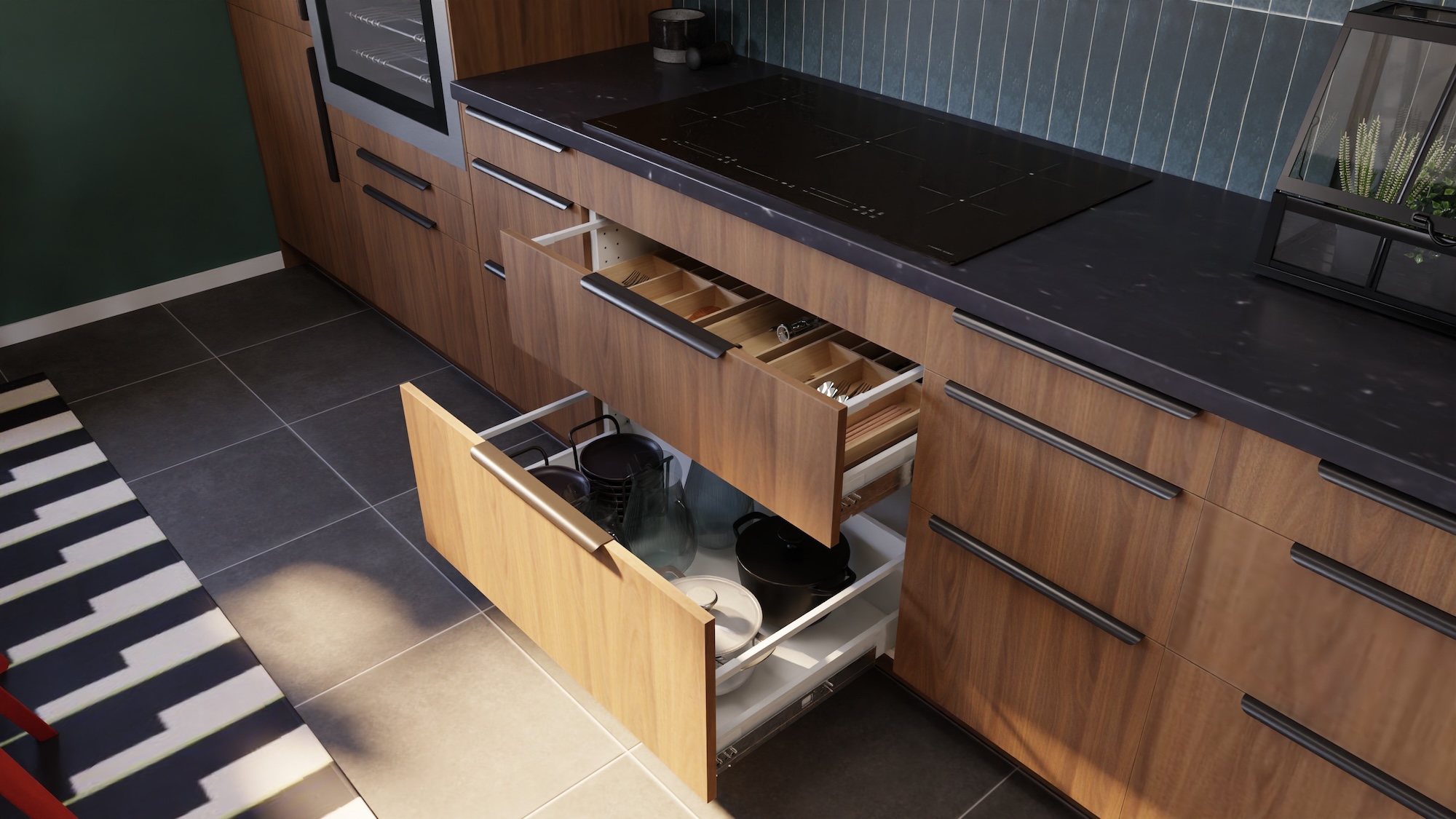
Credit: www.ikea.com
Frequently Asked Questions
What Materials Form Ikea Kitchen Cabinets?
IKEA cabinets use particleboard and fiberboard. These are often covered with foil or laminate. Some doors might use solid wood or veneers.
Are Ikea Cabinets Made Of Real Wood?
Some IKEA cabinet doors use real wood veneers. The main cabinet boxes are typically particleboard. This makes them affordable and durable.
What Is The Inside Of Ikea Cabinets Like?
The inside is usually melamine or laminate. This surface is easy to clean. It provides a smooth finish for shelves and drawers.
Are Ikea Cabinets Durable?
Yes, IKEA cabinets are quite durable. Their construction is designed for everyday use. They hold up well with proper care and maintenance.
What Laminate Options Are Available?
Laminate offers many colors and patterns. It mimics wood grain or solid colors. This finish is resistant to scratches and stains.
Do Ikea Cabinets Use Formaldehyde?
IKEA follows strict environmental standards. They aim to minimize formaldehyde in their products. This is part of their commitment to health.
Can Ikea Cabinets Be Customized?
IKEA cabinets are highly modular. You can mix and match different sizes. This allows for a custom kitchen layout.
Conclusion
IKEA cabinets use particleboard and fiberboard. These materials offer affordability. They often have a durable laminate or veneer finish. Real wood fronts are also an option. Consider your budget and style needs. These choices impact durability and look. IKEA offers many cabinet material options.