
When you’re working with generators or power tools, understanding the difference between starting watts and running watts can save you from costly mistakes. You might think all watts are the same, but they’re not.
Starting watts are the extra surge of power your device needs to get going, while running watts are what it uses to keep running smoothly. Knowing how these two work together helps you pick the right equipment and avoid overloads.
Keep reading, and you’ll learn exactly how to calculate and use these numbers to power your projects safely and efficiently.
Credit: www.bluedm.com.au
Starting Watts Basics
Starting watts are a key part of understanding power needs for many devices. This term describes the extra power a motor or appliance needs at the moment it starts. Knowing about starting watts helps pick the right generator or power source. It stops damage to machines and avoids power overloads.
Definition And Importance
Starting watts mean the extra energy needed to start a device. It is higher than running watts, which is the normal power used while working. Motors and compressors often need this extra power at the start. Without enough starting watts, devices may fail to run or cause power trips. This makes starting watts very important for safe and smooth operation.
Typical Applications
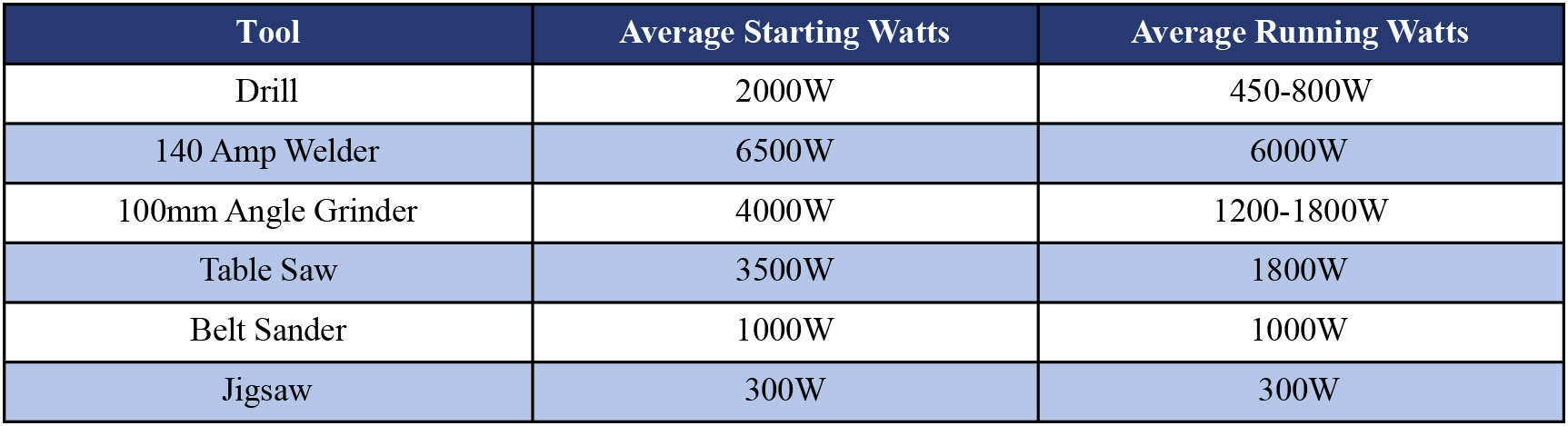
Starting watts matter most for devices with motors or compressors. Examples include refrigerators, air conditioners, pumps, and power tools. These devices use more power at the beginning. Generators and power systems must handle this surge to keep things running. Knowing starting watts helps plan power needs correctly.
Measurement Methods
Starting watts are measured using special meters. These devices track the power surge at startup. A watt meter or a clamp meter can record this data. Sometimes, manufacturers provide starting watt info in manuals. Measuring starting watts ensures the power source is strong enough for the device.
Running Watts Essentials
Running watts are a key part of understanding power use in devices and appliances. They show how much energy an item needs to work normally. Knowing about running watts helps you pick the right generator or power source. It also helps avoid problems like power overloads and wasted energy.
Here, you will learn what running watts mean, their role in power use, and how to measure them correctly.
What Running Watts Mean
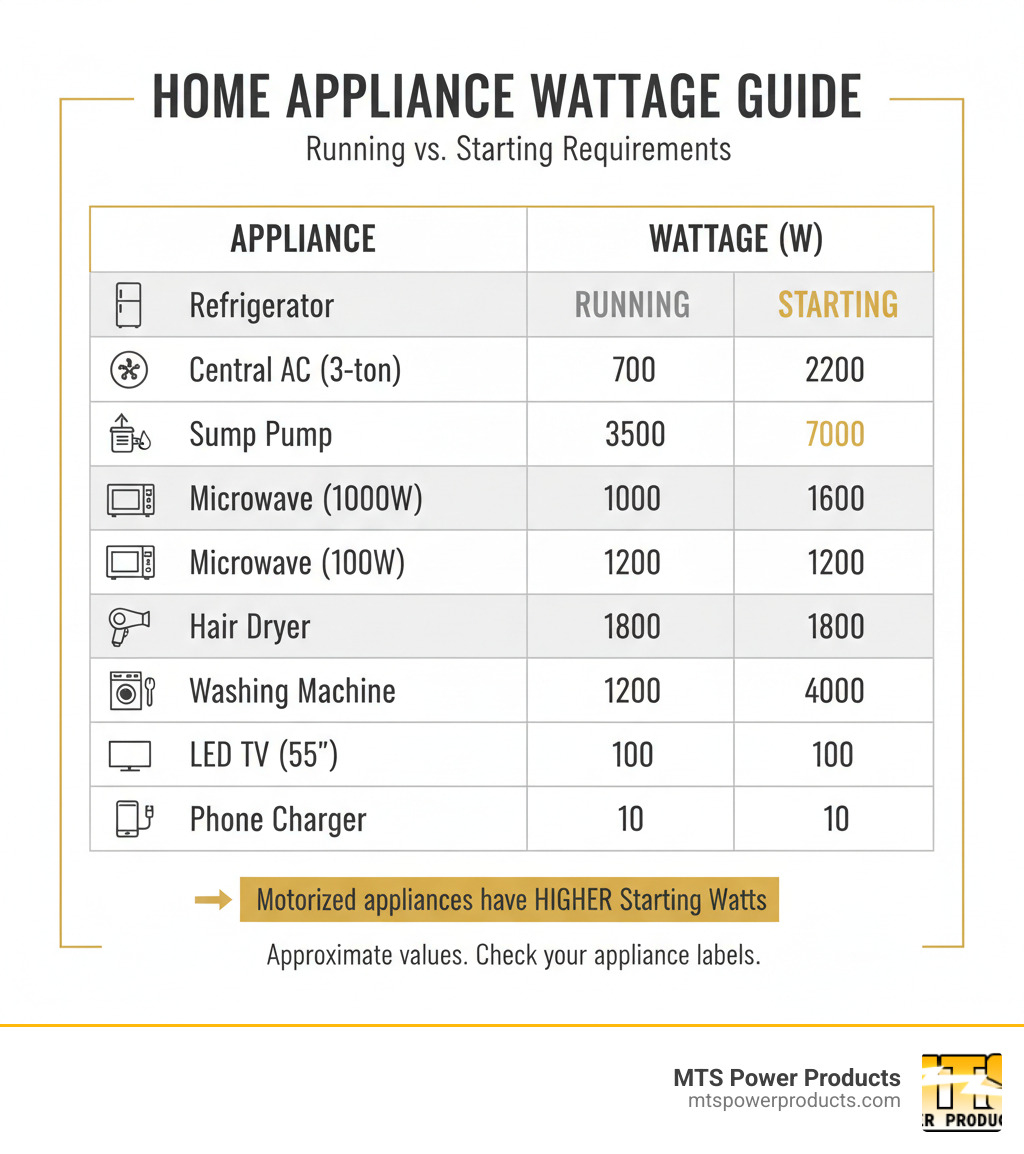
Running watts are the power a device uses during regular operation. This is the energy needed to keep the device working smoothly. For example, a refrigerator’s running watts indicate the power it needs to stay cool. Running watts differ from starting watts, which are higher and used only at startup.
Role In Power Consumption
Running watts show the constant power draw of an appliance. This value helps calculate total energy use over time. It also guides the selection of power sources that can handle the load. Using correct running watt information prevents electrical issues and saves energy costs.
How To Measure Running Watts
Measure running watts with a wattmeter or power meter. Plug the device into the meter and note the reading when it runs normally. Some meters connect directly to the power source. Record the steady reading to find the running watts. This simple step gives an accurate power use estimate.
Key Differences Between Starting And Running Watts
Starting watts and running watts describe two different power needs for electrical devices. Starting watts are higher because devices need extra power to begin working. Running watts show the power needed to keep the device running steadily. Understanding these differences helps in choosing the right power source or generator for your needs.
Power Demand At Startup Vs Steady State
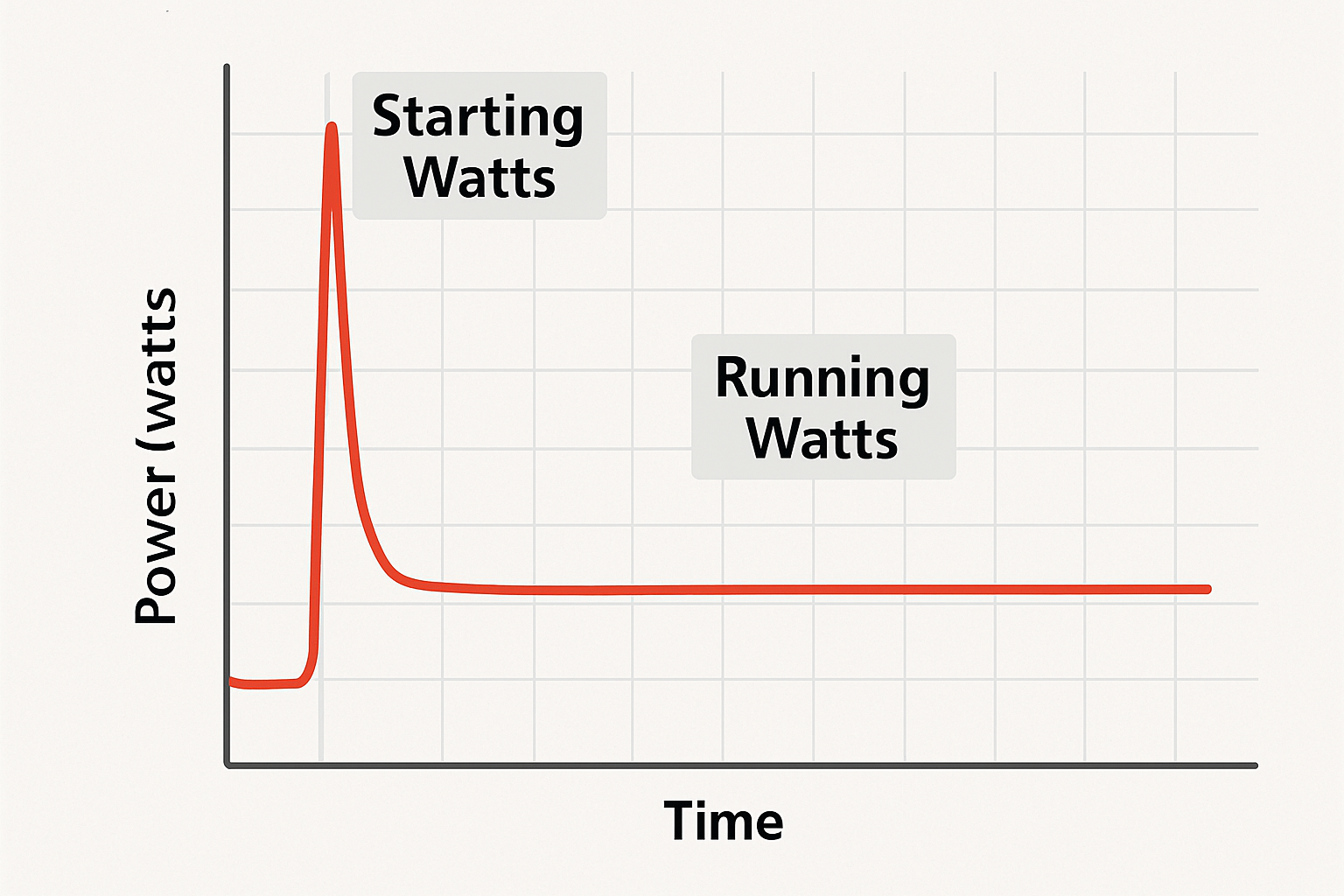
Starting watts demand more power in a short burst. This surge happens when the device motor or compressor first turns on. Running watts are lower and steady, showing the power used during normal operation. The gap between starting and running watts can be significant. This difference ensures devices start smoothly without overloading the system.
Impact On Electrical Systems
Electrical systems must handle starting watts to avoid damage. If the system cannot support the surge, breakers may trip or wires may overheat. Running watts impact the system less since power use is stable. Properly sized systems reduce the risk of failure and keep devices safe. Planning for starting watts protects both the device and wiring.
Typical Values And Ratios
Starting watts are usually 2 to 3 times higher than running watts. For example, a device running at 500 watts may need 1,000 to 1,500 watts at startup. This ratio varies by device type and size. Knowing typical values helps in selecting the right generator or power supply. Always check device manuals for exact power requirements.
Why Starting Watts Matter For Equipment
Starting watts are the extra power needed to turn on equipment. This power is often much higher than the running watts, which is the power needed to keep the equipment working. Understanding why starting watts matter is important to protect your devices and ensure they run smoothly.
Effect On Circuit Breakers
Starting watts cause a sudden surge of electricity. This surge can trip circuit breakers if they are not designed for it. Circuit breakers protect your home from electrical fires by cutting off power. If the starting watts are too high, breakers may trip often, causing inconvenience and potential damage.
Sizing Generators And Power Supplies
Generators and power supplies must handle starting watts plus running watts. Choosing a generator that only meets running watts can cause it to fail. A properly sized generator provides enough power for the initial surge. This ensures your equipment starts smoothly without power drops or shutdowns.
Preventing Overloads And Damage
High starting watts can overload wiring and devices. Overloads can damage motors, compressors, and other equipment parts. Knowing the starting watt requirements helps prevent overheating and electrical failure. Proper planning extends the life of your equipment and avoids costly repairs.
How Running Watts Affect Energy Usage
Running watts show the power a device uses during normal operation. This number is crucial for understanding how much energy the device will consume over time. It helps predict ongoing electricity costs and informs choices about energy use.
Knowing running watts allows you to see which appliances use more power regularly. This insight can guide you to manage your energy better and reduce waste.
Influence On Energy Bills
Running watts directly impact your monthly energy bill. The higher the running watts, the more electricity the device consumes. Devices with low running watts cost less to operate daily. Monitoring running watts helps avoid surprise charges on your bill.
Optimizing Running Load
Reducing the running load means lowering the power use of devices. Turn off or unplug devices when not in use. Choose appliances with lower running watts for everyday tasks. Smaller running loads lead to less energy consumption and savings.
Energy Efficiency Considerations
Energy-efficient devices use fewer running watts for the same output. Look for energy ratings to find efficient products. Efficient appliances reduce power use without sacrificing performance. This helps protect the environment and saves money.
Credit: mtspowerproducts.com
Tips For Managing Starting And Running Watts
Managing starting and running watts is key for efficient power use. Starting watts are higher and last briefly. Running watts are lower and steady. Controlling both helps save energy and protects equipment.
Smart steps can reduce power spikes and lower energy costs. Follow simple tips to handle starting and running watts well.
Selecting Proper Equipment
Choose machines with low starting watts needs. Look for energy-efficient motors and appliances. Smaller motors often use fewer starting watts. Match equipment size to the job for best results. Proper equipment avoids unnecessary power surges.
Using Soft Starters Or Variable Frequency Drives
Soft starters reduce the initial power surge during startup. They gradually increase motor speed to avoid spikes. Variable Frequency Drives (VFDs) control motor speed constantly. VFDs lower running watts by adjusting power to demand. Both tools protect equipment and save energy.
Maintenance Practices To Reduce Power Spikes
Keep motors clean and lubricated for smooth operation. Check wiring and connections for safety and efficiency. Replace worn parts to prevent excess power use. Regular maintenance stops sudden power surges. Good care extends equipment life and lowers energy bills.
Credit: www.anernstore.com
Frequently Asked Questions
What Is Starting Watts In A Generator?
Starting watts are the extra power needed to start a device. This power is higher than the normal running watts. It helps the device turn on smoothly.
How Do Running Watts Differ From Starting Watts?
Running watts are the constant power a device uses while working. Starting watts are a short burst of extra power at startup. Running watts are always lower than starting watts.
Why Do Appliances Need More Starting Watts?
Appliances with motors or compressors need more power to start. This surge helps overcome initial resistance. After starting, they use less energy to run.
Can A Generator Handle Both Starting And Running Watts?
A good generator can supply both starting and running watts. It must have enough capacity for the higher starting watts. Otherwise, the appliance might not start properly.
How To Calculate The Total Watts Required For Appliances?
Add the running watts of all devices you want to power. Then add the highest starting watts from any one device. This total helps pick the right generator size.
What Happens If Starting Watts Exceed Generator Capacity?
If starting watts are too high, the generator may fail. It might shut down or damage the appliance. Always choose a generator with higher starting watt capacity.
Are Starting Watts Important For All Appliances?
Not all appliances need extra starting watts. Simple devices like lights or chargers use only running watts. Motors, pumps, and refrigerators usually need starting watts.
Conclusion
Starting watts and running watts both play key roles in power needs. Starting watts help devices turn on quickly without tripping power. Running watts keep them working steadily after the start. Knowing the difference helps you pick the right generator or power source.
It also prevents overloads and power failures in your home or work. Always check both watt values before buying or using equipment. This simple step saves money and frustration later. Understanding watts makes your power use safer and more efficient.