
Are you struggling with clogged drains and wondering which solution works best for you? When it comes to tackling tough root intrusions in your pipes, two popular options stand out: Foaming Root Killer and Copper Sulfate.
But which one will give you the fastest, safest, and most lasting results? You’ll discover the key differences between these products, how they work, and what you need to know before making your choice. Keep reading to find the answer that will save you time, money, and frustration.

Credit: www.amazon.com
Causes Of Root Blockages
Root blockages in pipes cause serious plumbing problems. Roots grow inside sewer lines and water pipes. They enter through small cracks or joints. Moisture and nutrients in pipes attract root growth. Over time, roots spread and clog pipes. This leads to slow drainage and backups. Understanding what causes root blockages helps in choosing the right treatment.
Common Types Of Roots In Pipes
Several types of tree roots invade pipes. Willow roots are very aggressive and seek water. Oak roots grow thick and tough, causing strong blockages. Maple roots spread wide and can enter from far away. Poplar roots are fast-growing and reach pipes quickly. These roots can enter through tiny pipe cracks. They expand inside, forming dense mats that block flow.
Impact On Plumbing Systems
Root blockages disrupt plumbing systems seriously. Water flow slows down and pipes may burst. Sewage can back up into homes, causing damage. Pipes may crack or collapse from root pressure. Repairs become costly and inconvenient for homeowners. Regular inspection and treatment prevent extensive damage. Early detection saves money and stress in the long run.
How Foaming Root Killers Work
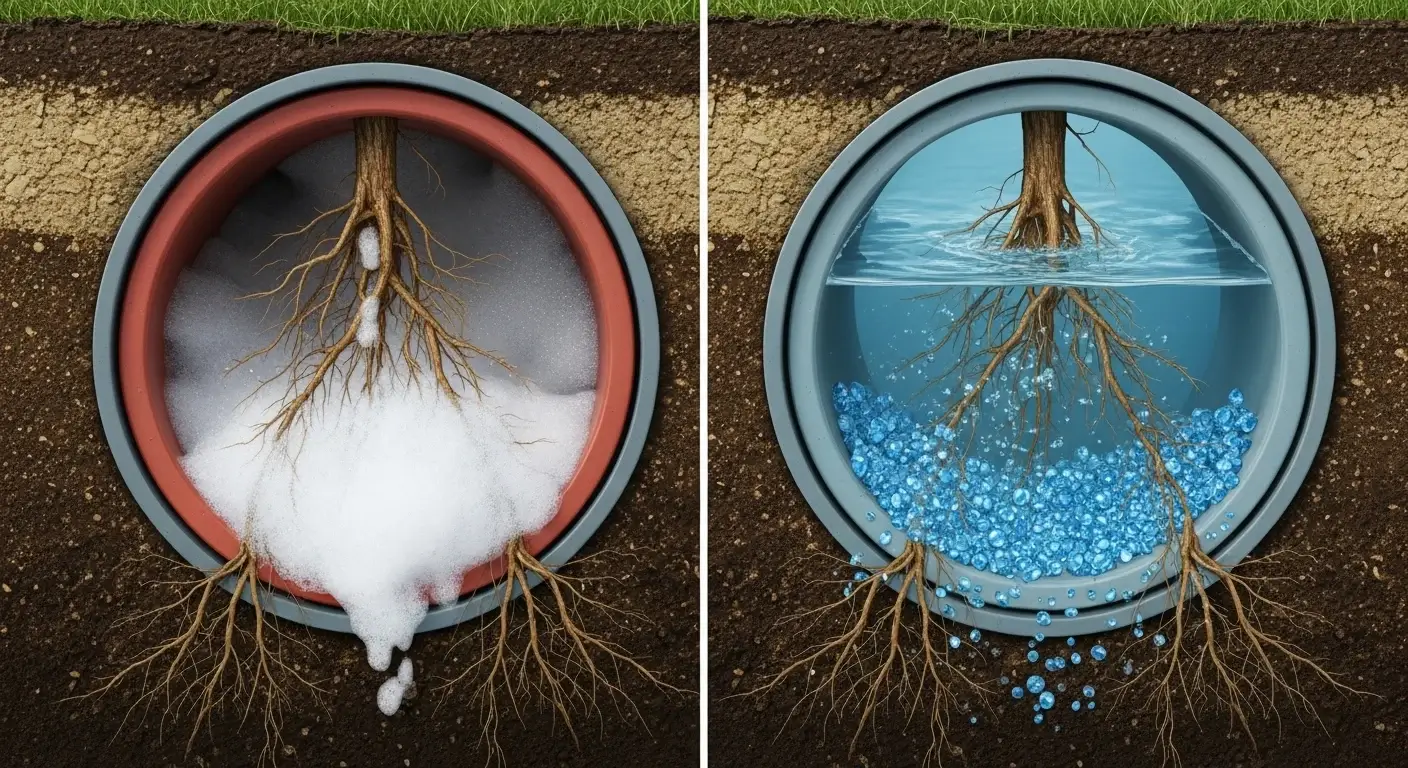
Foaming root killers offer an effective way to clear clogged pipes caused by roots. They work by targeting roots growing inside sewer lines. These products create foam that fills the pipe and kills roots. This method prevents damage and keeps water flowing smoothly.
Active Ingredients And Mechanism
Foaming root killers usually contain herbicides like dichlobenil or copper sulfate. These chemicals stop root cells from growing. The foam spreads evenly through pipes, reaching roots in hard-to-access spots. The foam sticks to roots longer than liquids, improving the kill rate. It kills roots without harming the pipe material.
Application Process And Usage Tips
Apply foaming root killers directly into clean drains or sewer cleanouts. Pour the product slowly to allow foam to form inside pipes. Let the foam sit for several hours or overnight. Avoid using water during this time to keep foam active. Repeat treatments every few months to control new root growth. Always follow safety instructions on the product label.
How Copper Sulfate Works
Copper sulfate is a common chemical used to kill roots in pipes and drains. It works by stopping the roots from growing and breaking down existing ones. This process helps clear blockages caused by tree roots in sewer lines.
The chemical attacks the roots directly and makes them die off. It also prevents new roots from invading the pipes. This method keeps the drainage system clear and running smoothly for longer.
Chemical Properties And Action
Copper sulfate is a blue crystalline solid that dissolves in water. It releases copper ions that are toxic to plant roots. These ions interfere with root cells, damaging them and causing root death.
The copper ions react with root proteins and enzymes. This stops essential cell functions and makes roots weak. Roots then break apart and stop growing into pipes.
It works slowly but effectively. The chemical spreads through the water in pipes and reaches roots deep inside.
Safety Measures And Application
Handle copper sulfate with care. It can be harmful if swallowed or inhaled. Wear gloves and eye protection during use.
Apply copper sulfate according to product instructions. Use the right amount to avoid pipe damage or harm to the environment. Do not pour it into storm drains or water bodies.
Keep children and pets away from treated areas. After application, flush pipes with water to clear any residue. Proper use ensures safe and effective root control.
Credit: 907heatingplumbing.com
Effectiveness Comparison
Comparing Foaming Root Killer and Copper Sulfate helps understand which works better. Both products aim to clear root blockages in pipes, but their effectiveness varies. This section breaks down their performance in three key areas. Learn how fast they work, their lasting effects, and impact on the environment.
Speed Of Action
Foaming Root Killer acts quickly by expanding foam that kills roots fast. It reaches deep into pipes and stops roots from growing soon after application. Copper Sulfate works slower. It dissolves in water and takes days to affect roots. For fast results, Foaming Root Killer is usually preferred.
Long-term Results
Foaming Root Killer provides longer-lasting protection by creating a barrier inside pipes. This barrier prevents roots from coming back quickly. Copper Sulfate kills roots but does not stop new growth as effectively. Pipes may need retreatment more often when using Copper Sulfate.
Environmental Impact
Foaming Root Killer is designed to minimize harm to soil and water. Its ingredients break down without leaving toxic residues. Copper Sulfate can be harmful to aquatic life and soil health if overused. Careful application is required to avoid environmental damage.
Cost And Availability
Cost and availability play key roles in choosing between Foaming Root Killer and Copper Sulfate. Understanding price differences helps budget better. Knowing where to buy each product saves time and effort.
Price Differences
Foaming Root Killer usually costs more per treatment. This is due to its specialized formula and ease of use. Copper Sulfate is cheaper but may require multiple applications. Bulk buying Copper Sulfate can lower the price further. Consider long-term costs, not just the initial price.
Where To Buy Each Product
Foaming Root Killer is available at most plumbing supply stores. Many online retailers also stock it for convenient purchase. Copper Sulfate can be found in garden centers and agricultural supply shops. It is also sold online, often in larger quantities. Check product reviews before buying to ensure quality.
Safety And Environmental Concerns
Choosing between foaming root killer and copper sulfate requires understanding their safety and environmental impact. Both chemicals serve to clear roots and blockages but differ in how they affect nature and human health. It is crucial to handle them carefully to prevent harm.
Impact On Wildlife And Water Systems
Foaming root killers usually have fewer harmful effects on wildlife. They break down quickly and do not leave lasting residues. Copper sulfate, on the other hand, can be toxic to fish and aquatic life. It tends to linger in water, affecting ecosystems for longer periods. Small water bodies near treated areas may suffer damage. Birds and other animals might also get harmed if exposed to copper sulfate.
Handling Precautions
Always wear gloves and eye protection when using these chemicals. Avoid breathing in fumes or dust. Keep both products away from children and pets. Store them in a cool, dry place. Do not mix with other chemicals. Rinse tools and containers thoroughly after use. Follow all label instructions carefully to reduce risks. Dispose of leftover chemicals according to local regulations.
User Experiences And Reviews
User experiences and reviews offer valuable insights into how Foaming Root Killer and Copper Sulfate perform in real-life situations. These products target roots in sewer lines and drains, but users often report different results. Reading their feedback helps understand the effectiveness and possible issues of each product.
Success Stories
Many users praise Foaming Root Killer for reaching deep roots effectively. They say it expands foam to cover the entire pipe surface. This makes it easier to kill roots that block drains. Several homeowners mention fewer clogs after using it once or twice.
Users also report good results with Copper Sulfate. It dissolves roots quickly and is easy to apply. Some people notice improved water flow shortly after treatment. Copper Sulfate is popular for being affordable and accessible in most stores.
Common Complaints
Some users find Foaming Root Killer expensive compared to other options. A few say the foam does not always reach all root areas. Others mention needing several treatments for lasting results.
Copper Sulfate users often complain about its strong odor. It may also stain pipes or fixtures if not used carefully. Some reviews warn about environmental concerns, as copper can harm plants and animals near drains.

Credit: us.amazon.com
Choosing The Right Solution
Choosing the right solution to kill roots in pipes or drains is important. Both foaming root killer and copper sulfate have benefits. Knowing which one to pick depends on several factors. Understanding these can help you get the best result for your problem.
Factors To Consider
Think about the type of roots causing the problem. Some roots are tougher and need stronger chemicals. Consider the condition of your pipes. Older pipes might react badly to harsh chemicals. Also, check if the product is safe for your plumbing system. The environment matters too. Copper sulfate can harm plants and animals if used near water. Foaming root killer may be safer in some cases. Cost and ease of use also play a role. Choose a product that fits your budget and skill level.
When To Use Each Product
Use foaming root killer for slow root growth. It works well in pipes with small root intrusions. It spreads inside the pipes and kills roots effectively. This product is good for regular maintenance. Copper sulfate suits larger root problems. It acts fast and kills roots deeply. Use it in pipes that need a strong chemical treatment. Avoid copper sulfate near gardens or water bodies. Follow instructions carefully to avoid damage. Choose foaming root killer for safer, gentle treatment. Pick copper sulfate for tough, fast action.
Frequently Asked Questions
What Is Foaming Root Killer Used For?
Foaming root killer clears clogged pipes and sewer lines caused by roots. It creates foam that spreads and kills roots inside pipes. This helps prevent blockages and backups in plumbing systems.
How Does Copper Sulfate Kill Tree Roots?
Copper sulfate is a chemical that poisons roots by disrupting their growth. It enters the root system and stops roots from growing inside pipes. This helps keep sewer lines clear from root damage.
Which Is Safer: Foaming Root Killer Or Copper Sulfate?
Foaming root killer is generally safer because it targets roots inside pipes without harming soil. Copper sulfate can be toxic and may affect nearby plants or animals. Proper use is important for both products.
How Long Does Foaming Root Killer Last In Pipes?
Foaming root killer effects can last several months, depending on root growth and pipe conditions. Regular treatments may be needed to keep pipes clear. It works best as part of routine maintenance.
Can Copper Sulfate Damage My Plumbing System?
Copper sulfate is usually safe for metal and plastic pipes if used correctly. Overuse or high concentrations may cause corrosion or pipe damage. Follow product instructions to avoid plumbing problems.
How Often Should I Apply Foaming Root Killer?
Applying foaming root killer every 3 to 6 months helps prevent root regrowth in pipes. Frequency depends on root problems and pipe conditions. Regular use keeps sewer lines flowing smoothly.
Is Copper Sulfate Eco-friendly For Root Control?
Copper sulfate is not very eco-friendly because it can harm soil and water life. It should be used carefully to avoid environmental damage. Alternative methods may be better for sensitive areas.
Conclusion
Choosing between foaming root killer and copper sulfate depends on your needs. Foaming root killer works well for clearing slow drains quickly. Copper sulfate treats roots but may take longer to act. Both can harm the environment if used carelessly.
Always follow safety instructions on the label. Consider your plumbing type and local regulations before use. Proper use ensures better drain flow and fewer blockages. Think about which option fits your situation best. Simple steps can keep your pipes clear and healthy.