
A light blue pool liner generally looks best because it reflects sunlight to create the natural turquoise water most people want, making it the ideal choice for standard backyard pools in full sun. Darker shades like deep gray or black give a lagoon look but absorb more heat and hide debris until it builds up.
Your yard’s surroundings, the depth of your pool, and how much direct sun it gets all change which shade works for you. The rest of this page breaks down those variables so you can pick the right one instead of guessing from a small sample swatch.
Who needs a new pool liner color
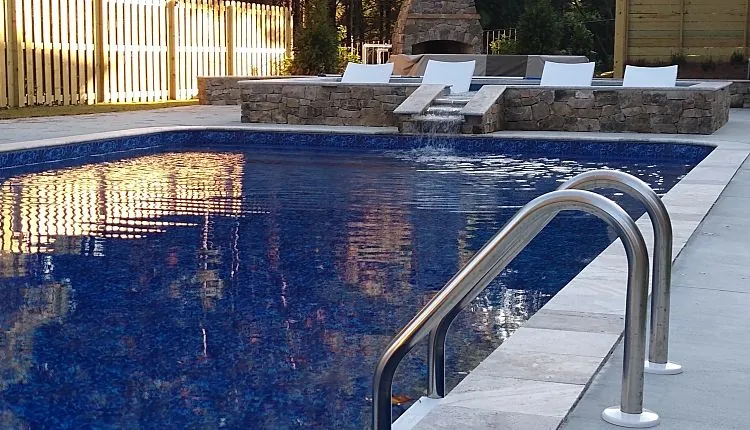
Three different people usually search for this answer, and they don’t need the same advice. The first is someone building a new vinyl-liner pool who has to pick a color before the concrete deck is poured. They have every option open but no water to test against.
The second person owns an older pool with a faded white or pale blue liner that’s finally leaking. They just want the water to look clean again without changing the whole vibe of their backyard. They’re replacing what they had, not redesigning.
The third is a homeowner who saw a dark-bottom pool on social media and wants that exact moody look. They’re focused entirely on aesthetics and haven’t thought about how dark vinyl changes water temperature or makes it harder to spot a dropped phone at the bottom.
This page serves the first two readers best. It assumes you’re choosing a standard 20-mil or 27-mil vinyl liner for a residential in-ground pool that gets at least four hours of direct sun daily. If you’re trying to match a commercial tile finish or working with a shaded above-ground pool, you’ll need the manufacturer’s specific reflectance charts instead of general color rules.
What changes how a liner looks
Five things decide whether a liner color actually looks good once the pool is filled with water. Sun exposure matters most because it controls how much light bounces off the floor back up to your eyes. A south-facing pool in Arizona will make even a medium blue look bright cyan.
That same medium blue turns dull navy in a heavily shaded yard surrounded by tall oak trees. You can check your own sun hours by timing how long direct light hits the deep end on a clear summer afternoon. Less than four hours means you should stick to lighter shades.
Water depth is the second biggest factor. The shallow end always shows the liner’s true printed color. The deep end, usually eight feet down in a standard residential pool, adds a heavy blue filter over whatever pattern you chose. A gray liner reads as blue-gray in the deep end.
Surrounding hardscape creates the third variable. Red brick coping warms up the reflection, making blue water look slightly green. White concrete keeps colors crisp and accurate. Look at your deck material before picking a pattern with warm tones baked into it.
Local climate decides the fourth point: heat absorption. Dark liners raise water temperature by several degrees compared to light ones. That’s a bonus in cooler northern states where swimming seasons are short. In Texas or Florida, darker water might get uncomfortably warm by August.
The fifth thing people get wrong most often is judging a dry sample indoors. Vinyl stretches when installed, which thins the ink layer and shifts the hue. Water adds another visual layer on top of that stretch. Always ask your installer for a photo of the exact pattern underwater in a finished pool, not just the folded catalog square.
How to pick your liner color
Choosing a liner takes a few deliberate steps because you can’t return it once it’s cut and welded to fit your pool’s shape. Follow this order to avoid paying twice for the same job.
- Measure your pool’s maximum depth and note the sun hours in the deep end. Pools deeper than six feet need lighter patterns to keep the bottom visible.
- Look at your coping and deck material. Match cool grays or blues with concrete, and warmer earth tones if you have natural stone or red brick.
- Decide if you want warmer water or cooler water. Pick dark charcoal or black if you need extra heat; choose white or light blue to reflect heat away.
- Ask your installer for three wet samples of your chosen brand. Don’t rely on dry catalog squares, because stretched vinyl underwater looks completely different.
- Tape the wet samples to a pole and lower them to the deepest point of your empty pool. View them from your patio at noon and again at late afternoon.
- Check the warranty terms for UV fading on each option. Darker pigments fade faster under heavy sun, so a 15-year warranty on black vinyl might only guarantee five years of true color.
- Order the liner with a 27-mil thickness if your budget allows it. Thicker vinyl holds its printed pattern longer against chemical wear than the standard 20-mil option.
- Schedule the installation for early spring or late fall. Installing vinyl in peak summer heat causes it to expand too fast, stretching the pattern unevenly before the water fills it.
The real judgment call happens at step five. If the sample looks great at noon but disappears into a dark shadow by four o’clock, your yard doesn’t support that shade. Pick the color that still shows its pattern clearly in the lowest light you’ll swim in. If you notice the vinyl feels unusually thin or brittle during installation, stop and call the manufacturer — that points to a storage or shipping failure, not a color choice.
Situations and the right shade
Different yards demand different approaches, so here’s how the common setups break down. Use this table to find your exact situation and see what works without guessing.
| Your setup | Best color choice | Effort needed | Watch out for |
|---|---|---|---|
| Full sun, concrete deck | Light blue or white | Low effort | Glare on bright days |
| Heavy shade, stone deck | Medium blue or tan | Medium effort | Algae hiding in shadows |
| Want warmer water | Dark gray or black | Low effort | Faster UV fading |
| Shallow kids pool | Bright blue mosaic | Low effort | Pattern distortion on curves |
| Natural landscape setting | Earth tone pebble | High effort | Color blending with dirt |
| Modern geometric design | Solid dark charcoal | Medium effort | Visible calcium lines |
Light blue remains the safest bet for resale value because it matches almost any house exterior. Earth tones require more care since they blend with surrounding dirt, making it hard to tell when the pool needs vacuuming. Solid dark colors show white calcium deposits instantly along the waterline, demanding weekly brushing to stay sharp.
Details that make a liner look right
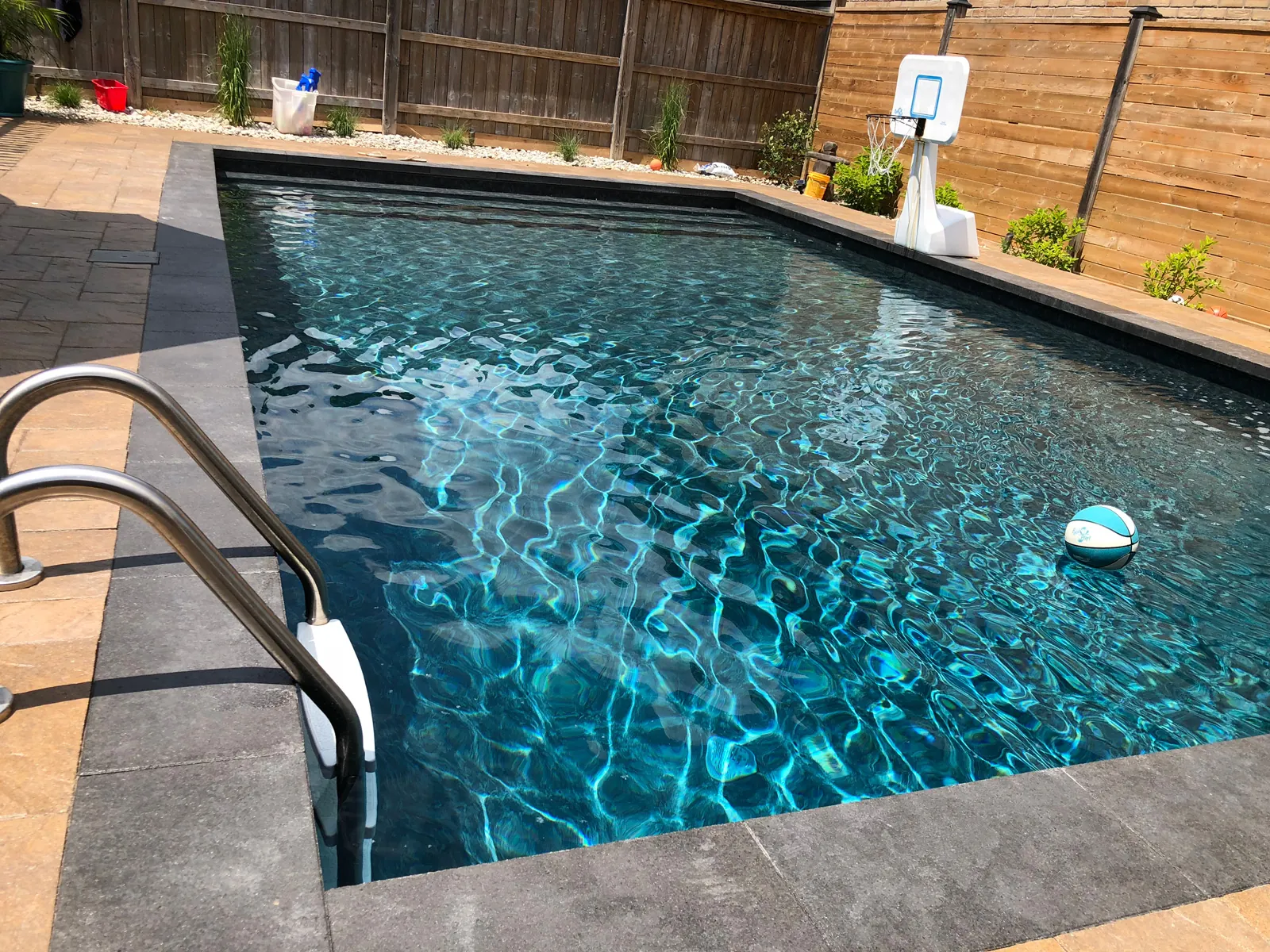
Getting the pattern alignment correct
Installers must line up the tile print exactly at the water level. If the pattern sits two inches too high, you’ll see a blank strip of solid vinyl between the water and the coping. That gap ruins the illusion of a natural edge and makes the whole pool look cheap.
Check the alignment before they start filling the pool with water. Stand at the deep end and look across the surface toward the shallow steps. The printed border should sit perfectly flat against the waterline track all the way around.
Managing the stretch over corners
Vinyl pulls tightest over inside corners and steps. A busy mosaic pattern distorts badly here, turning circles into stretched ovals. Solid colors or very subtle gradients handle this tension without showing obvious warping.
If you love a detailed tile print, ask the fabricator to add extra material specifically for the step radii. Without that allowance, the pattern thins out and fades months ahead of the rest of the floor. You can verify this by pressing your thumb gently into the corner vinyl after installation — it shouldn’t feel noticeably thinner than the flat floor sections.
Pool liner color problems and fixes
Color issues usually show up within the first season of swimming. Here’s how to read what the water is telling you and fix it before you blame the manufacturer.
| What you notice | What it usually means | What to do first | How to stop it happening again |
|---|---|---|---|
| White chalky spots | Calcium buildup | Brush with nylon pad | Lower calcium hardness levels |
| Pink stains near returns | Surface bacterial growth (Serratia marcescens) | Shock chlorinate immediately | Fix groundwater drainage issues |
| Faded deep end | UV damage over time | Accept normal aging | Use a solar cover daily |
| Green tint everywhere | Algae starting | Test and balance chlorine | Run pump 8 hours minimum |
| Brown marks on floor | Metal staining | Apply ascorbic acid treatment | Add sequestering agent monthly |
| Uneven color patches | Wrinkles trapping debris | Smooth out with pool broom | Maintain proper water level |
Pink stains are the most alarming because they aren’t actually coming from the vinyl itself. Pink stains are caused by Serratia marcescens bacteria growing on the wet surface of the liner where water flow is slow. If shocking the water doesn’t clear them in 48 hours, scrub the affected areas with a stiff brush and a specialized algaecide or disinfectant.
Safety and manufacturing standards
Pool liners sold in the US must meet specific fire and chemical safety requirements set by ASTM International. You can verify a manufacturer’s compliance by checking their published spec sheets for this designation.
Thickness claims matter because they dictate lifespan. A “20-mil” liner measures twenty-thousandths of an inch thick. Some brands market “gauge” instead of mils, and 20-gauge is actually thinner than 20-mil. Always confirm the unit of measurement before comparing prices between two different suppliers.
Chemical resistance varies by pigment type. The Association of Pool & Spa Professionals publishes guidelines on safe chlorine ranges for vinyl surfaces. Keeping free chlorine between 1 and 3 parts per million prevents the ink from bleaching out prematurely. Higher concentrations eat through dark pigments significantly faster than light ones.
If your local municipality requires a barrier fence or specific drain covers, those rules apply regardless of what color you choose. Check your county’s building code office for the exact swimming pool safety requirements in your zip code.
What you’ll actually spend
The color itself rarely changes the base price of a custom-cut liner. You’ll pay for the thickness, the pattern complexity, and the size of your pool. A standard 16-by-32-foot rectangular pool typically costs significantly less than replacing the entire pool structure, assuming a 20-mil thickness.
Upgrading to 27-mil vinyl adds roughly 20% to that material cost. Intricate mosaic prints or custom logos push the price higher than solid colors because they require more precise printing passes at the factory. Installation labor is a separate charge, usually matching or exceeding the material cost depending on your region.
Dark liners carry a hidden long-term expense. Because they absorb more UV radiation, they tend to fade visibly two to three years sooner than identical light-colored vinyl in the same climate. You might save money initially on a basic black liner, only to face a replacement cycle sooner.
To get an accurate number, measure your pool’s length, width, and depth in feet. Give those three numbers to at least two local installers and ask them to quote the exact same mil thickness. Comparing a 20-mil quote against a 27-mil quote will always look like one company is overcharging when they aren’t.
Keeping the color sharp later
Sunlight and chlorine work together to bleach vinyl over time. The only reliable way to slow this down is blocking UV rays when the pool isn’t in use. A solid safety cover or a floating solar blanket cuts fading dramatically compared to leaving the water exposed all day.
Water chemistry plays the second biggest role. High chlorine levels attack the printed ink directly. Keep your sanitizer in the 1 to 3 ppm range recommended by the Centers for Disease Control and Prevention for treated recreational water venues. You can read their model aquatic health code for exact parameters.
Brush the walls gently with a soft nylon brush once a week. This stops calcium scale from bonding to the vinyl and creating permanent white clouds over your chosen pattern. Never use steel wool or stiff bristles, which scratch the surface and trap dirt inside the grooves.
If the water level drops below the skimmer opening, the exposed vinyl dries out and shrinks rapidly. Refill the pool immediately to keep the material submerged and pliable. Once vinyl shrinks in the sun, it won’t stretch back to fit the corners properly.
When a vinyl liner isn’t the answer
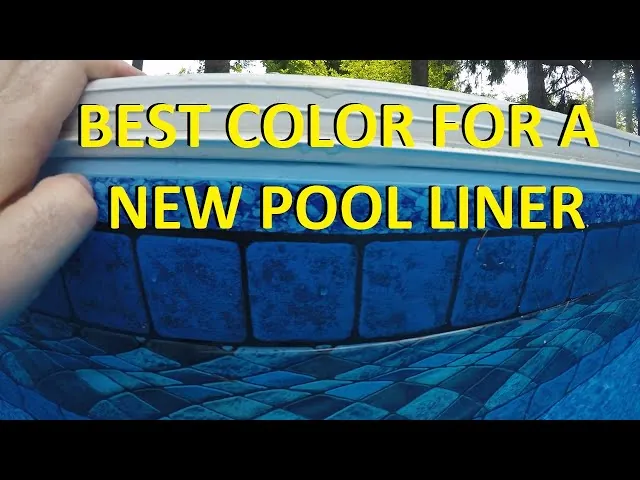
Not every pool project should use colored vinyl. If your pool shell has major structural cracks shifting the walls, installing a new liner just hides a failing foundation. You need a concrete repair specialist to stabilize the shell first.
Plaster or fiberglass pools don’t take vinyl liners at all. Trying to force a liner into a plastered shell creates trapped air pockets that float the material and ruin the finish. If you inherited a plaster pool and hate the color, you’ll need an acid wash or a resurfacing job instead.
Commercial pools or public facilities face strict health codes that often prohibit dark bottoms. Lifeguards need to see a swimmer resting on the floor instantly. A dark gray liner fails this safety requirement completely, forcing you to use white or very pale blue regardless of your aesthetic preference.
If your goal is a mirror-like reflective surface that looks like liquid glass, vinyl can’t achieve it. Only polished dark plaster or specialized aggregate finishes give that effect. Choosing vinyl for a look it physically can’t produce leads to immediate disappointment the moment the water fills up.
Frequently asked questions
Can I change my pool liner color without draining?
No, you must drain the pool completely to replace a vinyl liner. The old material needs to be pulled from the tracking channel around the entire perimeter. Installing a new color over an existing liner traps moisture and causes rapid bacterial growth underneath both layers.
Why does my blue liner look green?
Algae or dissolved metals in the water shift the visual color toward green. Test your water for copper and iron using a standard kit from a pool supply store. If metals are zero, shock the pool to kill suspended algae that’s filtering the light hitting the blue floor.
How long does a dark pool liner last?
A dark vinyl liner typically lasts several years before noticeable fading occurs. Light blue or white liners often reach a longer duration in the same conditions. The exact lifespan depends on your daily sun exposure and how strictly you maintain your chlorine levels.
Is it safe to use a black pool liner?
Yes, black liners are structurally safe for residential swimming pools. The main trade-off is visibility. You won’t easily see dropped items, small children’s limbs, or early algae growth on a dark floor. Ensure your pool lighting is strong enough to compensate for the lost contrast.
What happens if I pick a patterned liner?
Patterned liners hide minor scratches and debris better than solid colors. However, complex mosaics distort heavily over steps and curved benches. If your pool has a lot of built-in seating or irregular shapes, a simple gradient or solid color will look much cleaner once stretched.
Does liner color affect water temperature?
Yes, darker colors absorb significantly more solar radiation than lighter ones. A black or dark gray liner can raise water temperature by several degrees compared to a white liner in identical sunlight. This reduces heating costs in cold climates but increases evaporation in hot regions.
Do I need to match the liner to my house?
You don’t have to match it exactly, but coordinating with your hardscape prevents clashing reflections. Cool-toned concrete decks pair naturally with blue or gray water. Warm brick or natural stone surrounds look better with earth-tone or sand-colored liner patterns reflecting upward.
First steps for your pool liner
Start by measuring your pool’s deep-end depth and timing your afternoon sun exposure today. Those two numbers tell you immediately whether a dark shade will work or if you need a lighter blue to keep the bottom visible. Expect the water to look one shade darker than the dry sample once filled. If the stretched vinyl feels paper-thin over your steps during installation, stop filling and contact the fabricator.