
Greasing fittings on heavy equipment requires a reliable cordless tool that delivers consistent pressure without the mess of manual pumping. If you’re comparing options and searching for dewalt vs milwaukee grease gun, you need clear facts about pressure ratings, battery compatibility, flow rates, and hose lengths to make the right purchase. Both brands manufacture 20-volt class tools designed for contractors, farmers, and fleet mechanics who depend on daily lubrication maintenance.
Key Takeaways
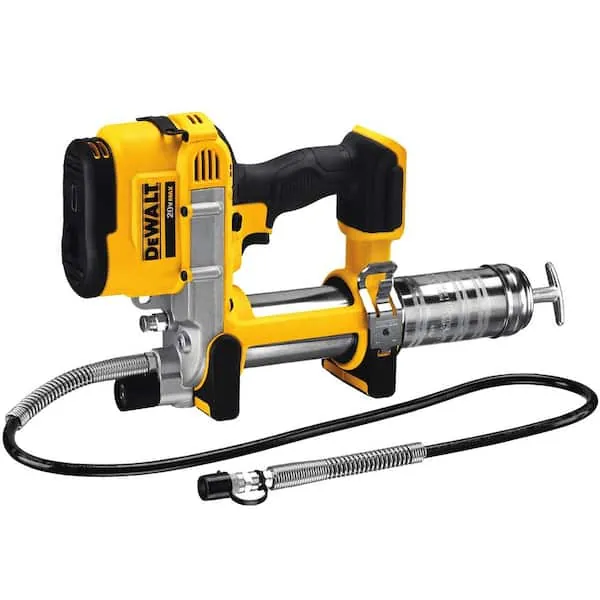
- Milwaukee delivers up to 10,000 PSI maximum pressure, making it better suited for stubborn, heavily corroded fittings that resist standard flow.
- DeWalt provides a longer standard flexible hose at 42 inches compared to Milwaukee’s 36-inch option, offering slightly better reach around obstructions.
- Both platforms utilize their existing 20V or M18 battery ecosystems, meaning you should buy the brand whose batteries you already own.
- Milwaukee offers two distinct speed settings for precise control, while DeWalt relies on a variable-speed trigger mechanism for adjusting flow.
- Pre-filling the barrel instead of using cartridge tubes prevents air pockets, which is the most common cause of tool failure in the field.
How Do Pressure Ratings Compare?
Maximum operating pressure determines whether a cordless grease gun can push thick lubricant through blocked or tightly sealed zerks. When dealing with heavy machinery, excavators, or agricultural tractors, insufficient pressure means the fitting simply won’t accept fresh grease.
Milwaukee leads this category with its flagship M18 model, generating up to 10,000 PSI. This extreme force breaks through hardened debris inside neglected fittings. DeWalt’s primary 20V MAX cordless grease gun operates at a lower but still highly capable 10,000 PSI on specific high-pressure variants, though many of their standard models cap out around 6,500 to 7,500 PSI depending on the exact generation.
Pro Tip: Always match your pressure setting to the fitting’s rating. Applying 10,000 PSI to a delicate bearing seal can blow it out completely, leading to expensive mechanical failures and downtime.
| Specification | Milwaukee M18 | DeWalt 20V MAX |
|---|---|---|
| Maximum Pressure | 10,000 PSI | 6,500 – 10,000 PSI |
| Flow Rate (High) | Up to 10 oz/min | Up to 9 oz/min |
| Flow Rate (Low) | Up to 5 oz/min | Variable via trigger |
| Hose Length | 36 inches | 42 inches |
| Speed Settings | Two-speed dial | Variable trigger |
For most routine automotive and light construction tasks, DeWalt pressure is more than sufficient. However, if you service mining equipment or older industrial machines where fittings seize regularly, the raw force provided by Milwaukee becomes essential.
Which Battery System Wins?
Cordless power tools are only as good as the batteries fueling them. Purchasing a bare tool makes sense only if you already possess compatible cells from the same manufacturer.
Milwaukee utilizes the M18 REDLITHIUM battery platform. These packs are widely praised for their durability in harsh environments and excellent cold-weather performance. A single M18 XC 5.0Ah battery typically dispenses multiple full cartridges of grease before requiring a recharge.
DeWalt relies on the 20V MAX XR ecosystem. Their PowerStack pouch-cell batteries offer a smaller physical footprint and impressive energy density, which helps reduce the overall weight of the grease gun during overhead applications.
According to Milwaukee Tool specifications, the runtime directly correlates to the amp-hour rating of the inserted battery pack. Higher amp-hours mean fewer interruptions. If your shop runs entirely on yellow tools, buying a red grease gun forces you into purchasing separate chargers and batteries, destroying your workflow efficiency. Stick to your existing platform unless a specific feature demands otherwise.
What About Hose Length and Design?
Reaching awkward grease fittings on skid steers, mowers, or truck suspensions often dictates how easily you complete the job. A short hose forces you to contort the entire heavy tool into tight spaces.
DeWalt equips its standard cordless grease guns with a 42-inch flexible hose. This extra length proves incredibly useful when working underneath vehicles on jack stands or reaching deep into the pivot points of heavy earthmoving equipment. The rubber compound remains pliable even in cooler temperatures.
Milwaukee includes a 36-inch premium hose on most of its professional kits. While six inches shorter than DeWalt, Milwaukee compensates by integrating a built-in LED light near the coupler head. This illumination helps mechanics locate hidden fittings in dark undercarriages without holding a separate flashlight.
Both hoses use standard threaded connections, allowing aftermarket replacements if yours gets crushed or kinked. Ensure you buy replacement hoses rated for the specific maximum PSI of your unit; attaching a 6,000 PSI hose to a 10,000 PSI tool creates a dangerous rupture hazard.
Loading Methods and Barrel Capacity

How you load grease impacts both speed and cleanliness. Cordless models from both manufacturers support multiple loading techniques to accommodate different user preferences.
The standard capacity for both DeWalt and Milwaukee barrels is 16 ounces, which aligns perfectly with traditional bulk grease cartridges. You simply unscrew the rear cap, insert the tube, remove the pull tab, and reassemble.
However, bulk loading remains popular among high-volume users. Both tools allow you to pump grease directly from a five-gallon pail into the barrel using a hand-operated filler pump. This method significantly lowers the cost per ounce of lubricant compared to buying individual cardboard tubes.
Suction filling is another supported method, where the plunger draws grease upward from an open container. Regardless of the method chosen, bleeding trapped air from the system is mandatory. Air compresses under pressure, preventing the motor from pushing actual lubricant through the hose.
| Loading Method | Cleanliness | Cost Efficiency | Speed |
|---|---|---|---|
| Cartridge Tube | High | Moderate | Fast |
| Bulk Pail Fill | Low | High | Moderate |
| Suction Fill | Moderate | High | Slow |
Build Quality and Ergonomics
A fully loaded cordless grease gun weighs between seven and ten pounds. Ergonomic design matters immensely when greasing dozens of fittings across a large piece of machinery.
Milwaukee features a balanced center of gravity when paired with their M18 batteries. The handle incorporates overmolded rubber grips that prevent slipping when hands are covered in oil. Their trigger requires deliberate pressure to engage, reducing accidental discharge when bumping against steel frames.
DeWalt emphasizes a compact motor housing. By utilizing brushless motor technology, they reduced the overall size of the nose assembly. This allows the tool to fit between closely spaced components where bulkier heads can’t reach. The brushless motor also generates less heat during extended continuous use, extending the lifespan of the internal electronics.
Both brands construct their barrels from heavy-gauge steel to withstand drops on concrete shop floors. Plastic components are generally limited to the outer casing and battery receptacles, keeping vulnerable areas protected from impact damage.
Troubleshooting Common Grease Gun Issues
Even premium cordless tools encounter operational problems. Understanding basic troubleshooting saves time and prevents unnecessary warranty returns.
Motor Runs But No Grease Flows
This almost always indicates an air lock inside the barrel. Loosen the bleed screw located near the head of the gun while depressing the trigger. Allow the motor to run until solid grease emerges without bubbles, then tighten the screw immediately.
Coupler Leaking Around Fitting
If grease sprays backward onto your hands, the jaws inside the coupler are likely worn or clogged. Disassemble the coupler tip, clean out hardened debris with a pick, and inspect the spring tension. Replace the coupler if the internal claws no longer grip the zerk tightly.
Battery Drains Rapidly
Pushing 10,000 PSI requires massive electrical current. If you constantly hold the trigger against fully blocked fittings, the motor works at peak draw. Clear the blockage manually first, or use the low-speed setting to gradually work lubricant into the joint rather than forcing it instantly.
Maintenance Tips for Longevity
Neglecting your grease gun guarantees premature failure. Lubricant hardens over time, especially when exposed to temperature fluctuations in unheated garages.
After every major project, wipe down the exterior barrel and hose to remove accumulated dirt. Dirt acts as an abrasive when it migrates into moving parts. Store the tool horizontally rather than standing upright, which prevents grease from settling away from the plunger mechanism.
Always use high-quality grease appropriate for your application. Mixing incompatible thickeners—such as lithium complex with polyurea—causes the lubricant to break down into a watery consistency or harden into a solid block. Consult the equipment manufacturer’s manual to verify the correct NLGI grade and base type.
Periodically inspect the plunger rod for bends. A slightly warped rod creates friction against the barrel walls, forcing the motor to work harder and draining batteries faster. Keep spare O-rings and couplers in your toolbox to address minor leaks before they escalate into total failures.
DeWalt vs Milwaukee Grease Gun Price Comparison and Value
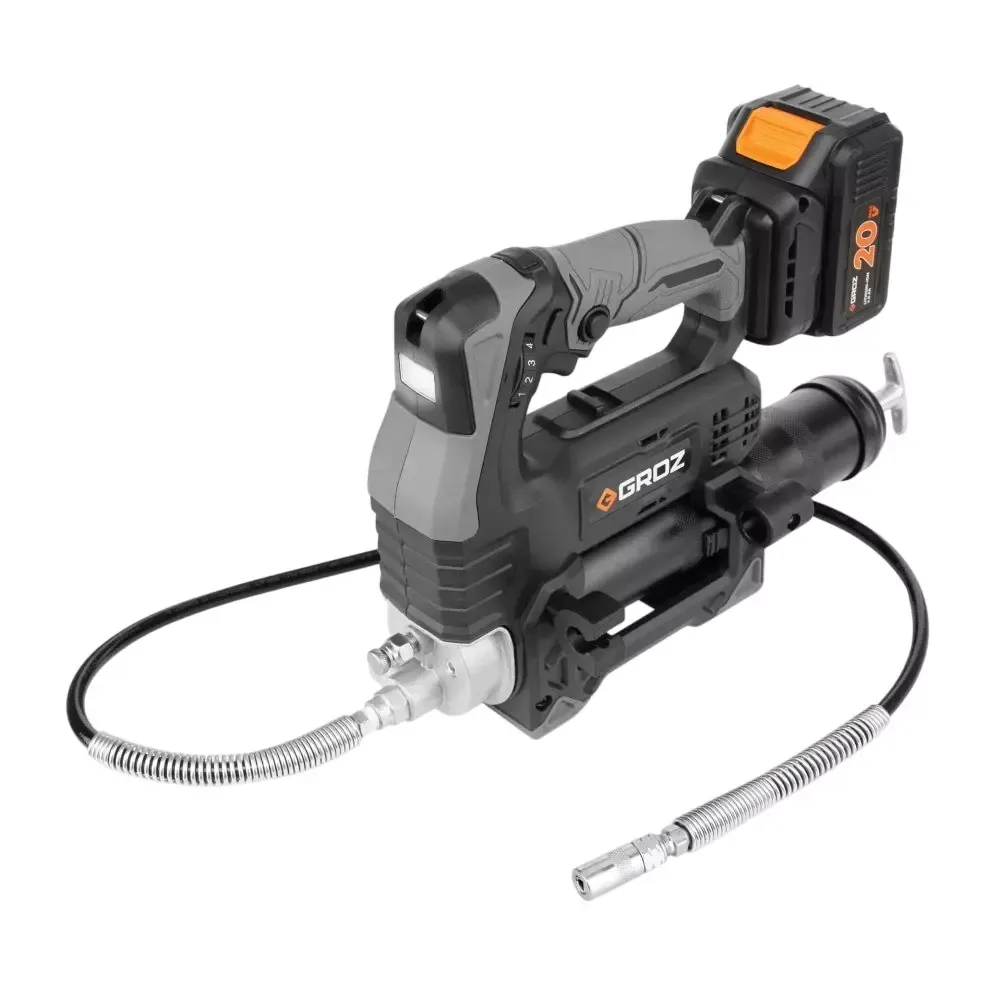
Budget constraints play a role in selecting between these two industry giants. Pricing fluctuates based on whether you purchase a bare tool or a complete kit containing batteries and a charger.
Bare tools typically range from $150 to $250. Kits equipped with a single mid-capacity battery and charger usually fall between $250 and $400. Milwaukee’s highest-pressure models tend to sit at the upper end of this spectrum due to their reinforced internal gearing.
DeWalt frequently bundles their grease guns into promotional deals alongside other 20V MAX tools like drills or impact drivers. If you’re starting a new collection from scratch, these combo kits offer substantially better overall value than purchasing items individually. Consider the long-term investment: buying into a battery platform locks you in for years.
Related guides
Frequently Asked Questions
Can I use standard grease cartridges in both?
Yes. Both DeWalt and Milwaukee cordless grease guns accept standard 16-ounce grease cartridges. They also support bulk loading directly from pails. Ensure the cardboard tube isn’t dented before insertion, as deformations prevent the plunger from seating correctly against the follower plate.
Which brand handles colder weather better?
Milwaukee’s M18 REDLITHIUM batteries generally maintain voltage output slightly better in freezing temperatures compared to older lithium-ion cells. However, the grease itself thickens significantly in cold weather. Store your tool indoors overnight and use synthetic winter-grade lubricants for optimal cold-weather performance.
Are the hoses interchangeable between brands?
No. While both use standard thread pitches for the coupler end, the connection point at the grease gun head differs between manufacturers. Attempting to adapt a Milwaukee hose onto a DeWalt body risks cross-threading or creating a weak point that fails under high pressure.
How often should I replace the coupler?
Replace the coupler whenever you notice grease leaking past the fitting during operation, or if the jaws fail to snap securely onto the zerk. For daily professional use, expect to replace couplers every few months. Occasional users may go several years without needing a replacement.
Does higher PSI mean better performance?
Not necessarily. Higher PSI helps clear blocked fittings, but excessive pressure damages seals on delicate bearings. For general automotive and agricultural maintenance, 6,000 to 7,000 PSI is adequate. Reserve 10,000 PSI tools specifically for heavy industrial equipment where fittings endure extreme contamination.
Can I leave grease loaded during storage?
Yes, leaving grease loaded is actually recommended to prevent moisture from entering the empty barrel and causing rust. Retract the plunger rod slightly to relieve tension on the internal spring, and store the tool in a dry location away from direct sunlight to preserve the rubber hose.
Conclusion
Determine which battery platform currently powers your workshop, as matching ecosystems saves hundreds of dollars. Once you identify your preferred brand, order a bare tool kit, fill the barrel with the exact lubricant your machinery requires, and schedule your first greasing session today.