
When evaluating water testing equipment for residential pools, the choice between the Taylor K-2006 and the K-2006C often confuses new owners seeking precision. Both kits serve as the gold standard for titration-based analysis, yet they differ significantly in their included reagents and intended application scope. While pricing varies by retailer and region, you can typically expect to find the standard K-2006 model ranging from $135 to $165, whereas the specialized K-2006C version usually falls between $155 and $185. This price difference reflects the specific chemical additions required for cyanuric acid testing, a critical factor for outdoor pools exposed to sunlight. Understanding these nuances ensures you purchase the exact tool needed for your specific water chemistry management without overspending on unnecessary components or missing vital testing capabilities.
Key Takeaways
- The K-2006C includes a dedicated test for cyanuric acid, while the standard K-2006 does not.
- Both kits utilize the same high-precision titration method for measuring free chlorine and total alkalinity.
- Use the K-2006C if your pool is outdoors and relies on stabilized chlorine products like dichlor or trichlor.
- The standard K-2006 is sufficient for indoor pools or those using only unstabilized liquid chlorine sources.
- Reagent shelf life is approximately one year; store bottles in a cool, dark place to maintain chemical stability.
- Always perform the FAS-DPD test for chlorine accuracy rather than relying on less precise color-matching tablets.
What Is the Main Difference Between Models?
The primary distinction lies in the inclusion of the CYA test kit within the box. The Taylor K-2006 is a comprehensive general-purpose kit designed to measure free chlorine, combined chlorine, total chlorine, total alkalinity, pH, and hardness. It’s the workhorse for basic maintenance but lacks the specific reagents needed to test for cyanuric acid.
Conversely, the K-2006C adds the necessary chemicals and instructions to determine cyanuric acid levels. Cyanuric acid acts as a stabilizer that protects chlorine from degradation by ultraviolet light. Without this test, pool owners can’t accurately balance their sanitizer levels against sun exposure, leading to rapid chlorine loss or ineffective sanitation.
Why Cyanuric Acid Matters Outdoors
Outdoor pools require careful monitoring of stabilizer levels because sunlight destroys chlorine rapidly. If cyanuric acid levels are too low, the sun will burn off your sanitizer before it can kill bacteria. If levels are too high, the chlorine becomes “locked” and ineffective, a condition known as chlorine lock. The K-2006C allows you to measure this value directly, ensuring you stay within the optimal range of 30 to 50 parts per million for most residential applications.
Which Kit Do You Need for Your Pool?
Choosing the right model depends entirely on your pool environment and the type of sanitizer you use. If you manage an indoor pool, a spa, or an outdoor pool that uses only unstabilized liquid bleach or saltwater chlorine generators, the standard K-2006 is perfectly adequate.
These scenarios don’t introduce external stabilizers into the water, making the CYA test redundant. However, if you use granular shock, dichlor, or trichlor tablets, you’re adding cyanuric acid with every dose. In these cases, the K-2006C is the mandatory choice to prevent over-stabilization.
| Feature | Taylor K-2006 | Taylor K-2006C |
|---|---|---|
| Free Chlorine Test | Yes (FAS-DPD) | Yes (FAS-DPD) |
| Combined Chlorine | Yes | Yes |
| Total Alkalinity | Yes | Yes |
| pH Level | Yes | Yes |
| Calcium Hardness | Yes | Yes |
| Cyanuric Acid | No | Yes |
| Ideal For | Indoor/Unstabilized Pools | Outdoor/Stabilized Pools |
| Typical Price Range | $135 – $165 | $155 – $185 |
How Does the FAS-DPD Test Work?
Both models feature the FAS-DPD (Ferrous Ammonium Sulfate – Diethyl-p-phenylenediamine) method for chlorine testing, which is far superior to older orthotolidine tests. This titration process involves adding a powder reagent to a water sample, turning it pink.
You then add drops of a clear titrant solution until the pink color disappears completely. Each drop represents a specific increment of chlorine concentration, usually 0.2 ppm. This method provides a precise digital readout rather than a subjective color comparison, eliminating guesswork and human error.
Accuracy of Titration Results
The precision of the FAS-DPD method allows for detection of very low chlorine levels, which is crucial for maintaining safe water without over-chlorinating. Unlike color charts where lighting conditions can skew results, the endpoint here is a distinct visual change from pink to clear. This binary transition makes it easier for users to identify the exact moment the reaction is complete. Consistent technique ensures reliable data for adjusting chemical dosages accurately.
Testing Steps for Chlorine and Alkalinity
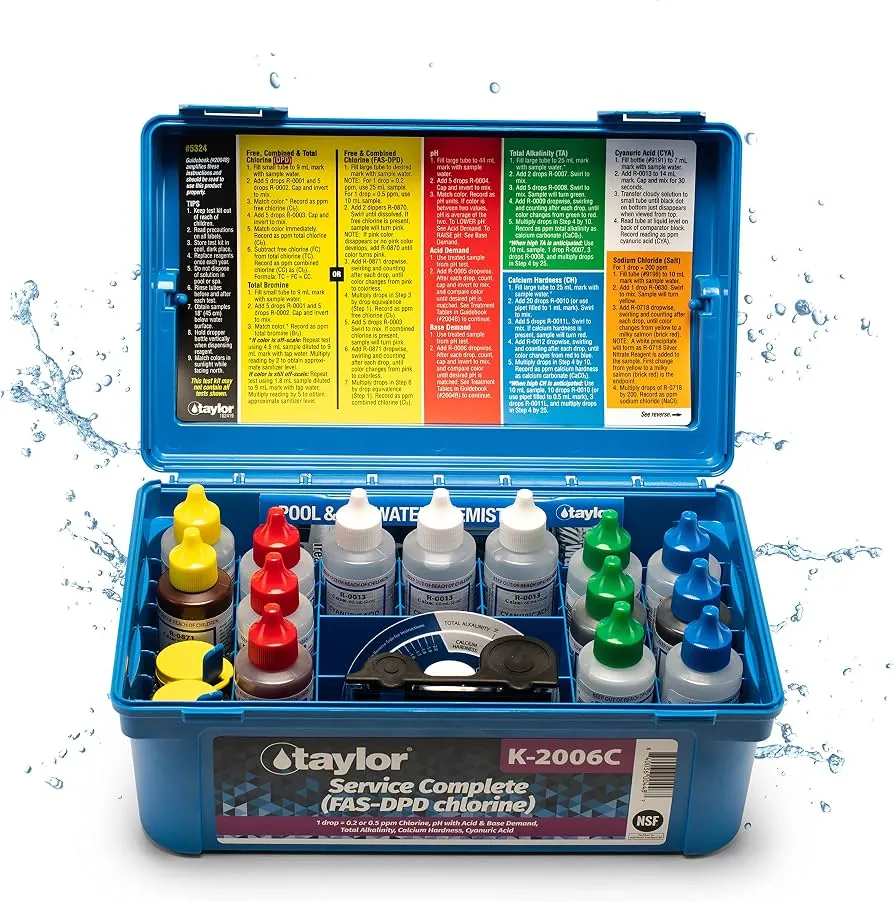
Performing the standard tests requires a systematic approach to ensure valid results. Begin by rinsing the sample cells with pool water three times to remove any residue from previous tests. Fill the cell to the marked line with fresh water. Add the appropriate reagent powder packet for the specific test you’re conducting. Swirl gently to dissolve the powder completely without creating excessive bubbles.
Warning: Never touch the inside of the sample cells with your fingers, as oils and contaminants can alter the chemical reaction and lead to false readings.
For alkalinity, add drops of the titrant until the color changes from blue to red. Count the drops carefully. For chlorine, follow the FAS-DPD steps described earlier. Record all numbers immediately in a logbook to track trends over time. Regular logging helps identify slow leaks or filtration issues before they become major problems.
Conducting the Cyanuric Acid Test
The cyanuric acid test found in the K-2006C operates on a turbidity principle rather than color change. You mix a specific amount of pool water with a reagent containing melamine, which reacts with cyanuric acid to form a cloudy precipitate.
You then look through the mixture at a black dot printed on the bottom of the test tube. As you add more reagent, the cloudiness increases until the black dot disappears from view. The number of drops added corresponds to the CYA level.
Interpreting Cloudiness Levels
Reading the result requires good lighting and a steady hand. Hold the tube at eye level and look down through the liquid. The endpoint is reached when the black dot is no longer visible. If the dot remains visible after adding the maximum recommended drops, the level is above the measurable range, indicating a need for partial water replacement. This test is slower than the chlorine titration but equally vital for outdoor pool health.
Pro Tip: Perform the CYA test in direct sunlight or under a bright lamp to ensure you can clearly see the black dot disappearing, as poor lighting is the most common cause of inaccurate readings.
Troubleshooting Common Testing Errors
Even experienced pool owners encounter issues with test results. A frequent problem is a fading color during the chlorine titration, which suggests the presence of oxidizing agents other than chlorine or a high pH level interfering with the reaction. Another issue is the failure of the CYA test to turn cloudy, which often indicates the water has been sitting too long before testing or the reagent has expired.
Fixing Unstable Readings
If your pH reading fluctuates wildly, check the buffer solution in the bottle. Old buffers lose effectiveness and produce erratic colors. Similarly, if the chlorine test never turns pink, the DPD powder may have degraded due to heat or humidity. Always store reagents in their original boxes away from direct sunlight and extreme temperatures. Replace any bottle that shows signs of clumping or discoloration.
Maintaining Your Reagent Supply
Chemical reagents have a finite shelf life, typically lasting about one year from the date of manufacture. After this period, the active ingredients degrade, leading to unreliable test results. Taylor Technologies recommends checking the expiration date printed on the bottle cap or label before each season begins. If you live in a hot climate, consider buying smaller quantities more frequently to avoid waste.
Storage Best Practices
Keep all bottles tightly capped when not in use to prevent moisture absorption. Store them in a cool, dry place, ideally below 75 degrees Fahrenheit. Avoid leaving the kit in a hot car or near a pool heater, as heat accelerates chemical breakdown. Proper storage extends the life of your investment and ensures every test yields accurate data.
Where to Buy Authentic Kits
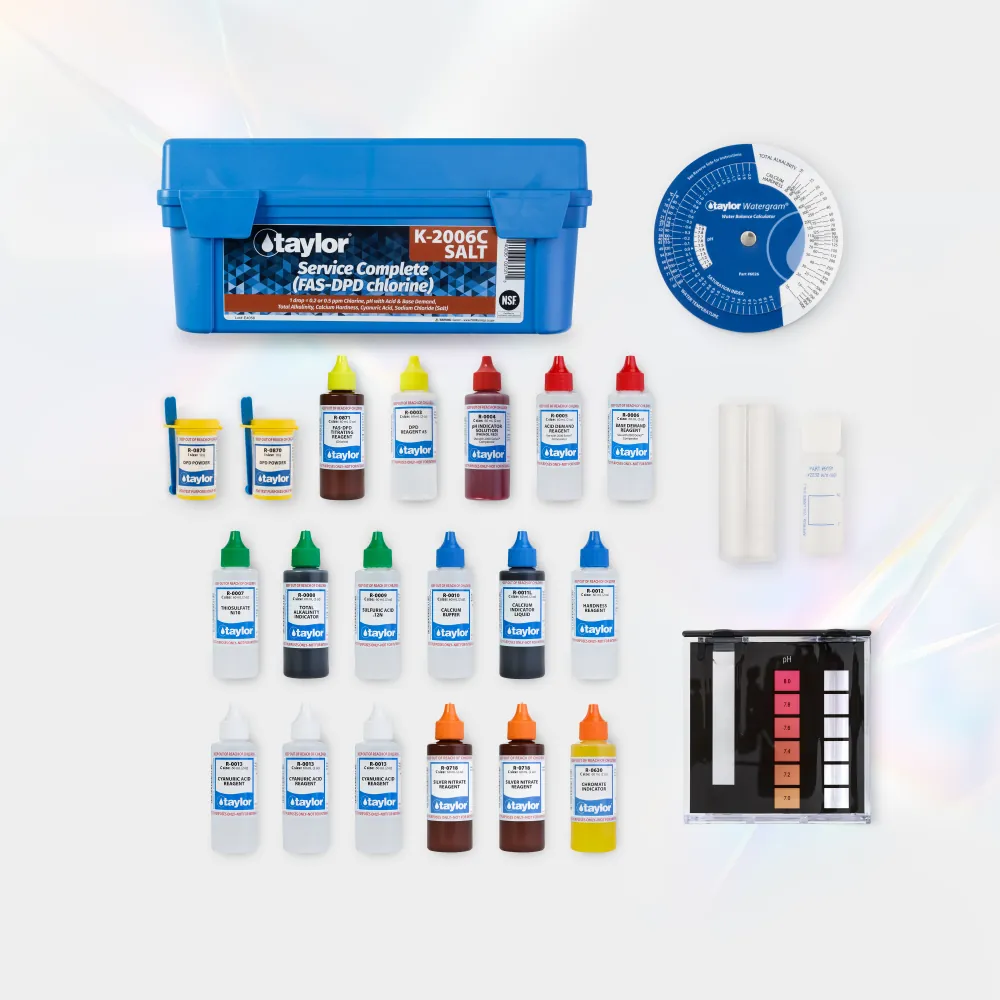
Purchasing from authorized dealers guarantees you receive genuine Taylor products with valid expiration dates. Many big-box retailers sell generic or outdated stock, so verify the manufacturer details before buying. Look for established pool supply chains that specialize in professional-grade equipment. Taylor Technologies official product page provides a list of authorized distributors and current product specifications.
Frequently Asked Questions
Can I buy just the CYA test separately?
Yes, Taylor sells a standalone cyanuric acid test kit, often labeled as the R-0014 or similar, which contains the necessary reagents. However, purchasing the full K-2006C is often more cost-effective if you also need to replace other reagents.
How often should I test my pool water?
Test free chlorine and pH daily during heavy usage or hot weather. Test alkalinity and calcium hardness weekly. Test cyanuric acid monthly or whenever you add stabilized chlorine products to the water.
What happens if my CYA level is too high?
High cyanuric acid levels reduce chlorine effectiveness, requiring massive amounts of sanitizer to achieve sanitation. The only fix is to drain a portion of the pool water and refill it with fresh water to dilute the concentration.
Why does my chlorine test turn pink then fade?
This usually indicates the presence of bromine instead of chlorine, or a very high pH level. If you use bromine, you must use a different test kit specifically designed for bromine measurement.
Are the reagents hazardous to handle?
Most reagents are mild acids or bases and are generally safe with proper handling. However, always wear gloves and eye protection, and avoid ingesting any chemicals. Wash hands thoroughly after use.
Can I use tap water for calibration?
No, tap water contains unknown levels of chlorine and minerals that will skew your baseline. Always rinse and fill your test cells with the actual pool water you intend to test.
Conclusion
Select the kit that matches your specific pool chemistry needs to ensure accurate, reliable water analysis every time. If you own an outdoor pool using stabilized chlorine, invest in the K-2006C today to gain full visibility into your water’s stability and safety.