
When it comes to plumbing, understanding the difference between an S trap and a P trap can save you from costly mistakes and frustrating repairs. You might not realize it, but the type of trap you use affects how well your drains work and whether unpleasant odors stay out of your home.
If you’ve ever wondered which one is right for your bathroom or kitchen, you’re in the right place. Keep reading to discover the key differences between S traps and P traps, and learn how to choose the best option for your plumbing needs.
This simple knowledge could make all the difference for your home’s comfort and hygiene.
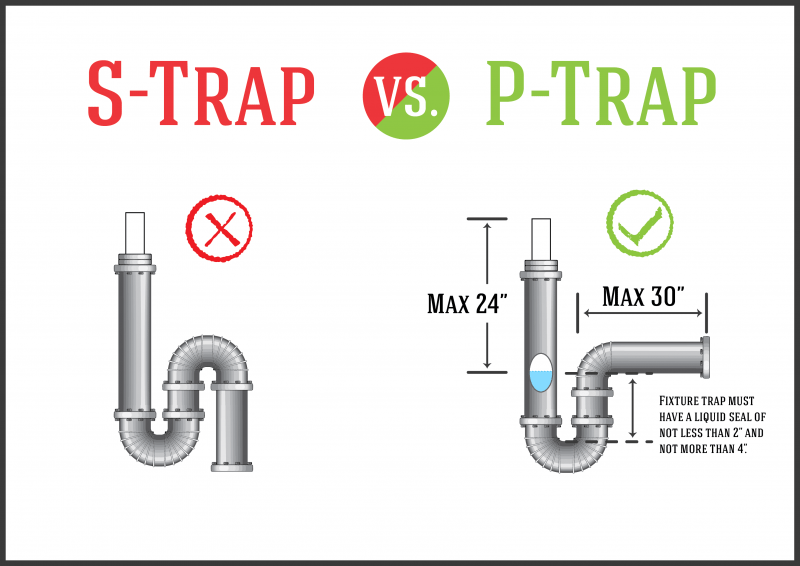
Credit: www.directinspections.com
Drain Trap Basics
Understanding drain traps is important for any plumbing system. They stop bad smells and keep your home safe. Drain traps come in different shapes and types. Knowing the basics helps you choose the right one for your needs.
This section explains what drain traps are and why they matter. It will give you clear and simple information.
What Is A Drain Trap?
A drain trap is a pipe shaped like a loop. It holds water to block sewer gases. This water barrier stops bad smells from coming inside.
Drain traps also help catch small objects. They prevent clogs by stopping debris from moving further into the pipes. You find drain traps under sinks, showers, and toilets.
Why Drain Traps Matter
Drain traps protect your home from harmful gases. These gases can cause health problems and bad odors. The water in the trap acts as a seal.
Without a trap, sewer gases can enter your living space. It also helps keep pests away. A good trap ensures smooth drainage and prevents pipe damage.

Credit: www.jlconline.com
S Trap Features
The S trap is a common plumbing fixture. It helps prevent bad smells from the sewer. This trap holds water in its bend. The water creates a seal that blocks sewer gases. Understanding its features can help you choose the right trap for your needs.
Design And Shape
The S trap looks like the letter “S.” It has two curves that form an S shape. Water sits in the lower curve to block gases. This design connects directly to the floor drain. It is simple but effective in sealing the pipe.
Common Applications
S traps are often used in older homes. They connect to toilets and floor drains. They are common in places with floor-level plumbing. The trap is easy to install in these spots. Many bathrooms still use S traps today.
Advantages And Drawbacks
The S trap is easy to install and cheap. It works well to stop sewer smells. But it has a problem with siphoning. Water can be pulled out, breaking the seal. This can let gases escape into the room. Because of this, some building codes do not allow S traps.
P Trap Features
The P trap is a common plumbing part found in many homes. It helps keep bad smells from coming back into the house. This part uses water to block gases from drains.
Understanding the features of a P trap can help you see why it is popular in plumbing systems.
Design And Shape
The P trap has a unique shape that looks like the letter “P”.
It has a curved pipe that holds water in a small bend. This water acts as a seal against sewer gases.
The design allows easy cleaning and prevents clogs. Most P traps are made of metal or plastic.
Common Applications
P traps are mostly used under sinks in kitchens and bathrooms.
They also fit well with bathtubs and showers. These traps work with most household drains.
Their design suits places where water flow is steady but not too strong.
Advantages And Drawbacks
The P trap stops bad smells from entering rooms. It also helps catch small objects dropped down the drain.
Cleaning is simple by removing the trap. It is also easy to install and replace.
One drawback is that the trap can dry out if unused. This allows smells to come back.
It can also clog if hair or debris builds up inside.
Key Differences
The S trap and P trap serve the same main function: to stop sewer gases from entering your home. They both create a water barrier. Yet, they differ in design and use. Understanding these differences helps in choosing the right trap for your plumbing.
Installation Methods
The S trap connects directly to the floor drain. It bends downward into the drainpipe below. This setup often needs a tight seal to prevent leaks. The P trap attaches to a wall drain. It has a horizontal outlet that leads into the wall pipe. Installation is easier with standard plumbing fittings. Many local codes prefer the P trap.
Ventilation Requirements
The S trap often lacks proper venting. Without venting, water can siphon out and break the seal. This causes bad odors to enter living spaces. The P trap is designed with venting in mind. It connects to a vent pipe that equalizes air pressure. This keeps the water seal stable and odors out.
Water Seal And Odor Control
Both traps hold water to block sewer gases. The P trap’s shape helps maintain this water seal longer. It resists siphoning better than the S trap. The S trap can lose its seal if venting is poor. This allows foul smells to escape. Proper maintenance is key for both traps to work well.
Building Codes And Regulations
Building codes and regulations ensure safe and effective plumbing systems. They set rules for installing traps like S traps and P traps. These codes protect homes from sewer gases and water damage. Understanding these rules helps avoid costly mistakes.
Compliance Factors
Building codes require traps to prevent sewer gas from entering buildings. P traps are often favored because they maintain a water seal better. S traps can lose their seal, causing bad odors and health risks. Codes may ban S traps in many areas for this reason. Proper venting and trap size also matter in compliance.
Regional Variations
Building codes vary by state and country. Some regions still allow S traps with specific conditions. Others completely prohibit S traps and only accept P traps. Local authorities may have unique rules on trap installation. Checking local codes before plumbing work avoids code violations and fines.
Choosing The Right Trap
Choosing the right trap for your plumbing is important. The trap prevents sewer gases from entering your home. It also helps to stop clogs and keeps the drain working smoothly. Picking between an S trap and a P trap depends on several factors. Each trap has different features that suit different plumbing setups.
Knowing your needs helps to pick the best option. Consider the space, pipe layout, and local plumbing codes. These points guide your choice and ensure your system works well.
Assessing Plumbing Needs
Check the location of your drain pipe. S traps connect directly to floor drains. P traps fit best with wall drains under sinks. Also, think about the pipe size and shape. Your plumbing setup may not allow one type of trap. Local building codes may require a specific trap. Always follow these rules to avoid future issues.
Considering Maintenance
Both traps need regular cleaning to prevent clogs. P traps are easier to clean and inspect. S traps can cause more blockages because they lose water seal faster. Choose a trap that matches your comfort with maintenance. Easy-to-clean traps save time and reduce plumbing problems.
Cost And Availability
Prices for S traps and P traps are similar. Availability depends on your local hardware stores. P traps are more common and easier to find. S traps might be harder to get in some areas. Consider installation costs too. Some traps require extra parts or special skills. Factor all costs before deciding on a trap type.
Troubleshooting Common Issues
Troubleshooting common issues in S traps and P traps helps keep your plumbing working well. Knowing the differences between these traps can solve problems faster. This section covers common problems and easy fixes. You will learn about leaks, blockages, siphoning, and odor prevention.
Leaks And Blockages
Leaks often happen at trap joints or pipe connections. Check for loose fittings and tighten them carefully. Blockages form from hair, soap, or food debris. Use a plunger or drain snake to clear clogs. Avoid harsh chemicals, which can damage pipes.
Siphoning Problems
Siphoning happens when water in the trap gets sucked out. This breaks the water seal and lets sewer gas enter your home. It can occur if vent pipes are blocked or missing. Inspect vents and clear any obstructions. Installing proper venting prevents siphoning issues.
Odor Prevention Tips
Odors come from dry traps or sewer gas leaks. Pour water into unused drains weekly to keep traps full. Fix leaks quickly to stop gas escape. Clean traps regularly to remove buildup. Good ventilation also helps reduce bad smells.
Installation Tips
Choosing between an S trap and a P trap affects drainage and odor control. S traps are simpler but may cause siphoning. P traps hold water to block sewer gases and work better in most cases.
Tools And Materials
Gather all needed tools and materials before starting. You will need a pipe wrench, plumber’s tape, a hacksaw, and a bucket. Also, have the S trap or P trap ready. Don’t forget pipe connectors and sealant. These items help ensure a smooth installation process.
Step-by-step Guide
First, turn off the water supply. Place a bucket under the trap to catch water. Remove the old trap by loosening the slip nuts. Clean the pipe ends before fitting the new trap. Align the trap properly with the drain and waste pipe. Tighten the slip nuts by hand, then use a wrench for a secure fit. Check for leaks by running water through the drain. Tighten connections if needed. Make sure the trap shape matches your plumbing layout. S traps fit through floors; P traps connect to walls.
Professional Vs Diy
DIY installation saves money and can be quick. Choose this if you have basic plumbing skills. A professional plumber offers expert work and ensures code compliance. Complex plumbing layouts or old pipes need professional help. Professionals detect hidden issues that you may miss. Assess your comfort level before starting the job yourself. Sometimes, hiring a plumber prevents costly mistakes later.

Credit: hofensanitary.com
Frequently Asked Questions
What Is The Main Difference Between S Trap And P Trap?
S Traps connect directly to the floor drain; P Traps connect to the wall drain.
Which Trap Is Better For Modern Plumbing Systems?
P Traps are better because they fit wall drains and prevent sewer gases effectively.
Can S Traps Cause Plumbing Problems?
Yes, S Traps can lose water seal and allow bad smells to enter the home.
Are P Traps Easier To Install Than S Traps?
P Traps are usually easier to install due to standard wall drain connections.
Where Is An S Trap Commonly Used?
S Traps are often used in older homes with floor drain plumbing setups.
How Do P Traps Prevent Sewer Gas From Entering The Home?
P Traps hold water in the curve, blocking sewer gases from coming back up.
Conclusion
Choosing between an S trap and a P trap depends on your plumbing needs. Both stop bad smells from coming up through drains. The P trap is common and works well in many homes. The S trap may cause problems with water flow or suction.
Proper installation matters a lot for either trap. Know your local plumbing rules before making a choice. Good traps keep your home clean and fresh. Simple, effective, and easy to maintain—pick the right one for your pipes.