
Have you ever wondered whether a pool uses saltwater or chlorine to keep its water clean and clear? Knowing the difference isn’t just about curiosity—it can help you understand maintenance, safety, and even how the water feels on your skin.
Whether you’re thinking about buying a pool, renting a place with one, or just want to impress friends with your pool knowledge, this guide will show you simple ways to tell if a pool is saltwater or chlorine. Keep reading, and you’ll discover easy tips you can use right away.
Differences Between Saltwater And Chlorine Pools
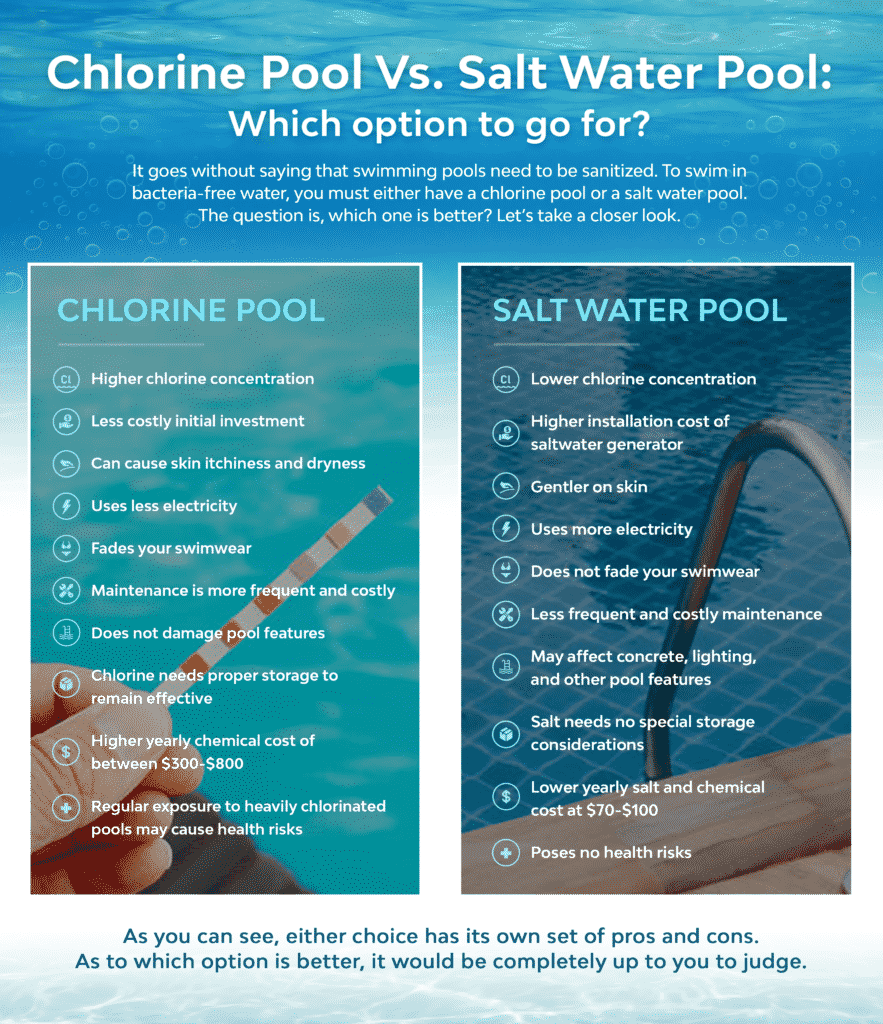
Saltwater and chlorine pools look alike but work differently. Knowing their differences helps you care for your pool better. These two types vary in chemicals, upkeep, and the way water feels and smells.
Chemical Composition
Saltwater pools use salt and a generator to make chlorine. The salt breaks down and creates chlorine slowly. Chlorine pools get chlorine added directly. This means saltwater pools have less chlorine added by hand.
Maintenance Requirements
Saltwater pools need less frequent chlorine checks. The salt system keeps chlorine levels steady. Chlorine pools need chlorine added often. They require more testing to keep water safe. Saltwater pools also need the salt cell cleaned sometimes.
Water Feel And Smell
Saltwater pools feel softer on the skin. Their water is less harsh and less drying. Chlorine pools may have a stronger chemical smell. The water can feel rougher on the eyes and skin. Saltwater pools usually have a milder, fresher scent.
Credit: katchakid.com
Visual Clues Around The Pool Area
Visual clues around the pool area help identify if a pool is saltwater or chlorine. These signs are easy to spot and can tell you a lot without testing the water. Observing the pool equipment and water itself gives clear hints. Here are some common visual indicators.
Presence Of Salt Chlorine Generator
Saltwater pools often have a salt chlorine generator near the pool. This device looks like a small box connected to the pool system. It converts salt into chlorine to keep the water clean. If you see a unit labeled “salt cell” or “salt generator,” the pool is likely saltwater.
Pool Equipment And Labels
Check the pool pump and filter area for labels. Saltwater pool systems usually have labels mentioning “salt” or “chlorine generator.” Chlorine pools may show labels with “chlorinator” or just the brand name of chlorine tablets. Equipment rust or corrosion near metal parts can indicate saltwater presence.
Water Clarity And Color
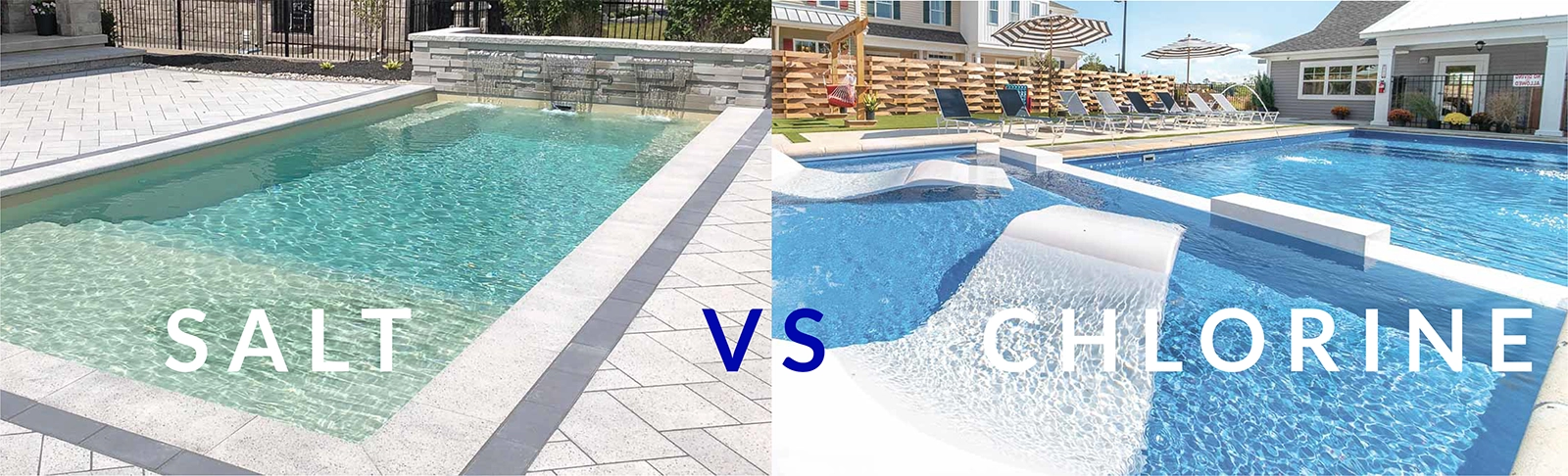
Saltwater pools often have sparkling, clear water with a slight blue tint. Chlorine pools may look clear but sometimes have a greenish or cloudy tone if not well maintained. Saltwater pools feel softer on the skin and have less strong chlorine smell. Water color and clarity provide useful clues about the pool type.
Testing The Water Yourself
Testing the water yourself is a simple way to find out if a pool uses saltwater or chlorine. You do not need special skills. Basic tools can give clear results. These tests help you understand the pool water better. They also help keep the pool safe and clean.
Using Salt Test Kits
Salt test kits measure the salt level in pool water. Dip the test strip or use a liquid test. The kit shows the salt concentration. Saltwater pools have higher salt levels, usually around 2700-3400 ppm. Low salt levels mean the pool likely uses chlorine instead.
Chlorine Test Strips
Chlorine test strips detect chlorine amount in the water. Dip the strip and wait a few seconds. Compare the color change to the chart. Chlorine pools show moderate to high chlorine levels. Saltwater pools use chlorine too, but often at lower levels. This helps keep the water safe.
Ph And Alkalinity Levels
Check pH and alkalinity with test kits. Saltwater pools usually have stable pH between 7.4 and 7.6. Chlorine pools may show more pH swings. Alkalinity helps balance the water. Both pool types need good alkalinity for comfort and safety. Testing these levels helps maintain water quality.
Credit: exploreindustries.com
Asking The Right Questions
Asking the right questions helps you find out if a pool uses saltwater or chlorine. This step saves time and avoids guesswork. It also gives clear answers about pool care and safety. Asking questions can reveal important details about pool type and maintenance.
Pool Owner Or Manager Inquiry
Start by asking the pool owner or manager directly. They know the pool’s setup and chemicals used. Simple questions like “Do you use salt or chlorine?” can give quick answers. They can also explain how they keep the water clean and balanced.
Checking Maintenance Records
Look at the pool’s maintenance records if available. These records often list the chemicals used and cleaning schedules. Saltwater pools need special salt cell checks. Chlorine pools show regular chlorine level tests. Records give proof of what the pool uses.
Local Regulations And Preferences
Local rules sometimes guide pool types in your area. Some places prefer saltwater pools for health or environment reasons. Others may require chlorine pools for safety. Knowing local preferences can hint at what type of pool you are dealing with.
Common Misconceptions To Avoid
Many people confuse facts about saltwater and chlorine pools. These common misconceptions can make it hard to tell the difference. Knowing the truth helps you care for your pool better. It also saves money and time.
Saltwater Pools Are Maintenance-free
Saltwater pools need regular care like chlorine pools. The salt system creates chlorine but does not remove maintenance. You must check salt levels and clean the system parts. Filters and pumps also need attention. Saltwater pools are easier in some ways but not free of work.
Chlorine Pools Always Smell Strong
A strong smell does not mean a pool is chlorine-based. Sometimes, it shows too much chlorine is in the water. Proper chlorine balance keeps the smell low. Saltwater pools also use chlorine, just made on-site. Smell depends on chemical levels, not pool type.
Saltwater Pools Are Always Expensive
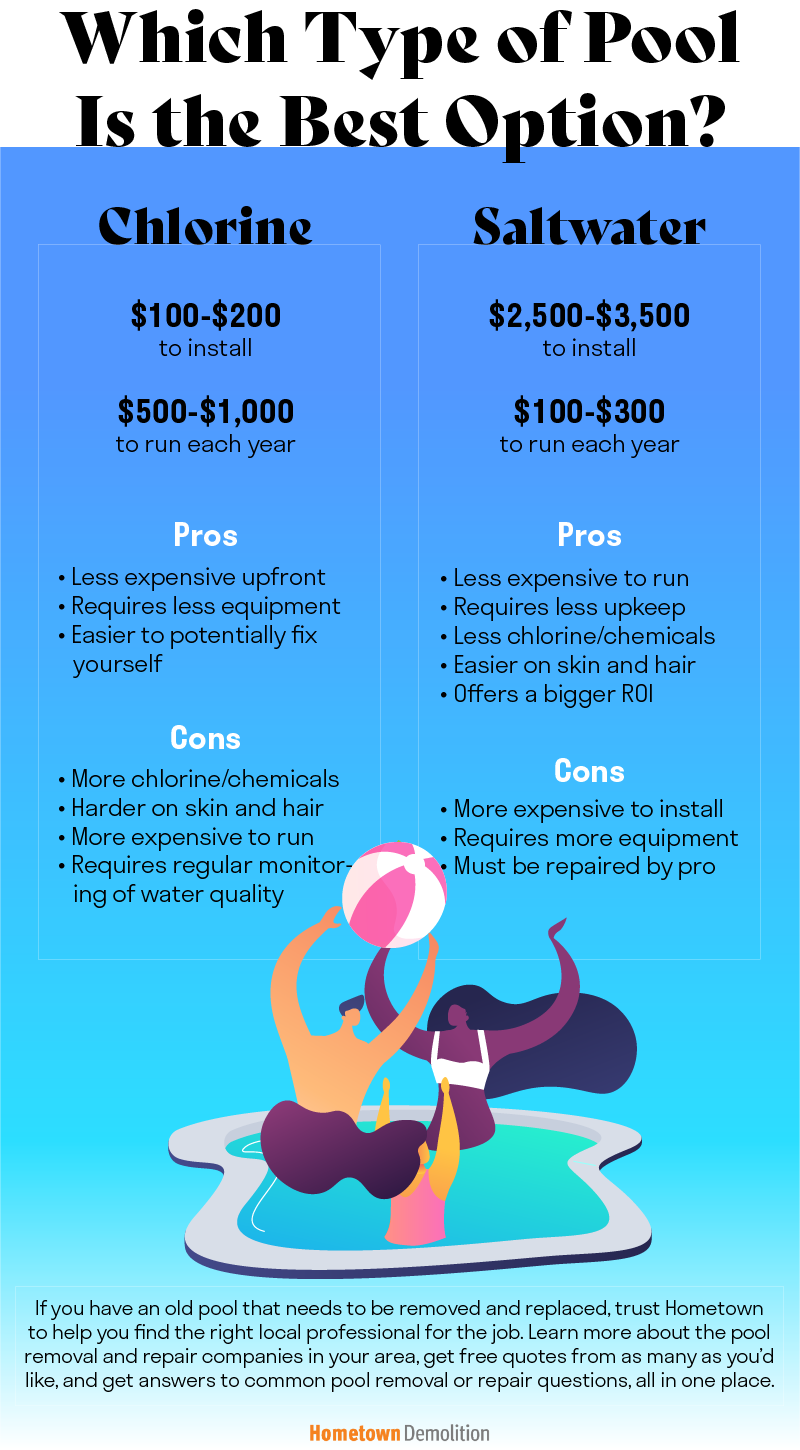
Saltwater pools may cost more at first. The salt system and installation add to the price. But they save money over time on buying chlorine. Chlorine pools have lower start costs but higher supply costs. Saltwater pools can be cost-effective long term.
Credit: www.hometowndemolitioncontractors.com
Frequently Asked Questions
How To Identify A Saltwater Pool Visually?
Saltwater pools often have a salt cell or generator near the pump system.
What Does Saltwater Pool Water Taste Like?
Saltwater pool water tastes slightly salty, unlike chlorine pools which have no salt taste.
Can You Test Pool Water To Know Its Type?
Yes, salt test strips or kits can confirm if a pool is saltwater.
Does Saltwater Pool Water Feel Different On Skin?
Saltwater pools feel softer and less harsh on the skin compared to chlorine pools.
How Does Chlorine Smell Differ In Saltwater Pools?
Saltwater pools usually have little to no strong chlorine smell.
Is Pool Maintenance Different For Saltwater And Chlorine Pools?
Yes, saltwater pools need salt level checks, while chlorine pools require regular chemical addition.
Conclusion
Knowing how to tell if a pool is saltwater or chlorine helps you understand pool care better. Saltwater pools feel softer and use a salt system to clean water. Chlorine pools have a stronger smell and rely on added chemicals.
Checking the pool’s equipment or water test can give clear answers. This knowledge helps you enjoy swimming safely and keep the water clean. Simple steps make pool care easier for everyone. Keep your pool healthy by knowing what type it is.