
The choice of the best water softeners often depends on your home’s plumbing size and the total hardness of your water supply. These systems, which include salt-based ion exchangers, salt-free conditioners, and reverse osmosis units, work by removing or neutralizing minerals that cause buildup in pipes and appliances. While they all aim to improve water quality, they differ significantly in their mechanical approach and the specific minerals they target.
Comparison of popular water treatment systems
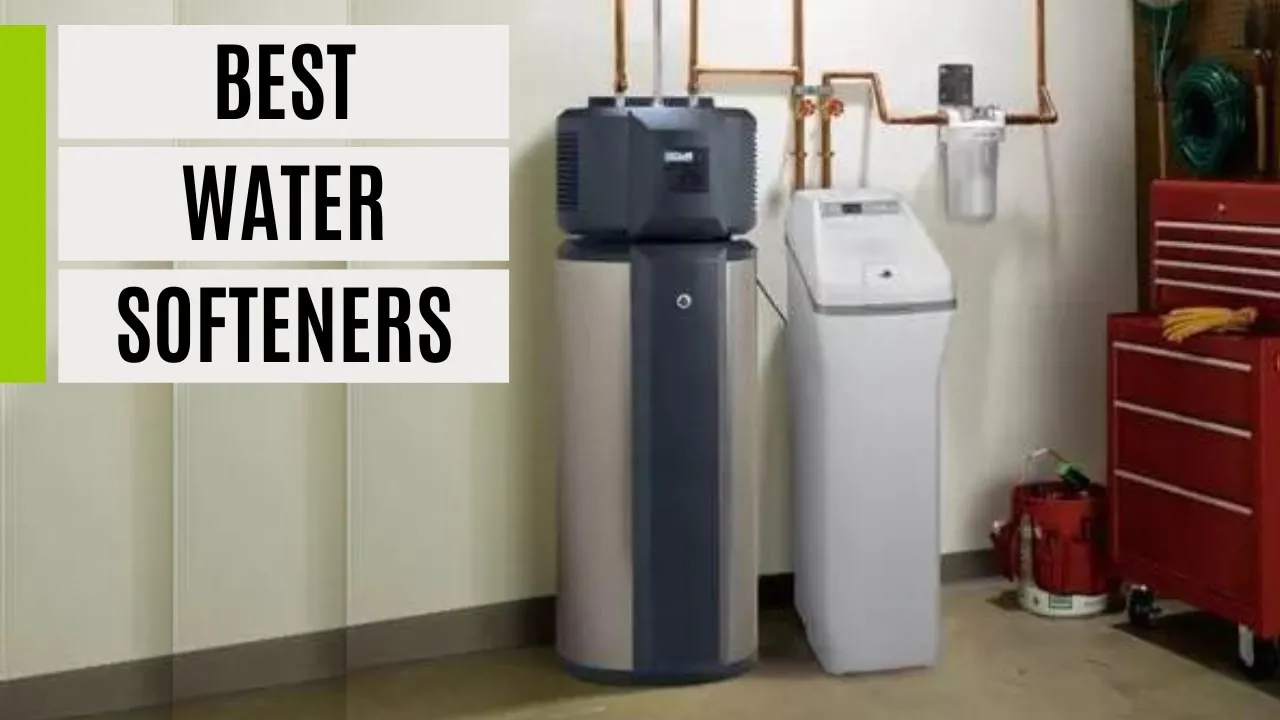
| System type | Best use case | Common example |
|---|---|---|
| Salt-based exchanger | Removing hard minerals | Ion exchange resin tank |
| Salt-free conditioner | Preventing scale buildup | Template-assisted crystallization |
| Dual-tank system | Continuous soft water | Twin-tank resin unit |
| Reverse osmosis | High-purity drinking water | Multi-stage membrane filter |
Salt-based exchangers are the only choice if you need to physically remove calcium and magnesium. They replace these minerals with sodium ions, which prevents soap scum in showers. If you live in an area with water hardness exceeding 10 grains per gallon, this is the industry standard.
Salt-free conditioners don’t remove minerals. Instead, they alter the crystalline structure of calcium so it can’t adhere to pipes. Choose this if you want to protect your plumbing without dealing with heavy salt bags or brine discharge. However, these units fail if your water has high levels of iron or manganese, which will foul the media.
Dual-tank systems solve the downtime issue of single-tank units. A single tank must regenerate at night, leaving you without soft water for hours. If your household uses more than 150 gallons of water daily, the dual-tank design ensures one unit is always active.
Reverse osmosis is for point-of-use filtration, not whole-home treatment. It forces water through a semi-permeable membrane to strip out 99% of dissolved solids. Install this under your kitchen sink for drinking and cooking. Don’t attempt to run your entire house through an RO system unless you’re prepared to manage a massive waste-water ratio, which often reaches three gallons of waste for every gallon of purified water produced.
Salt-based ion exchange softeners
A salt-based ion exchange system is the most effective method for physically removing calcium and magnesium ions from your household water. It suits homeowners who have high water hardness levels and want to protect their plumbing and water-using appliances from scale damage. This process requires a brine tank and a resin bed to trade hard minerals for sodium or potassium ions.
- Physical removal of hardness minerals ensures that soap lathers effectively in showers and sinks.
- Reduced scale buildup extends the lifespan of internal heating elements in dishwashers and water heaters.
- The system regenerates automatically based on water usage, which saves salt and water over time.
If you have a home with three bathrooms and a family of four, a standard 40,000-grain capacity unit is usually sufficient for daily needs.
You must monitor the salt level in the brine tank monthly to ensure the unit functions correctly; if the salt bridges or runs out, the resin beads can’t recharge, and your water will remain hard. For specific capacity requirements, check your NSF International water quality standards to see which certified models match your household’s flow rate and hardness levels.
Salt-free water conditioners
A salt-free water conditioner uses template-assisted crystallization to alter the structure of minerals so they don’t stick to surfaces. It suits those who want to prevent scale formation without adding sodium to their water or needing a drain line for regeneration. Unlike ion exchangers, these systems don’t remove minerals, meaning the water remains technically “hard” even if it doesn’t leave scale.
- Maintenance requirements are minimal because there’s no brine tank to refill or backwash cycles to manage.
- The compact design fits easily in tight spaces where a traditional two-tank system would be too large.
- No water is wasted during operation since the process doesn’t require a discharge cycle.
If you live in a small apartment or a home with limited space, a single-cartridge conditioner can be installed under the main water line entry point. You should replace the media filter every 12 to 24 months, depending on your local water quality and total usage volume. If you notice persistent scale on faucets despite having a conditioner, it may mean your water hardness exceeds the limits of the media’s crystallization capacity.
Dual-tank water softeners
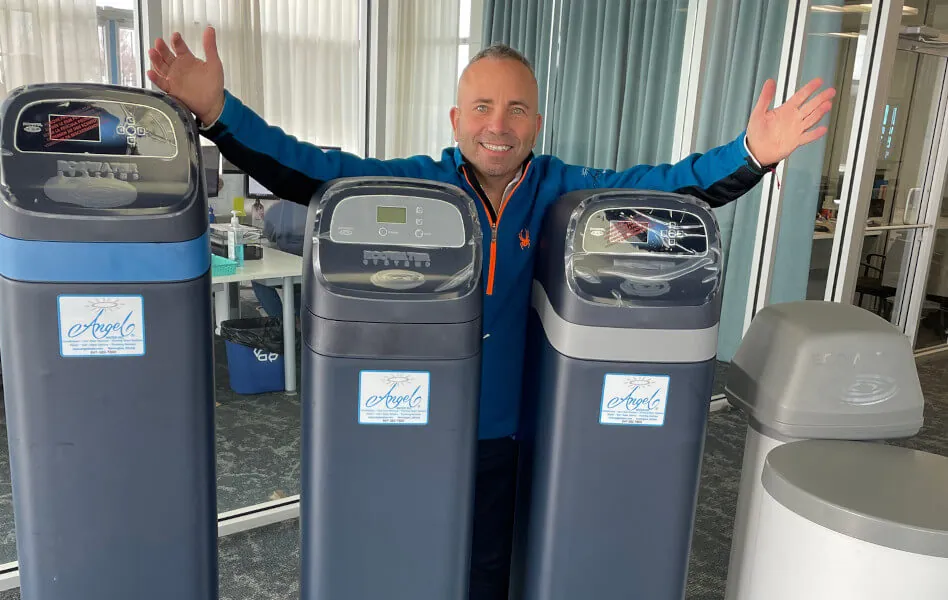
A dual-tank softener provides a constant supply of softened water by alternating between two resin tanks. It suits large households or families who use water at all hours of the day and can’t afford a downtime period for regeneration. While one tank is busy cleaning itself, the other remains active to ensure your water quality never drops.
Continuous soft water supply is guaranteed because the system switches tanks automatically as needed. You avoid the common trap of scheduling regeneration for 2:00 a.m., only to find your family’s late-night habits or early-morning showers still trigger hard water spikes.
Higher efficiency is achieved because the system uses soft water to clean the resin during the regeneration phase. Because the brine solution is free of minerals, the resin beads remain cleaner and more effective over time. This process reduces the salt waste that often plagues single-tank units.
System longevity is improved as each tank works half as often as a single-tank equivalent. If your household uses more than 300 gallons of water daily, a dual-tank system pays for itself within five years by delaying the inevitable degradation of the resin bed.
Measure your installation area carefully before purchase. These units typically require a footprint of at least 30 inches by 20 inches. If your basement or utility closet lacks this clearance, you’ll struggle to access the brine tank for salt refills, which costs you in maintenance time and potential spills.
Check your home’s peak flow rate before committing. If you have a high-flow plumbing system with multiple bathrooms, ensure your unit has a control valve rated for at least 12 gallons per minute. Anything less will cause a noticeable pressure drop when two showers run simultaneously.
These systems aren’t for homeowners with limited space or low water usage. If your household consists of two people or fewer, the extra cost of the second tank is unnecessary. You’re better off with a high-capacity single-tank unit, which provides the same benefit at a lower entry price and a smaller physical footprint.
Reverse osmosis systems
A reverse osmosis system utilizes a semi-permeable membrane to strip dissolved solids, chemicals, and microscopic impurities from your drinking water. It’s the gold standard for those prioritizing absolute purity for consumption rather than treating the entire home’s supply. This process excels where standard softeners fail, specifically targeting lead, arsenic, and fluoride ions.
Multi-stage filtration handles the heavy lifting. A sediment filter catches rust and dirt, a carbon block removes chlorine and volatile organic compounds, and the final membrane captures dissolved salts. This layered approach eliminates the earthy or chemical notes often found in municipal supplies, creating a neutral profile that elevates the flavor of coffee and tea.
You should install a dedicated faucet for this system. By keeping the treated water separate from the main kitchen tap, you avoid wasting high-purity water on tasks like washing dishes or rinsing produce. This separation extends the lifespan of your filters by hundreds of gallons per year.
Most residential units produce 50 to 75 gallons of treated water daily, provided your incoming pressure holds steady at 60 psi. If your home’s pressure sits below 40 psi, the membrane can’t force water through its pores effectively. In this case, you must install an electric booster pump to maintain the necessary flow. Without one, the system will dump excessive water down the drain as waste while producing only a fraction of its rated capacity.
Monitor your drain-to-product ratio to gauge system health. If you notice the system is constantly running or the tank takes a long time to refill, your membrane is likely fouled. The frequency of replacement depends on your specific water usage and quality; consult your owner’s manual for guidance.
If your water develops a metallic tang or the flow rate drops to a persistent trickle, don’t simply replace the pre-filters. The membrane itself has likely reached its capacity for mineral accumulation. Test your water with a handheld TDS meter before and after the system.
If the reduction rate falls below 85 percent, the membrane is no longer performing its primary duty and must be discarded. Always flush the new membrane for at least 30 minutes before consuming the output to clear out the protective storage solution used during shipping.
Other water treatment options
Magnetic descalers use electromagnetic fields to alter the electrical charge of minerals, preventing them from adhering to pipe walls. They work best for homeowners dealing with low-to-moderate hardness levels who want a non-invasive, zero-maintenance solution. However, they don’t actually remove minerals or soften the water. If you see white spots on your glassware or feel a film on your skin after showering, these devices won’t solve the problem. They’re strictly for protecting your plumbing infrastructure from long-term buildup.
Template-assisted crystallization (TAC) cartridges offer a more robust alternative for point-of-use applications. These systems use a specialized resin to convert dissolved calcium and magnesium into microscopic, inert crystals that can’t stick to surfaces. They’re the gold standard for protecting high-end espresso machines or tankless water heaters where even minor scale accumulation triggers expensive sensor failures.
Choose TAC if your primary goal is equipment longevity rather than water texture. If you notice your tankless unit’s flow rate dropping or your coffee machine’s heating element failing prematurely, install a TAC cartridge immediately upstream of the appliance. Unlike magnetic systems, TAC requires periodic media replacement, typically every 12 to 24 months. If you ignore the replacement schedule, the crystals lose their effectiveness, and you’ll find your heating elements coated in scale again within weeks.
Distinguish between these two by your end goal. If you simply want to prevent your pipes from clogging over the next decade, a magnetic descaler is sufficient. If you’re protecting a sensitive, high-heat appliance that’s prone to scale-related error codes, invest in a TAC system. You can’t rely on a magnetic device to save a high-efficiency boiler.
How to choose the right system
Deciding which system fits your home starts with testing your water hardness, measured in grains per gallon (GPG). Use a titration drop test kit rather than a simple test strip to ensure accuracy. If your result exceeds 7 GPG, a salt-based ion exchanger is necessary to achieve true softness.
For hardness between 3 and 7 GPG, a salt-free conditioner or high-efficiency softener may suffice. If you see white crusting on faucets or notice soap failing to lather, prioritize the ion exchanger regardless of the GPG reading. Scale buildup is a reliable indicator that your water mineral content is actively damaging your plumbing.
Next, consider your available space and maintenance habits. If you have a garage or basement with a floor drain, a salt-based system is the standard choice. These units require regular salt refills and periodic flushing. If you lack space or a dedicated drain line, look at salt-free conditioners or point-of-use reverse osmosis units.
Check your household’s total water consumption to ensure the system’s grain capacity can handle your daily demand. A standard family of four typically requires a system rated for at least 30,000 grains to avoid constant regeneration. If you choose a unit too small for your flow rate, the resin bed will exhaust prematurely, forcing the system to cycle daily and wasting hundreds of gallons of water.
These systems aren’t interchangeable. Picking a salt-free unit when you need true softening will result in lingering scale issues that eventually clog your water heater elements. Conversely, choosing a salt-based unit when you only have minor scale is often more work than required.
If your primary goal is protecting appliances, prioritize capacity. If your goal is skin comfort and soap efficiency, prioritize the ion exchange process. Always confirm your local plumbing codes before installation, as some municipalities restrict the discharge of brine from salt-based softeners into septic systems.
Frequently asked questions
Can I install a water softener by myself?
You can install most systems if you have basic plumbing skills and the right tools. You must shut off the main water line and connect the unit using compression fittings or soldering. If you’re uncomfortable working with pressurized pipes or specialized materials, hire a licensed plumber.
How long do water softeners last?
A high-quality salt-based softener typically lasts 10 to 15 years with regular maintenance. The lifespan depends heavily on your local water quality, specifically the level of chlorine, which can degrade resin beads over time. If the water feels hard after a salt refill, the resin may be exhausted.
Does a water softener make water taste salty?
No, a properly functioning softener shouldn’t make your water taste salty. During the ion exchange process, the amount of sodium released is very small compared to common foods. If you detect a salty taste, the system’s regeneration cycle may be malfunctioning or the salt dosage settings are too high.
Is softened water safe for plants?
Yes, the excess sodium in softened water can be harmful to sensitive houseplants and garden beds. Most indoor plants are sensitive to sodium buildup in the soil, which can lead to leaf burn. Use a bypass valve to route unsoftened water to your outdoor spigots to protect your greenery.
Why is my water softener using so much salt?
A softener using excessive salt often points to an incorrect regeneration schedule or a faulty sensor. If the system is set to regenerate too frequently, it will consume salt even when not needed. Check the controller’s settings against your actual water hardness to ensure the cycle is efficient.
What happens if I run out of salt?
If you run out of salt, the ion exchange process stops and your water will return to its hard state. The resin beads will no longer be able to trade minerals, causing scale to form in your pipes. Refill the brine tank as soon as the level drops.
Conclusion
Start by testing your water to determine the exact hardness level in grains per gallon. Once you have this number, compare it to the capacity of the models you’re considering to ensure the unit can handle your household’s daily volume.