
Draining part of the water and refilling it with fresh water is the fastest way to lower chlorine in hot tub naturally. This method works immediately because it physically removes the chemical rather than trying to neutralize it with additives. The final level depends on how much water you replace, your current chlorine reading, and the size of your spa. If you have a very high reading, you might need to change half the tank. If the level is just slightly too high, swapping out a quarter of the water often solves the problem.
You must also consider your bather load and recent weather. Heavy use or rain can spike levels quickly, changing how much water you need to swap. A large family using the tub daily will see faster buildup than a couple who uses it once a week. Always test the water after every refill to confirm the new balance before adding any chemicals back in.
Who needs to lower chlorine naturally
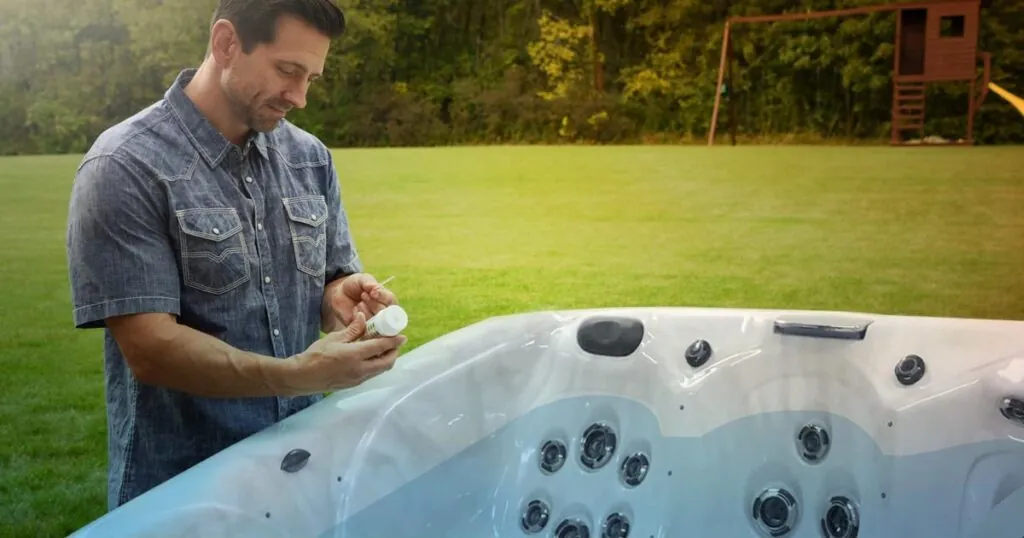
This page serves owners who see a chlorine test strip turn dark purple or red and want to fix it without buying special neutralizing drops. These readers usually have a standard home spa with a digital tester or simple strips. They understand basic terms like “parts per million” but don’t want to mix complex acids or wait days for a reaction. They need a safe, immediate solution that doesn’t require draining the entire unit.
The advice here assumes you have access to a garden hose and a pump or drain valve. It also assumes your heater and filter are working correctly so you can run the jets during the process. If your chlorine is off the charts due to a massive overdose from a shock treatment, this guide helps you dilute it safely.
However, if your water smells like rotten eggs or looks cloudy despite low chlorine, you likely have a different bacterial issue. In that case, you shouldn’t try to adjust levels yourself. Instead, call a professional service to sanitize the plumbing and check the heater. This guide isn’t for commercial pools or public spas, as they follow strict health codes that require specific chemical treatments and logging.
What changes the result
The volume of water you remove is the single biggest factor in how fast the chlorine drops. Removing 25% of the water lowers the concentration by roughly one-quarter, while removing 50% cuts it in half. You can calculate this by checking your tub’s total capacity in the owner’s manual. Many people guess the size, which leads to over-dilution or under-dilution.
The temperature of your spa also affects how quickly chlorine dissipates on its own. Hotter water accelerates the breakdown of chlorine through increased chemical reaction rates and UV exposure if the cover is off, but chlorine itself doesn’t simply evaporate like water.
However, relying on heat alone is risky because it takes time and wastes energy. A cooler tub might hold onto high chlorine levels for days if you don’t add fresh water. This is why drainage is more reliable than waiting for evaporation.
Your current bather load determines how fast the level rises again after you fix it. If four people jump in right after you lower the chlorine, sweat and oils will create new sanitizer demand as the chlorine binds with these contaminants.
This forces the chlorine to bind with contaminants, making the water feel harsh even if the number looks correct. The most common mistake people make is ignoring the source of the contamination. They lower the number but don’t clean the filter, so the chlorine spikes again within hours.
Step by step
- Turn off the power to the hot tub at the breaker panel to ensure safety while you work. Don’t touch any electrical components near the water.
- Test the current chlorine level with a liquid drop kit or high-quality strip to get an accurate starting number. Write this down so you can compare it later.
- Attach a garden hose to the drain valve located at the bottom of your spa shell or cabinet. Run the other end to a suitable drainage area away from plants.
- Open the valve and let the water flow out until you reach your target removal amount, such as 25% or 50% of the total volume. Use a bucket to measure if you’re unsure of the flow rate.
- Close the drain valve tightly and disconnect the hose before turning the power back on at the breaker.
- Fill the tub with fresh, cool water from your hose until it reaches the normal operating level marked inside the shell.
- Turn on the jets and let them run for at least 15 minutes to mix the new water thoroughly with the old water.
- Wait another 15 minutes for the water to settle, then test the chlorine level again with your kit.
- If the level is still too high, repeat the process by draining another 10-15% of the water and refilling.
- Once the level is between 1 and 3 parts per million, add your regular sanitizing dose if needed to maintain protection.
The critical judgement call here is knowing when to stop draining. If you drain too much, you waste money on heating the new water and risk damaging the pump by running it dry. If you stop too soon, the chlorine remains irritating to your skin.
Trust the test strip over your gut feeling; if the color matches the middle of the chart, you’re done. Never skip the mixing step, as fresh water sitting on top of old water will give a false low reading.
If your chlorine level is extremely high (over 10 ppm) due to a chemical accident, don’t enter the water. Call a local pool professional or contact the manufacturer for emergency advice before proceeding.
Quick view of options
| Situation | Action to take | Effort required | Watch out for |
|---|---|---|---|
| Slightly high (4-5 ppm) | Drain 15-20% of water | Low effort, 30 mins | Over-diluting and wasting heat |
| Very high (6-10 ppm) | Drain 40-50% of water | Medium effort, 1 hour | Pump running dry during fill |
| After heavy shock | Drain 25% and wait 2 hrs | Low effort, 2+ hours | Re-testing too soon |
| Cloudy water + high Cl | Clean filter first, then drain | High effort, 2 hours | Missing the root cause |
| Smells bad + high Cl | Shock with non-chlorine, then drain | Medium effort, 1 hour | Confusing odor with chlorine |
| New water only added | Just wait 24 hours | No effort, 1 day | Testing before full mix |
Signs of a good fix
A successful fix leaves the water clear and free of any strong chemical smell. When you dip your hand in, the water should feel soft, not scratchy or tight on your skin. The test strip should show a light yellow or green color, indicating the chlorine is between 1 and 3 parts per million. This range protects against bacteria without causing irritation. If the strip turns dark orange or red, wait another hour before retesting to avoid overdosing.
Experienced users also check the pH level immediately after lowering the chlorine. Adding fresh water often shifts the pH, so you must re-balance it to stay between 7.2 and 7.6. Beginners often forget this step and end up with water that feels rough even though the chlorine is low. They also fail to clean the filter after a big water change, letting old dirt redeposit into the clean water.
Always rinse the filter cartridge with a hose before putting it back in the system. Run the pump for at least two hours after cleaning to ensure all debris is flushed out. If the water turns cloudy again within a day, the filter likely needs a deeper soak in a cleaning solution rather than just a quick rinse.
Common problems and fixes
| What you notice | What it usually means | What to do first | How to stop it happening again |
|---|---|---|---|
| Chlorine stays high | Old water not drained enough | Drain another 10% now | Measure volume before draining |
| Water feels slimy | Biofilm on walls or filter | Brush walls and clean filter | Shock weekly, not monthly |
| Skin turns red | Chlorine too high or pH wrong | Lower chlorine, check pH | Test water before every swim |
| Strong bleach smell | Too much combined chlorine | Shock with non-chlorine | Rinse off before entering |
| Test strip breaks | Chemicals too concentrated | Dilute sample in fresh water | Store strips in dry place |
| Jets make noise | Air in pump from low water | Refill to proper level | Check water level daily |
Rules you must follow
Health regulations in the US generally require hot tub chlorine to stay between 1 and 3 parts per million for public use, and many manufacturers suggest the same for homes.
The CDC recommends maintaining chlorine levels between 1 and 3 parts per million to help control harmful germs like E. coli and Pseudomonas, provided the water is properly circulated and balanced. You can find these specific guidelines on the CDC website regarding recreational water illnesses. Always follow the instructions on your specific chemical bottle, as some brands have different active ingredients.
Never mix chlorine products with other cleaners or acids, as this can create dangerous toxic gas. If you’re unsure about a chemical reaction, read the warning label on the container. Local laws may also dictate how you can dispose of chlorinated water. Some areas prohibit draining directly into storm drains, requiring you to dechlorinate the water first or drain it into a sanitary sewer. Check your local municipal code or utility company website for disposal rules in your area.
What this really costs
The main cost of lowering chlorine naturally is the price of heating the new water you add. If you drain 50% of a 400-gallon tub, you’re paying to heat 200 gallons of cold water from scratch. This can add $10 to $30 to your energy bill depending on your local rates and the temperature difference. The time cost is low, usually under an hour, but the water waste adds up if you do it too often.
Skip the chemical neutralizers entirely since fresh water handles the job without extra fees. Yet ignoring why chlorine spikes in the first place creates hidden expenses that grow quietly over months.
You might see your pump working harder as sediment builds up from constant flushing, leading to premature motor failure or clogged filters that require expensive replacement parts. A single neglected week of high chlorine can force a full tank dump later, costing three times more than routine maintenance would have required.
Test your water every two days during heavy use seasons rather than waiting for visible cloudiness. If levels rise above 3 ppm, add just enough fresh water to dilute the concentration by half instead of draining the entire tub. This small adjustment keeps your heater running efficiently while preventing the shock load that damages seals and gaskets. Catching the trend early means you never face the steep bill of a complete system overhaul caused by prolonged neglect.
Keeping results stable
After you lower the chlorine, keep the cover on whenever the tub isn’t in use to prevent sunlight from breaking down the sanitizer. Sunlight destroys chlorine rapidly, forcing you to add more and potentially spiking levels again. Run the filtration cycle for at least 6 hours a day to circulate the water and distribute the chemical evenly. This ensures no pockets of high or low chlorine form in the corners.
Check the water chemistry every 2 to 3 days to catch rising levels before they become a problem. If you notice the chlorine creeping up, reduce the amount of shock you add at night. Look for signs of cloudiness or a change in smell, which indicate the balance is shifting. Replace the water entirely every 3 to 4 months to prevent mineral buildup that interferes with testing.
Test strips often misread high chlorine as zero because the dye bleaches out completely. This false low leads people to dump in more shock when the tub already has too much. Use liquid drop reagents instead if your strip shows an unexpectedly clear pad.
Keep cyanuric acid between 30 and 50 parts per million to shield the chlorine without locking it up. High levels of cyanuric acid reduce the effectiveness of chlorine; in hot tubs, even moderate levels can significantly inhibit sanitization, making it difficult to maintain safe germ-killing power. You then have to drain half the tub and refill it to dilute the excess.
When this approach fails
This method fails if your chlorine stays high because a broken feeder or stuck float keeps dosing the water. Draining alone can’t stop the chemical from being added continuously. You must repair the mechanical failure first, or the chlorine will spike again immediately after you refill.
If the water is cloudy and green, high chlorine is likely not the only issue; algae has probably taken over. In that case, shocking the water without killing the bloom first just wastes chemicals while the algae eats them.
Don’t rely on natural methods if you have guests with severe respiratory issues or open wounds. Even low levels of chlorine can irritate sensitive skin or lungs. In these situations, it’s safer to empty the tub completely and start fresh with a non-chlorine sanitation system like saltwater or bromine.
If you can’t get the chlorine below 1 ppm after three attempts, the water may be contaminated with organic matter that requires a full system flush by a pro. A hidden leak in the plumbing could also be pulling dirty groundwater into the cycle, making any drop-in treatment useless until the source is found and sealed.
Related guides
- 5 Best Inflatable Hot Tub for Winter Picks for Cold Weather in 2026
- Toilet Seat Wont Stay Up Fix: Adjust Hinges and Bolts in 2026
Frequently asked questions
How long does it take for chlorine to go down naturally?
Without adding fresh water, chlorine can take 24 to 48 hours to drop significantly in a covered hot tub. Leaving the cover off and running the jets speeds this up to about 12 hours, but it’s slow and wasteful.
Is it safe to soak in water with high chlorine?
No, soaking in water with chlorine above 5 ppm can cause skin irritation, red eyes, and breathing difficulties. Wait until the level drops to the safe range of 1 to 3 ppm before entering.
Can I use vinegar to lower chlorine levels?
No, vinegar doesn’t neutralize chlorine effectively and will throw off your pH balance, making the water corrosive. It’s better to drain and refill with fresh water.
Why does my chlorine level go up after I lower it?
This usually happens because the filter is dirty or you added too much shock recently. The trapped contaminants release chlorine back into the water, or the shock is still reacting.
Does rain affect chlorine levels in a hot tub?
Rain can dilute chlorine slightly if the cover is off, but it also brings organic debris that consumes chlorine. You may need to test and adjust more often after a storm.
Can I use hydrogen peroxide to lower chlorine?
Hydrogen peroxide can neutralize chlorine, but it’s difficult to dose correctly and may leave residues. Draining water is a safer and more predictable method for home users.
How much water should I drain to fix high chlorine?
Drain 25% of the water to lower chlorine by about one-quarter, or 50% to cut it in half. Always test the water after refilling to confirm the new level.
Next steps for you
Test your water now to gauge chlorine levels before draining. Expect a drop within an hour of refilling and running jets. If the water stays cloudy or smells bad, stop and call a pro. For readings over five ppm, wait thirty minutes before retesting instead of adding more water. A green tint signals algae needing shock treatment, while a lingering chemical smell may indicate a broken seal.